Who Were They?

Lost and forgotten photos from the past

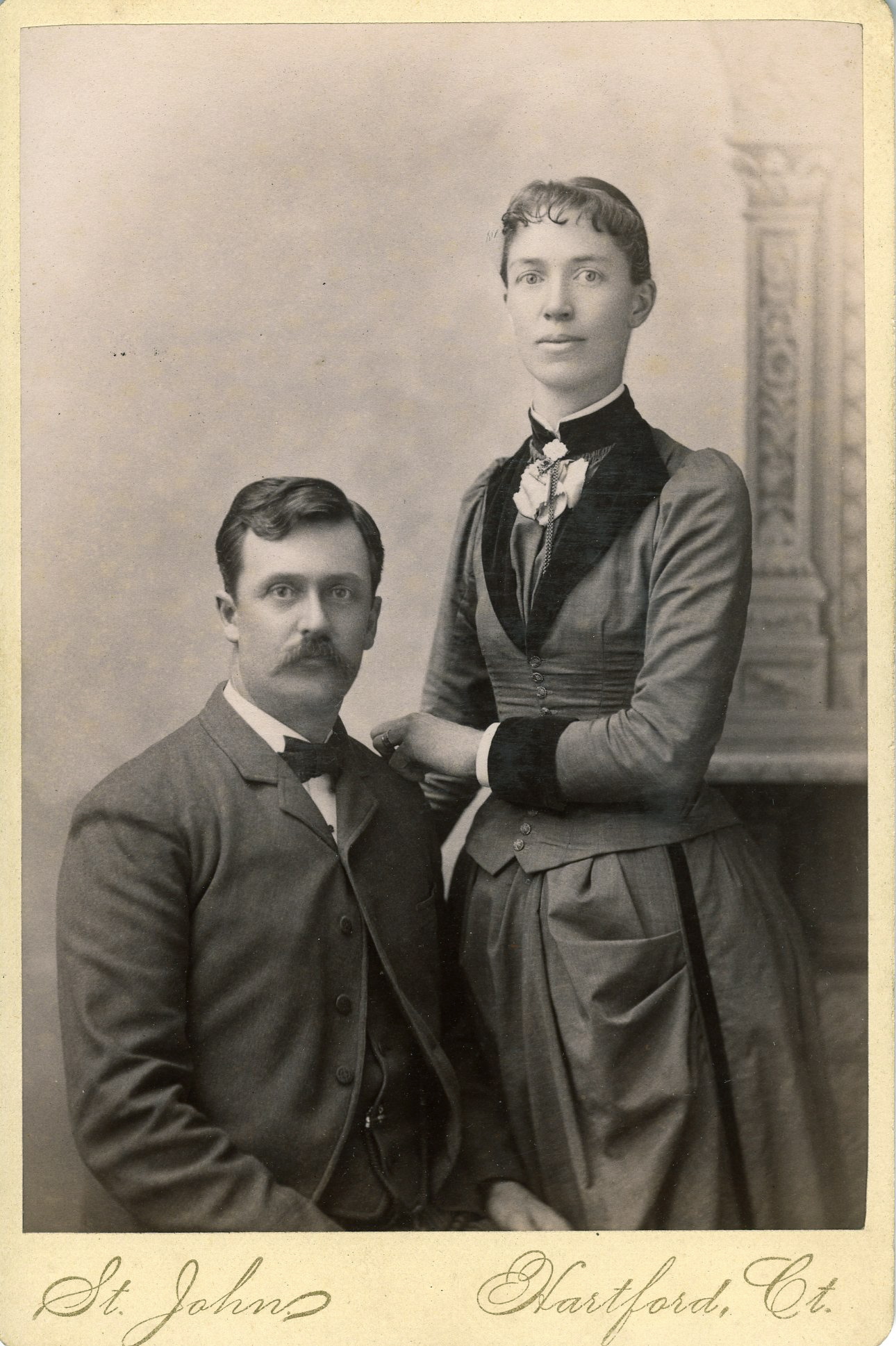
This photo is definitely an earlier photo than yesterday’s photo of Clyde and his mother, but my daughter insisted on a baby photo and it’s tough to disappoint a three-year-old. You can probably now understand why yesterday I commented that Mother looks a little rough around the edges. My suspicion is that this is a wedding photo of Clyde’s parents.

At first I just thought she had a lot of embellishments at her neck, but under a magnifying glass I realized that she has a very thick chain necklace with an unusual square clasp – the only word that comes to mind – in this photo. The clasp is laying on top of the white flower/fluff. In the photo with her baby it’s much easier to see. The only way I can describe this necklace is as a bolo or lariat but that doesn’t feel right.

It is going to be difficult to trace the photographer because there is a very famous church called St. John’s in Hartford, CT. It makes me wonder if this couple were married at the church and somehow the priest was forward thinking and offered a portrait…? Probably a stretch.  What this does tell us is that the couple were from Connecticut and somehow made their way to Kansas. If we ever learn their names, we might be able to unravel their reasons for emigrating westward.

I wonder who they were? Thanks for stopping in.

UPDATE: This couple has been identified as George and Abbie (Streeter) Moses, married January 15, 1880.

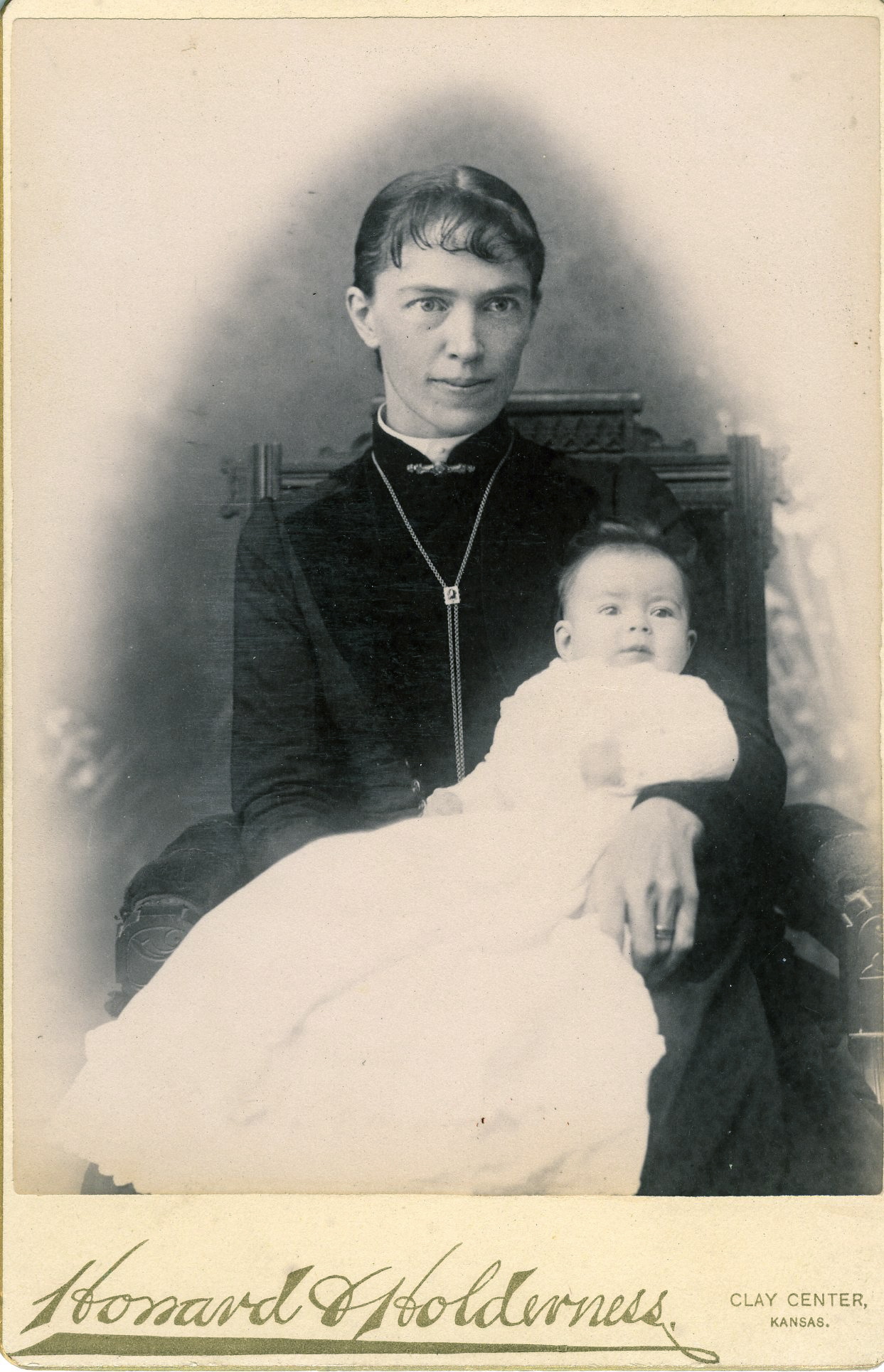
A lovely baby with his mother, taken around 1882. This baby is named Clyde, so that answers that question, but who is his mother? In my opinion, she looks a little worn around the edges, as though she is having a difficult time adjusting to the rigors of motherhood. Check back again for Clyde and his mother, as I have identified at least three other photos from the C. Murray Album of this family.

I had no luck searching for the photographer, Howard T Holderness. There is a famous plastic surgeon apparently who shares the name, but no luck elsewhere.

UPDATE: This is Abbie J (Streeter) Moses and her son Clyde. Abbie was born October 6, 1855 and lived until December 10, 1917. Her husband George lived until 1928.

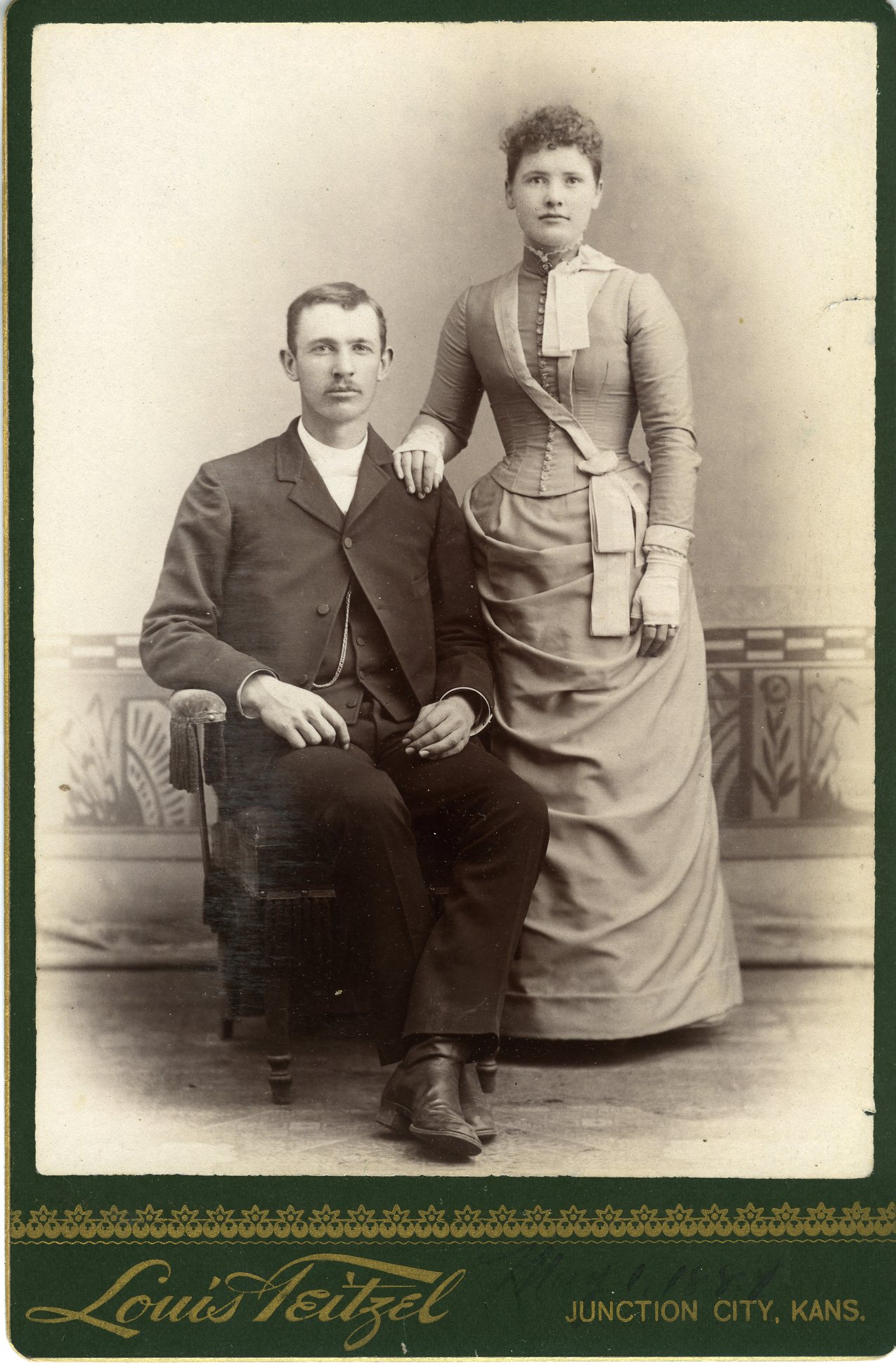
We can comfortably date this cabinet card to 1885-1895 due to the use of a dark backing, which is when they were popular, and apparently dark green cards were less popular and thus fewer examples exist to be studied. Yay us! We have this lovely couple from the C. Murray Album who were photographed by Louis Teitzel in Junction City, KS.

I found the photographer in the documentation registering Junction City Downtown Historic District. G.M. Wheeler had a photography studio on the upper floor of a building established in 1870 by the M.W. Keller Grocery. At some point, Wheeler and Teitzel became partners, and Teitzel became the studio owner in 1885. Teitzel was in business at the same location until 1909 when J.W. Montgomery had taken over the studio. The building was replaced by the existing building at 706 N. Washington Street, Junction City, KS. It is currently known as Boone’s Market building and houses bank offices.

This all coincides with the dress of the lady in our photo, which is consistent with the lines and decoration of the Late Bustle period. If she turned just a bit to the side, I’m sure we’d see the poufs and drapery of her skirts behind her.

UPDATE: Notice the date written directly above the photographer’s name. It looks like May 1, 1889.

UPDATE 2: This couple has been identified as Arthur and Kate (Parish) Streeter.

.

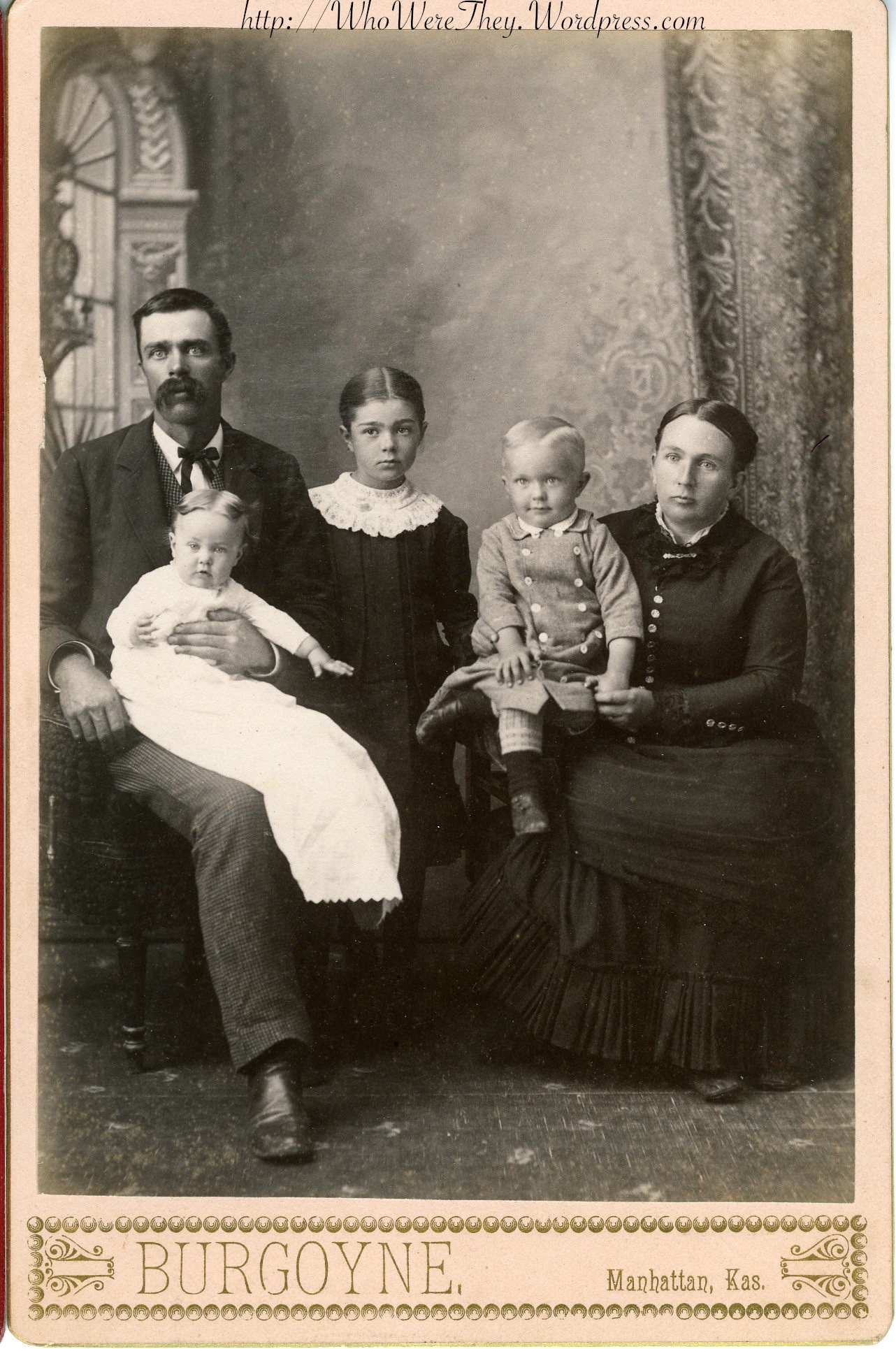
This is a lovely family from the C. Murray Album. The parents look to be in their 30s with three children – a girl, a boy, and an infant. The mother looks a bit like Who Was She? #2. Relations?

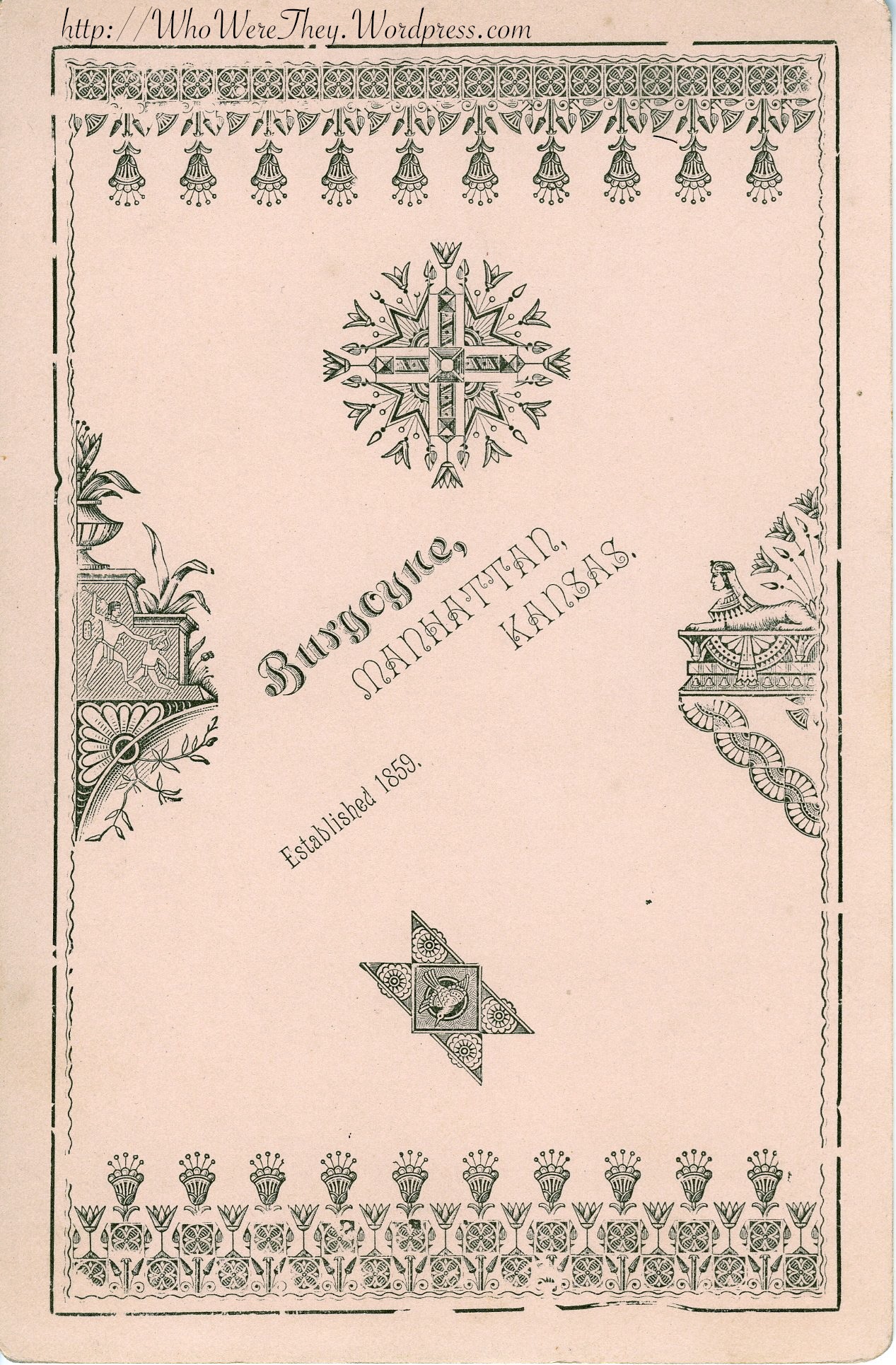
I found that George Burgoyne was a photographer in Manhattan, KS from 1864 into the 1870s, although the card says the studio was established in 1859. There is some historical speculation that a previous owner started the studio in ’59 and Burgoyne took over in ’64. From the mother’s dress, we can tell this image was made in the 1870s, as her dress features the higher shoulder seams and more narrow skirt that emerged in the 1870s. Noting the drape across her knees, it’s a good speculation that she’s wearing a bustle dress. The Early Bustle period ran from 1870-1876, was followed by the Natural Form period which eschewed the bustle, and then the bustle came back with a vengeance from 1882-1889. The girl also has a lovely wide lace collar, the boy a handsome double breasted suit and the infant a lovely gown. After studying the infant, I’m saying it is a girl because the hair is so deliberately parted in the middle. Girls hair was parted in the middle, boys on the side.

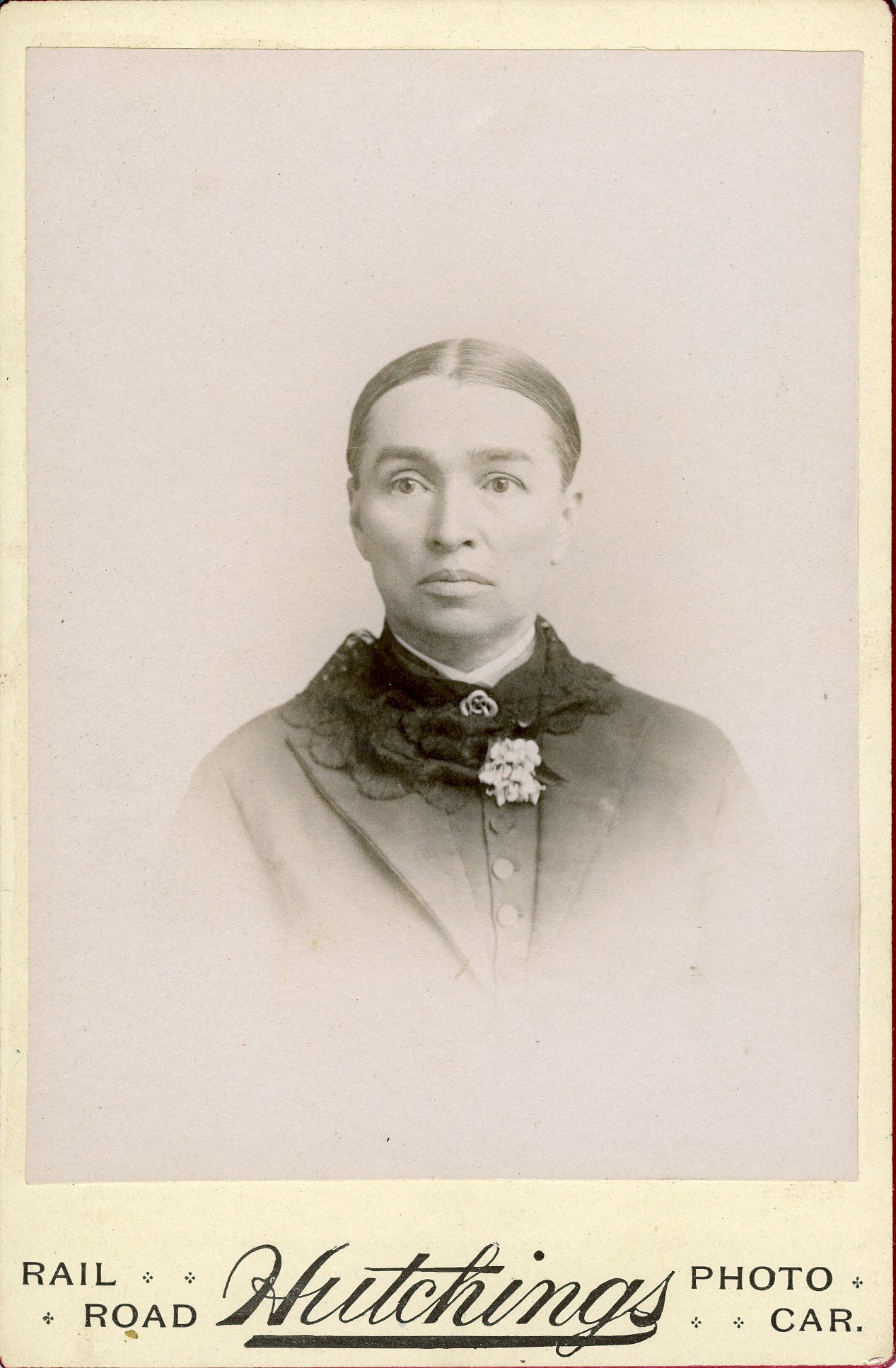
Here’s cabinet card #3 from the C. Murray Album, a lady in her 40s I would guess. From what I can find, the Hutchings Railroad Photo Car was a train car set up as a traveling photography studio. The other cabinet cards I have seen have slight variations on the inscription but all say the same thing. The studio was know to have operated in Nebraska in the 1880s to 1890s at least.

This lady has a mannish jacket bodice with an inset and rather lacy collar. The white fluff at the center could be a floral embellishment, and there is also a brooch at her throat. The neckline shows a blouse underneath the dress, evidenced by the thin white collar. The look of the 1880s and 1890s was trending toward an elongated neck, hence the stand up collars.