Who Were They?

Lost and forgotten photos from the past

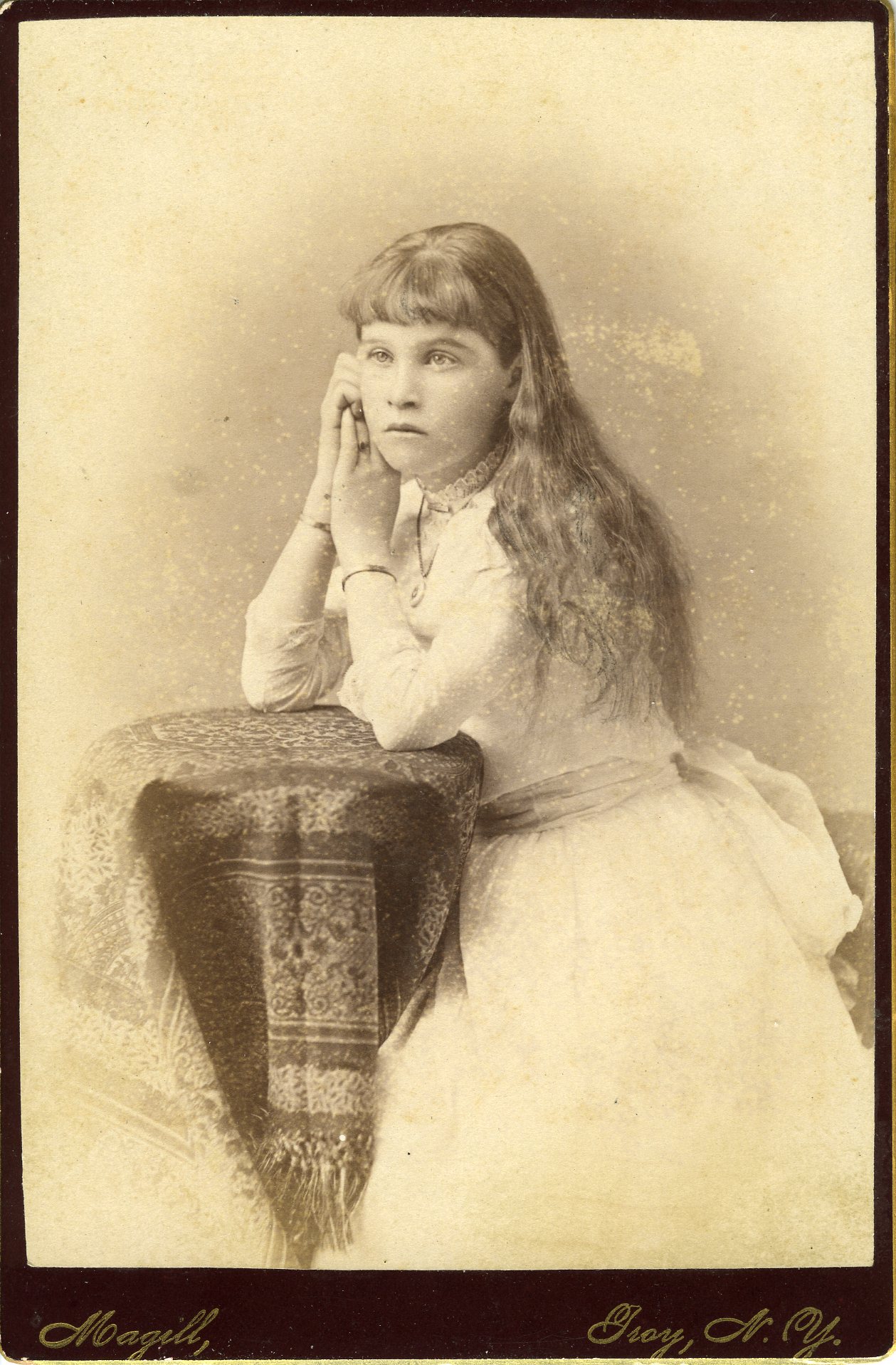
Sometimes a photo comes along that reminds you that people haven’t changed much over the past hundred years, and this is one of those for me. This young girl’s portrait captured her in a moment of reflection with her future bright in front of her. She is a beauty with long softly curling hair and a lovely oval face. She makes me hope for my daughter’s future as one filled with love and happiness.

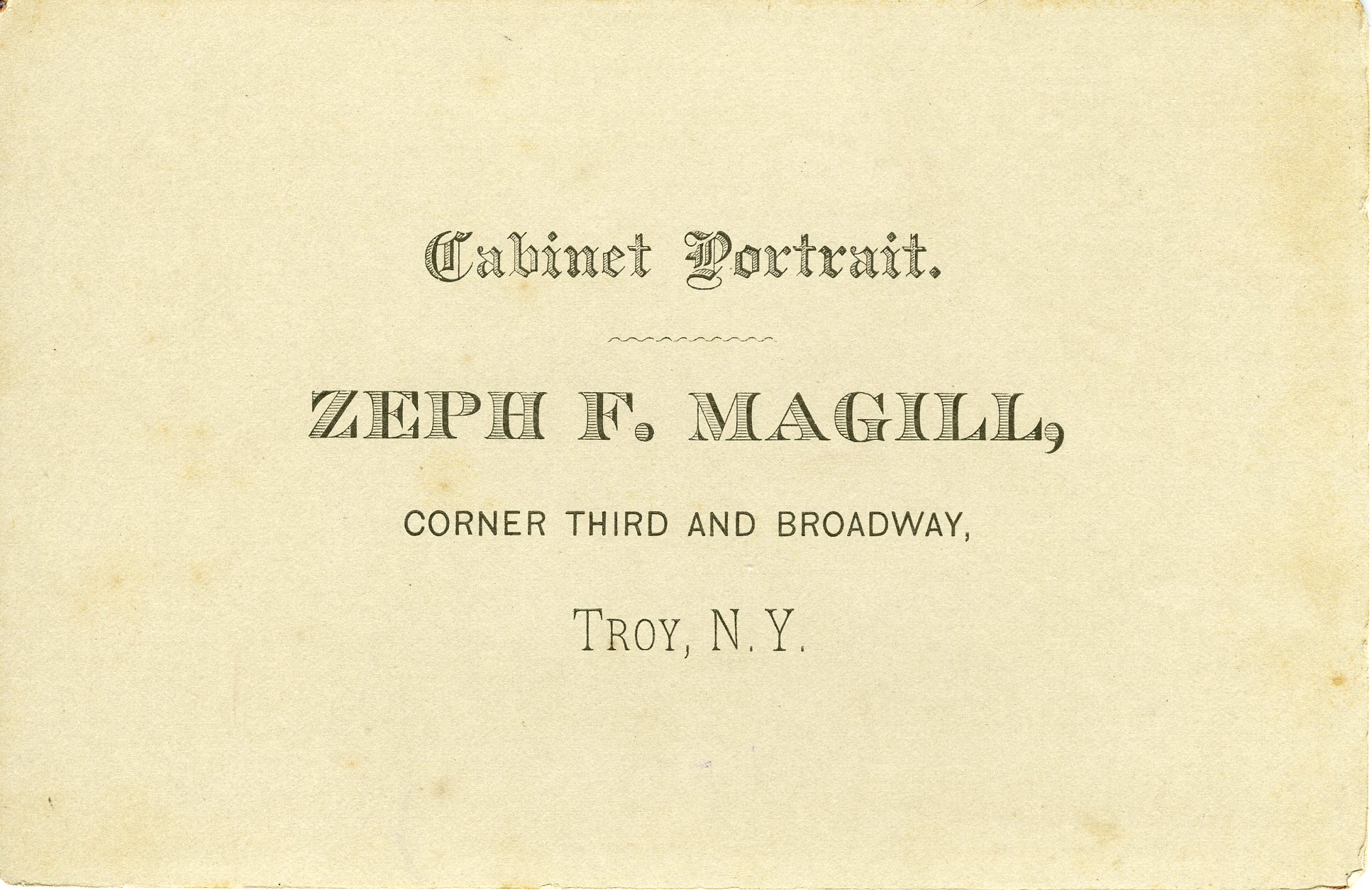
The photographer is Zeph. F. Magill, who purchased the business from a Mr. Clark. Earlier cabinet cards by Magill state “successor to Clark” instead of the studio location. Zeph. F. Magill was somehow involved in politics and fertilizer, oddly coordinating lines of business and could also be identified as Zeph. T. Magill who was somehow associated with a criminal arrested for fraud. Such an odd name could not be easily duplicated, but an F can look like a T and vice versa. Hmmm.

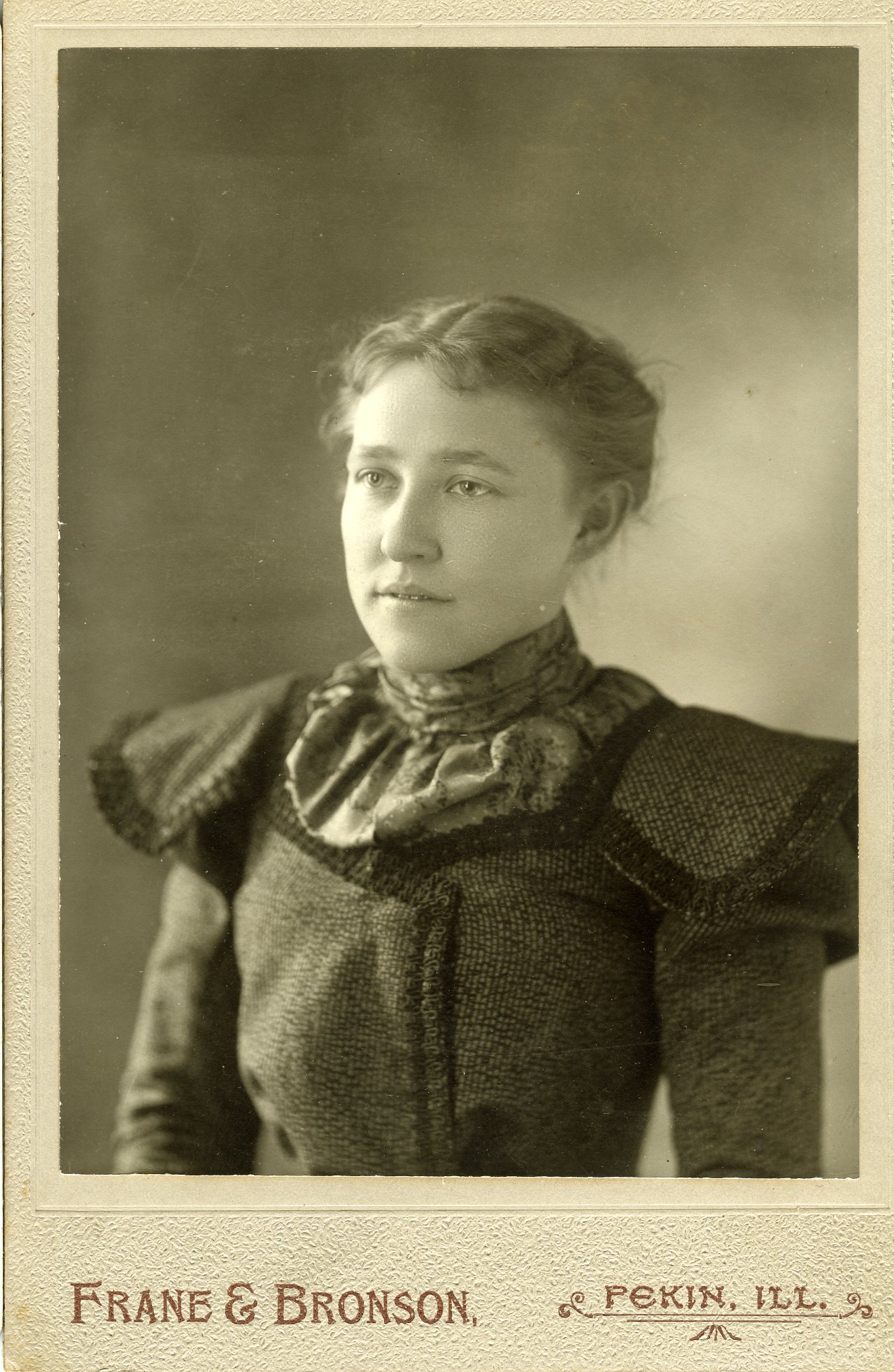
The best way I can describe the “wings” on this bodice is to call them epaulettes, although they really are not epaulettes. Epaulettes are the fancy fringed military insignia worn on the shoulder. They are most well known for decorating the impressive red jackets of 19th century military officers and in US military custom they were allowed to be left off the uniform during combat around 1868. I’d think the shiny gold fringe would be yet another target for a sharpshooter, so it was probably a good policy to institute.

This photograph from the Dobb Long Book is probably from the 1890s and was made by Frane & Bronson of Pekin, IL.

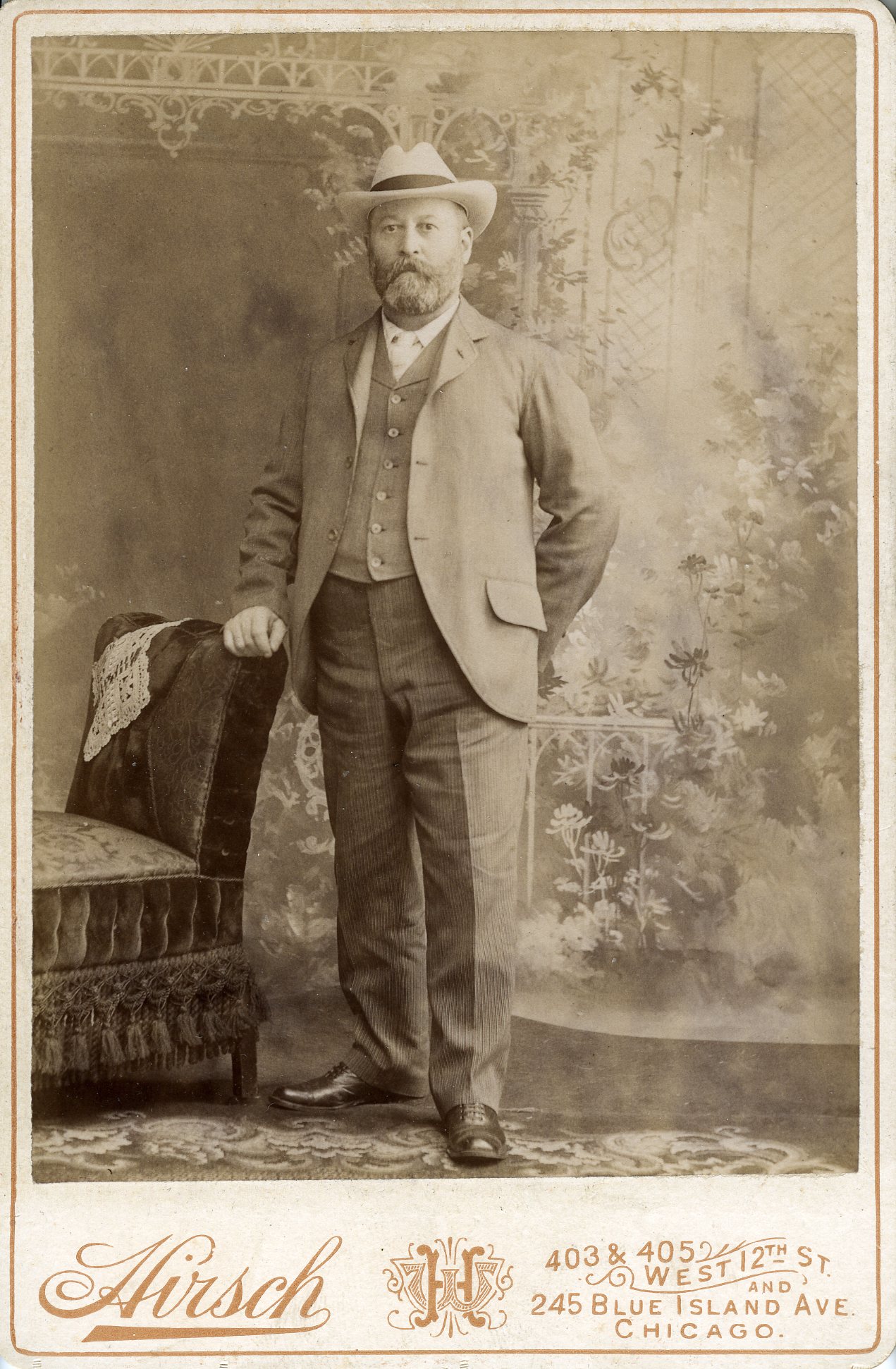
This gentleman, with his hat and whiskers, looks to be a dapper –  if middle aged – fellow. His vest seems a bit short to really disguise the pot belly, and the cut of his coat accents it also, but the clothing appears to be well made and fashionable.

The photographer was William Hirsch, who operated on both Blue Island Ave and 12th Street, in Chciago. He was in business from 1881-1900. I’m no good with men’s clothing, so I’ll peg this as the 1880s and leave it at that. If someone knows better, please enlighten us!

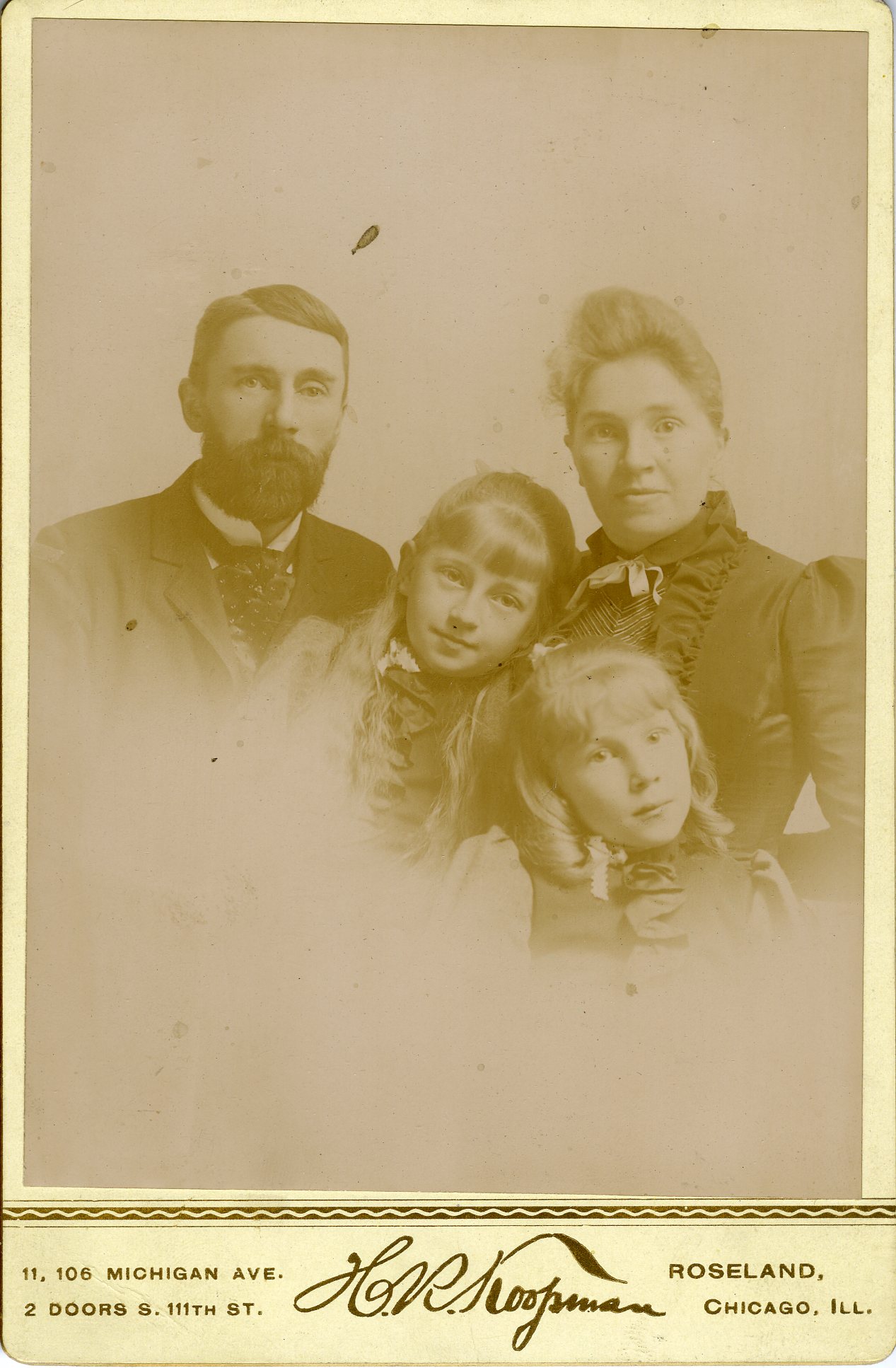
This is a lovely family photograph taken by H. R. Troopman of Chicago. The girls look to be 10 years old or so. I think the photo is from the 1880s, but what is tricking me is the slight purple tint it has. The collodion process was not widely used until the 1890s. I found another site with a Troopman photograph showing a soldier in about 1868. The date of this photograph is difficult to nail down.

UPDATE: Thanks to Iggy we now know this photographer was H. R. Koopman, thanks Iggy!!

From the Pullman (Railcar) State Historic Site:

“1884 — 1914: H. R. Koopman

Henry R. Koopman was the Pullman photographer of the town and workers.

In 1893 he published a book on the town called “The City of Brick”. His studio was located at 11106 S. Michigan Avenue in Roseland. From 1918-19, he worked in the Pullman Shops in the shell division. We have many original photographs, studio cards, postcards, etc. by Koopman as well as images of his studio in Roseland.”

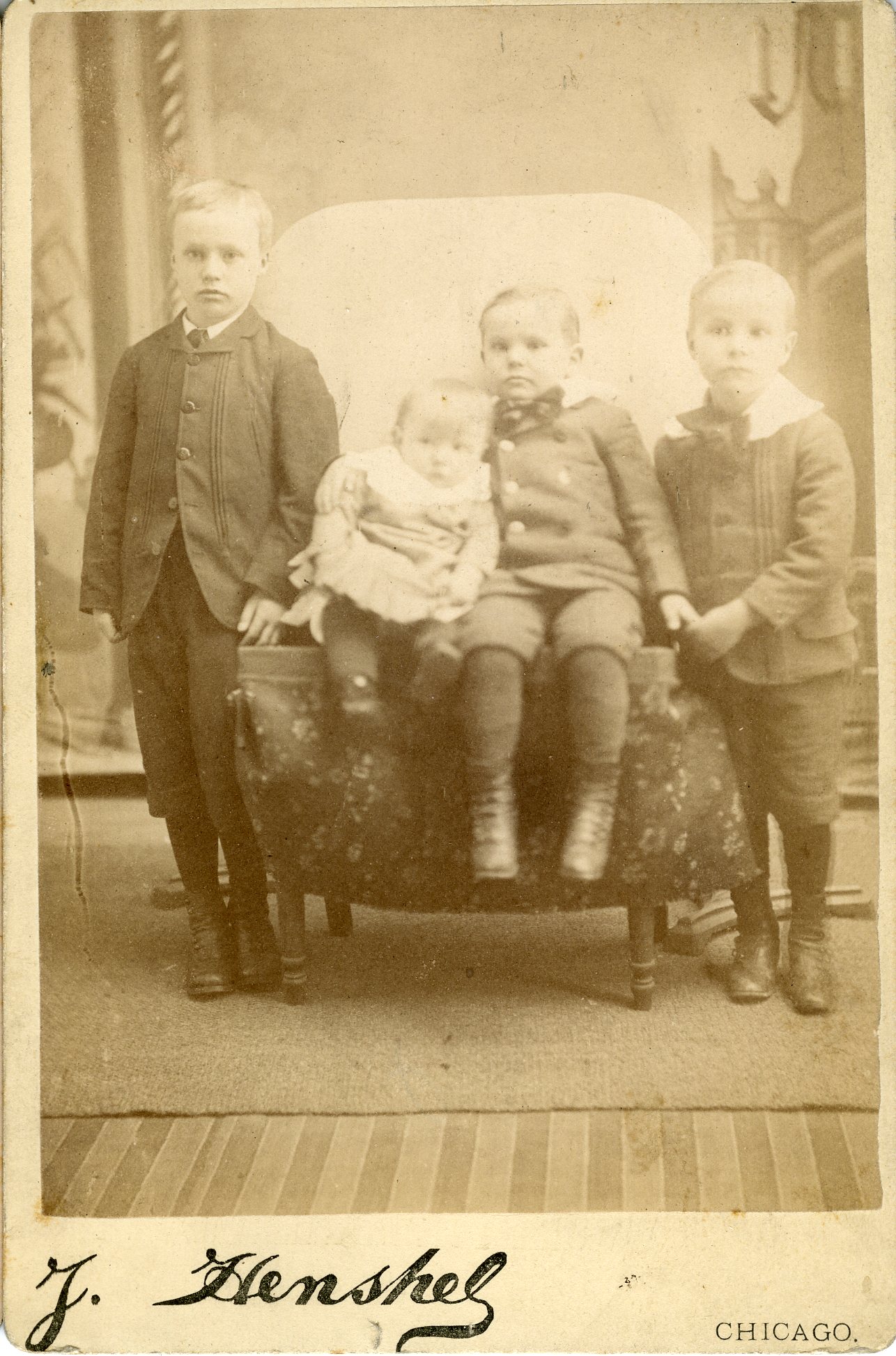
I believe this is a set of four brothers. The youngest could be a girl, but the face is awfully “boy” to me. This photo is under Mr. Bewildered and diagonal from Mrs. Bustle Dress. If you look at the floor behind the boys on the outsides, you will see the feet of positioning stands which were a necessity for holding still little children. These boys look to be 6 months, 2-3 years, 5 years and on the left 7 years.

The photographer is J. (Jacob) Henshel of Chicago. There were three Henshels in the photography business in Chicago from 1868 through 1899, however J. Henshel does not appear to have been partnered with the other two. Their addresses never coincide, which leads me to believe that William, Jacob and Mrs. C. Henshel may have been related but J Henshel owned his own studio, while William and Mrs. C. partnered. J. Henshel was in business from 1878-1888. I will date this one right in the middle, at 1883.