Who Were They?

Lost and forgotten photos from the past

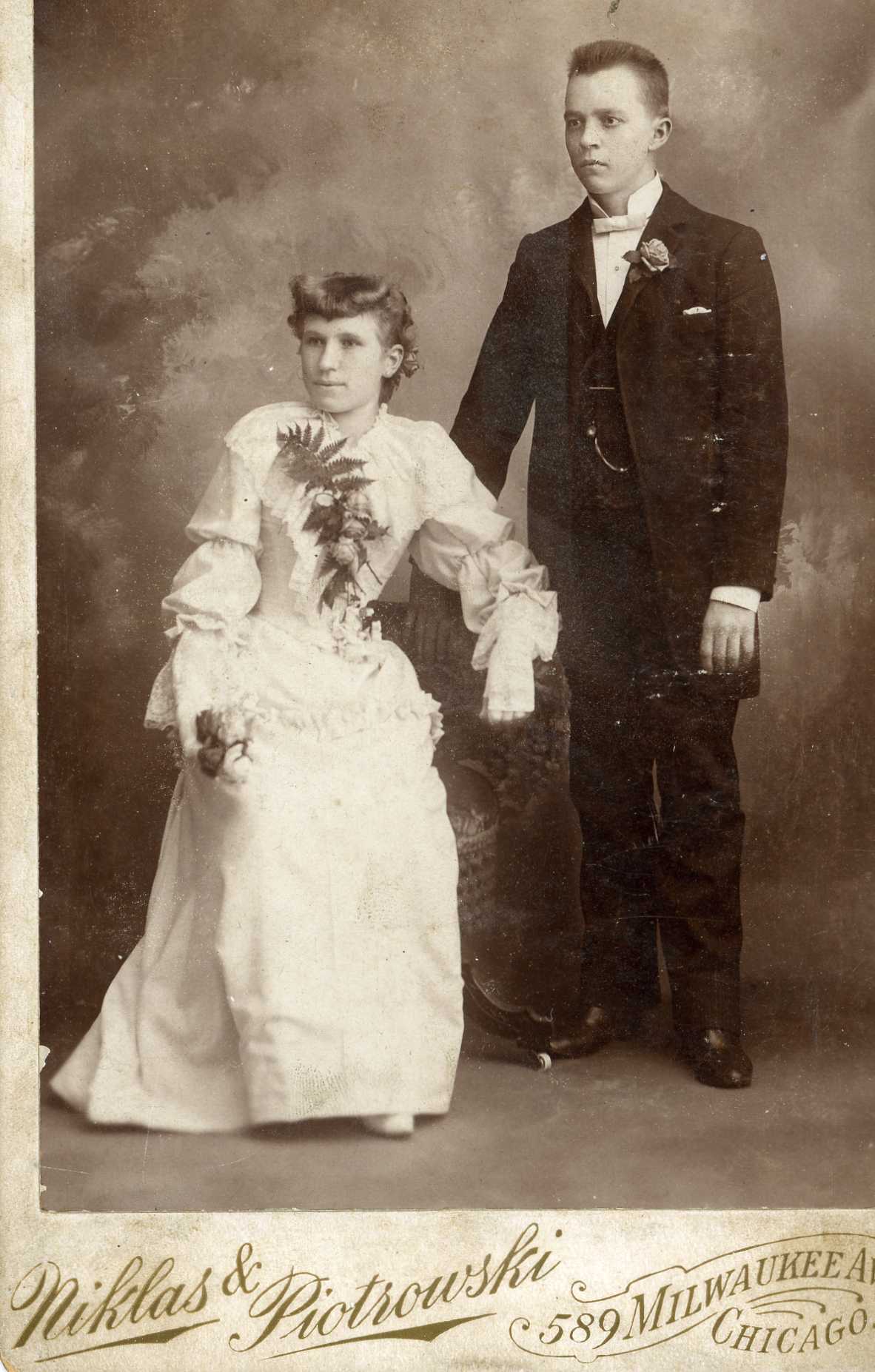
This family really must have had some economic means, because this bride is wearing white. We know that white dresses were a symbol of wealth because only the wealthy could A) afford a dress they would wear only one time and B) have the means to keep it clean. The numerous yards of white fabric and lace required for a wedding dress were expensive, usually from silk, silk taffeta, organdy, brocade, etc., and if only worn once would be an extravagance in a time of general frugality. Note her incredibly tiny waist! That is some tight lacing. And before you even think of making the comment, women did not have ribs surgically removed to attain the tiny waist. It was a time when people died from what we consider to be common illnesses; the recovery from major surgery was often a fight against raging infection because they didn’t understand surgical sterility as we do today.

I’m having trouble dating the photo from the dress because I have never seen these sleeves on a Victorian dress, though I do not doubt they were popular! Considering our previous photograph that Ray sent us and I posted was by this same photographer and was dated 1899, I’m guessing somewhere in that range. I have no reason to think the boys in the Confirmation photograph were the children of this couple. Frankly, this couple looks too young to be getting married, let alone having children! But it was a different time. I also find it interesting that the groom has what looks like a brush cut hair style. The general fashion for gentlemen in the 1890s was to oil the hair flat and comb it to the side, even in the military. Was this young groom a trend setter?

The photographer is now named Niklas & Piotrowski, but still at 589 Milwaukee Ave, Chicago.

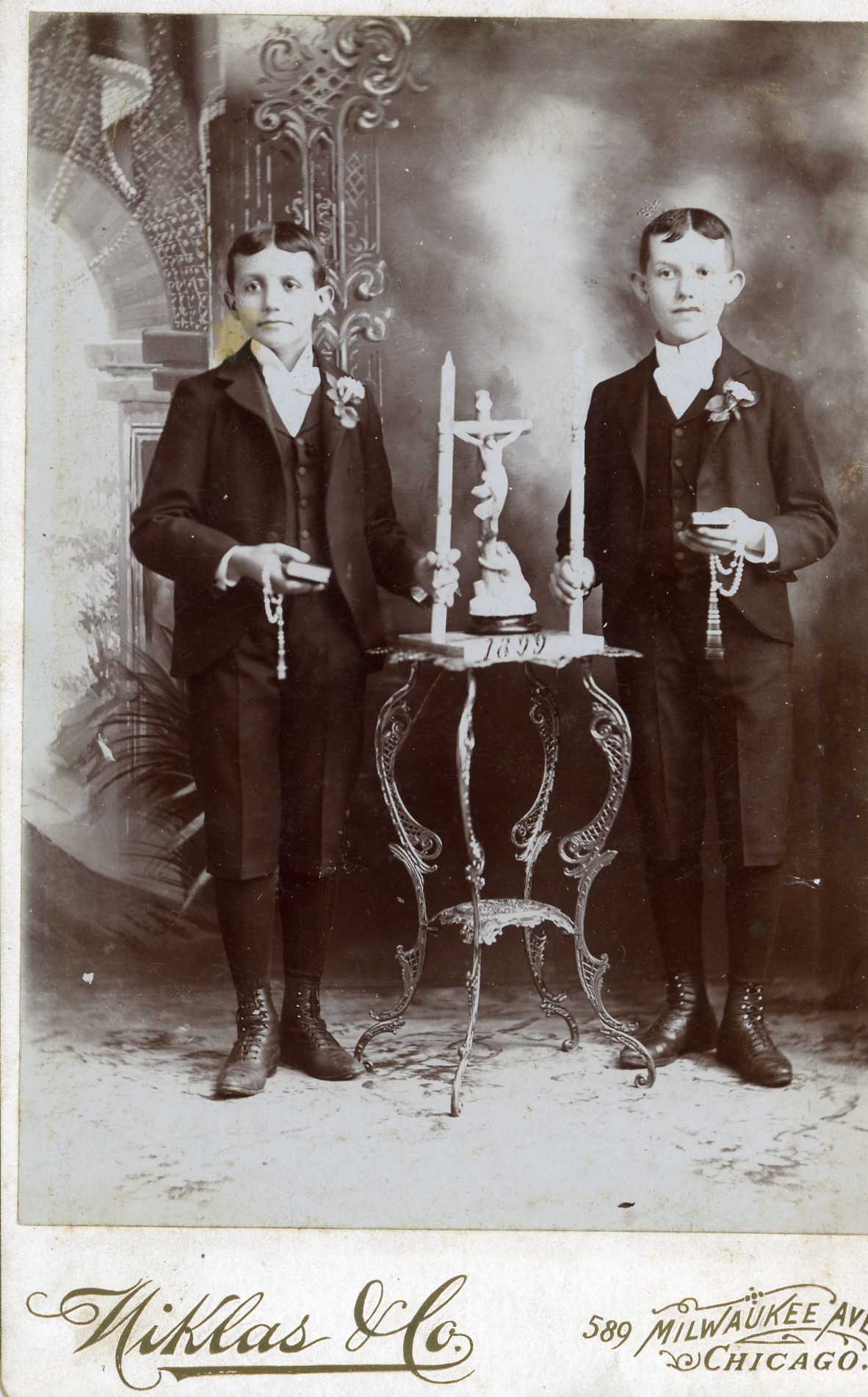
Ray Jackson sent me several photos, and I am happy to post another for your perusal. Here we have two brothers on the occasion of their Confirmation. We know this from the candles, rosaries, bibles and the cross on the table. The table is quite ornate! I cannot tell if the date 1899 is printed on the table or on the photo, but thanks to the photographer, Niklas & Co, we know the year the photo was made. The boys are dressed identically, with short-pant suits, high laced shoes and oiled hair. While the boy to the left does have a wear mark on the photo right by his face, the boy on the right actually appears to be sneering. Ray will have to chime in to let us know if it is damage to the image or actually how the boy held his mouth.

As mentioned, the photographer was Niklas & Co, at 589 Milwaukee Ave, Chicago.
Courtesy of Ray Jackson, today we showcase a tintype photograph of Charles Crane. Because the tintype was popular and available for over 50 years, they can be extremely difficult to date. They do not lend themselves to being written on to identify the subject, and all to often the paper sleeves are long gone by the time we find them in antique shops. This particular tintype appears to be the 1 5/8 by 2 1/8 size, which could be made in batches of 116 at at time due to the repeating cameras that became available around 1862. The camera could produce multiple images from one sitting and helped bring down the cost of tintype photography to below a penny per image.

In this particular case, the paper sleeve is still intact, and written on the back is the name Charles Crane. There was not a photographer’s mark on the sleeve, so this gives us no clues as to where the image was made. One tiny piece of information may be of assistance though. The paper sleeves came into use in the 1860s and ranged from newspaper-weight to firm cards. In the early 1860s until about 1863, the sleeves were very elaborate presumably in an attempt to make the inexpensive tintype look more like it’s pricier cousin the CdV. Those sleeves went out rather quickly and in came the sleeves like the one above. They featured red or other colored ink and some scrolled decoration. They were popular through the 1870s at least. At other times we see the embossed paper sleeves.

Looking at young Charles’ clothing can give us some more clues. The vest style is consistent with a more tailored style that was popular in the late 1860s through the 1870s. In the 1870s, the vest color became consistent with the coat color. I learned that the brocade vests that are so ubiquitous in Western movies and usually worn by gamblers at reenactments were widely popular among men in the 1850s and 1860s, giving way to the solid color vests as seen on Charles above. The coat Charles is wearing is likely a sack suit, which essentially means “loose fitted,” and they are also called walking suits and business suits. This style evolved into the modern three-piece suit. They were introduced in the 1850s but became more tailored in the 1870s.

Given that this is possibly an 1870s image, and Charles looks to be about 10-14 years old, I would guess he was born between 1860-1865.


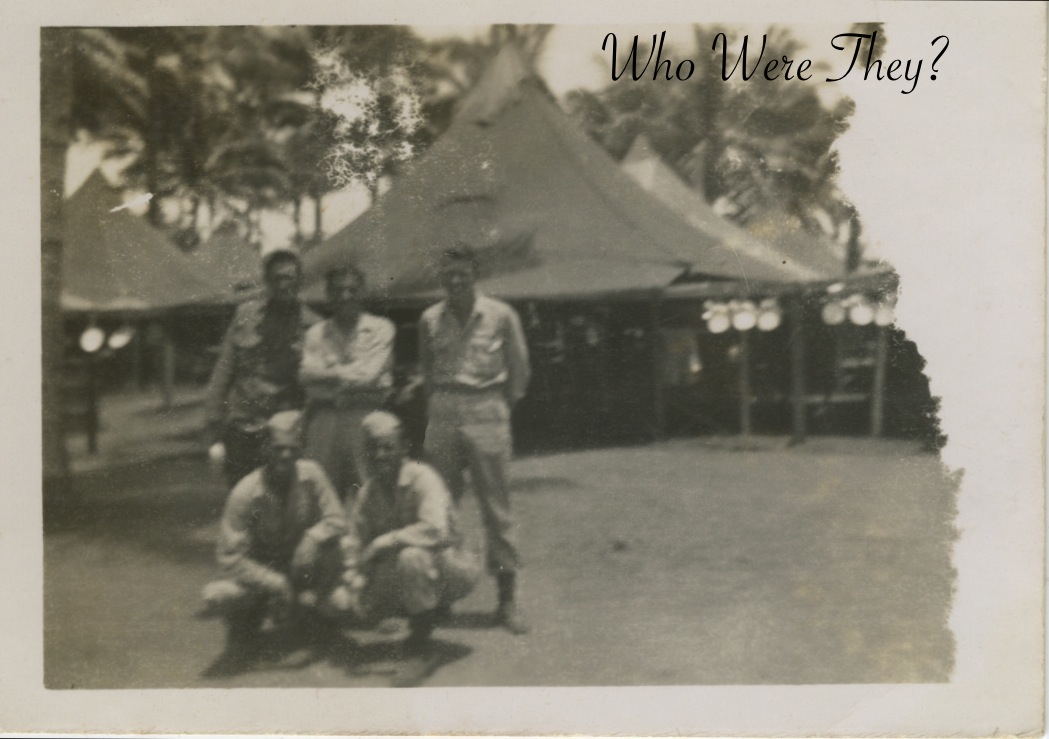
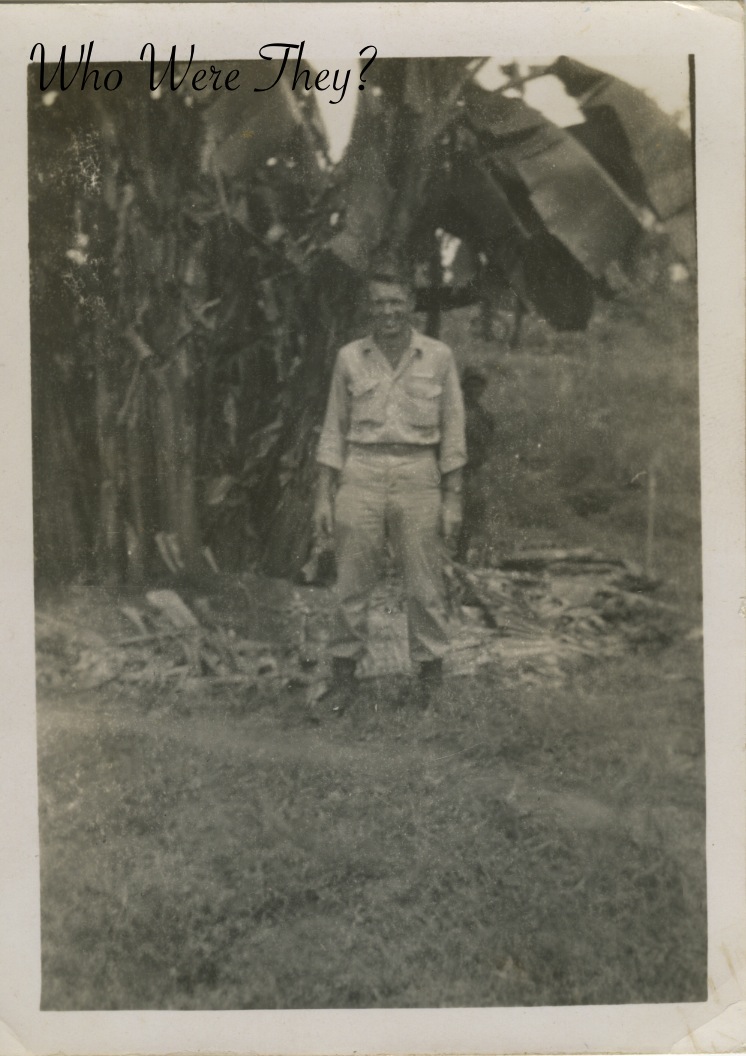
This week’s Sepia Saturday was another challenge for me due to my dearth of 20th century photos, so I searched my files and came up with something somewhat on theme. The prompt was of a group of WW1 soldiers cooking in the rubble of a bombed out town. Wow, that is tough to meet. So here I have two photos dating from 1940-50, of American military men somewhere in the tropics. That’s about as vague as you can get, I suppose!

The image quality is quite poor, with the subjects all barely discernible beyond “men”. I wonder if these were mailed home with a letter identifying Tom, Dick and Harry? Based on the posture of the top right man on the group photo, he appears to also be the man in the palm thicket photo. I don’t know enough about American military dress during that decade to even venture a guess a to what branch they were.

The backs of the photos have the Kodak Velox stamps. “Kodak print” is in a circle and “Velox” is printed on a diagonal, dating the photo paper to 1940-1950. Beyond that, there’s no information to tell us more about these fellows who paused for a moment to pose for a couple photographs on a sunny day, somewhere in the tropics.

Please click through to Sepia Saturday to then jump off to an array of fantastic sepia images from around the world.

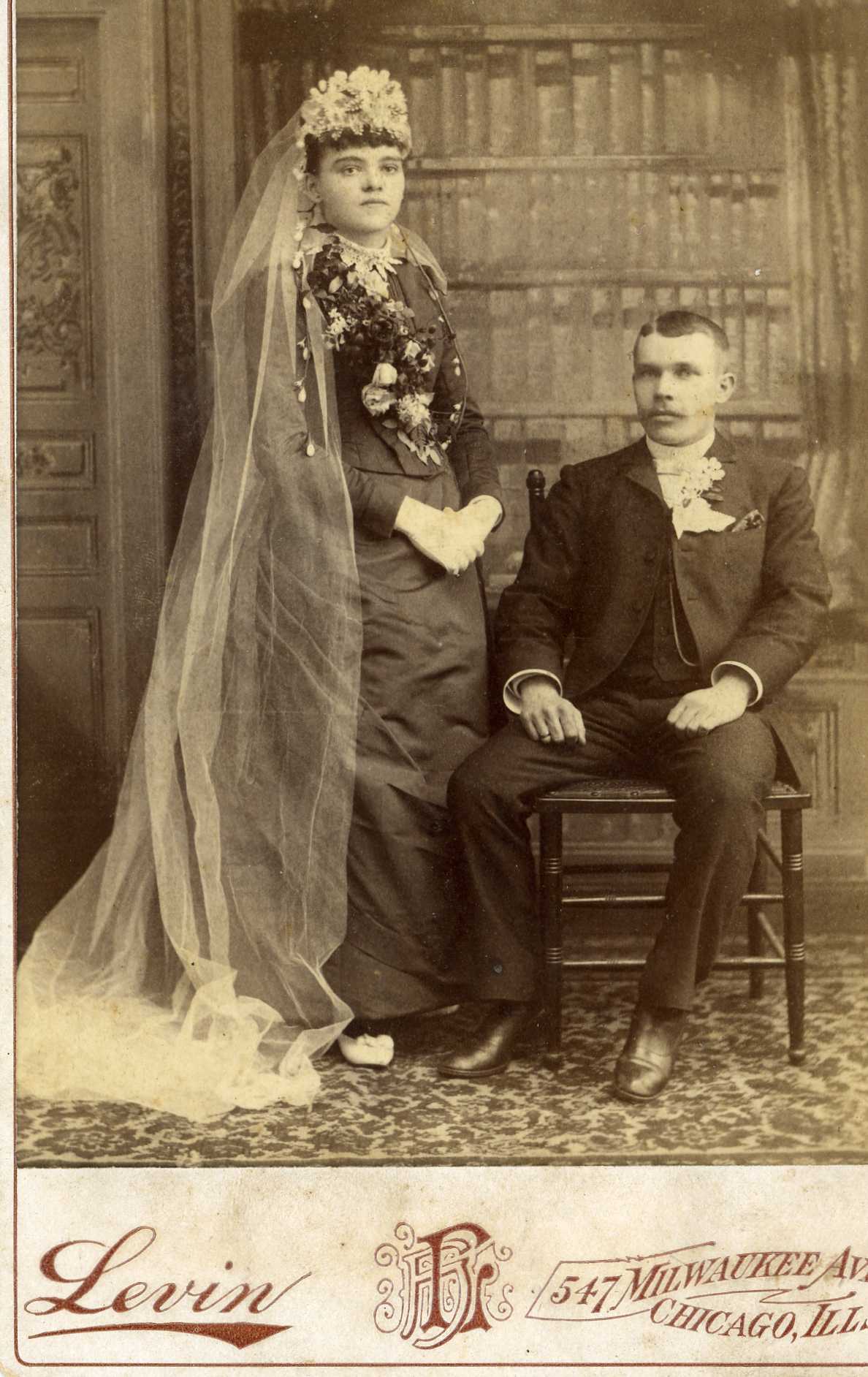
Today’s photo is also courtesy of Ray Jackson. It shows a lovely cabinet card sized wedding portrait of a young woman and her husband. I read on Patches of the Past that even though the most wealthy could and often would wear white dresses for their marriage, many women simply wore their best dress and a wedding bonnet. The bonnet consisted of flowers, ribbons and netting, and was a sentimental piece the bride could keep and treasure, while her best dress was worn again and again. This particular bride also has a floral adornment across her bodice which could have independently signified this as a wedding photo. You can also see that trailing from her bonnet are the ribbons tied in lovers knots with flowers. Some have suggested that the number of knots would signify the number of children the couple would have. Yikes!

The dress our bride has chosen to wear is a simple first bustle era dress, dating the photograph to 1870-1876. One way we know this is first bustle, I learned recently that the dresses were “one complete dress” whereas in the second bustle era, there was a skirt, over drape and bodice, all working together. I find it strange that she chose to wear white shoes with her dark colored dress. I once read that Laura Ingalls wore a dress of dark red merino wool for her wedding, so I am picturing this dress in that fabric.

The photographer was most likely Henry Levin(e), found in Chicago directories to have been in business in 1876 and possibly partnered with Jacob Maul, although the records are a bit confusing. He is later found at the same address in 1892.