Who Were They?

Lost and forgotten photos from the past

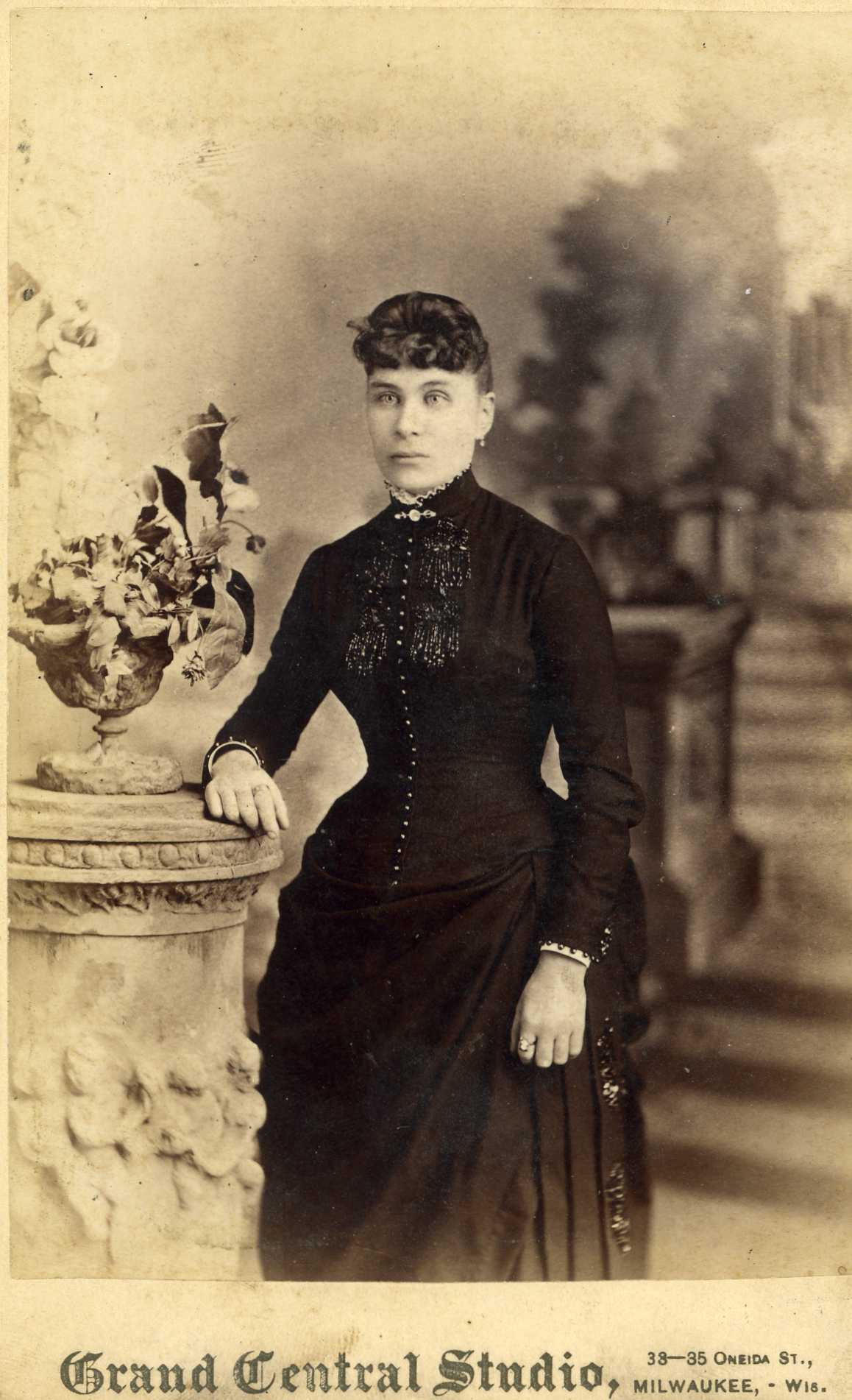
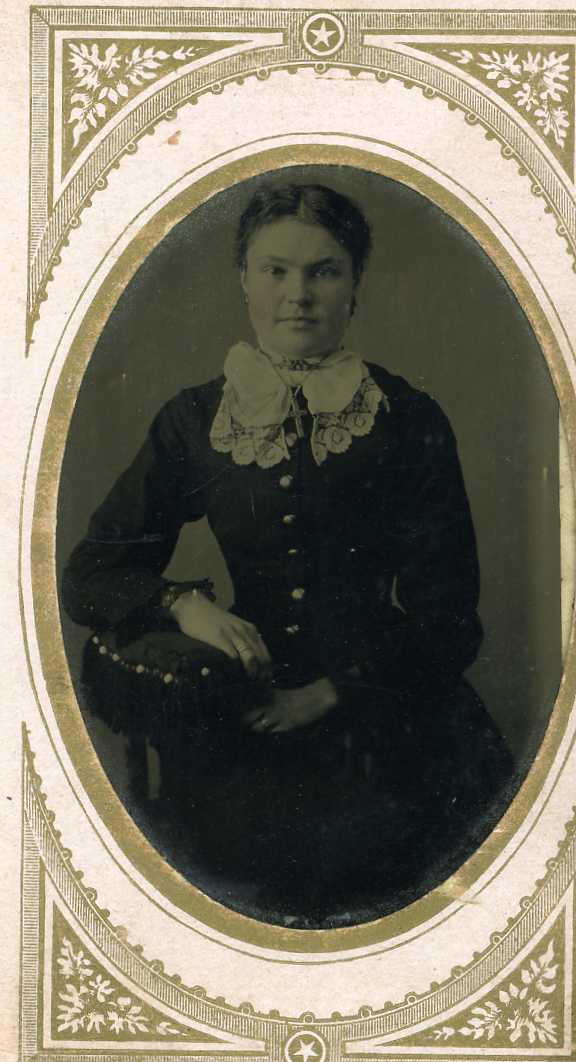
An expert may correct me but I believe this to be a second bustle era dress this lady is wearing. It looks to be all one dress, one with numerous tiny buttons down the front, beading on the bodice and skirt, and tight fitting sleeves. She is corseted quite smoothly, attesting to the body shaping that is possible with a corset. The reason I think this might be second bustle is the asymmetrical drape on her skirt – more popular during the second bustle era – and the stand up collar. Both these style trends were more popular during the second bustle era. I could very well be wrong, or this dress could be one she had during the first bustle era that she brought back for the second bustle era.

The photographer was Grand Central Studio at 33-35 Oneida St, Milwaukee, Wis. Thanks to Ray Jackson for this lovely cabinet card.

This little tin type has lost its paper sleeve and so any chance of identifying this pair is lost to the ages. By the girl’s dress, I would speculate the photo was taken in the 1890s. It’s difficult to tell what exactly she is standing or sitting on – a tree stump? Her father has a nice bow tie and hat. I suspect this is one of those tin types made by an itinerant photographer. You can see the canvas backdrop that looks pretty shoddy and doesn’t even go all the way to the ground. Was it the side of a tent? This photo is courtesy of Ray Jackson.

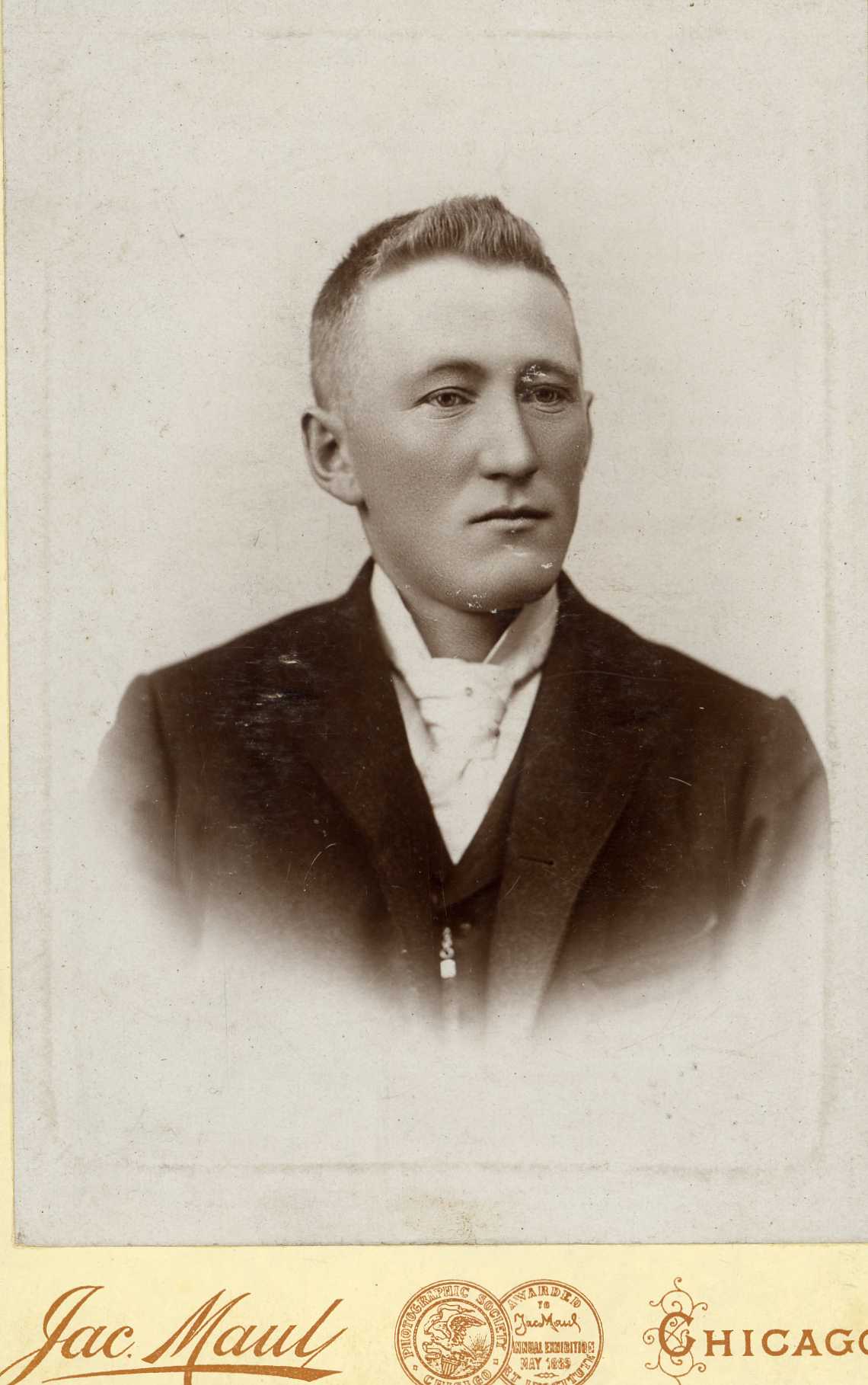
This fellow has such a modern haircut, don’t you think you could see his face in nearly any high school year book from about 1945 on? Maybe not so much today, but a few boys will still be clean cut, I hope! This is another of Ray Jackson’s photos, unidentified unfortunately. He is an handsome young man with high cheekbones and a strong face. He is wearing a cravat style neckcloth and his collar is not turned down, suggesting this photo is from the 1890s. He has his vest buttoned all the way and the chain for his watch is just showing clipped to the top button. We have seen other photos by Jacob Maul. Click on his name under photographers to see other images by him.


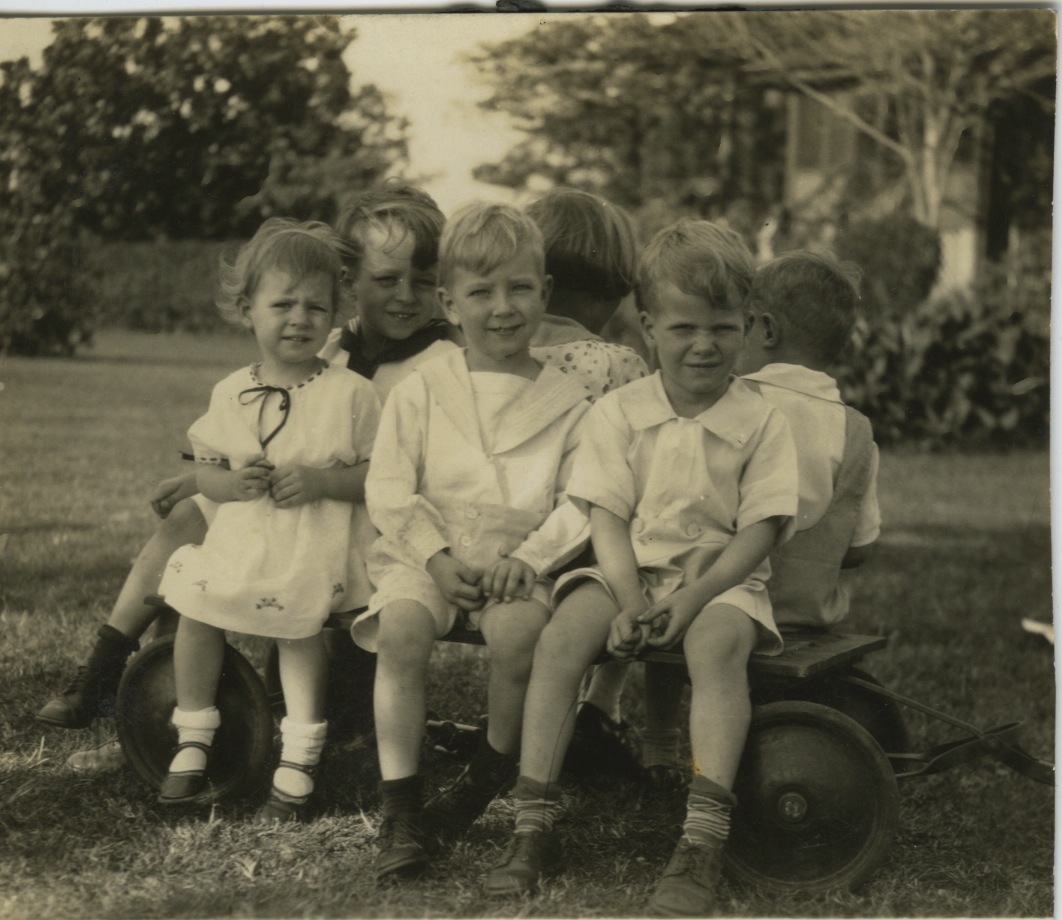
Who can resist a group of cute kids? Not me! This photo was found in a gigantic box at an antique store in Orange, CA, just begging me to take them home. I particularly like the little girl’s dress. It looks to have some embroidery on the hem area. The boy in the middle is sporting a sailor collar, and the boy to the right has rumpled socks. Although there are six children on this wagon, only four of them were looking at the camera. The other two were gossiping about Aunt Sally’s bursitis, I’m sure.

This is a Sepia Saturday post, celebrating children worldwide. Click through to find what other images of cherubic faces and dirty knees will turn up on the web.

Here we have another tintype that Ray Jackson sent me. The sleeve was intact, and written on the back was Stella Marshall. By the dress I will date this to the 1880s, but that is about as firm as I can get for you because I can’t see the clothing very well. The image has tinted cheeks, which the photographer would have done in his studio right at the time of the sitting. I learned quite a bit about tintypes recently. Many tintypes were made by itinerant or traveling photographers because the iron plates (not actually tin) would not break the way glass plates would. The repeating camera, or multiplying camera, was invented in 1862 or so, and made multiple images at the same time. The photographer then cut the images apart with tin snips, which probably gave rise to the misnomer “tin type.” While the studio tin type lost its cachet sometime in the 1880s-1890s, they were still available at amusement parks and venues such as Coney Island and Niagra Falls. The subjects were frequently posed with props that signified where the photo was made – a barrel for Niagra Falls, a strong man cutout for Coney Island, etc. They were cheap souvenirs for an American public that was enjoying the latest in leisure activities. Tin types remained available for another thirty years or so.

Here’s a little rhyme my Gram taught me that references the tin type. This was popular in the 1910s when she was a teen, so they were still in common use at that time. Switch it around if you want to know the real words. :-)

Once a big molicepan saw a bittle lum,

sitting on a sturb cone chewing gubber rum.

Please, said the molicepan, won’t you simme gum?

Tixie on your nin type, said the bittle lum!