Who Were They?

Lost and forgotten photos from the past

Today let’s take a look at people and their cars, shall we? There is a love affair between people and cars, starting in the early 20th century when cars became widely available for a moderate price. Posing in front of the car was so common that there is even a website or two dedicated to it.

First we have a family. “Uncle Bob, Rich, Muriel, Sue, Don and baby” is written on the front, but I can add and there are seven people pictured but only six noted. Wonder who is missing?

I can’t quite decide if this is a clown/mime or what, posed on the hood of his car. The photo is fairly poor in quality but I think I can just see a pointed cap on this fellow’s head. That with the two dark spots and rather large and floppy neck tie lead me to think clown. Interesting that you can see the hand crank of the car right above the bumper. Can you imagine starting your Mercedes C class that way?

I know this is “Chas in his new outfit & the car he uses to commute. It’s a maroon color Packard Six.” This was the note written on the back of the photo. I can’t identify the year exactly but the model was available from 1938-1947. The six refers to the number of cylinders in the engine.
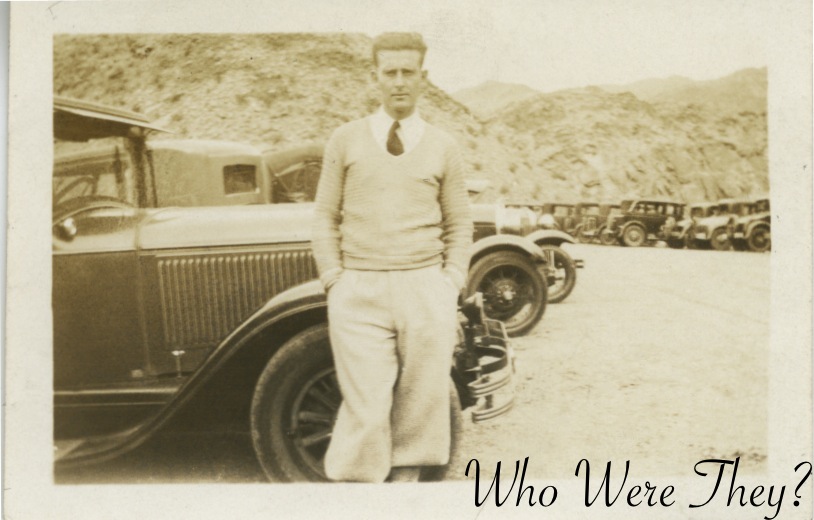
Here we have a man in front of his car, with a large number of similar cars lined up in the background. The photo was dated on the back, March 16, 1930.

This photo seems a little later, maybe late 1940s or early 1950s? I don’t know much about cars except to identify one that is old. :-)
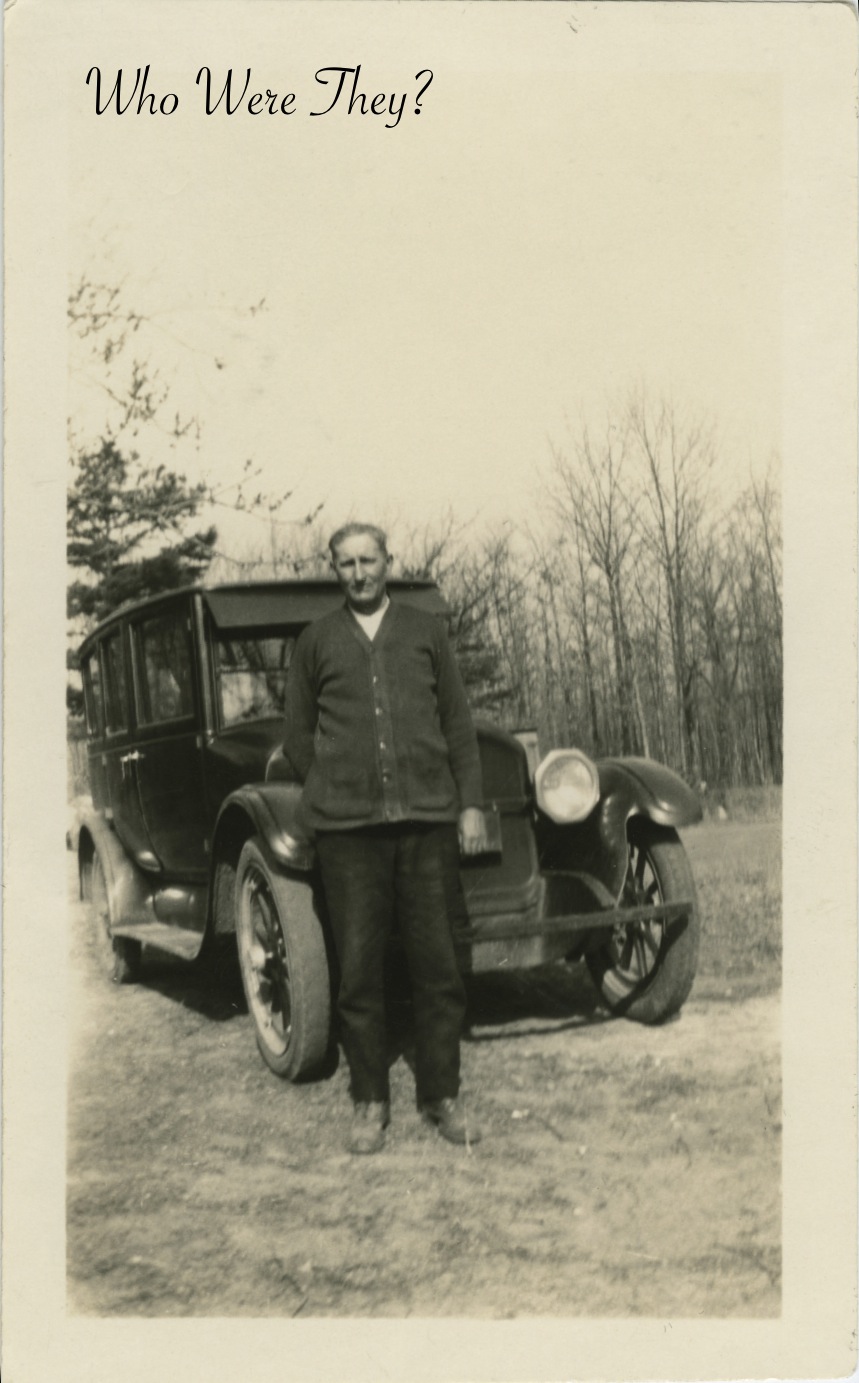
This is an undated photo of a gent in front of his car. Maybe 1930s?
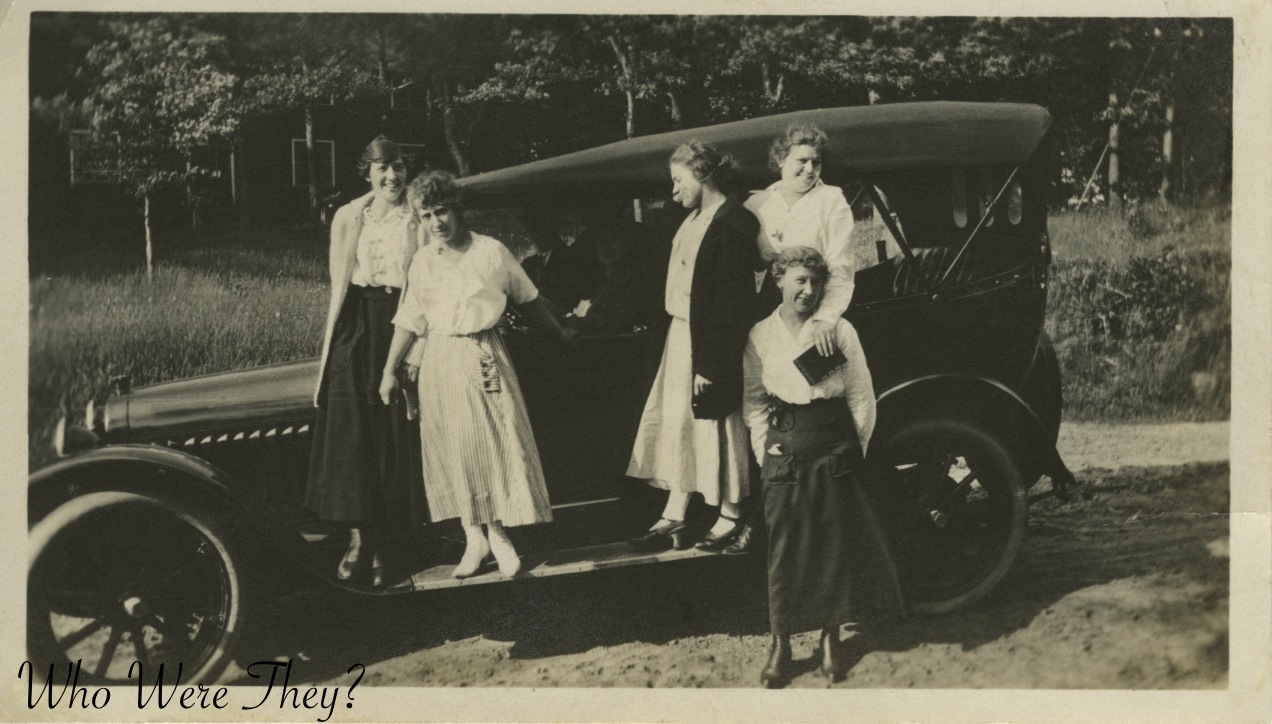
Five women outside a car and two men inside. Could this touring car have carried seven adults? Probably considering how much smaller people were in “the old days.” I’d guess at the late 20s or 30s on this photo based on the women’s clothing.

This is a proud Sepia Saturday post, where the theme is generally transportation. Please click through and see what other forms of vintage transportation have been presented from around the world!

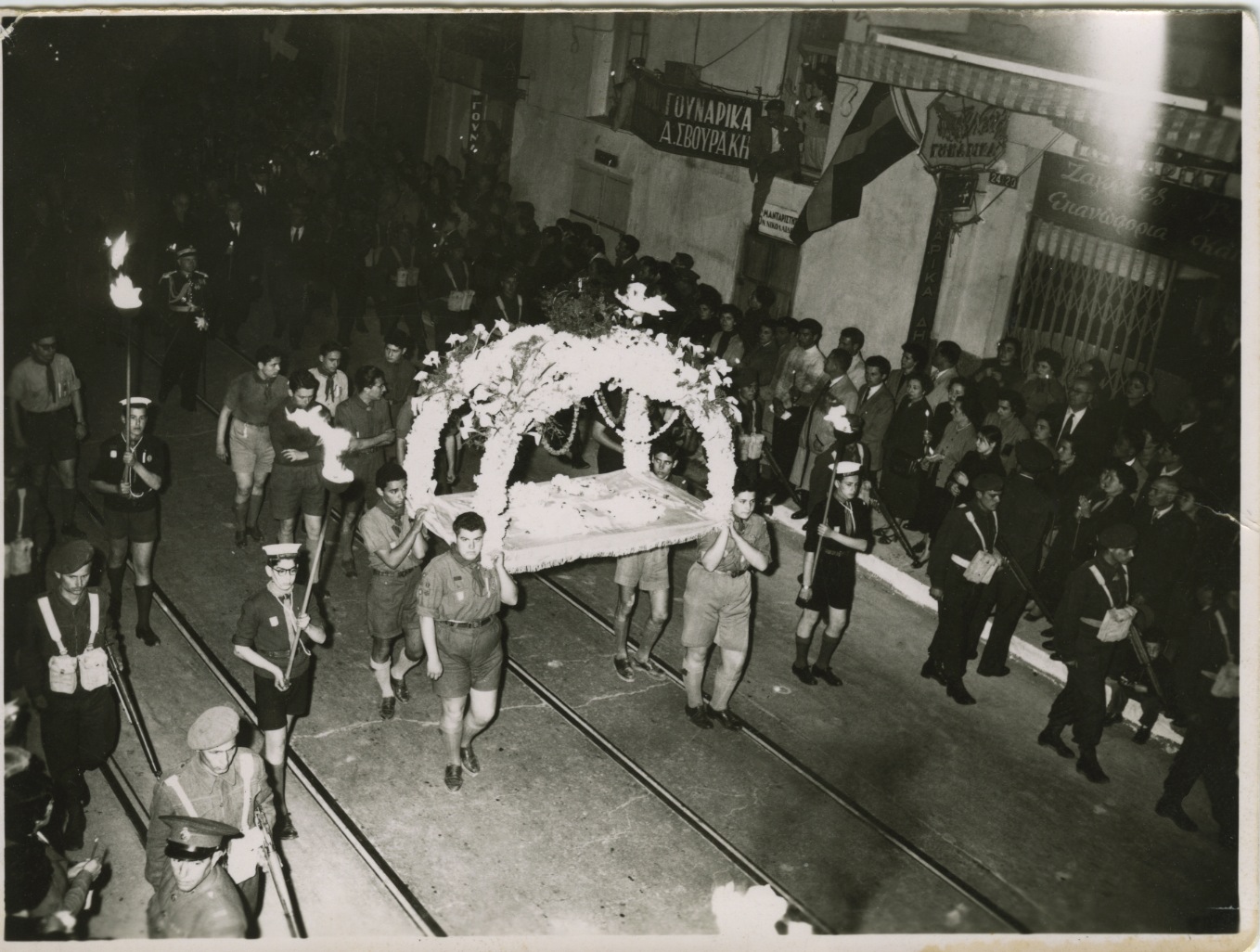
This snapshot is of a night time parade featuring four young men in uniform carrying some sort of flowered litter, flanked by four additional young men carrying torches, and further surrounded by men carrying weapons. The crowd on the street looks both Asian and Hispanic to me but the buildings have Russian writing on them. Very confusing. Could the boys in the middle (who look like Eagle Scouts to me) be carrying some sort of relic or ancient traditional treasure? What would be the occasion to warrant a flowered bier carried by four strapping young men at night? These types of situations are very rare in America so I’m afraid I can’t even speculate.

This photo is terribly faded but on enlargement you can see that it consists of a group of men milling around in front of a couple buildings. There is a wagon in front of the building to the right. On looking closely the men appear to be in uniform, leading me to wonder if they are a group of World War 1 soldiers. What do you think?

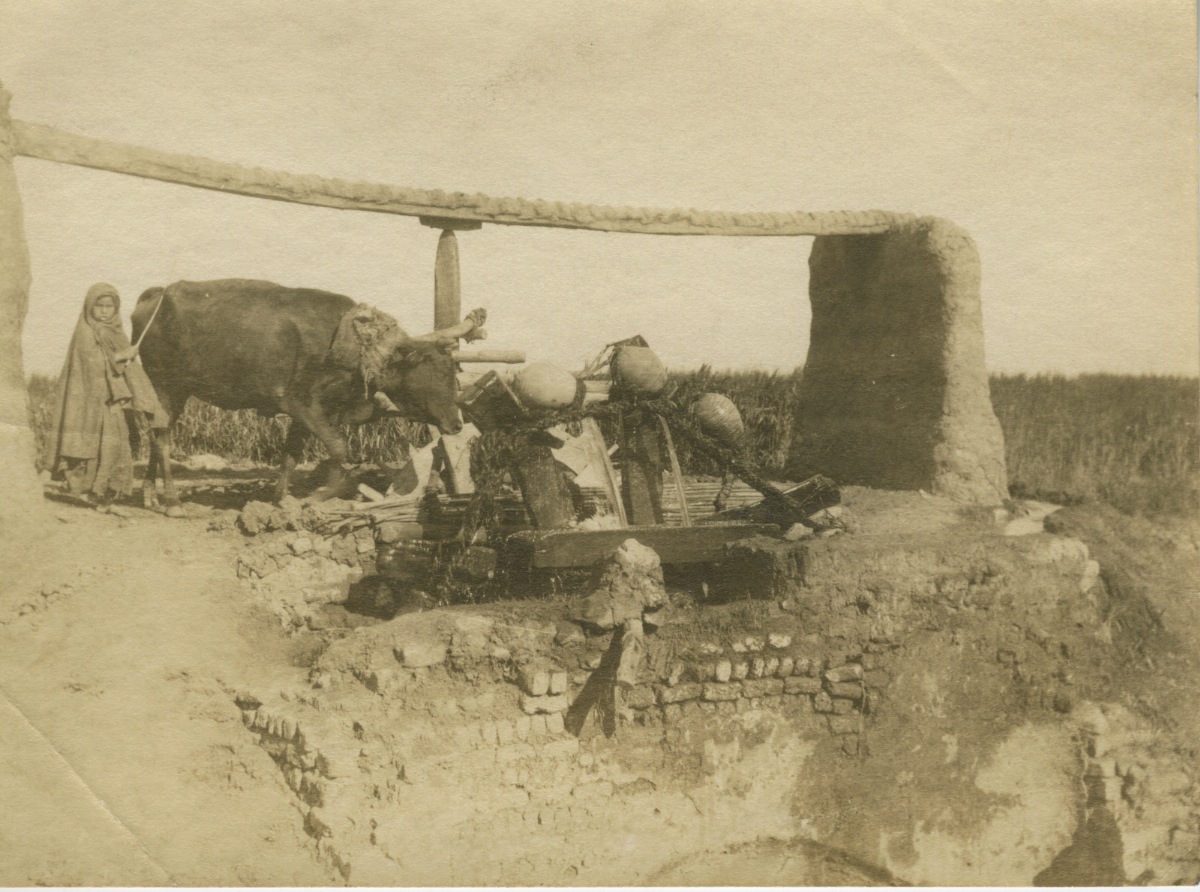
I have no idea where this photo was taken. It appears to be a girl and a cow at a well. When you enlarge the photo you can see water splashing from the jars, and the girl is wrapped in almost Bedouin like robes. She is holding a stick in her hand, I’m guessing used to drive the cow. It is an interesting photograph of some sort of rural situation. Makes you wonder.

UPDATE: Iggy found out what kind of well this is:

A noria (Arabic: ناعورة‎, nā‘ūra, from Syriac: ܢܥܘܪܐ, nā‘urā) is a machine for lifting water into a small aqueduct, either for the purpose of irrigation or, in at least one known instance, to feed seawater into a saltern. The most common examples consist of a vertical wheel which is slung with a chain of buckets. The buckets hang down into a well which may be up to 8 m (26 ft) deep. The most primitive norias of this type are driven by donkeys, mules, or oxen. The animal turns another wheel, which is engaged with the noria and so causes it to turn. This causes the buckets to circulate.

Click here for the wiki article. These types of wells date back hundreds of years. Wow!

In my other life (the one outside the photo/cooking/mother realm), I love to play dress up, and in particular I love the Victorian era. I have numerous 1860s dresses, Frontier outfits and 1890s dresses, but the one garment I have not tackled yet is the bustle dress. Partly because none of my friends have done it yet, but also partly because the bustle itself is rather daunting. Being as I like to make my own clothing, I would have to make a bustle, and even though I have made my own corset (experienced sewists only please!) I am intimidated by the wire frames and ties that make up this undergarment that was worn by millions of Western women at the height of the fashion in the 1880s.

A bustle is made of white cotton and can be a padded pillow-like item, or a wire framed petticoat that sticks out from the posterior. I read a little note that my grandmother jotted down at some point, allegedly from a conversation between her brother and sister. Her brother said “why would anyone want to pay twenty-five cents for a hump on her backside?” Regardless of the fact that my distant relative did not understand it, women did wear these fashions. They were considered extremely provocative as they created a little sway in the hips when viewed from behind. This coming from the prim Victorians is akin to sexting!

The question always comes to mind “how do you sit in a bustle dress?” Well, whether it was a padded pillow bustle or a wire frame bustle, there wasn’t a solid object behind the woman, and so she was able to plant her bottom on a chair or settee. However, also because there was a pillow or wire frame behind her, women tended to perch on the edges of their chairs rather than sink back into them. Our subject shown above appears to be leaning to one side of her body, transferring her weight over to her right leg. Perhaps it was a device of the photographer to make her look more natural, but having worn some of these voluminous Victorian style garments, I would say she is just trying to be comfortable.

I welcome comments from my historical clothing enthusiast friends…please tell us, how do you sit in a bustle dress?

Today’s photo is courtesy of Ray Jackson and was photographed by William Wollensak at 450 National Ave., Milwaukee. We know by the clothing that this photo was made in the 1880s. Mr. W. Wollensak was nominated for President of the Photographers Association of Wisconsin in 1898, having previously served on the Press Committee. Interestingly, there was a company that made photographic lenses named Wollensak Optical Company which sponsored the Wollensak Cup – a photographic trophy – in at least the 1910s, and the Photographers Association of Wisconsin was recorded as one of the conventions participating in the competition. Makes you wonder, doesn’t it?