Who Were They?

Lost and forgotten photos from the past

This photo is courtesy of site reader Ray Jackson who found it in a set of photos he bought from ebay. The back of the CdV indicated the subject is one Horace Jones, who at the time of the photograph looks to have been in his early twenties. We can tell this is an 1860s vintage CdV because of the square corners of the card and the thin border lines. The photographer was C. Young of Arcade, NY.

Ray was able to find an Horace Jones on the 1870 census as living in Arcade, Wyoming County, New York. This is quite a complicated search because there were actually TWO Horace Joneses living in Arcade at the time. Both had the middle initial W. Horace W. D. had a mother named Sophorona. Horace W. had a mother named Sophoronia. Unbelievable!

The town of Arcade was originally founded as the Town of China in 1807. For some reason they changed the name to Arcade in 1866, and the Arcade & Attica Rail Road runs through it. On the census, the town name change was reflected but makes it look like the families moved from one city to the other.

Horace W. D. was born to Milan (Milon, Melan) and Sophorona Jones in 1840. Milan was born in 1807 and Sophorona in 1815. Horace had a sister named Mary who was born in 1850. One can only imagine there were some lost siblings during that ten year span. The family also had a boarder named Orissa Crary or Casey who was a “tailoress,” what we today would call a seamstress. Milan was a carpenter.

In 1860 the family situation had not changed but Horace listed himself as a farmer.

Horace W. was born to Levi and Sophoronia Jones in 1840. Levi was born in 1814 and Sophoronia in 1820. Levi was a farmer and in 1850 they had Horace W. (10), Elisha W. (8), Farley Y. (6), Wm Henry (5), Luther S (3), and Elliott M. (1). I couldn’t find more about this Horace.

In 1880, one of these two men is married to Elizabeth, born about 1829. She has identified her occupation as “tailoress” which is an interesting coincidence. Maybe she knew or worked with the one Jones family boarder? At this point Horace lists his occupation as a painter. After that, the trail goes cold.

To further complicate the search, Horace Jones was quite a popular name in the 1840s and no fewer than 3 Horace W Joneses served in the military during the Civil War and enlisted from New York, but I am not able to determine if any of them are the two Horace W’s we are tracking here. It is a mystery that feels like it has a solution, but even that is a greater mystery.

UPDATE: Be sure to read the comments Intense Guy has added, there is some fascinating information including a connection to the Hatfields & McCoys.

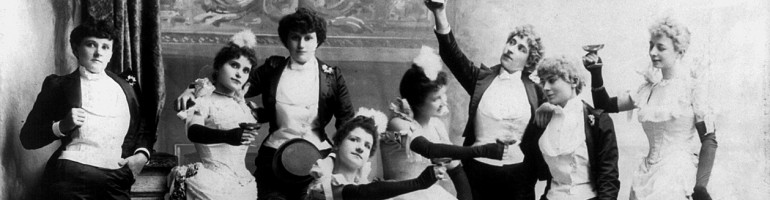
This week’s Sepia Saturday prompt is of a group of women marching for social justice in the Danish Parliament. That made me think of two tightly intertwined movements in the US – suffrage and temperance. The members of both groups felt they were working toward a better world for all, and in the latter part of the 19th century, the two movements tended to attract many of the same women. They wished to have many of the same rights as men, and felt that alcohol caused men to make bad decisions. If alcohol were controlled, the poor judgment of men would be diverted to good decisions and they would see that women were worthy of rights. It’s over simplified, but yes, these were the threads of propaganda at the time.

Why isn't anyone cheering?

Huh? That’s me and my friends doing a temperance march in a local history parade. We took 2nd place I think. So, back to the sepia images, ahem.

Pucker up, boys!

This is a fairly well known image that some claim is an actual temperance poster. Alas, it was made in the early 1900s, but the clothing is from the late 1800s, so it was probably made as a joke or advertisement by a bar or liquor distributor. Since the women are….rather plain looking, it wouldn’t be such a loss if a drunkard couldn’t kiss them, right?

For the love of the baby, let us vote!

Here we have a suffrage parade from 1912. Suffrage really meant more than the right to vote for women. In the beginning of the suffrage movement, women were considered the property of their husbands, had no legal rights, could not own property except under special circumstances, and couldn’t even retain custody of their children in the instance of a divorce. PLUS if the husband died, his parents had more rights over any children than the mother did! Women were not happy about it. I wouldn’t be either.

In California in the early 1900s, several suffrage and temperance bills were put before the populace for a vote. It is widely speculated that the liquor lobby was responsible for both types of bills being defeated. Interestingly, also in California, the Black Rights (rights of Negroes) workers often supported suffrage and temperance, and vice versa, because they all felt they were being oppressed. Some of the early articles about suffrage in California were published in a black-owned newspaper in San Francisco.

Well known women involved in both movements were Susan B. Anthony, Carrie Nation and Amelia Bloomer. While Anthony and Bloomer primarily worked on suffrage, Nation was known for going into bars and saloons with a hatchet and destroying the bar and its inventory. I bet she was happy in 1919 when the 18th Amendment to the Constitution passed! Oh, no she wasn’t, because she died in 1911, never having realized her dream of a complete ban on alcohol in the US.

While both Prohibition and Suffrage were passed in the US in the early 20th century, I for one am thankful Prohibition was repealed in 1933. Suffrage was the 19th Amendment to the Constitution and passed in 1920. Thankfully there hasn’t been word of a repeal.

Cheers, y'all!


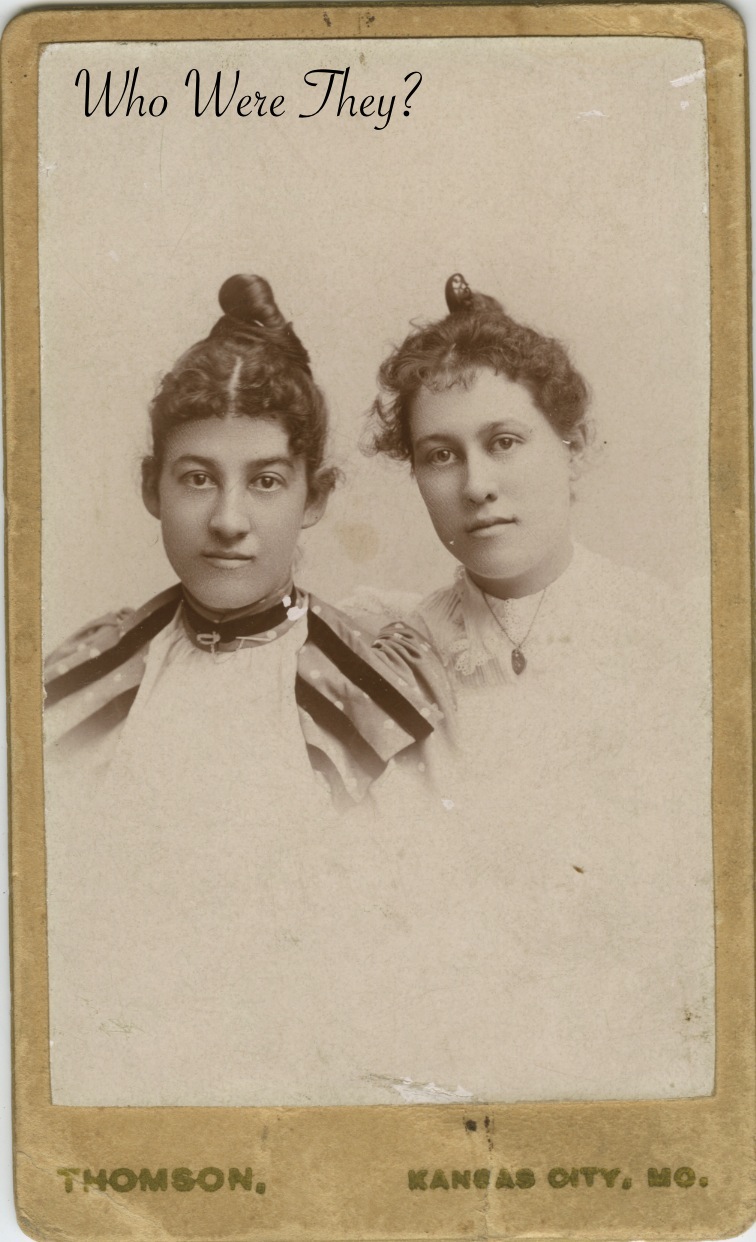
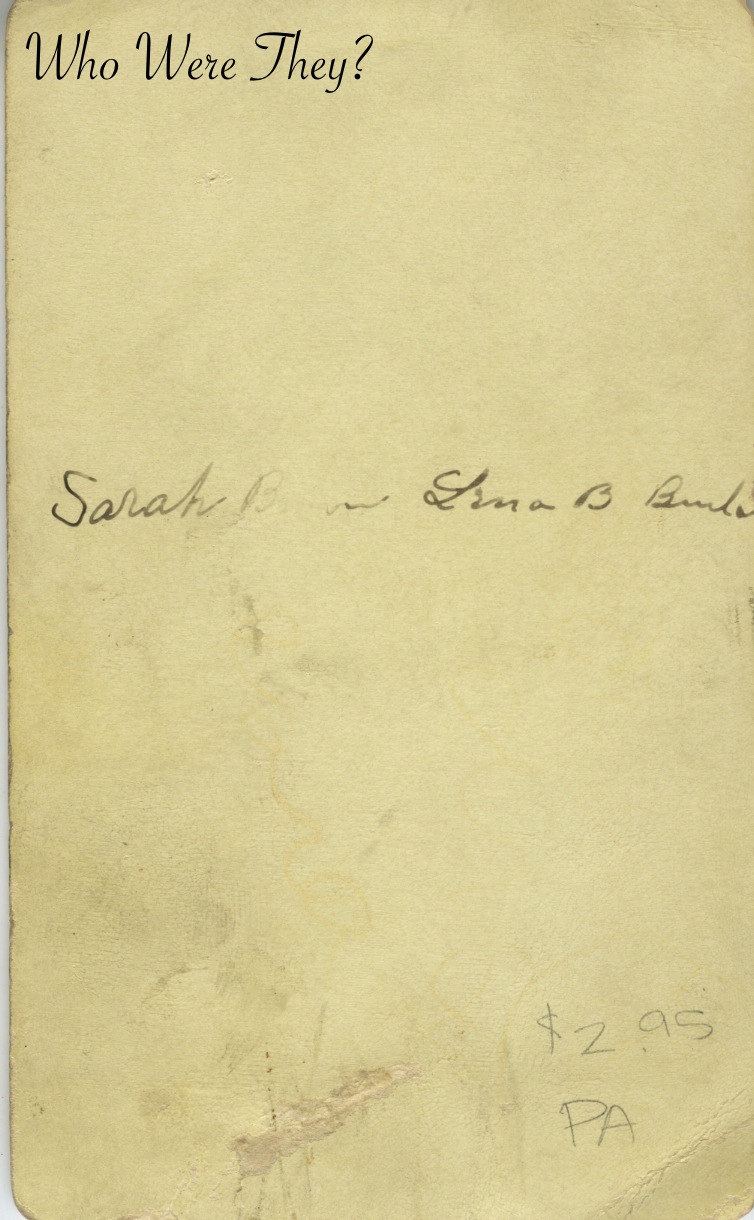
The above CdV came from the Downhome Antiques shop in Orange, CA. I find this hairstyle to be strange and interesting, but it was pretty common because I have seen it in a number of photographs. Often the top of the hair is adorned with some type of fancy decoration, or a fancy hair fork was used to create the twist in the first place. Although Sarah and Lana are identified on the back of the photo, unfortunately time and poor penmanship is preventing me from making out what their last names were. I don’t think they were sisters, so perhaps best friends or cousins.

The photographer here was Thomson in Kansas City, MO, most likely David P. Thomson. He was an incredibly respected photographer in Kansas City between 1874 – 1882, and through that time partnered with William I. Williams and J. C. Merine – a famous oil portrait artist. Merine was Williams’ uncle, and the three partnered in a variety of ways over the years. Merine was known for having painted the statesman Henry Clay. The various businesses must have been quite successful, as they had a number of clerks, porters, printers and photographers working for them over the years.

My summary about Mr. Thomson was pulled from a very interesting paper published in 2004 by David Boutros that looked at photographers in Kansas City, MO between 1850-1882. Please click through if you would like to read the information. It is quite revealing about the population growth and popularity of photography in Kansas City during those years.


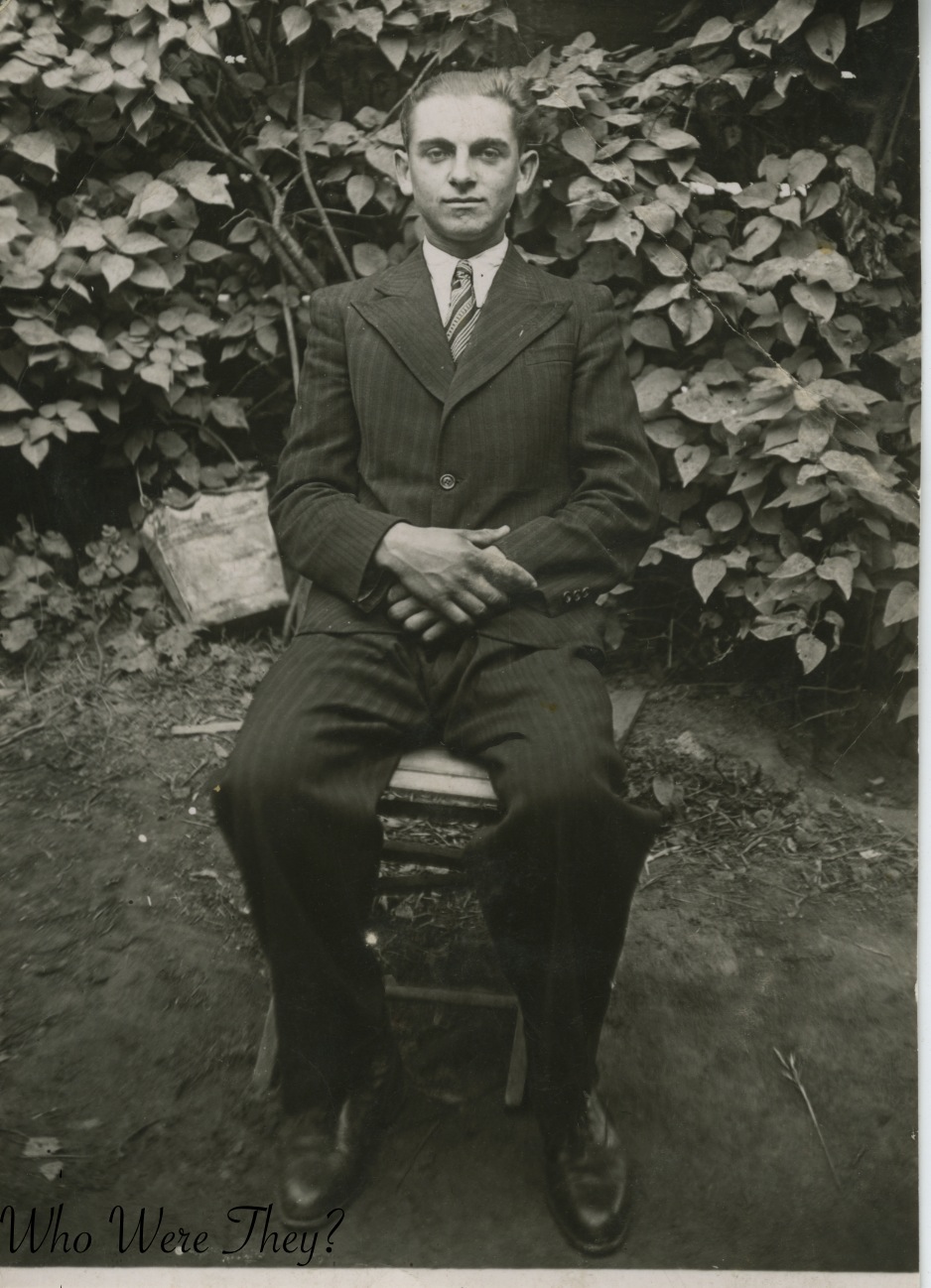
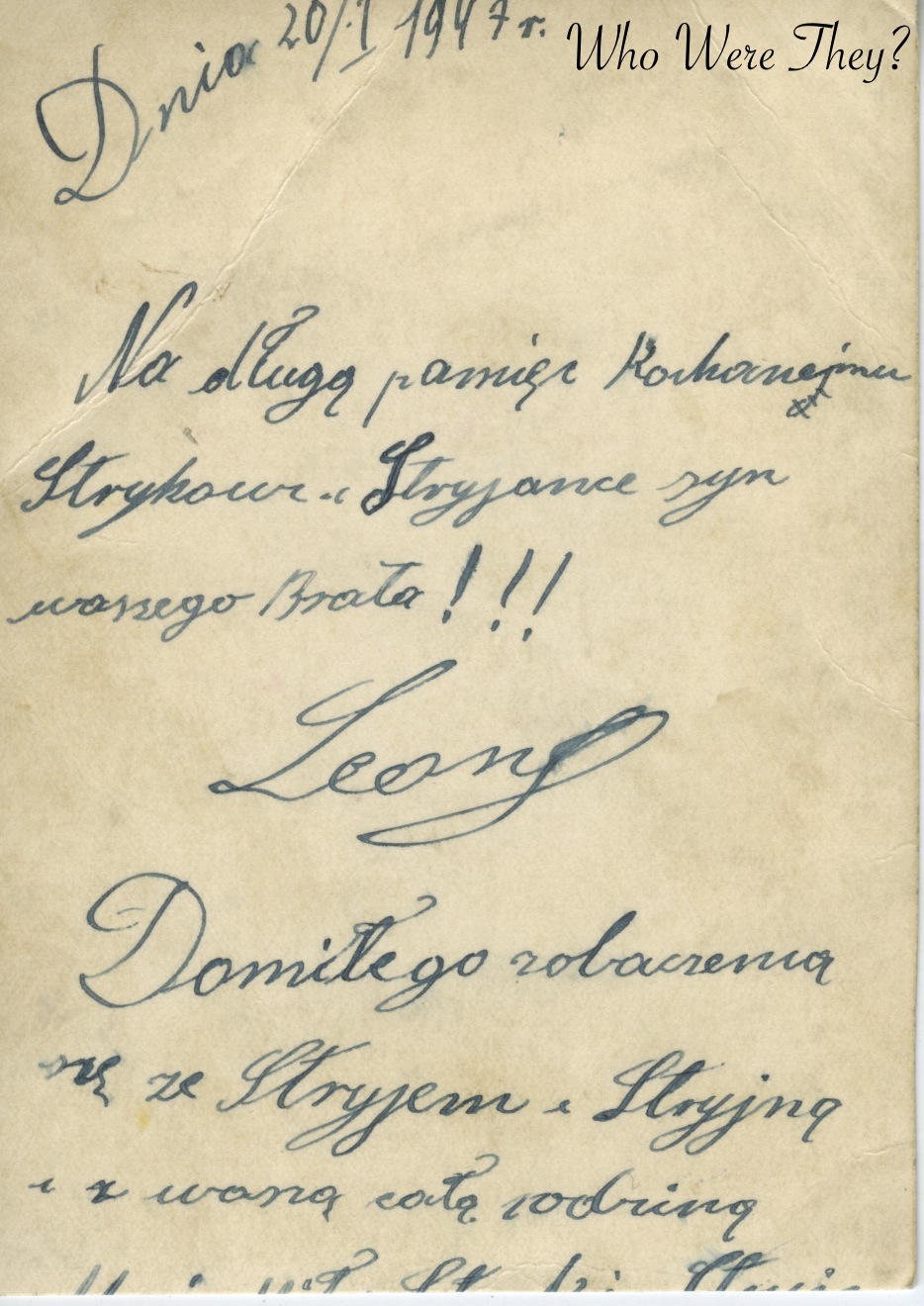
For this week’s Sepia Saturday post I had to look through my photos hoping for something that would dovetail from the prompt. The prompt is a picture of a magazine cover from 1937, featuring a lovely lady riding a polo pony of sorts. Well, I know I don’t have any photos of people on horses, and I have very few 20th century photographs (other than my own family), so this was a real challenge. I finally settled on this young man, posed on a chair in the backyard or side garden, with the date of 1947. Hm. On the back is a note written in a language I don’t recognize. I am guessing at something from Europe, but that’s the best guess I can make. Seriously, if it’s not Spanish or French it could as easily be Martian for me. If you recognize the language, please comment! I’d love to try to run this through a translator to find out what the note says.

Please click through to Sepia Saturday to experience other interesting posts inspired by a woman on a polo pony. The potential is really unlimited!

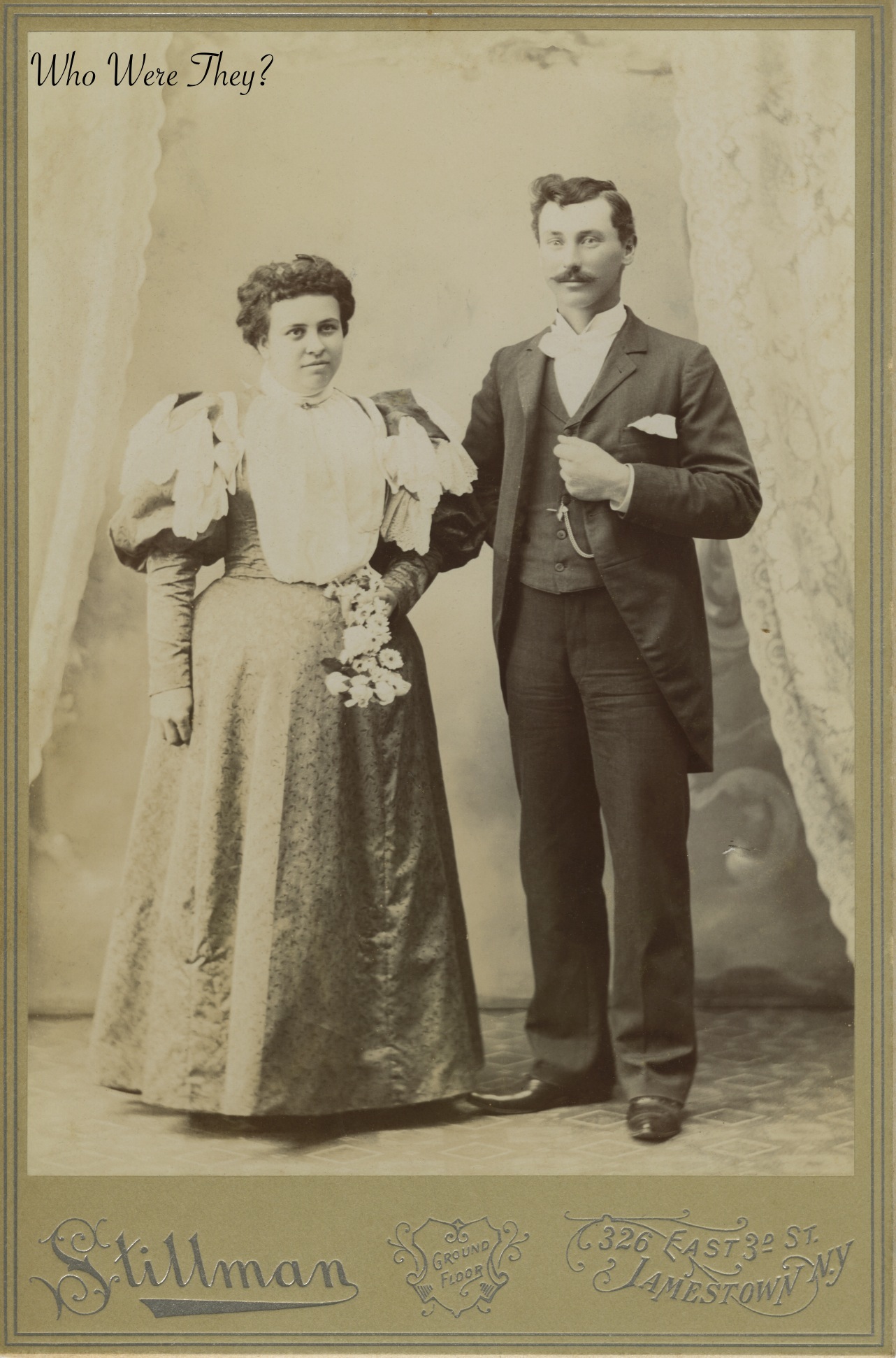
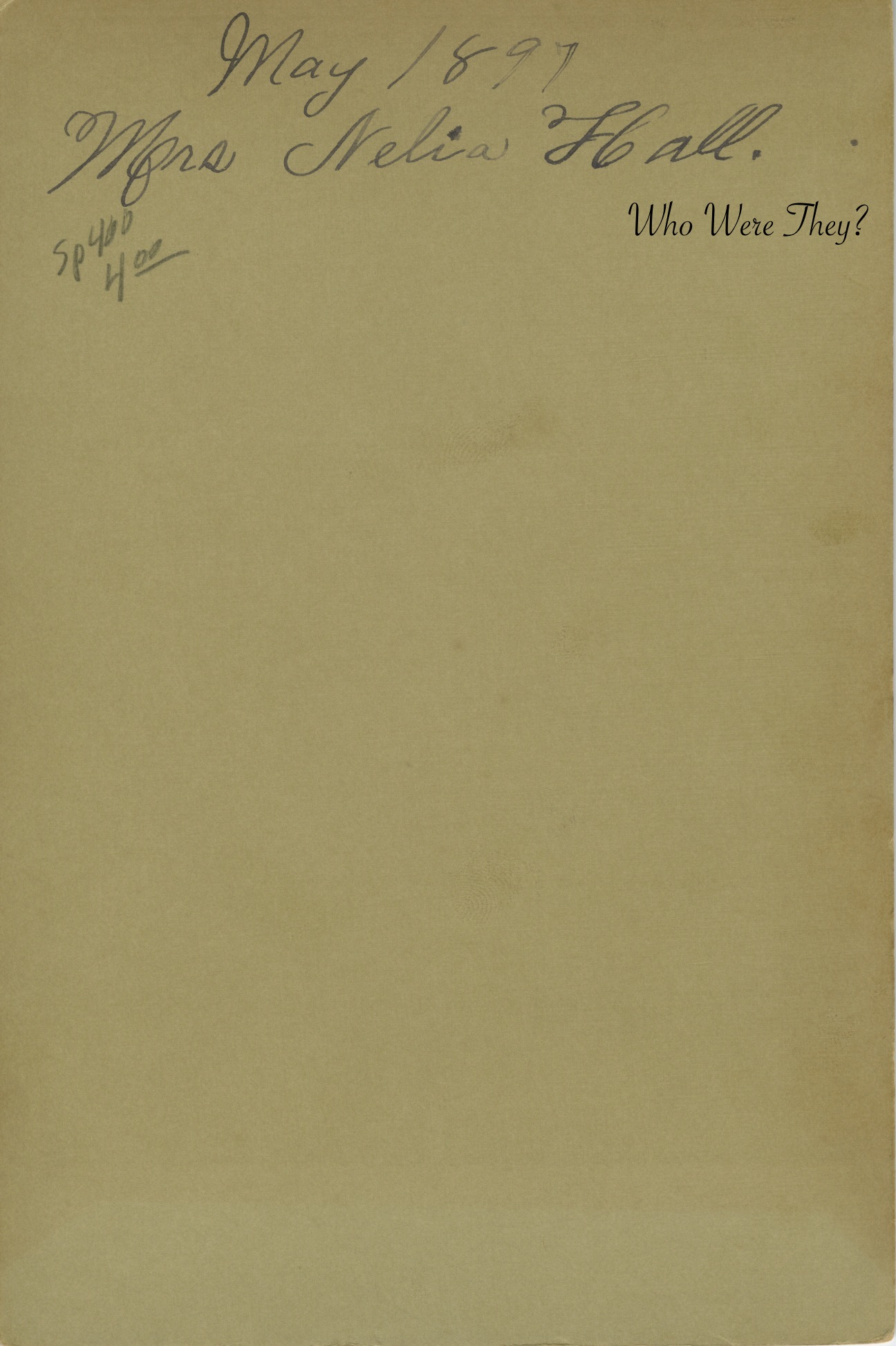
Here for your perusal is the wedding photo of Mrs. Nelia Hall and presumably Mr. Hall. I find it interesting that Mr. Hall was left unnamed for the ages to forget. Unfortunately without his name, it becomes terribly difficult to figure out just who she is. You wouldn’t think that “Nelia” was a popular name, because it’s relatively unknown today, but it was in fact, rather popular at the turn of the century, and that doesn’t account for the interpretations of the census taker’s poor handwriting or spelling errors.

Nelia was a short and plump little woman, who the fashion craze for exaggerated sleeves did not flatter. While her dress is lovely and surely well made by an expert seamstress, it serves to make her whole body look stuffed. Mr. Hall has a “distracted intellectual” look about him, what with his hair flipped up, and the way he was made to hold the lapel of his coat. It is also an illusion of the photograph that makes it look as though Mr. Hall is holding the bouquet in front of his lovely bride, when in fact he has his hand tucked behind his own back.

The photographer was Stillman, at 326 E. 3rd Street, Jamestown, NY.