Who Were They?

Lost and forgotten photos from the past

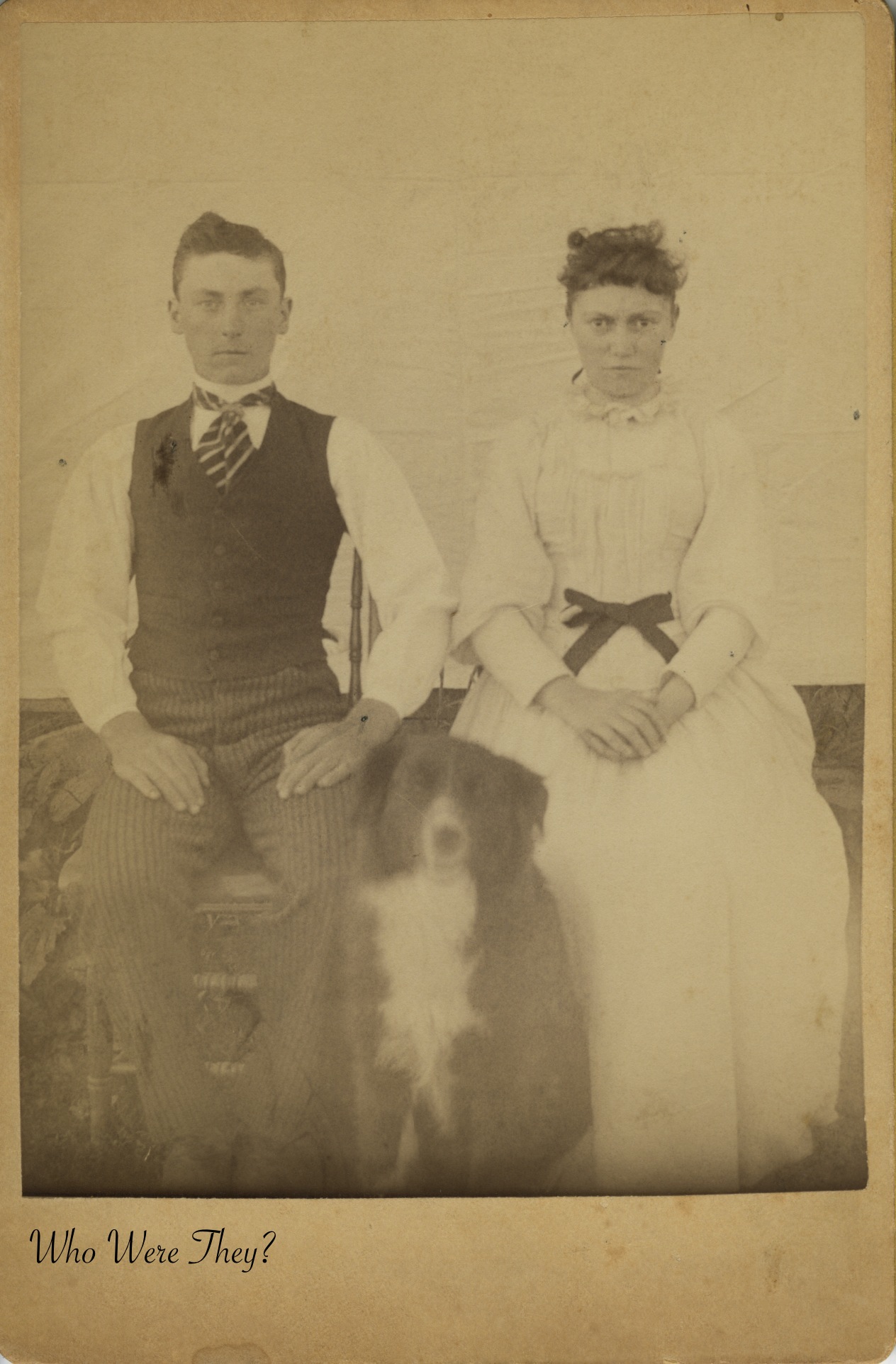
This is a cabinet card that has a distinctly 1850s feel to it, even though it was made post 1870s. The couple is posed in a very sterile manner, side by side on chairs. The backdrop is very plain to non-existent. Of interest is the dog they have between them. Although the dog moved, as is common with animals, it is still interesting that they decided to have their dog photographed with them in the first place. S/he must have been very important to them!

UPDATE: I realized I forgot to add the photographer information! This photo was made by W. A. Gourley, who was a Landscape & Portrait photographer from Freehold, PA. It’s tricky when a photographer hasn’t listed their first name, especially when their initials are “WA” and there is a Washington county in Pennsylvania. Sigh…

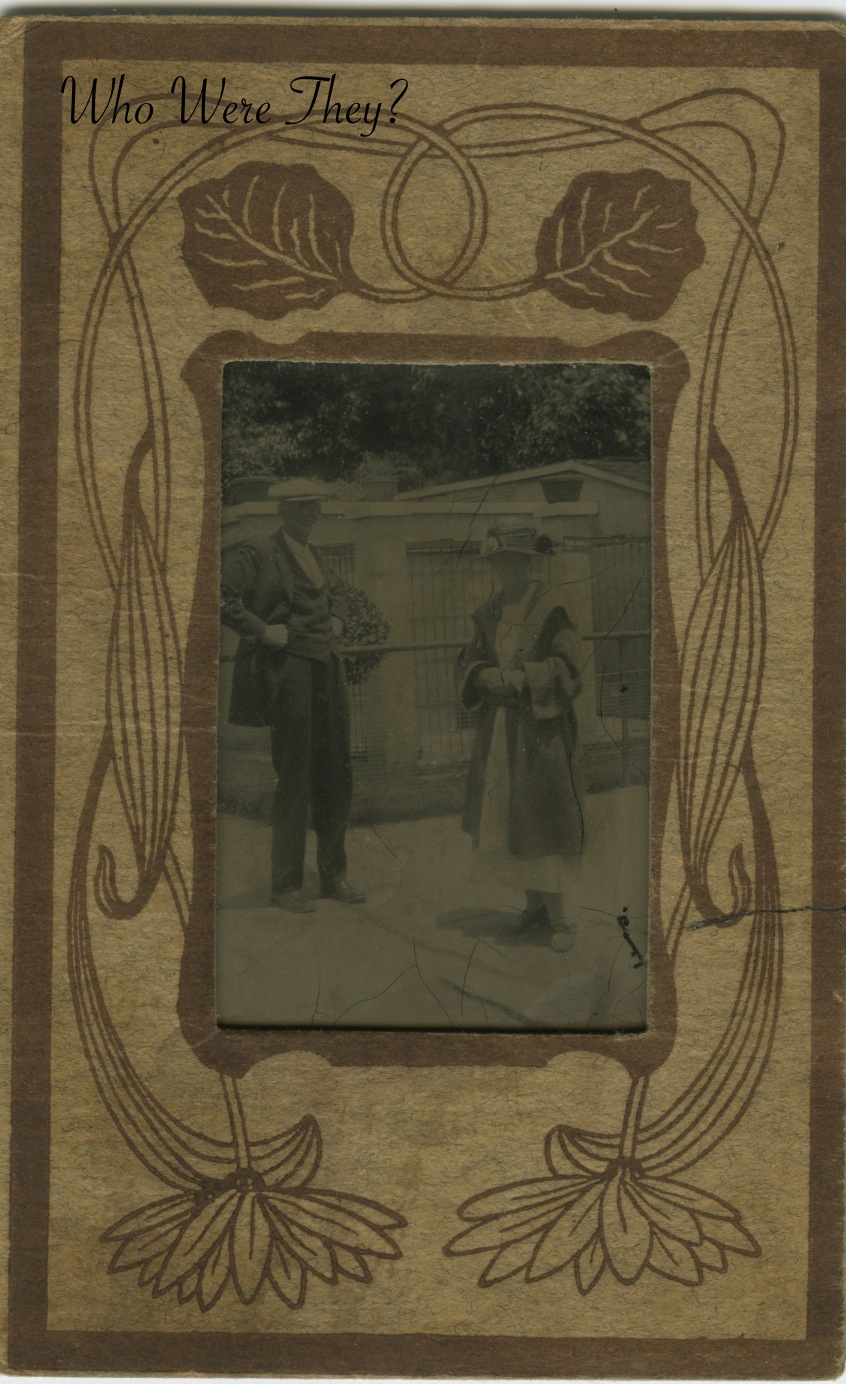
I don’t know quite how to describe this photo. The entire thing is about the size of a CdV, which is 2.5″ by 3.5″ generally. The paper folder has a small flap of thin paper on the back where the photo was inserted and then the flap was glued shut. The photo itself is made of a sort of plastic material, not a printed photograph as we know them today. The plastic is thin and actually reminds me of a slide, the type that were popular in the 1960s. I believe I had a previous photo like this one that had been folded in half, and the film of the photo was curling and flaking away, suggesting that the photo was printed in the standard process, but onto this piece of plastic.

Upon enlargement of the photo, you can tell this is a man and a woman in early 20th century clothing, although I cannot date it better than “sometime between 1910 and 1940.” The man is wearing a nice suit and a hat, while the woman is wearing a dress that is mid-calf in length plus a coat and hat. At first I thought the background might have been a cemetery, but upon closer scrutiny I think it might be the front yard of a home.

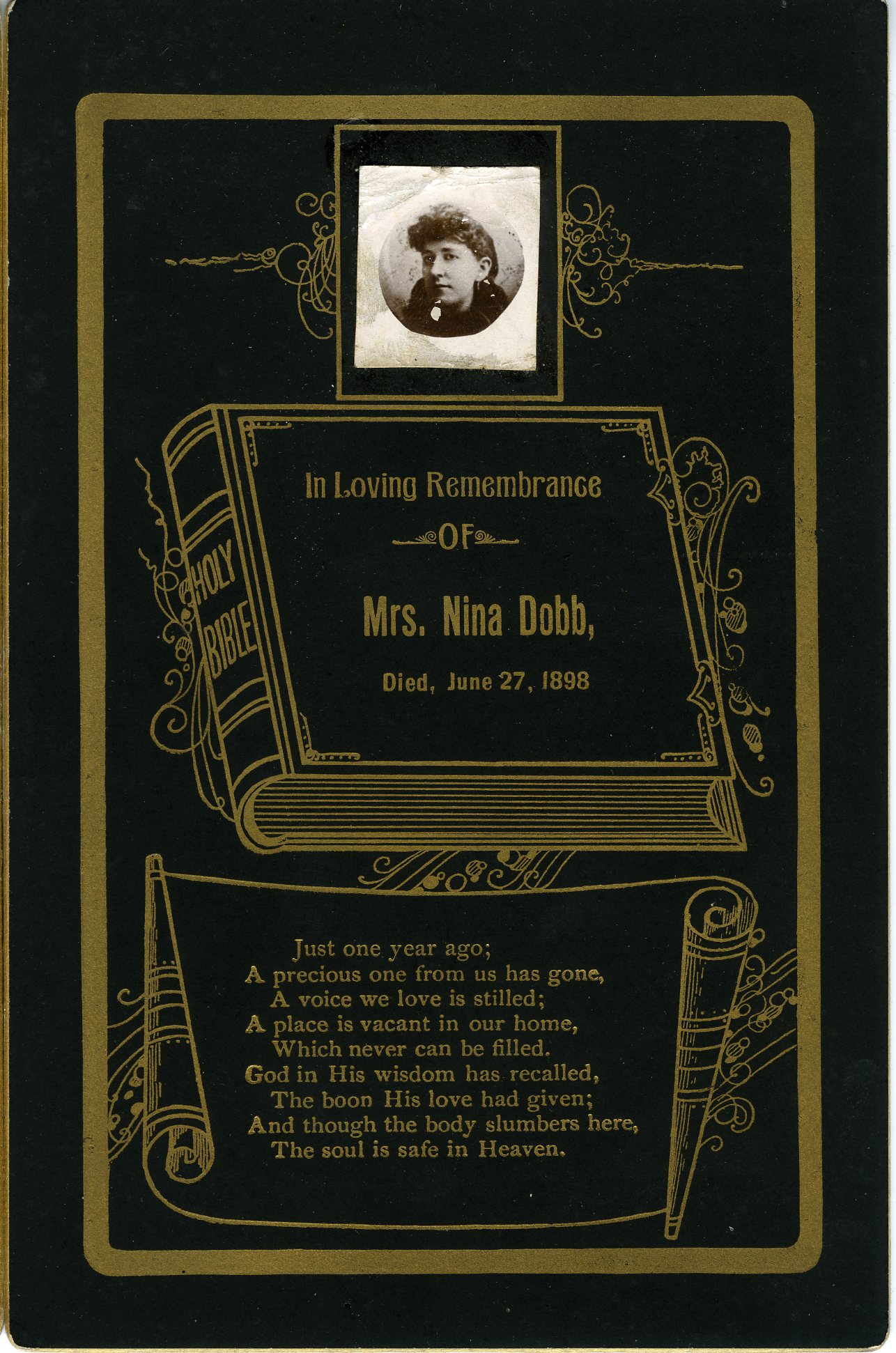
Funeral Card of Mrs Nina Dobb

For a Sepia Saturday prompt, Alan gave us a photo of a man sleeping in a chair. Of course, that took my mind to the eternal slumber of death. Yes, morbid, but having had such a rousing discussion about the possible memento mori photo last week (survey said ‘no’ btw), I suppose it was on my mind. I wanted to stay with this theme, as I am positive I have no photos of people in actual slumber, and death was such a fascination to our Victorian ancestors after all.

This cabinet card is one I have posted before, when I introduced the Dobb Long Book earlier this year. I have a couple other memorial or death cards, but neither of them have the added benefit of the photograph. Based on the text on this particular card, we can surmise that Mrs. Nina Dobb died on June 27, 1898 and that this card was made a year later in 1899. Cabinet cards were still in use at that time, which is the cusp of the new century and new photographic processes and styles. Some time in the early 20th century, cabinet cards gave way to smaller cards, embossed cards, and the “sandwich” cards that look like the fancy mattes you find in modern framers galleries.

In some ways, this is also a memento mori, in that it is a memento of the death of a loved one. Thankfully it is not a photo of the loved one in death, which are most commonly associated with the term memento mori. In my research I learned that memento mori translates as “remember you must die,” and the objects associated with mourning have taken on the appellation as a category. These objects can range from hair jewelry to photographs and photographic jewelry. The Victorian relationship with death was much different than our modern one, because death was simply another part of life. They did not have the medical technology or understanding we have today, nor did they have the vaccines and antibiotics that help us prolong life. A death from the flu was not surprising and the Victorians in general took it as something out of their control of life. The greater reliance on faith and religion also may have helped them through the numerous instances of death that must have touched their lives.

Even today we have memento mori, except they are called memorial keepsakes, and often come in the form of a charm or pendant with the deceased’s name, and frequently are found as bumper stickers or tee shirts stating “in loving memory of…” and including the photo of the departed and their dates of birth and death. Tell us, are the tee shirts and stickers an American phenomenon or do they pop up in other countries?

Please click through to Sepia Saturday to see how others were inspired by the prompt of a sleeping man. You never really know what you’re going to get after all!
Here we have a nice family portrait with a wiggly baby sitting on Mother’s lap and Father standing. This CdV is from the 1860s, though I am having some difficulty giving this a more firm year. First the card itself. The corners are square, indicating pre-1870. There wasn’t a photographer’s mark on the back, indicating either not much business or this could be early in the CdV period. The backdrop is simple, just a curtain and a chair provided, suggesting the mid 1860s.

Next, the clothing. The baby’s dress is very typical for children of the era and into the 1880s, so that is no help. The Mother’s clothing and hair are definitely 1860s. I venture to guess by the shoulder seams of her dress that this might be later in the decade because they are not as far dropped off the shoulder as some earlier era dresses were. Her hairstyle is also typical 1860s. Father’s clothing consists of a frock coat, brocaded vest, starched shirt and wide neck tie atop black slacks and shoes. He seems rather typical of a city dweller in the 1860s to me. His beard is the “Lincoln style” of whiskers only.

I would love to have seen them dressed in person. I imagine the colors of the clothing were lovely, particularly the woman’s dress, which I see in indigo and the man’s vest, which I see in black and indigo brocade.

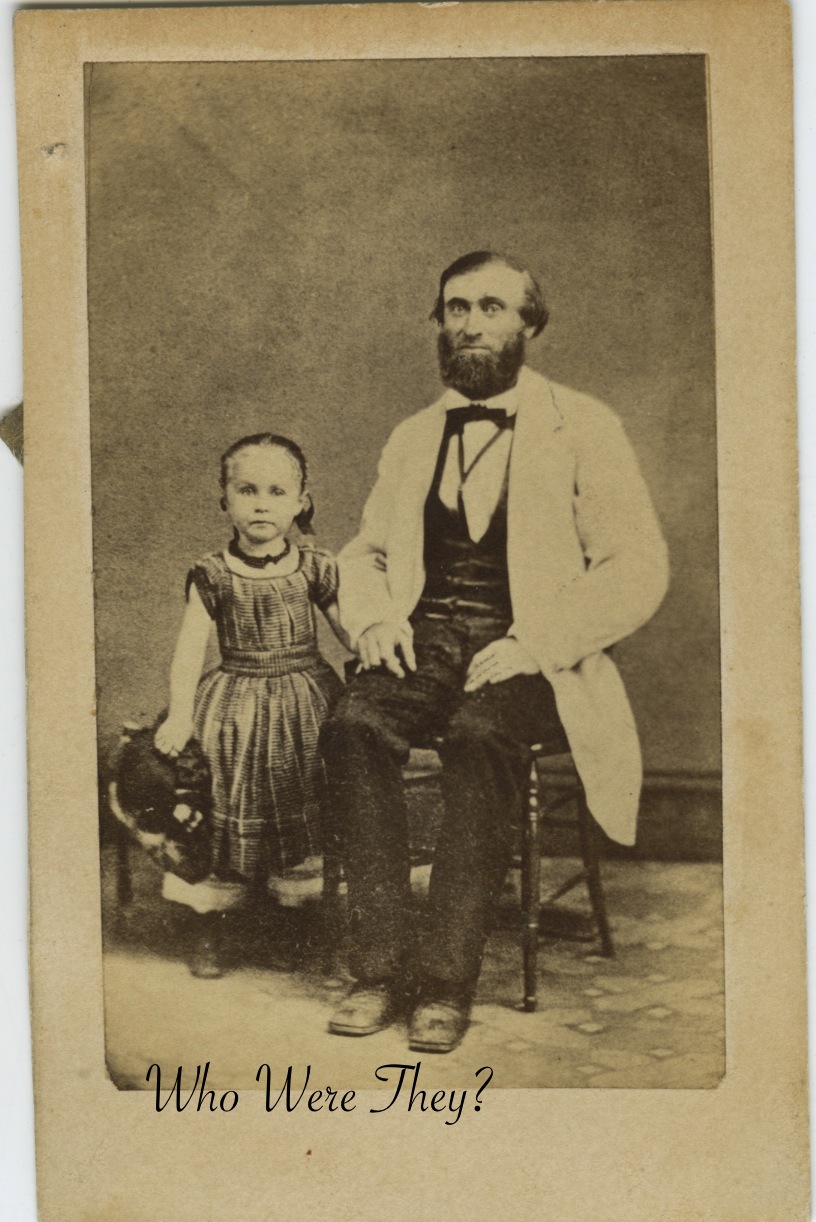
Here we have another early 1860s vintage CdV. The distinguishing characteristics are the simple card with no photographer’s information, the absence of borders around the photograph, and the simple furnishings. After the Daguerreian era but before the flush of CdV popularity, the furnishings offered by a photographer were quite simple, often consisting of a chair and nothing more. Around 1865 or thereabouts we begin to see more props, such as a table or pillar in the background, as the process of photography became more artistic.

Our subjects are a young girl and probably her father. The girl is holding a hat. Her dress is a lovely example of youth dress in the 1860s. She has a short sleeved dress, the bodice of which is gathered onto a waistband, and then a gathered skirt with one or two growth pleats. Her drawers show below her hem and then you can see her tiny boots. Her hair is dressed very simply, as befitted a little girl of less than 6 years old. She also has on a necklace, which might be a family piece or have some sentimental value to her. The fabric of her dress appears to be checked, which is an excellent method to disguise the dirt and spills that young children so often attract. Her father has a full set of whiskers, giving him a manly appearance. His clothing is simple but refined, a frock coat in a light color (signifying it was probably summer when the photo was made), a dark vest over a white shirt, black bow tie and black slacks topping walking boots. An article I recently read about dressing the Victorian man explicitly described that a man’s dress should suit the situation and never be flashy nor shabby. Ah the pressures of the Victorian man’s life!