Who Were They?

Lost and forgotten photos from the past

This 1860s vintage CdV has some distinguishing characteristics of early CdV portraiture. The image itself is small and masked in an oval shape in the center of the print. Second, there is no photographer information, the card is hand cut and flimsy, and the corners are square. These all point to the early 1860s. More captivating however is the actual subject of the photograph. This child has an expression that I termed slack mouthed, but at times I wonder if this is a memento mori because it is such an odd expression. The child is seated on a chair, and a parent or brace is hiding behind the drape directly behind the child. The style of dress suggests that this was a girl child. Early memento mori photographs attempted to put the subject into the most natural positions as possible, so that the loved ones could remember their dear departed as they were in life. Particularly in the early days of photography, this might be the only time a person was photographed, and with the staggeringly high childhood mortality rates of the time, there’s no wonder why families had these photos made. While we might consider even taking photos in a graveyard to be uncomfortable, our ancestors had a much different relationship with death, and so were not as reluctant to have these types of photos made.

What do you think? Was the child a simpleton or is this a memento mori?

This is a proud Sepia Saturday submission. Please click through and check out happier photos from around the world!

UPDATE: The consensus is that this is NOT a memento mori photograph, but instead an uncooperative subject. Thanks all!

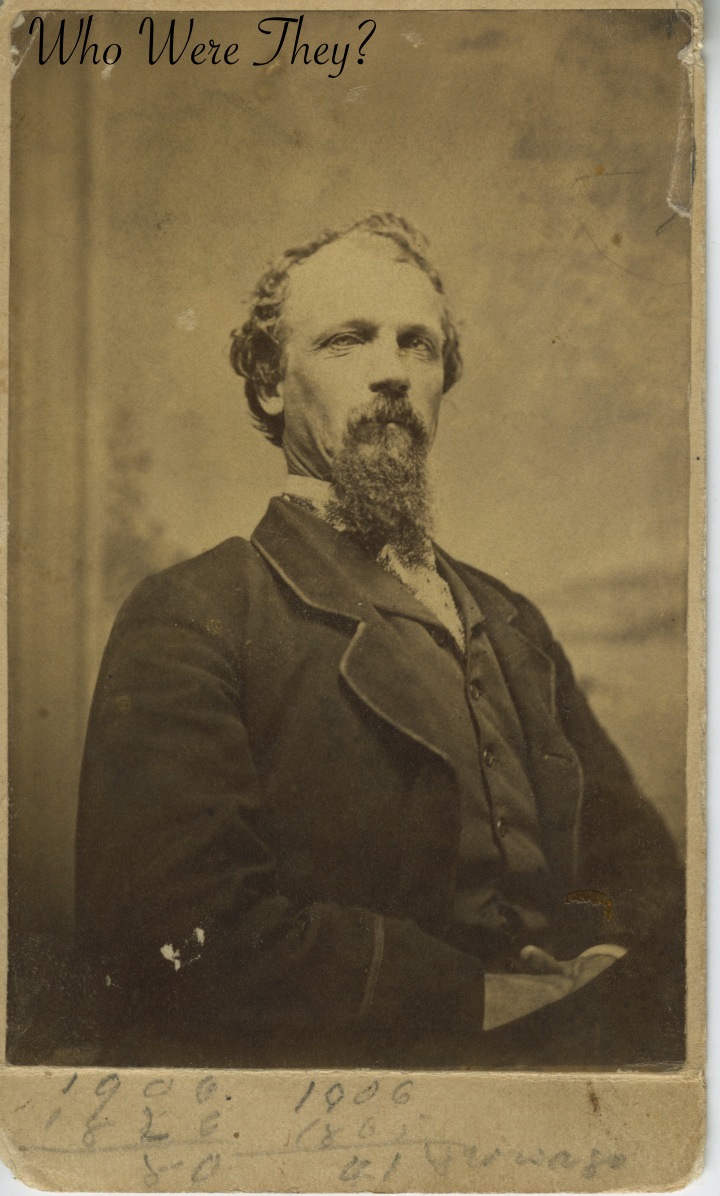
  

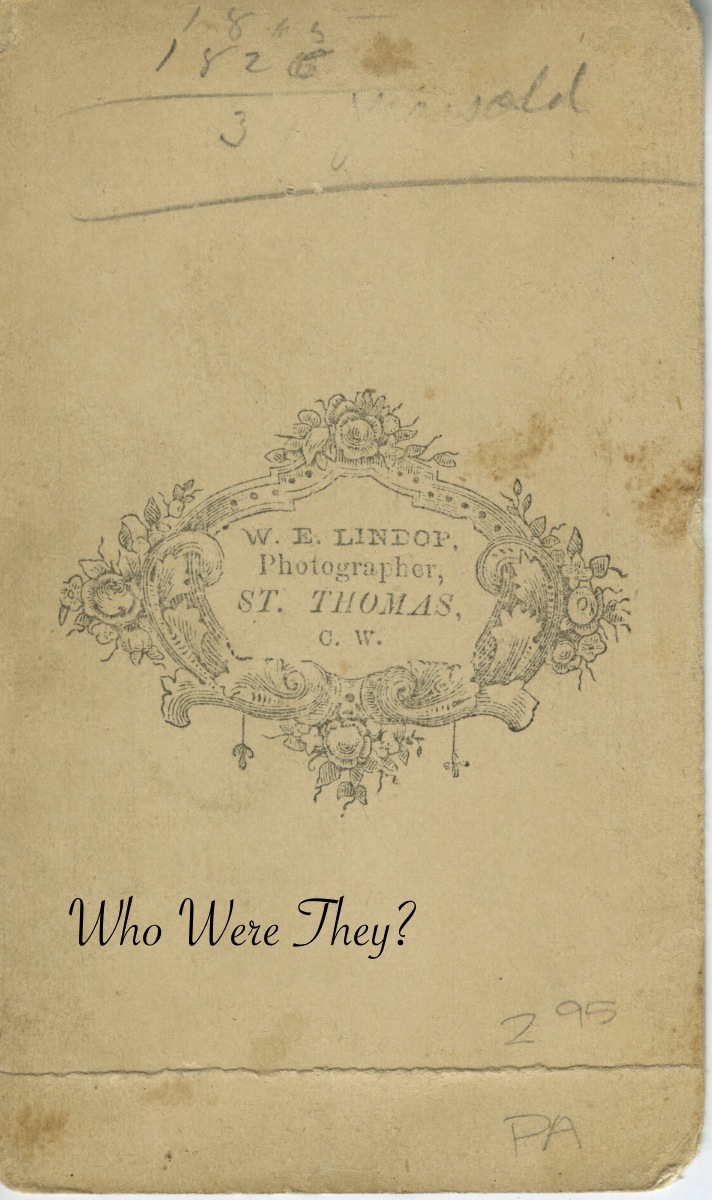
On a recent cruise through the Down Home Antiques shop in Orange, CA, I came across some wonderful Civil War era CdVs. Because of their worn condition, some of them were pretty inexpensive (for California) so I happily took them home. First is a man I think of as a distinguished ancestor of…someone. He looks a lot like a retired Colonel, doesn’t he? There are three sets of arithmetic here that tell a tiny piece of this story. Whoever this is sat for his portrait in 1865. In 1906, someone figured out he was 80 years old. The portrait had been taken 41 years prior, when the subject was 39 years old. He had been born in 1826. The corners of this CdV are worn off, not made rounded. The photographer was W. E. Lindop, in or on St. Thomas, C. W. I have no clue where that may actually be located.  C. W. is not an abbreviation I am familiar with, so is it possibly a foreign card?

UPDATE: Iggy found out that St. Thomas is in Ontario, Canada. C. W. stands for Canada West. Thank you!!

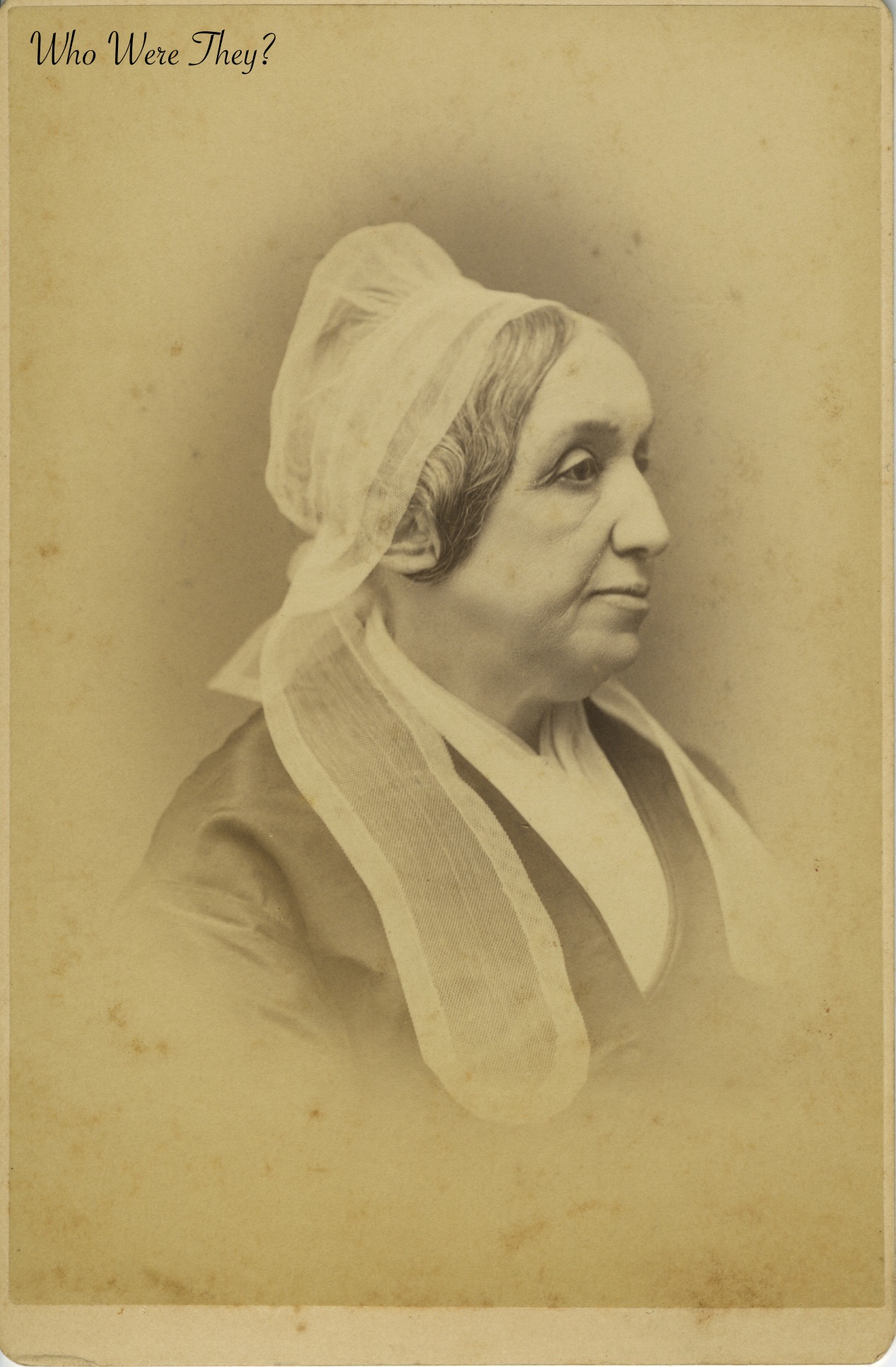
For my final photograph from the Mearns Family Album, I have saved one of my favorites for the last. This photo was made probably in the 1870s, based on the lack of ornamentation on the cabinet card. I have often said that the older set hold onto their favorite fashions and this is a good example of that habit. This lady is wearing some fashions of the 1860s for her 1870s vintage portrait.

First, the daycap. The tradition of having ones hair dressed and covered reaches back through the centuries, and probably arose from a combination of tradition and necessity. During the Renaissance, Europe was going through a mini ice age and it was quite cold, so wearing a covering on the head helped keep people warm. There was also a modesty factor that compelled women to keep their hair confined in public but allowed their closest relatives to see it unbound. Now remember those traditions and fast-forward 300 or so years.

During the 1860s, these lightweight caps were worn indoors as a way of keeping the hair neat. The hair was dressed by drawing it back into a chignon of some kind. A chignon is really just an arrangement of hair in some sort of twisted arrangement, not limited to the sleek look that dominates today. Here you can see that her hair was parted in the center and the sides were turned under her ears, as was the style. A daycap was made from lightweight fabrics, such as linen, batiste, or lawn. This particular one appears to be starched, almost like the cap Amish women still wear today. I don’t know the significance of the drapery falling over her shoulders, but I know that many daycaps had them. If a woman were to leave the house for visiting, she would remove the daycap and wear a hair net and her bonnet. The hair net was not the snood many women wear at Civil War reenactments, but more like the fine threaded hair nets your local lunchlady wears. Yup! of course, some hair nets were made from silk threads adorned with beads and were rather lovely, but the hair net of which I speak was intended to blend into the hair color and not be seen. It was another means of keeping the hair tidy.

And of course for bed, everyone wore a nightcap.

From what I can see from the dress, it also has some remnants of 1860s fashions. The shoulder seam is dropped a good 2-3 inches down the arm, which was the dominant style of the era. The bodice opening is a wrap front, meaning that the front opening wrapped one side over the other and closed with hidden buttons or hooks. There is a fichu in the opening, which was probably part of the dress and provided a fashionable modesty piece. I have seen extant dresses with this same bodice opening, but the one that comes to mind is a sheer dress, which was worn in the heat of summer. The subject of our photo appears to be wearing a dark colored silk dress.

Although this is not to the theme of Sepia Saturday this week, I encourage you to click through and take in the variety of photos a simple prompt can bring in from around the world.

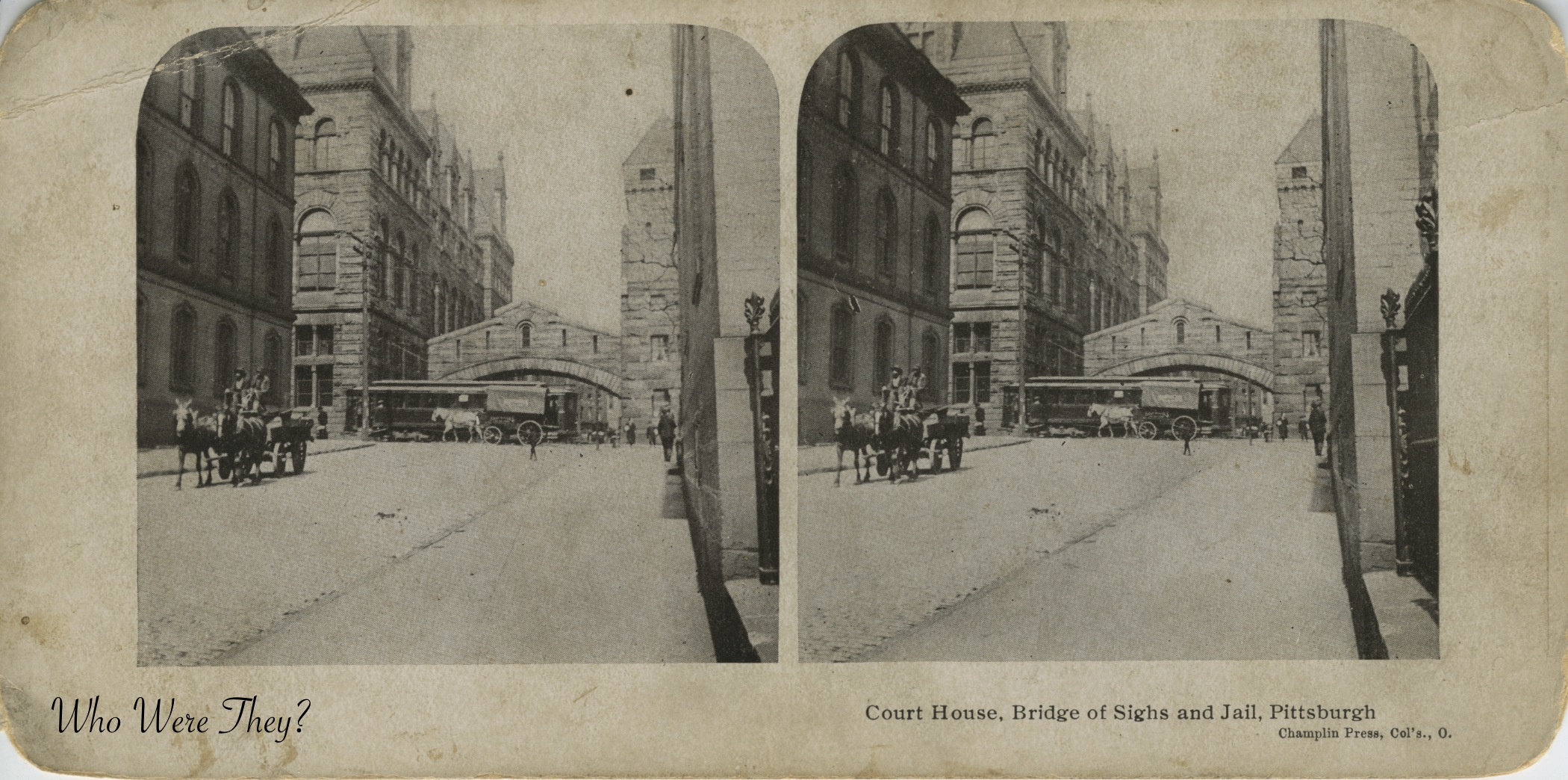
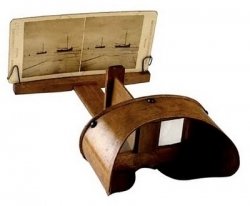
Well, here we are again with Sepia Saturday and the prompt has quite a lot of latitude. Since our sponsor Alan will be on holiday in Spain this weekend, I chose this photo since I will also be on holiday…in Pittsburgh. Not quite as glamorous as Spain, but I’ll be meeting with friends and that’s what is important. This is a stereopticon card showing the Court House, Bridge of Sighs and Jail in Pittsburgh, PA. The stereopticon was an early 3D photography technique that required a special viewer like this one.

The two images are taken from slightly different angles and the convergence of the two images in the line of sight tricks the human brain into thinking it is seeing one image with depth. The modern day Viewmaster was a refinement of the technology, using smaller slides and putting them into a circular sleeve that would advance with each click of the lever.

The stereopticon was invented in the 1830s and became popular both at home and in arcades as entertainment and education. Queen Victoria helped popularize the device in the 1850s, and in the US in the 1860s the Holmes stereopticon was invented and became the gold standard of 3D viewing. They are still produced apparently, in limited numbers.

Stereopticon images allowed the viewer to “see the world” while sitting in their living room. The most popular slides were travel and geography slides, showing the viewer all the sights – such as above. A trip to your local antique shop will probably bring you in contact with an enormous box full of old stereopticon slides of images all ’round the world.

The Allegheny County Courthouse and Jail were joined by the Bridge of Sighs, which is an homage to the original in Venice, Italy. The architect was Henry Hobson Richardson and it was constructed in 1884. I’ve read that Richardson felt this was his greatest work and he even tried to anticipate progress through the years by building in extra stone blocks a full floor below the 1880s street level. Unfortunately when the street was lowered, the entrance was a full floor above the new street level and the grand entrance he designed for the courthouse was closed up with tunnel-like entrance halls. The bridge was originally used to transport prisoners from the courthouse to the jail and vice versa. Today it is still used for this purpose but inmates are bussed from the main jail which is a few blocks away.

Please click through to Sepia Saturday and experience travel and more from around the world!

UPDATE: per your request, follow this link to see modern photos of this lovely old building and also learn a little bit about the architect Henry Hobson Richardson.


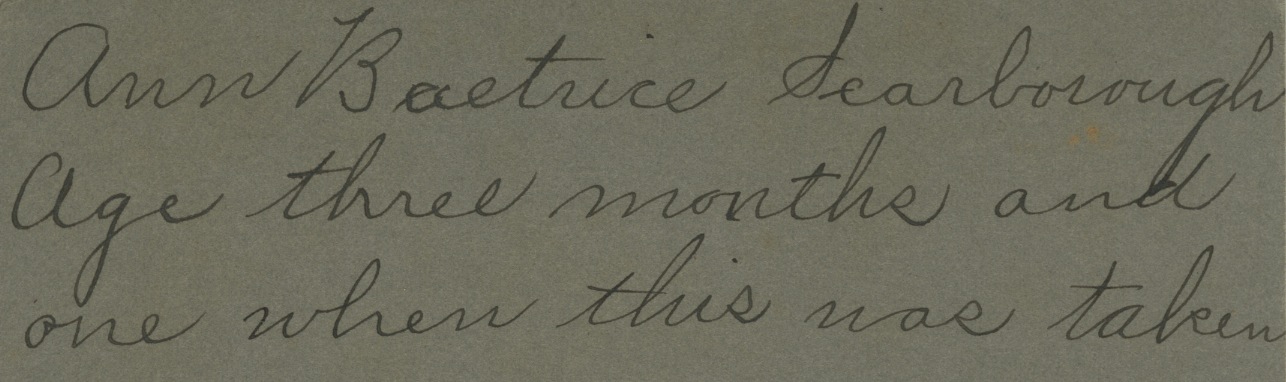
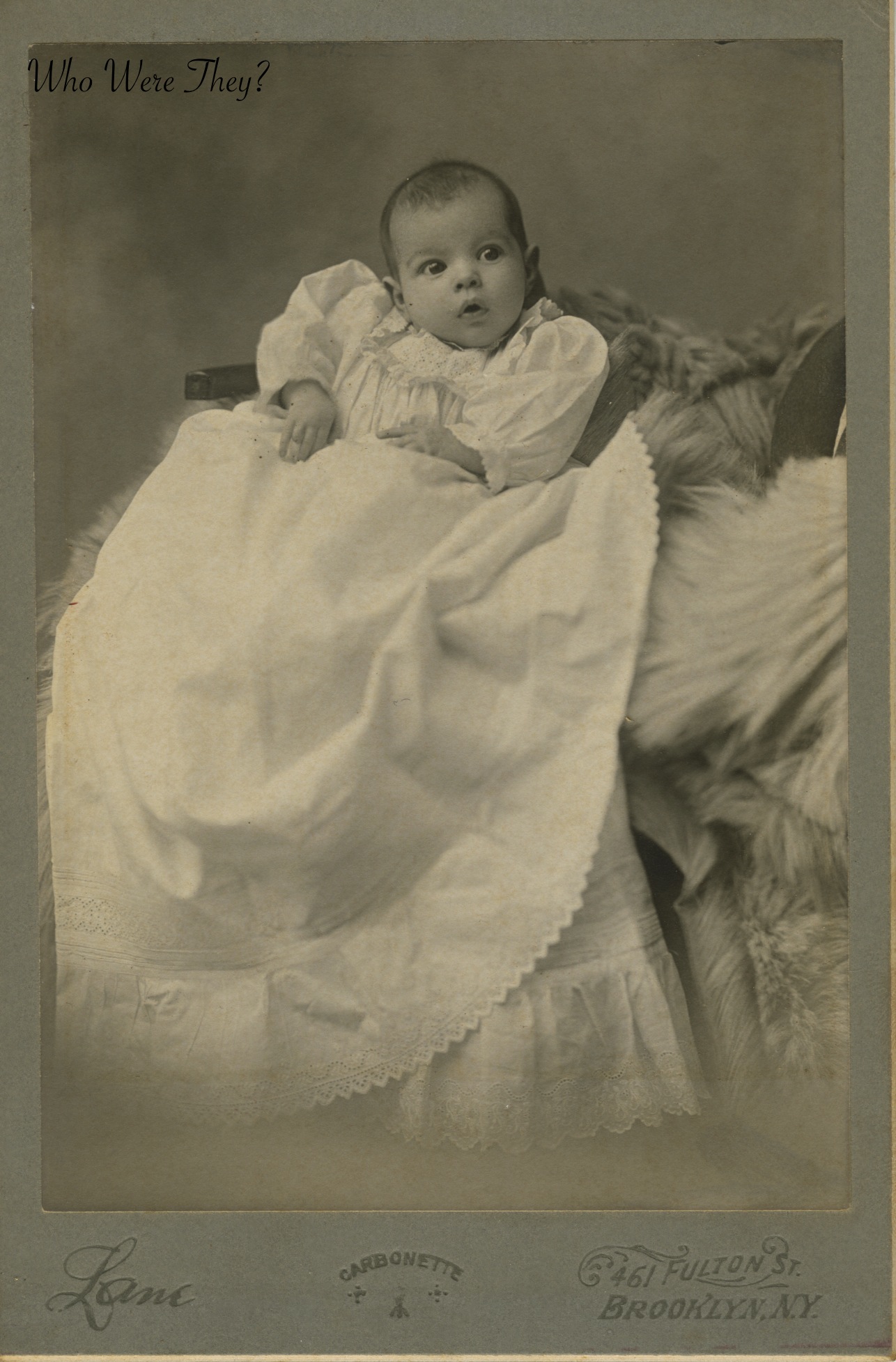
One of our final images from the Mearns Family Album is a photograph of a beautiful baby named Ann Beatrice Scarborough. I noticed than many of the Scarborough family photos were removed from the album. I can only guess that whoever wanted them missed this one because the identification information was written on the back. She was three months and one (day?) when this was taken. Her dress is gorgeous, with layers of eyelet and lots of lace, but she’s been placed on the ubiquitous animal pelt, ick.

The photographer was Lane in Brooklyn, NY.