Who Were They?

Lost and forgotten photos from the past

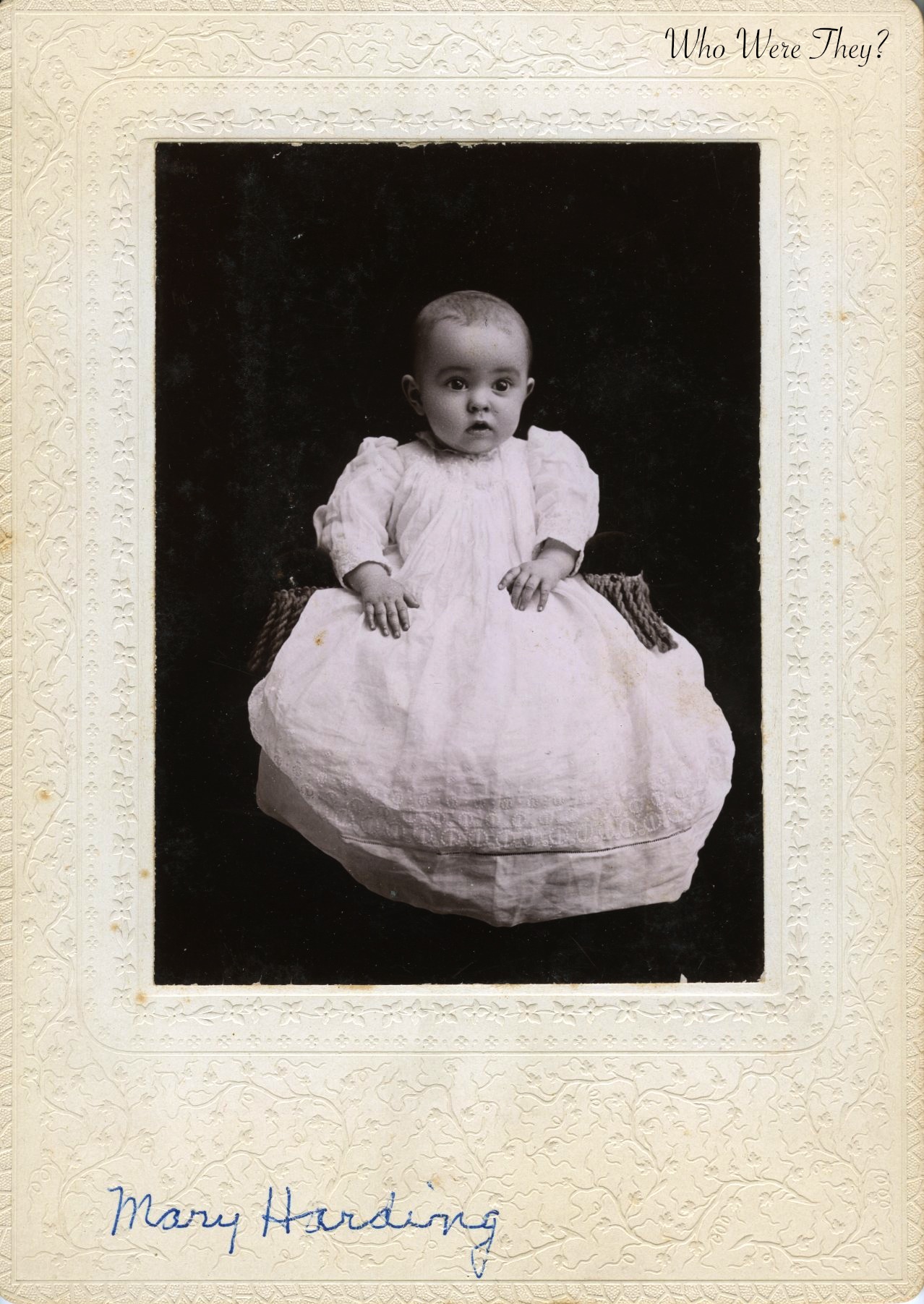
We are starting a little mystery tour with this lovely little girl, identified as Mary Harding. If you haven’t already guessed, Mary Harding is an incredibly common name, with Mary having been the #1 most popular girls name for much of the last two decades of the 19th century. I believe this is at minimum an 1895+ cabinet card due to the fancy embossing. It’s a floral pattern that I have seen one other time on some square snapshot type photos I found. This is definitely a studio photograph, but the name of the photographer was not present on the back. My suspicion leads me to think this is really a post 1900 photo.

Tomorrow, someone else identified in the same handwriting as Mary.


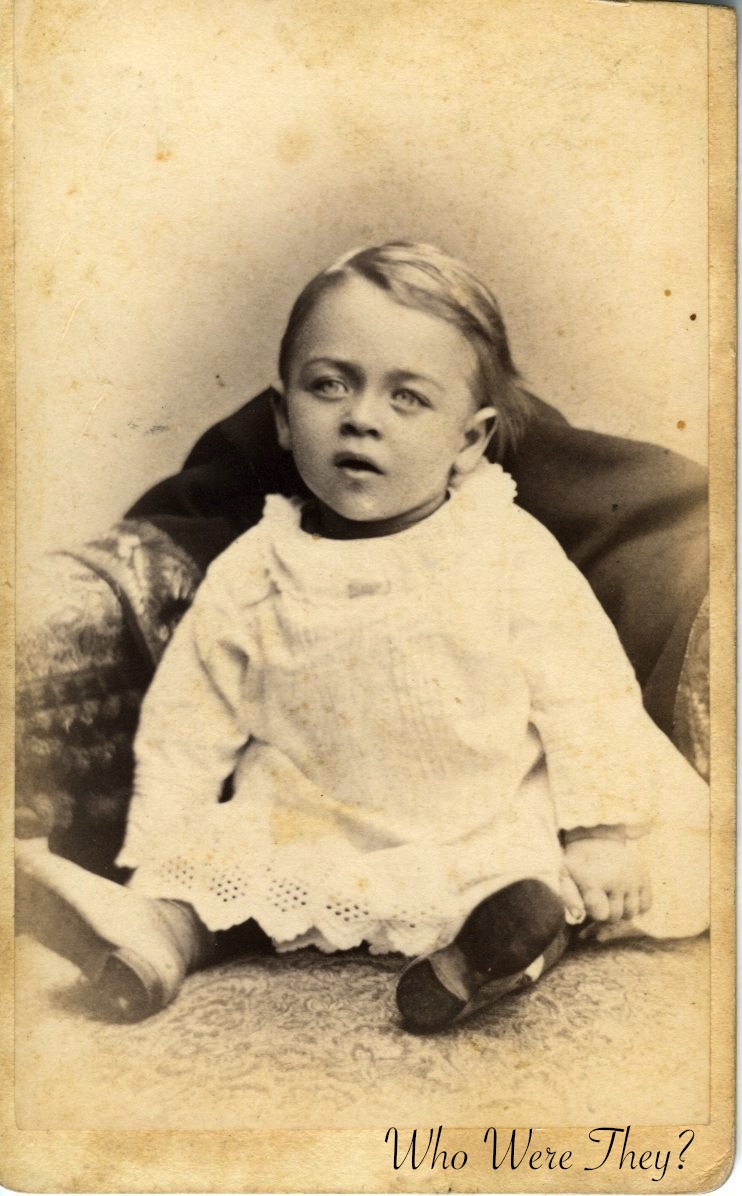
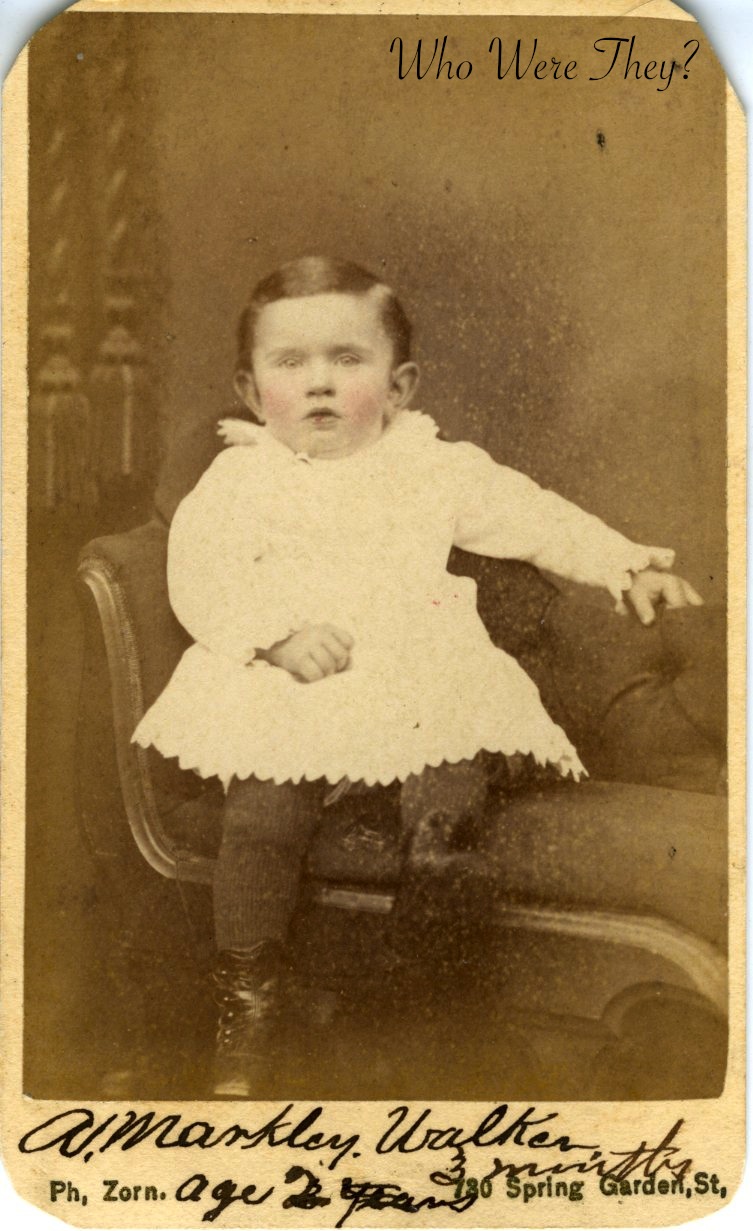
Today I have two CdVs, found in the big batch from ebay. They are not the same boy, because the face is just completely different from one photo to the other. Both photos appear to be from the early 1870s vintage and feature little boys in their darling dresses. Photo #1 on the left is identified on the back as Arthur Markley Lyter. Photo #2 on the right is identified as A. Markley Walker at age 2 years 3 months (possibly just 3 months). I find it interesting that they both are named A. Markley something. The photographer for Arthur Markley was Bishop Brothers in Altoona PA. The photographer for A. Markley is more difficult to make out, it appears to say “Ph, Zorn” on the left and “780 Spring Garden, Street” on the right.

UPDATE FROM IGGY: Photographer #2 was Ph. Zorn, a photographer in Philadelphia, PA. Also, so far records have revealed that Markley is a popular German surname in the Pennsylvania area, so these boys may be difficult to track. Arthur Markley Lyter was born in June 1879 and Arthur Markley Walker was born in September 1880, making these boys about one year apart in age. Cousins maybe? The common practice of giving a son his mother’s maiden last name as his middle name could have been at work here. Perhaps they were the sons of the last two daughters of a Markley line.

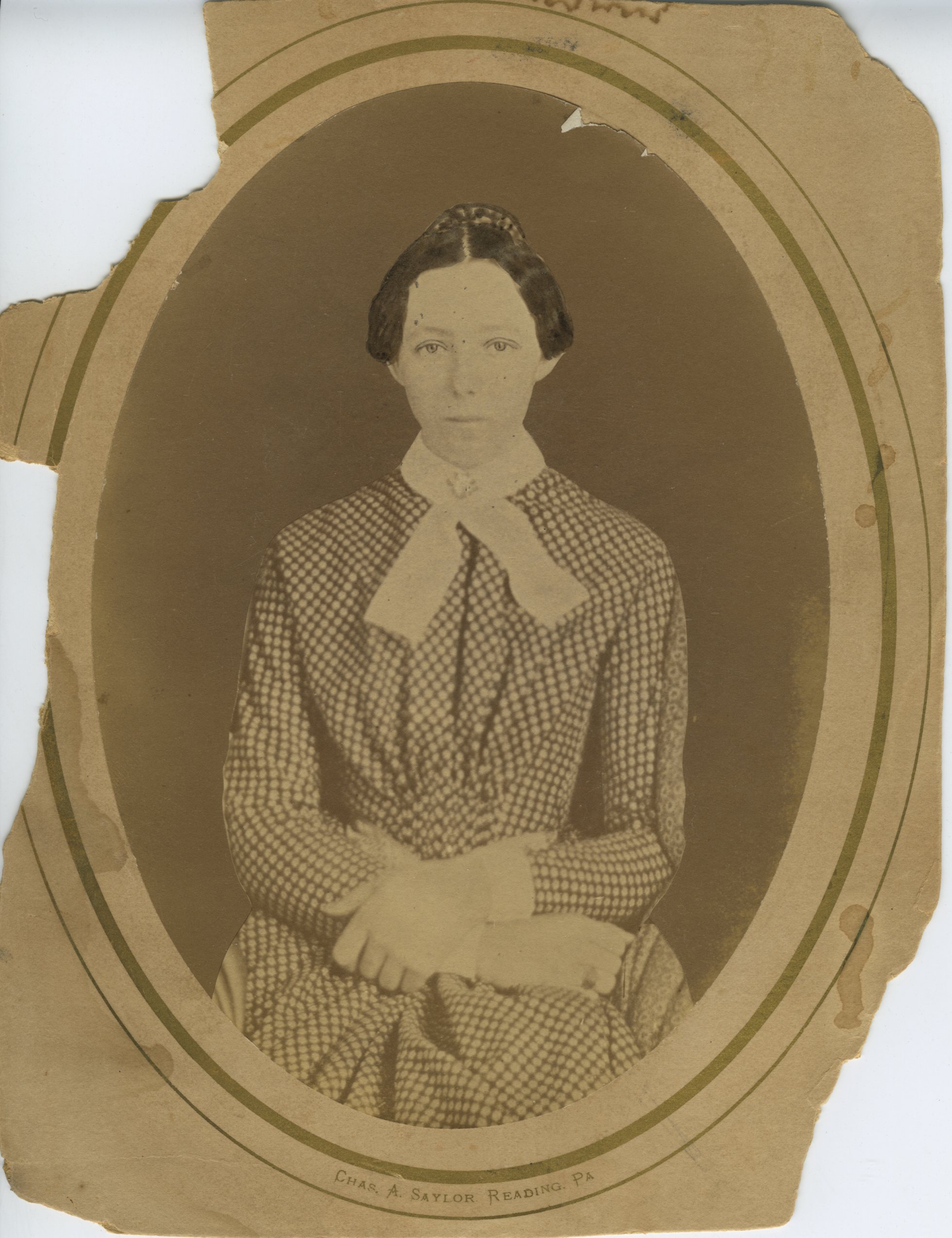
This photograph is a damaged mystery. For one thing, you can see how badly damaged the cardstock is. It has water damage as well as missing pieces. Important for our purposes though, the image is hardly damaged. The original card was approximately 7″ by 9″. The clothing worn is very “1850s” to my eyes. The gathered front bodice was more popular at the end of the 1850s and lingered on into the 1860s, and was popular with matrons and older women. But this photo is much larger in size than any other 1860s vintage photo I have seen. The photographer Chas. A. Saylor of Reading, PA was a known photographer of Civil War soldiers, and was one of “the most prolific photographers” during the CdV era.

Could this photo be a reprint? Even the contrast between her dark hair and light complexion suggests the older photographic methods. I don’t know enough about them to really say much about it, except if I didn’t have this card in hand, I’d have guessed at a daguerrotype or ambrotype. Or, am I completely misreading the photo clues here and is this a later vintage photo, even an 1870s image?

Also mysterious is that when I enlarge the image, I can see that the pattern of the fabric around her skirt on the right side is “different” as in she might have been sitting next to someone else with a different dress, AND it has the look of her image having been cut out of a larger image. The whole thing is odd, honestly!

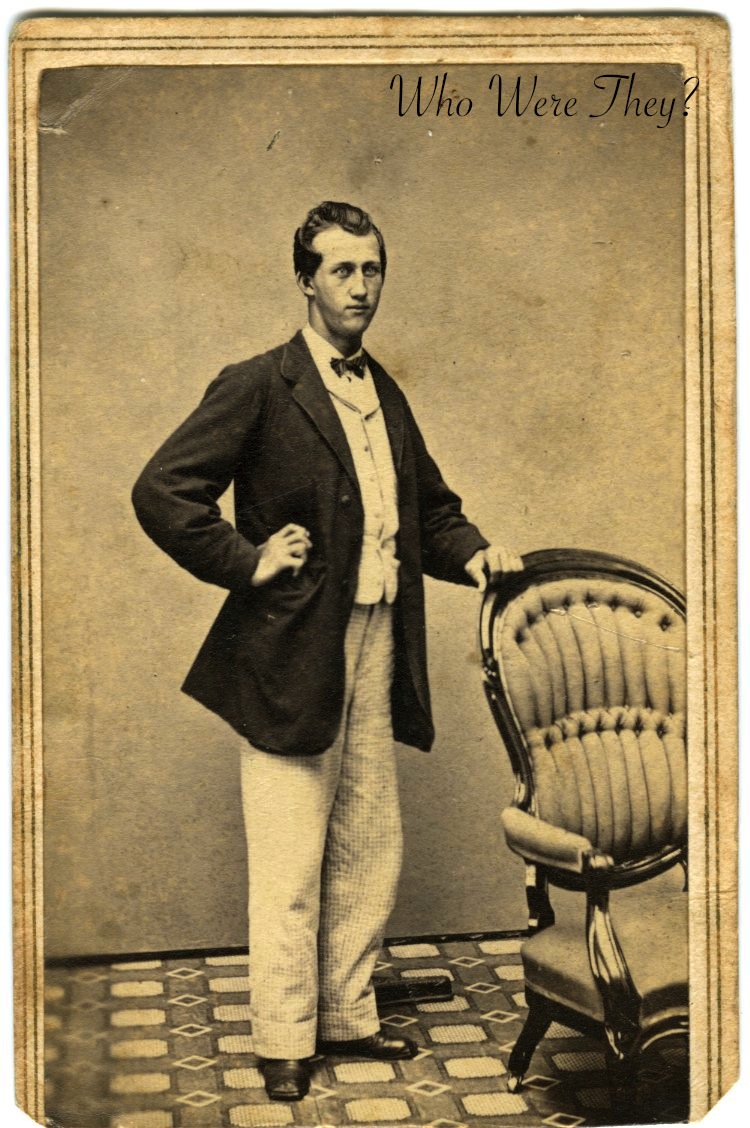
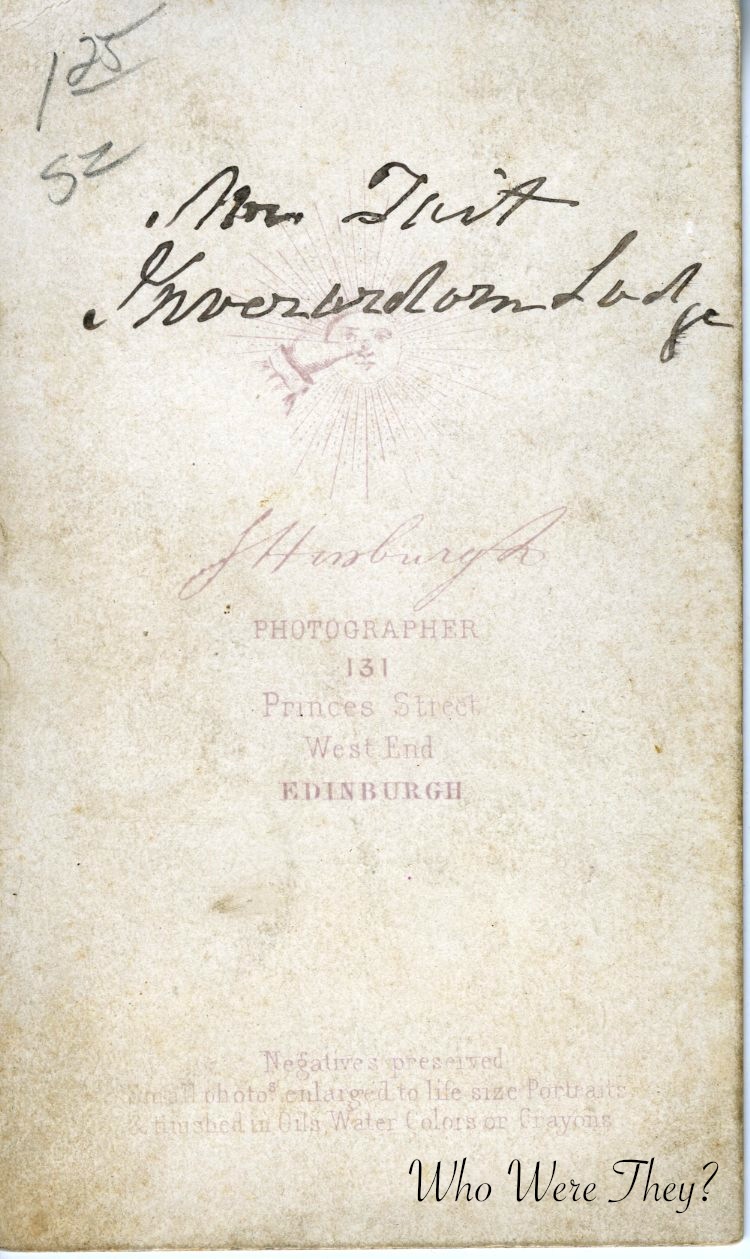
Presented as a proud Sepia Saturday post, I give you Mr Twist, or Trist, or something like that. This CdV was made in Edinburgh, Scotland in the 1860s. The card corners are square and the thin borders date this to roughly 1862-1863 but possibly as late as 1868. I am not up on my Scottish names, so the words written under the gentleman’s name look like Inverdown Lodge to me, but perhaps some of our international visitors could correct me if needed.

This photo shows Mr Twist as I will call him, in a fairly typical 1860s photographic studio setting. Early cameras yielded a large, clear image which resulted in these nice full body shots, although the very earliest cameras produced a small image that most times photographed the bust portrait that was so popular. The studio props are standard photography issue – chair, patterned rug and plain backdrop. After 1870, backdrops became more elaborate to the point of absurd in the 1880s; bearskin or other animal skin rugs flourished, and props such as artificial fencing (seen in a previous photo), planters, concrete walls, and other objects were used to simulate either the fancy drawing room or the outdoorsy setting. By the 1890s, the de minimus look had become popular and we go back to a variety of simple chairs, photos focused only on the subject in bust format, and the like.

Perhaps the inspiration for the photograph was a graduation from college, an appointment to an important position, or just a young man out to meet the ladies of Edinburgh. We shall never know, but we can enjoy this image today, 150 years on from it’s origination.

UPDATES: Iggy corrected my spelling/reading of the photographer’s name as Horsburgh, and noted he was at the address on the card beginning in 1868. Given the parameters of the card itself dating the photo at the latest to 1868, we’ll go with that year. Secondly, Brett Payne suggested the location could have been Inverardran Lodge. Iggy provided a link in his comment if you’d like to see the lovely gigantic mansion estate guest house.
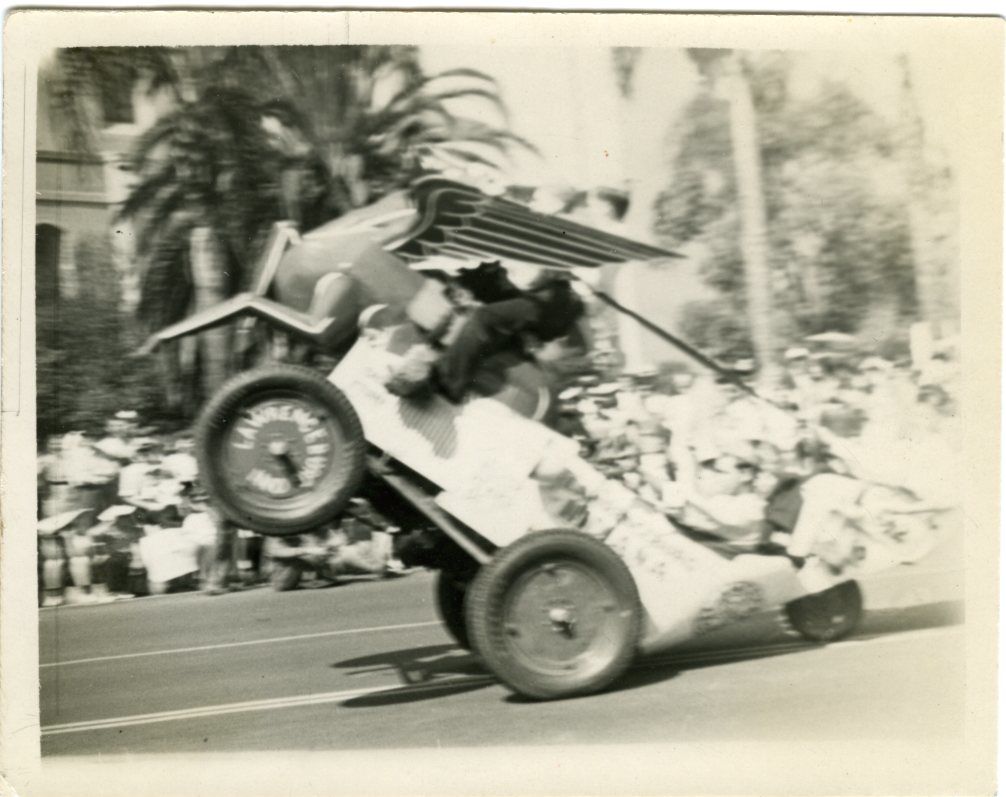
This photo has “Rose Bowl 1930” written on the back. Judging from the palm trees in the background I’d say it at least was in California. The float itself says “Santa Claus Post Indiana 242” on the side and the front says “Howdy Folks.” Santa looks a bit on the thin side to me.

The second image also has “Rose Bowl 1930” written on the back. Unfortunately the photo is fairly blurry so it’s very difficult to read what is written on them. The float is pretty small when you consider the monster sized floats in the Rose Parade these days.

It’s 24 years later and here we have the “Uncle Wiggily” float. Here you see the floats are trending toward today’s oversized and elaborate designs. It looks like the float must have featured a little hut toward the back and some sort of “view” of the underground. The companion car is also decorated with flowers. The photo is dated 1-9-54. After the parade is over, the floats are on view for the public to see. I don’t know where they went in the 50s, but these days they go to Pasadena City College.