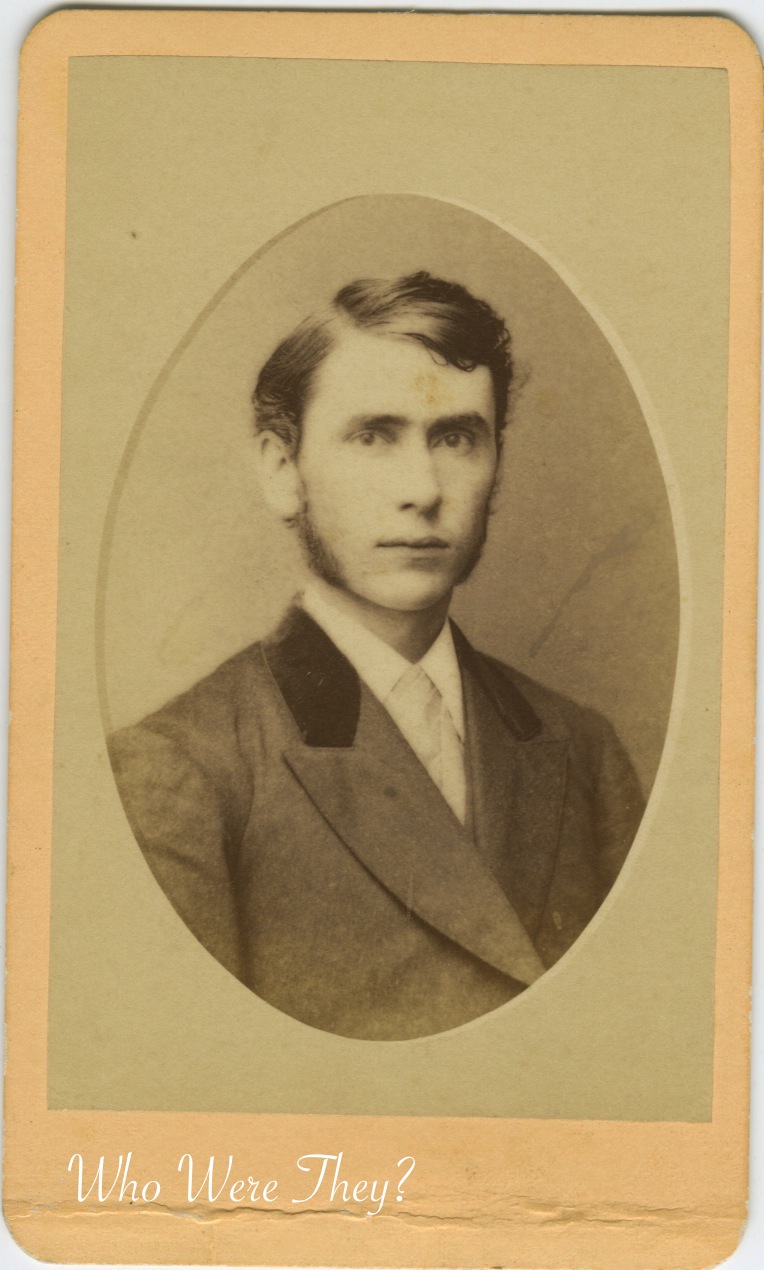
Shown here is a young man who must have been proud of his side burns. They extend from his ears along his jawline, but do not meet in the middle. There is potential there though. He has a strong chin, so there wasn’t a reason to hide it, but I imagine later in life his beard covered his neck, sort of like a feedbag, heh.
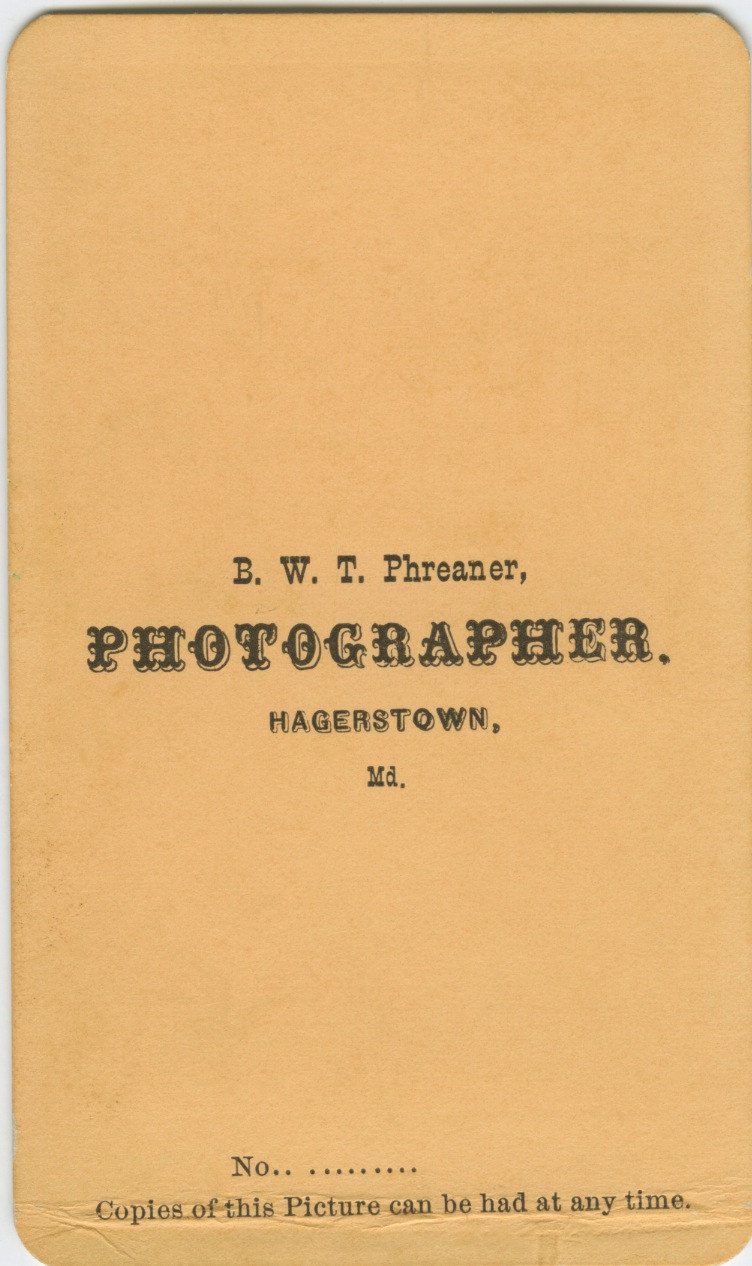
This photo in slot 4 of the Leather CdV album was made by B. W. T. Phreaner of Hagerstown, MD. Bascome W. T. Phreaner (1845-1932) operated in Hagerstown at 4 Washington Street, at Potomac Street. Hagerstown to Cumberland is a section of the Cumberland Road, a distance of 69 miles.The road was begun in 1811 and was the first national road project in the US. You can read more about the road at this great site I found during research for this post.
A plain looking woman, not unattractive but not a beauty either, sat for T. L. Darnell in Cumberland, MD in the 1870s. At first I thought this image was an 1860s photo due to the hair style and dropped shoulder seams of the woman’s dress. However, I learned that the heavy borderline (my scanner cut it off on two sides) in red indicates 1874-1880. I would surmise then that the photo was made earlier in the decade as the fashions shown are very similar to those of the previous decade. She also has a rather interesting necklace, sort of like a lariat style necklace. I have seen this on another woman’s portrait, so they must have had some popularity at the time.
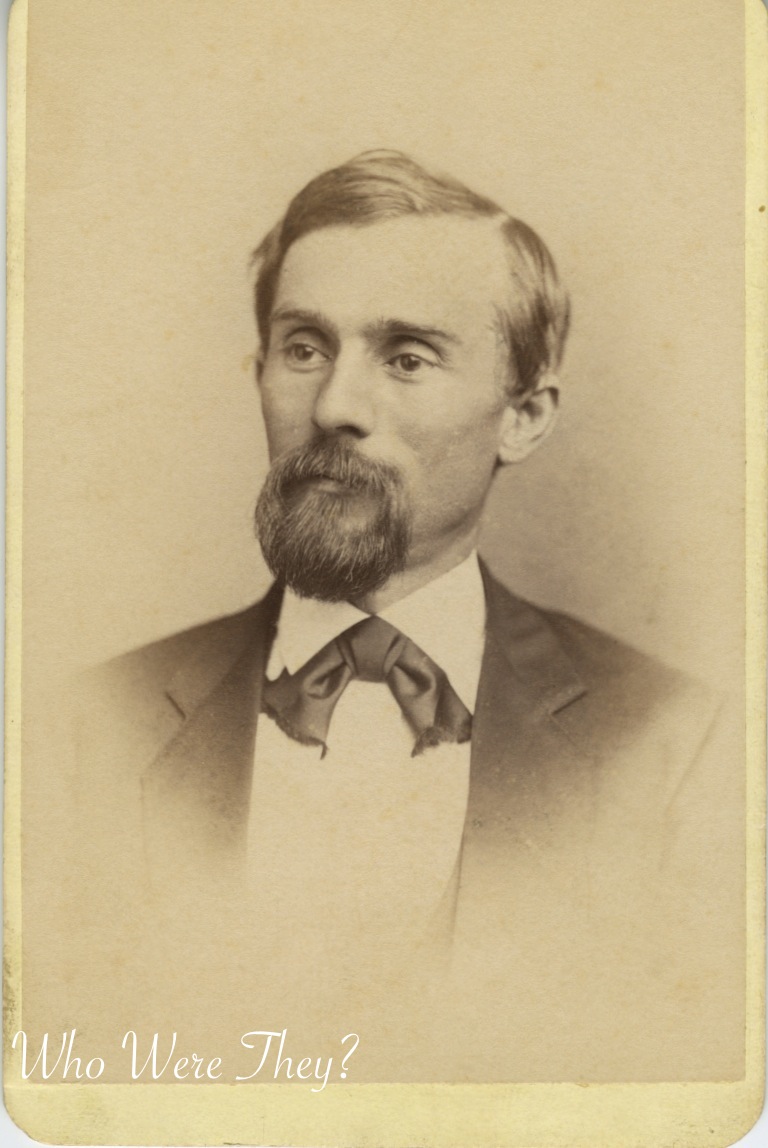
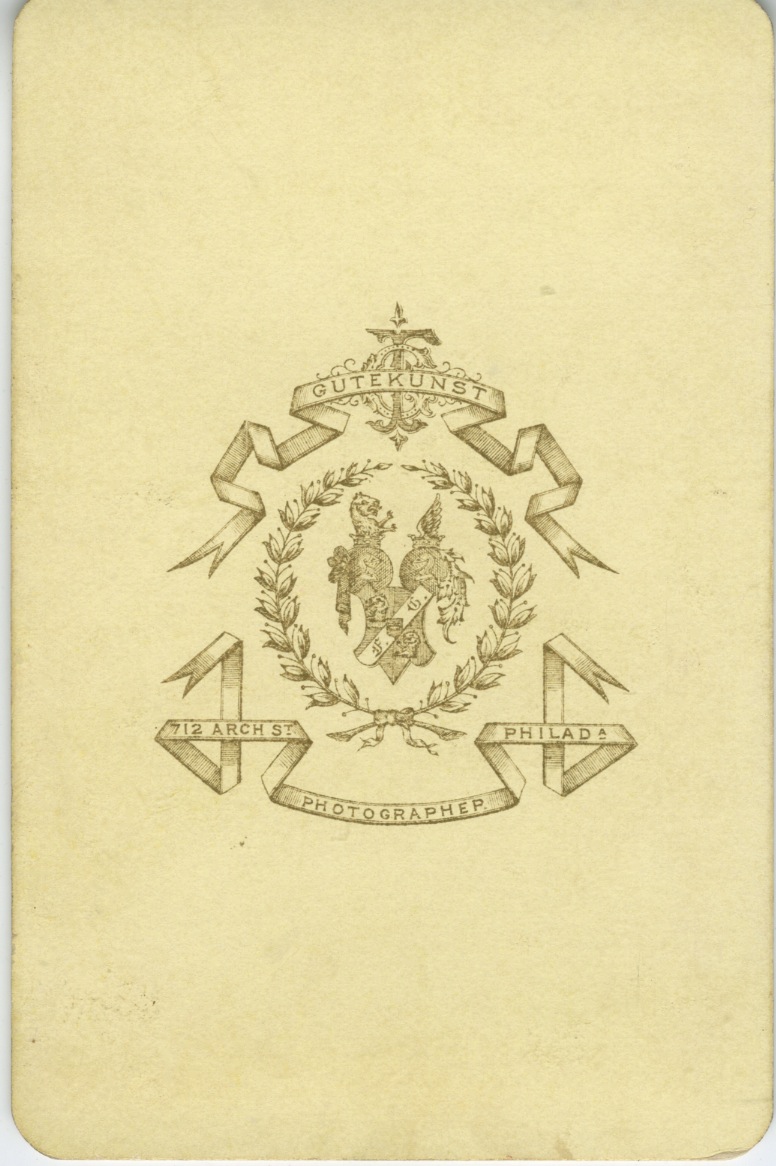
This fine looking gent was photographed by Guterkunst of Philadelphia, PA. This photo dates from the 1870s I believe. The corners of the photo are evenly rounded, which was not done in the 60s. The photo is located in slot 2 of the Leather CdV Album.
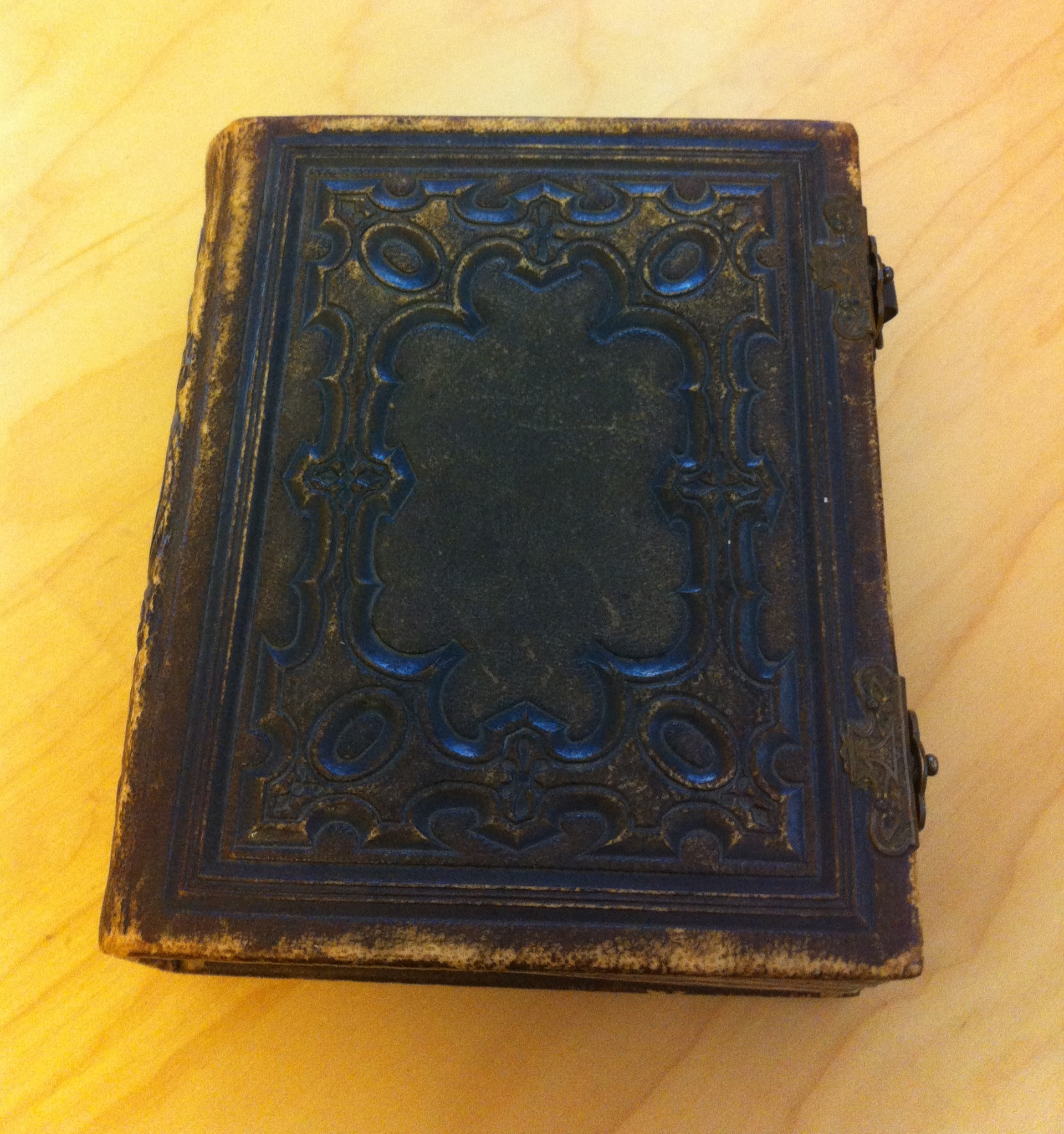
Recently, I acquired a photo album that dates back to the 1860s, during the time when CdV portraiture was really taking off and photo albums became more common. The carte de visite (CdV) became available in 1859 and thrived throughout the following decades. Numerous soldiers engaged in the American Civil War took the time to be photographed in their uniform for family and loved ones to see them looking “just so,” and young ladies and gentlemen after the war took the opportunity to present themselves in the best possible fashion to their friends and prospective beaux.
Small leather bound album
Of course, any photo album can be used long after it was made or acquired by the owner, and so we often find photographs that are “younger” than the actual age of the album held lovingly within the gilded openings. This particular photo album is one such. It has openings for 30 CdVs, with approximately half being of the 1860s and the rest having been made in the 1870s. And of the 29 images enclosed within its leather binding, only one has a complete name. Truly a shame!
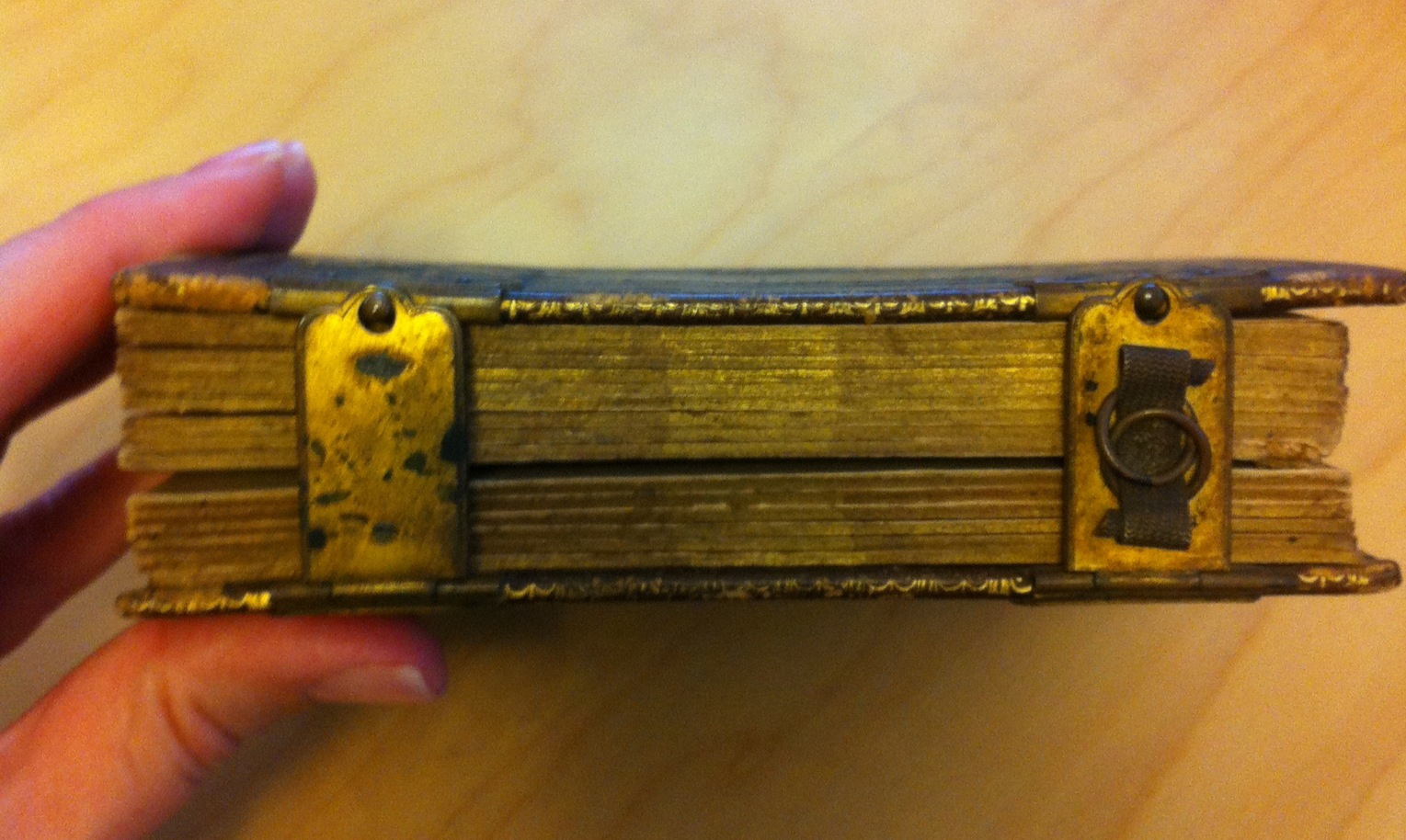
Side clasps
The album probably had a chain or handle of some type that attached to these side clasps. You can just see a shadow going down the middle of the gilt, in between the two clasps, although I don’t know what was there. The clasp on the right has a pair of interlocked rings, but they are missing from the left side.
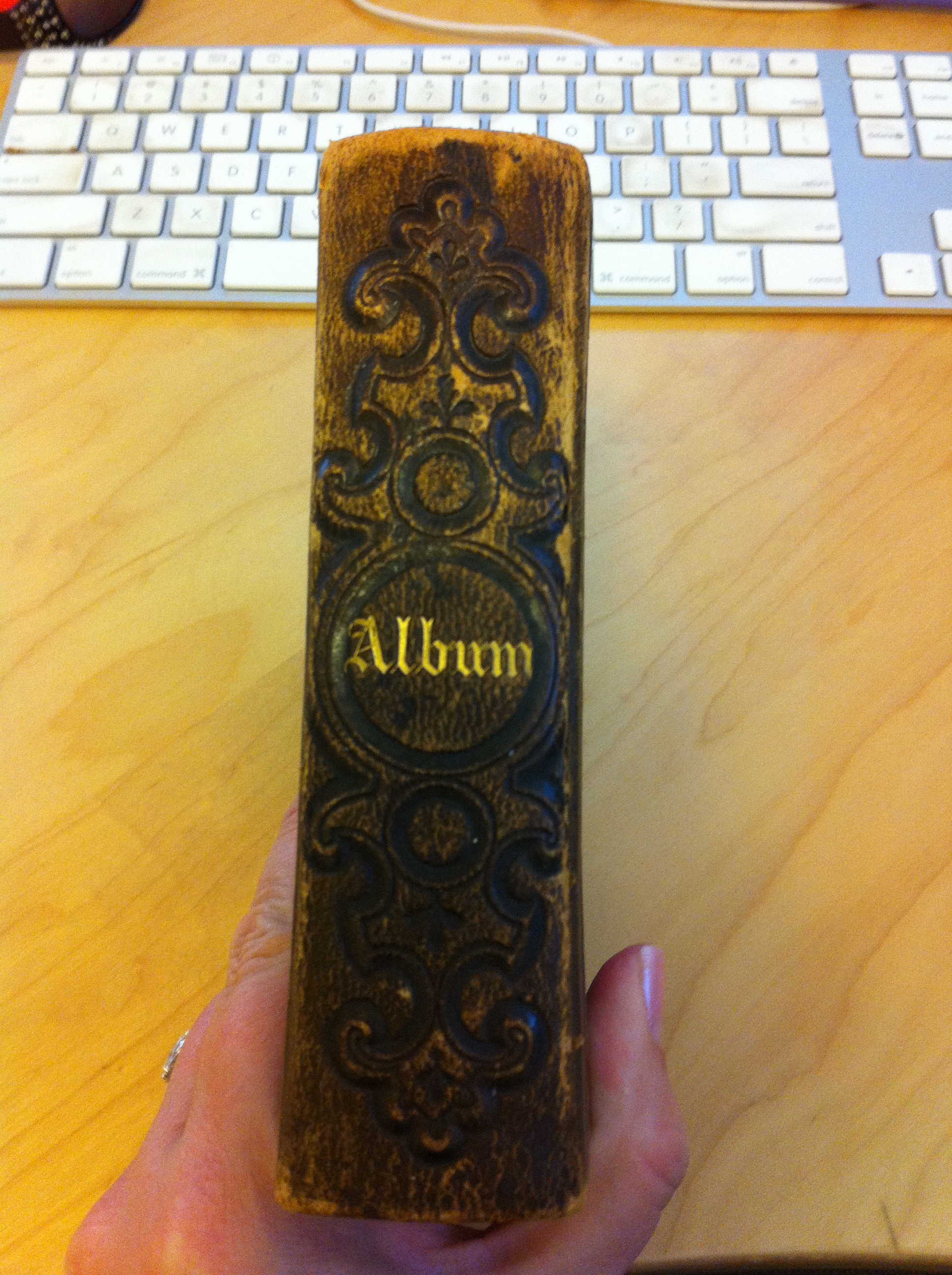
Spine
The leather is tooled in intricate scrolls and turns, gilded in places, and even the spine is lovely, displaying the pride in workmanship as well as the pride of ownership that was more evident 150 years ago. A person would have been proud to have this spine showing on his bookshelf. The album itself is approximately 4.5″ wide by 5.5″ high and only about 1 1/2″ thick. The inside leaves are buff white with gilded openings, each page holding one photo that slides in from the bottom of the page. Very few pages are torn (which is common with old albums) and the photos are arranged in such a way that mostly alternates male/female photos. Many of the photos were made by the same photographer in Cumberland, MD so they are likely related in some fashion. We will go through these photos over the next few weeks, but I will start you off today with image number 1.
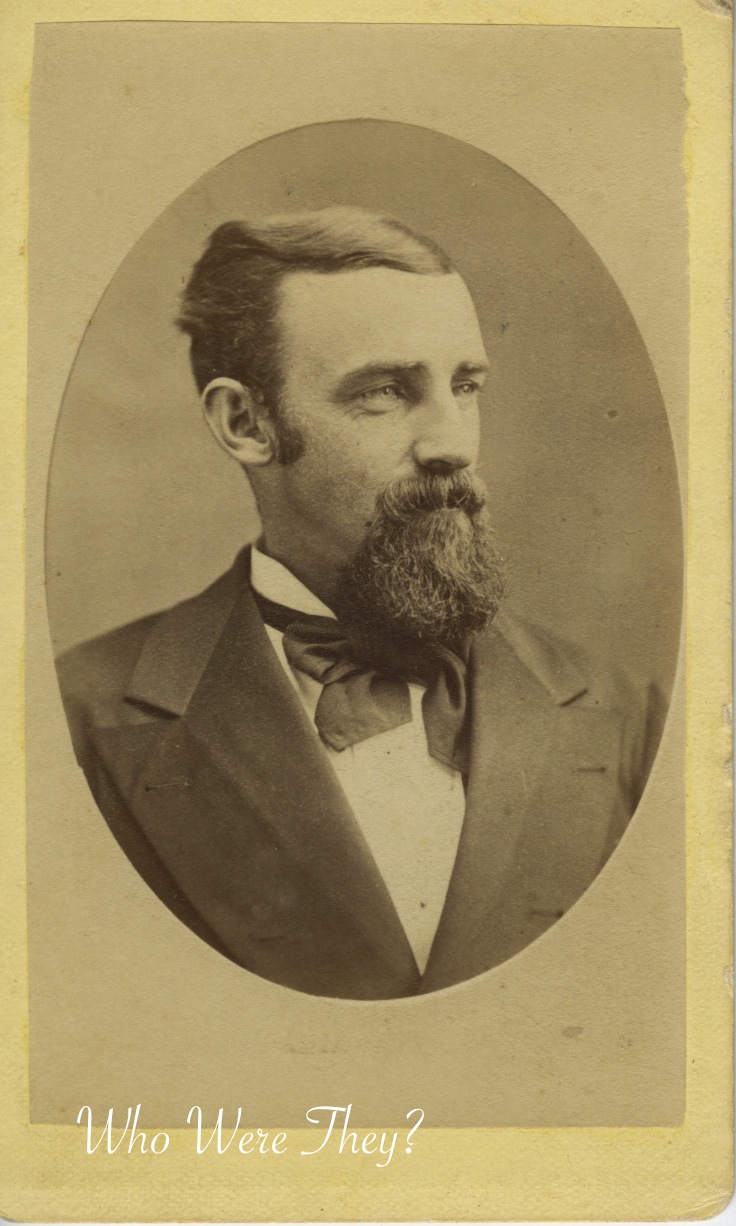
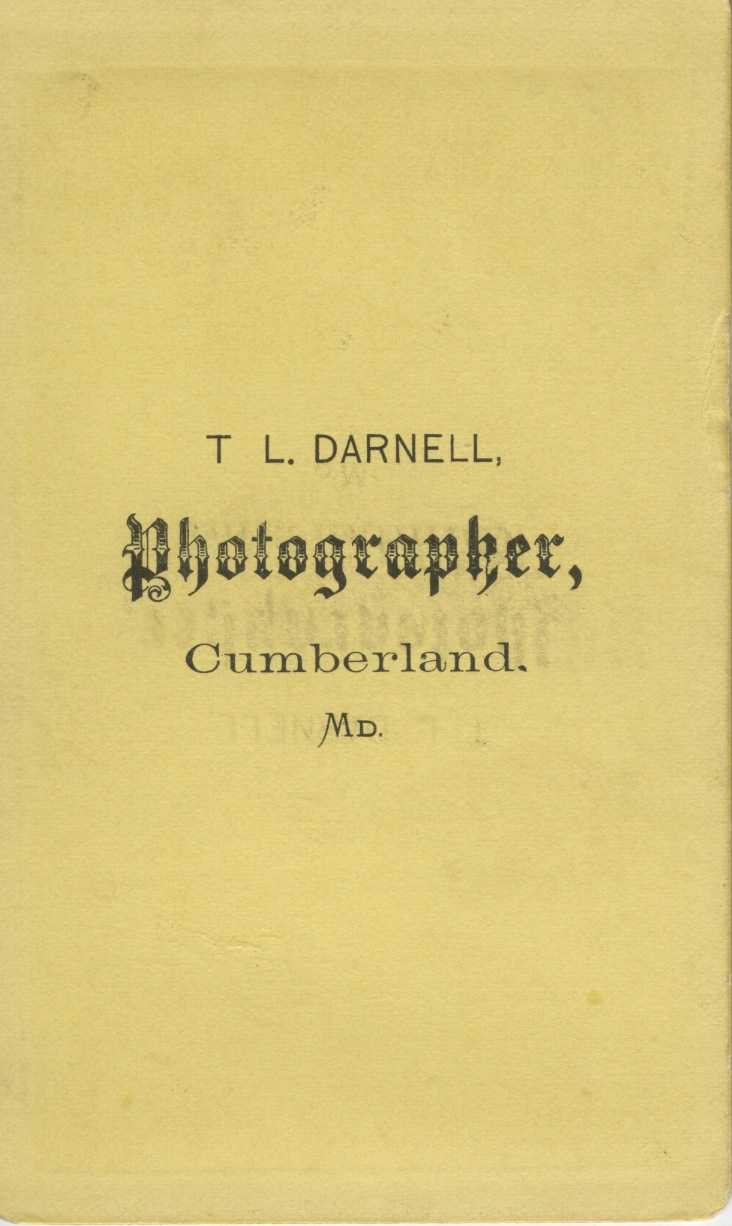
An unidentified man, photographed by T. L. Darnell of Cumberland, MD. I found a record of Thomas L. Darnell (1826-1908) having been a native of Maryland, and he was also well known as a stereoscopist in the 1890s. He was the preferred photographer for the people in this album and we will see many over the course of the album.
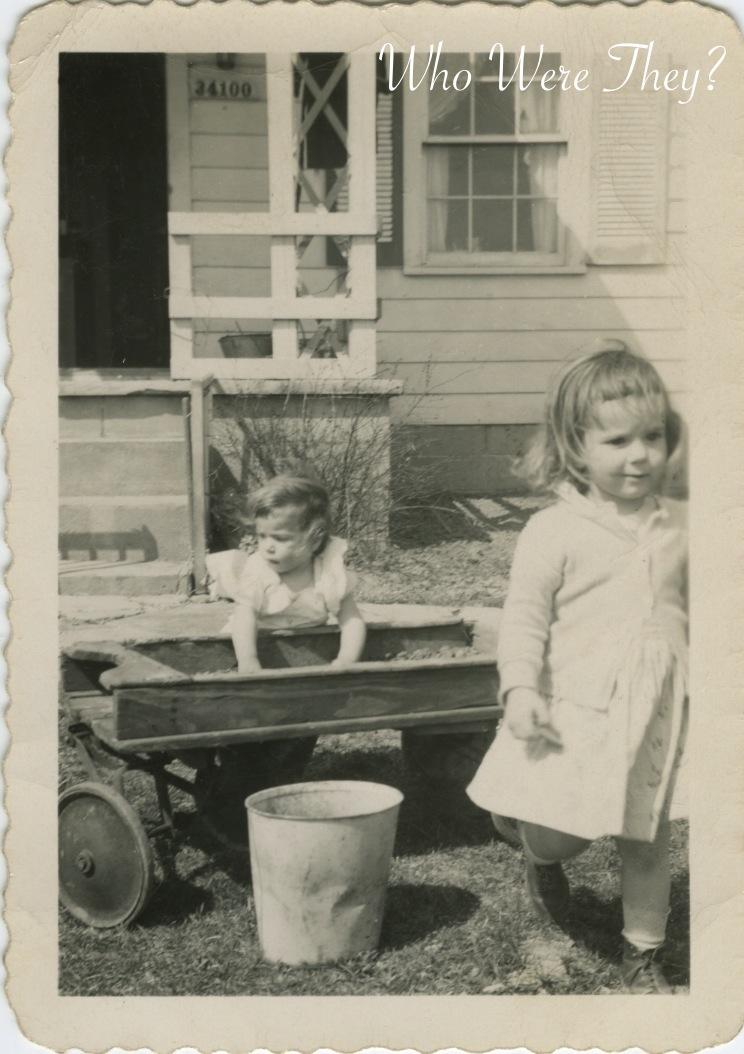
This snapshot circa the 1950s features a fantastic wooden wagon, a bucket and two little girls. I always wonder what the story was. What activity or event prompted the parent to snap the photo at that instant? With today’s digital images so easily deleted, replaced, and manipulated, it is difficult for us to imagine saving a shot so as not to waste film. I can remember the frustration of getting a bad shot when I picked up my prints from the developer! Sometimes those old, bad, snapshots are funny – such as double exposures, chopped off heads, funny facial expressions (the open mouth mid word is my favorite) and movement blurs. Whatever the inspiration on this long ago day, I hope the photo brought the family happy memories!





 Who Were They?