Who Were They?

Lost and forgotten photos from the past

Fading with time, before we lose the image altogether, here’s a photograph of William Mann Rudd Jr in the 1890s. The edges of the card have that deckled cutwork that was popular at the time. This makes him about 13 or 14 years of age in this image.

For other images of the Rudd family, enter “Rudd” in the search box.

I have been quite busy with ahem, cough, work, cough, cough, something this afternoon and have as yet to figure a way to tie this to Sepia Saturday. So, in the interest of time I’m not going to, haha. For great sepia images of boys at the library, books, study, and more, click over to Sepia Saturday.

Flip the page

The tall one is Olney and the seated one is Willie. Their information is written on the back of the card as follows:

Olney Lee Rudd b Jan 17, 1874

Carroll Co Ark, near Rudd, Ark

William Mann Rudd Jr b July 12, 1878 Springerville Arizona

Children of 

Dr William Mann Rudd and Eliza Catherine Mann

I was wondering at Olney’s uncomfortable posture and realized he probably has one of those head holder stands behind him. Upon closer inspection, he appears to be grasping something in each hand, probably hand rests of some type on the stand. Although the photo is not dated, Willie appears to be about 6 years old, putting this sometime in the early 1880s.

Here are two photos from the Rudd collection that feature people looking remarkably similar!


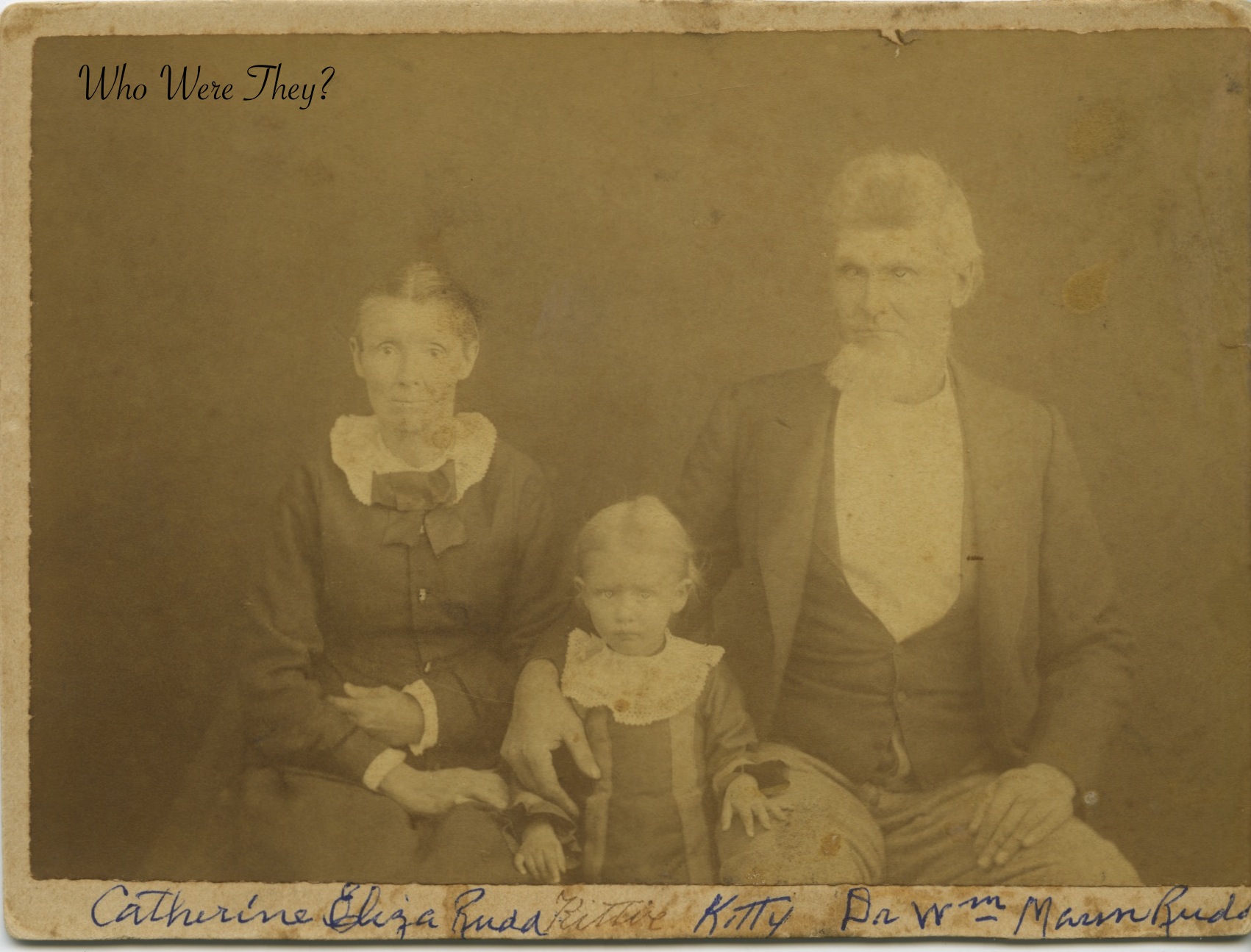
The top photograph is identified as Catherine Eliza Rudd, Kitty and Dr William Mann Rudd. Interestingly, another photo in the set identifies the adults as Dr William Mann Rudd and Eliza Catherine Mann. It was pretty common to intermarry among families, twisting lines around cousins first and second, etc. Further research may tell us how William and Eliza/Catherine were related.

The second photo is identified as Grandpa and Grandma Rain (or Rains) and Minnie. Also written in a large scrawl in pencil is “This is Minnie’s.”

The family came from Rudd, Arkansas apparently. Iggy found some good information for the women shown on my previous post and I suspect he is correct. More to come, this was a family that enjoyed photos and correspondence!

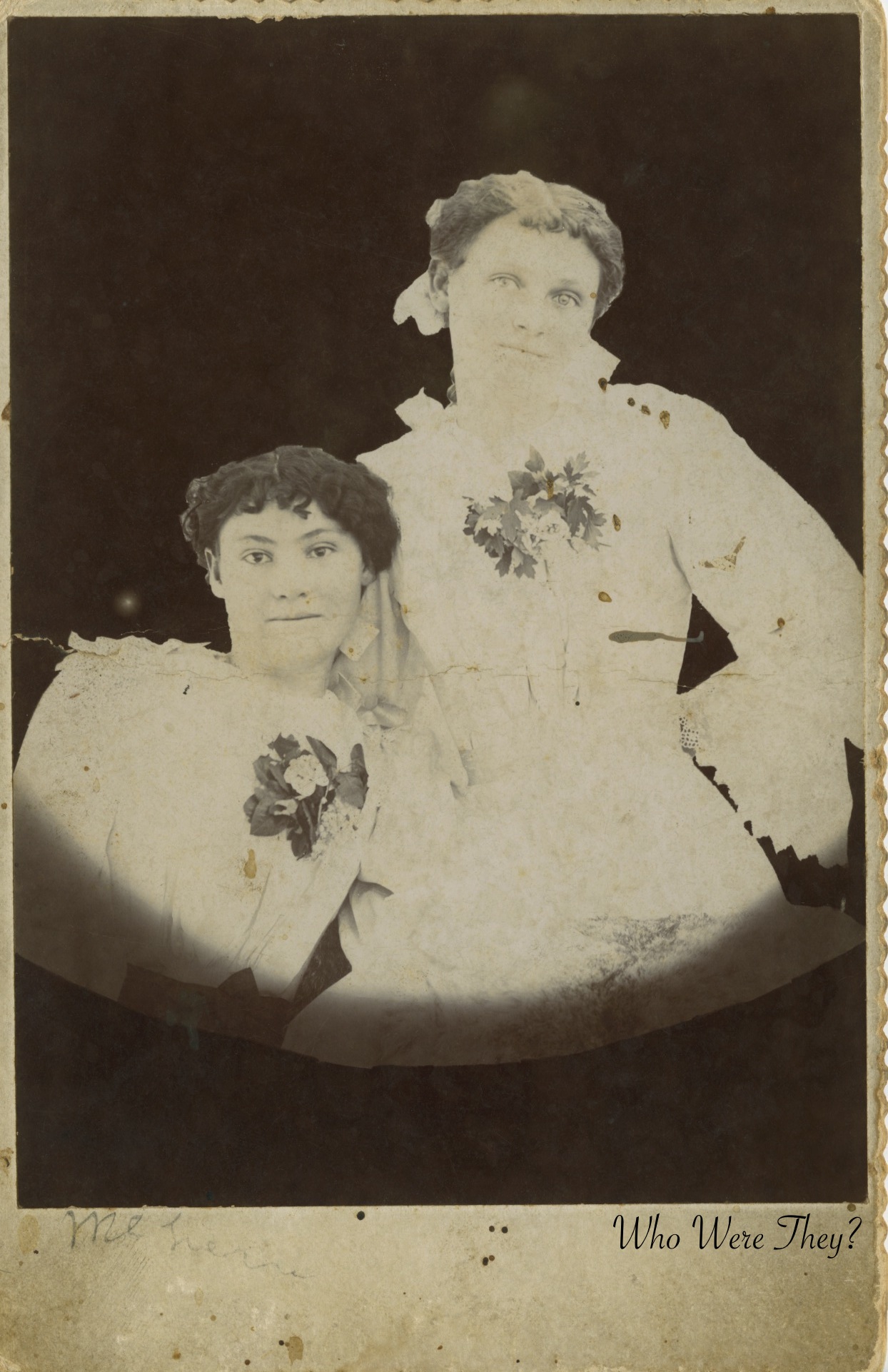
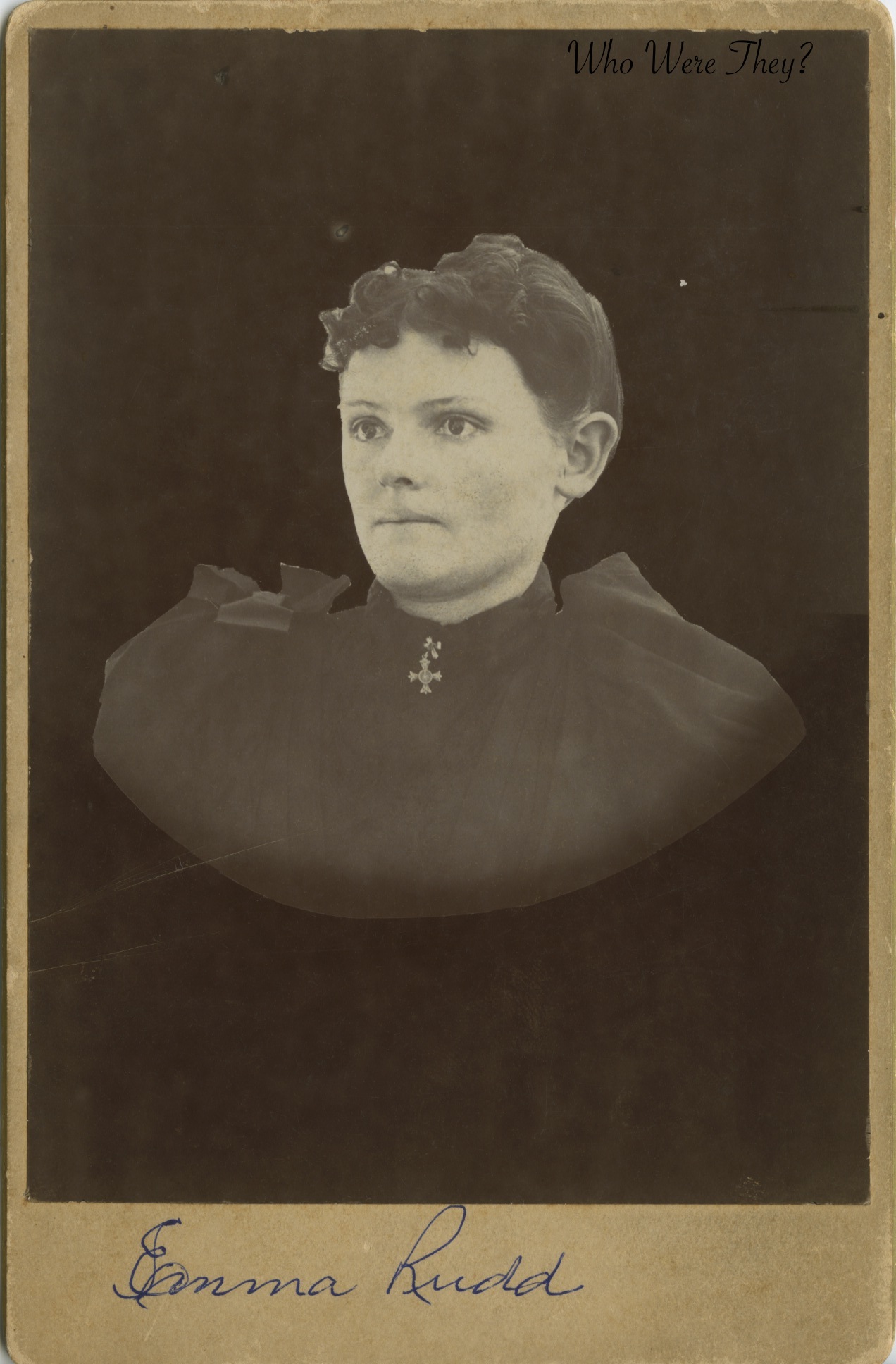
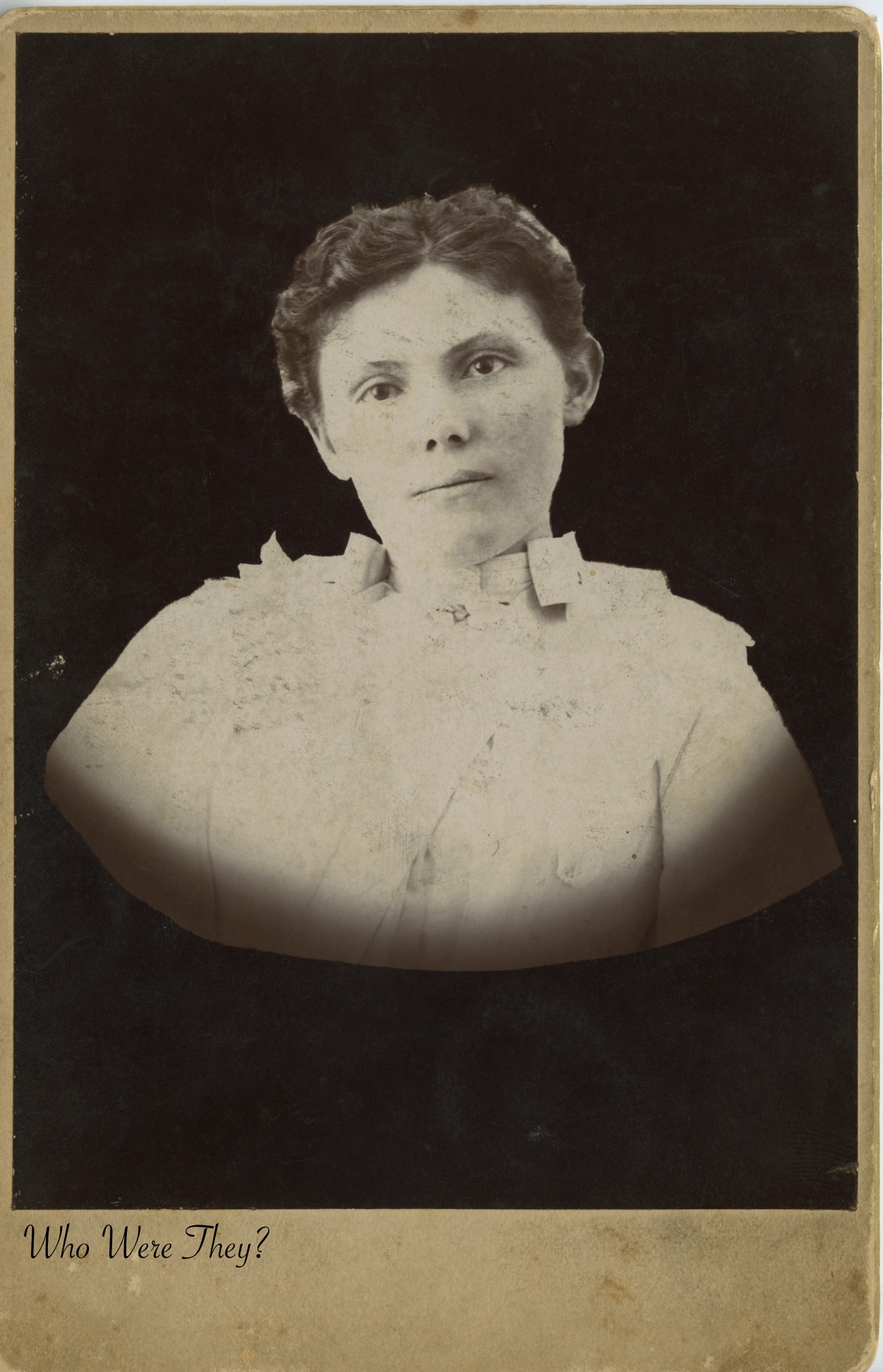
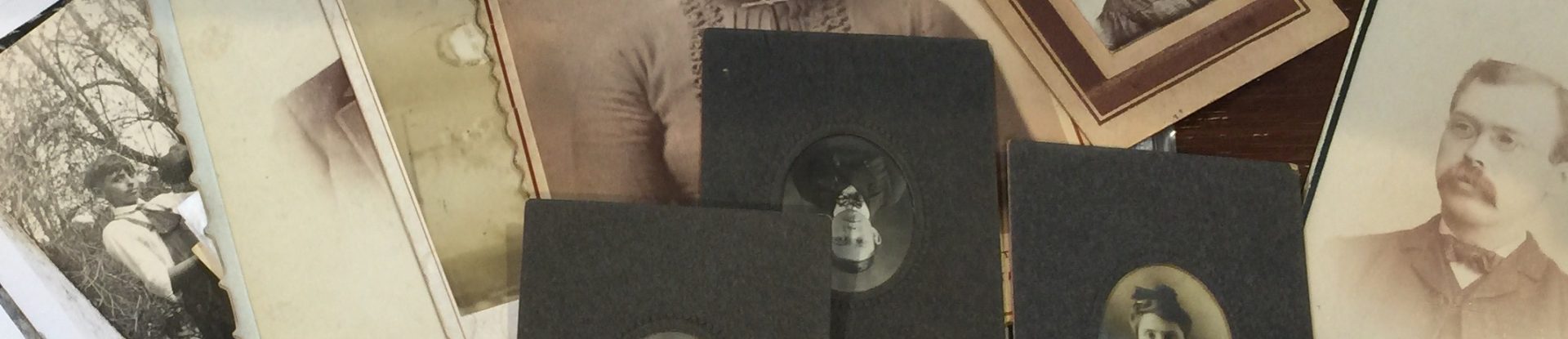
Sepia Saturday this week encourages us to look at women, and although I don’t have a photo of women talking on the phone, operating office machines or other possible directions the prompt could go, I do have some women from a recent purchase that I am ready to explore. These three photos have rather odd cropping.
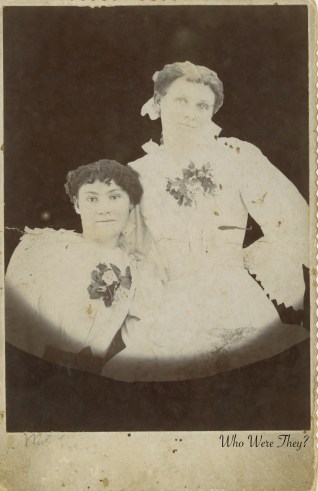
This cabinet card has the deckled edges popular in the 1890s, and the clothing also suggests that same time frame. You notice the image appears to have been cut in a rounded fashion along the lower portion of the girls’ bodies, and then placed on a brown field. Just under the girl on the left it says “me here” I think. The back identifies them as Ida & Catherine Rudd.
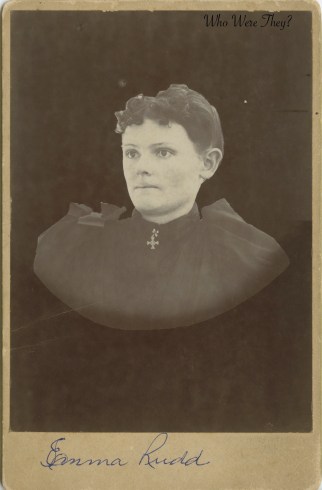
Another cabinet card with the strange rounded cropping. The clothing is indicative of the 1890s again, so my first impression that it was a photo cut out of another photograph and remounted. That could still be the case, but it isn’t an older photo reprint, as was often done. This one was identified as Emma Rudd.
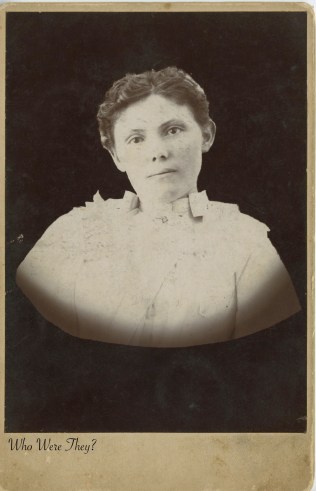
This image was clearly cut from another and reprinted. You can see behind the curls of her hair, a lighter backdrop than the dark brown one used here. The cutting was done carefully, but it is still possible to see where the scissors changed direction on the rounded edge at the bottom of the image. This is definitely another Rudd family member as the facial resemblance is quite strong, but it was not identified. None of the photos have any photographer’s information so at first I wasn’t even sure where they were from geographically. However, another photo in the batch was made in Los Angeles, CA, so that gives us a jumping off point for genealogical research. More to come with this family as I have a variety of cabinet cards, snapshots and possible even some postcards (mailed ones even!) to explore.

For other images of women doing interesting things (oh my!) click over to Sepia Saturday. You will be happy you did!

What number please?
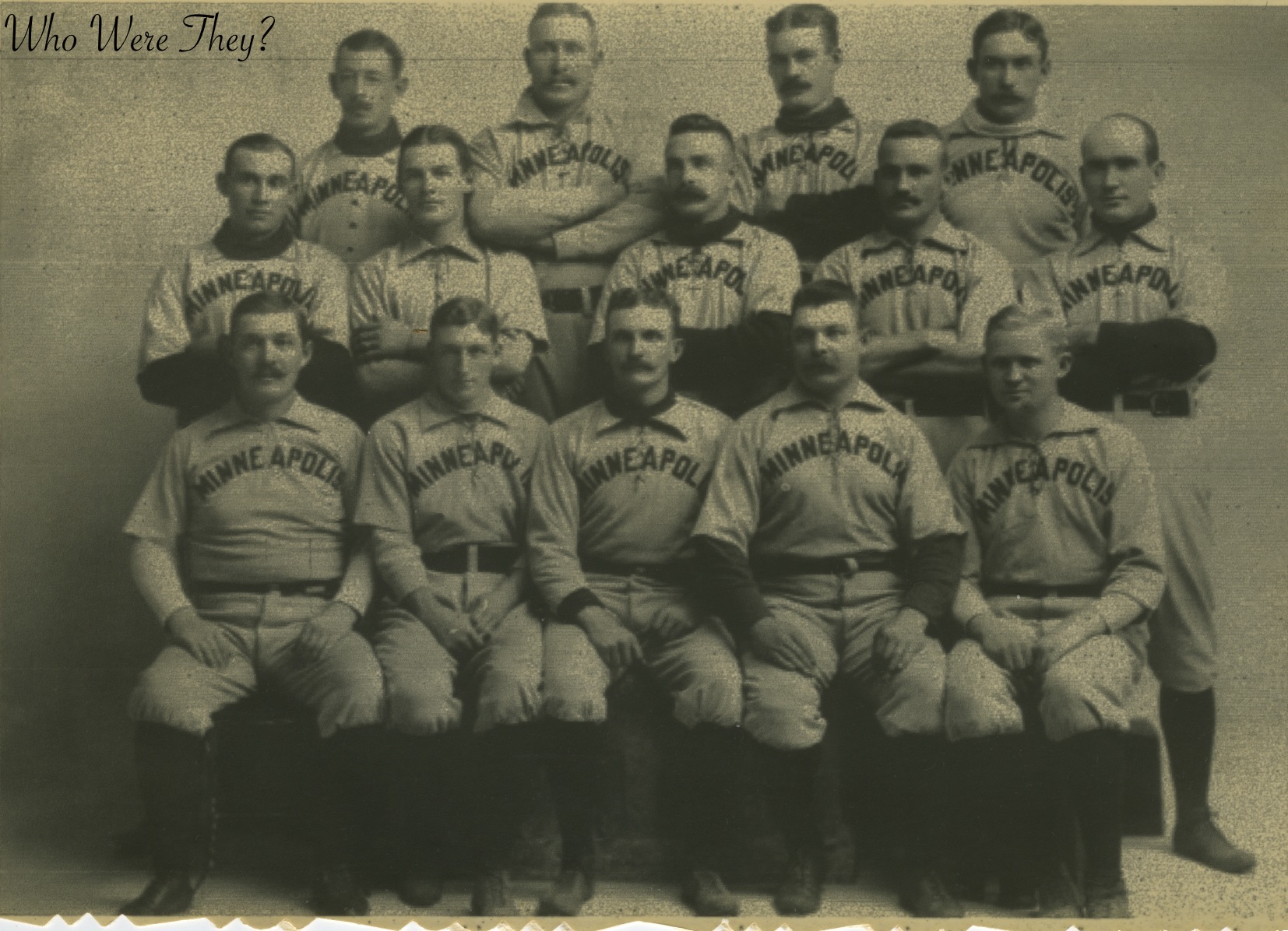
This is a print of a press photo of the Minneapolis Millers, 1896. The team had just won the Western League baseball championship. The Minneapolis Millers existed in some iteration for 76 years, beginning in 1884. They originally played in the Northwestern League, but when that failed they were absorbed into the Western League. The team pictured above was formed in 1894 when Ban Johnson and Charles Comisky (of that famous stadium Comisky Park) revived the Western League.

In the year the Millers won the championship, they played 150 games between April and October, then six additional games giving them the win over Indianapolis. Many of their season games were double headers and they often played every day of the week. They ended their season with 89 wins and 47 losses. Some of the scores of those games have staggering tallies: losses 14-20, 6-24 and 8-41, wins 22-7, 30-3, and 18-3 are just a few that stand out. It is no wonder some of those games had such high scores. The fellow second in from the left in the back row hit 49 home runs that year. That’s Perry “The Moose” Werden. Center front was their manager/outfielder Walter Wilmot.

There is a fantastic page dedicated to the Millers (click here) that has stats from the various seasons.

The photo itself has an interesting story. While this is simply a press photo circulated globally, it was picked up and printed in Argentina. Gillermo (William) Maubach ran a photo studio in Buenos Aires, and also worked for the Deutsche La Plata Zeitung newspaper. By 1940, the newspaper was forced to close by the government because it was considered socialist. All of the holdings of the paper and Maubach were sold among various buyers and are scattered across the world. If you don’t remember your history, by 1943 a military coup had taken over the Argentine government, setting in motion events that would make Juan Peron president. It is very complicated so I won’t go into it further here. Maubach was identified by 1947 as having been a German agent in Argentina and was ordered deported. Strangely, he disappeared before deportation could take place and his where abouts remained unknown. This of course feeds off the Argentine and other South American governments offering asylum to German war criminals after World War II ended. Was Maubach really a German agent? Did he return to Germany or escape to another country friendly to Germans? I suspect we will never know.