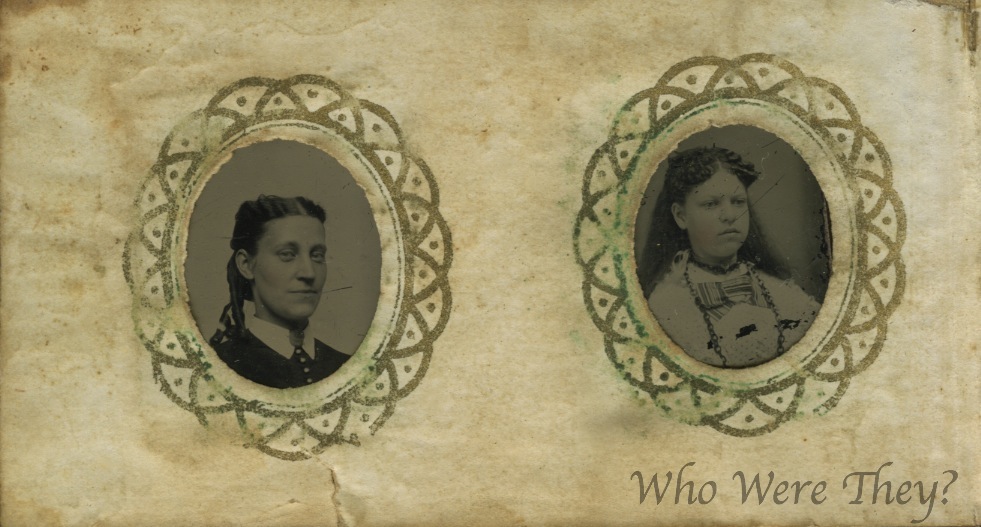
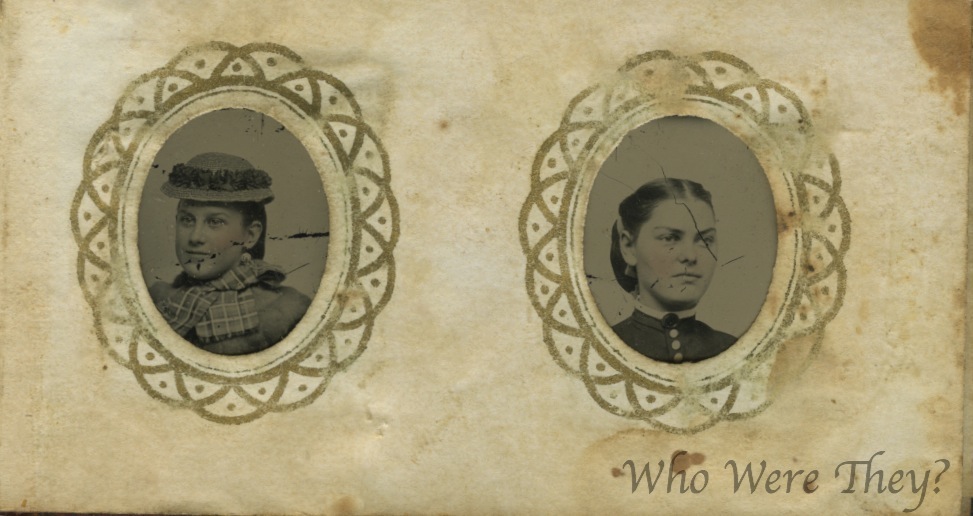
One lady looking superior, one young woman looking disgruntled. Such is life when arranging your hair for the photographer.
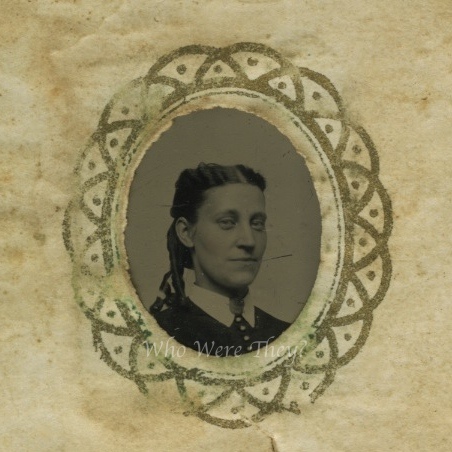
Smooth, oiled curls
In order to show off her perfect sausage curls, this lady has her head tilted in a 3/4 profile. Unfortunately, this gives us the “side glance” from her, and she looks a bit snooty, doesn’t she? Her clothing looks nice, well kept and fine, so perhaps she had reason to be smug.
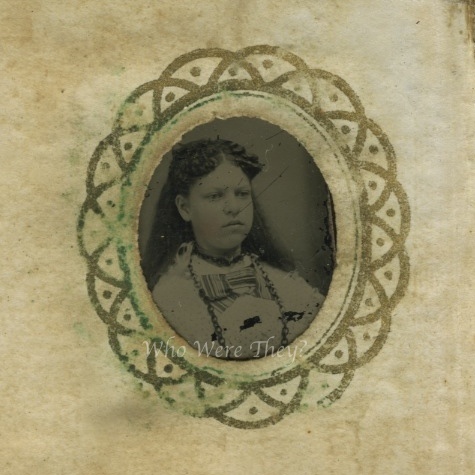
Frizzed out
By contrast, this soft faced girl has her hair brushed out in back, with soft, frizzy curls on top, as well. She is the antithesis of her page-neighbor. She wears what looks to be a knitted shawl over her dress, and there is also a long chain of round links, first around her neck and then draped across her bodice. That was probably a style her friends were also wearing at the time.
As site visitor Auntie Kat pointed out on my previous post – Toothsome – she could see herself wearing the hat pictured….apparently, these two women saw the same potential in this hat!
Do you like my hat?
If you look at this photo, and then look back at the previous photo, you will see these two women are wearing the same hat. They must have attended the photographer’s studio on the same day. Perhaps they were wandering through a marketplace and decided with giggles and shining eyes to have their portraits made. We shall never know, but owing to this young lady wearing her muffler on top of her outerwear, I can only imagine it was winter.
Buttoned down
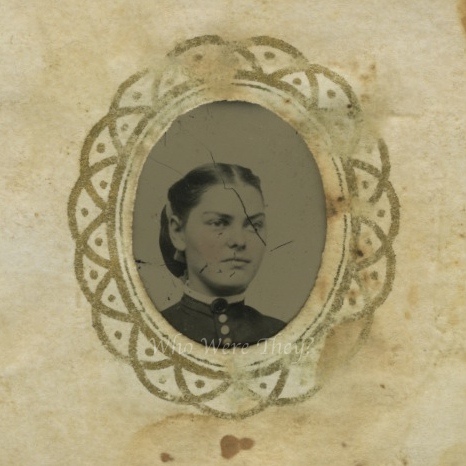
Completely unrelated is this pretty face with strong but feminine features, glossy hair, and shapely eyebrows. Her collar is high and straight, leading me to the 1870s for the time frame. I like her straight line of buttons that stand out in contrast to the color of her dress. Her hair style draws from the 1860s, but her clothing is firmly in the following decade.
Back in the day, the word “toothsome” was used similarly to the word “attractive.” According to the Mirriam-Webster Dictionary, it means agreeable, attractive, sexually attractive, or tasty as relates to food. Apparently, the word originated as describing something pleasing to taste, much like “sweet tooth,” in the 1400s. It was quickly extended to the language of attraction and the original meaning has become almost an afterthought.
Missing teeth?
The word toothsome came to me as I looked at this lady featured on the left hand side of the page. I am wondering if she had any teeth. These days it is pretty rare to see someone missing teeth, and frequently the absence of teeth is associated with bad habits, such as drug abuse, or poor living, such as malnutrition. It wasn’t until the 1970s that dentists began to link flossing and gum disease, so before our contemporary times, it wasn’t uncommon for someone to lose a tooth or have one pulled. When the front teeth are missing, there isn’t anything to support the lip, and so it collapses against the gums. Either that, or she possibly had a terribly pronounced underbite. There was no such thing as braces or corrective dentistry, only pulling teeth. Not everyone even brushed their teeth regularly, even though tooth brushes and cleaning powders were available. Aside from her possible oral issues, she otherwise looks clean, healthy and nicely groomed.
Straw Hat
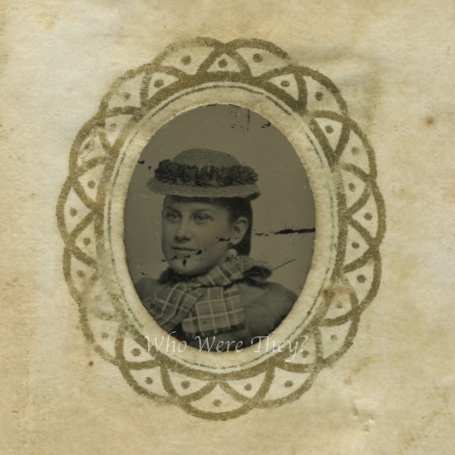
Conversely, this young lady looks lovely, without any visible flaws to her face or mien. She has a prim straw hat perched atop her head, her hair is drawn back, and she is possibly wearing earrings (it could also be a scratch or artifact on the image in the exact location of an earring). Her face is soft and her eyes deep, atop a wide mouth. Her look reminds me of none other than Al Capone, the infamous gangster of the 1930s. She could possibly be Italian, but I’m only making that guess because she reminds me of Capone. The cheeks of her tintype were tinted.
Sorry for my absence, I hadn’t realized it had been so long since I posted last! Yikes, it is funny how time gets away from us so quickly.
Today, let’s look at these two young women. I have heard recently that the early photographic techniques tended to add age to the faces of the subjects due to limitations in what the camera lens could see clearly. I don’t know which is better, adding age or 10 pounds! Anyway, these two ladies appear to be in their early twenties, although the one on the left *looks* like she could be older. Likely she isn’t.
Fringed
The dress shows features of the 1860s, but the hair looks 1870s. This is likely a later 60s image. When you enlarge the photo, you can see the fringe across her bodice in a shallow V. Also visible is the collar detail. The bodice has a folded collar of a darker color, with a narrow white stand collar inside. This is indicative of post-war fashions, as during the war, the bodice was made with a jewel neckline (simple rounded edge) and a white folded collar was basted directly onto the dress. Here the folded collar remains, but the basted white collar is a small band. Both types of removable collars served to protect the garment from the oils and dirt of the skin, and could be removed for washing. The dress itself was likely spot-cleaned when needed and air dried for freshening. The hairstyle here is parted in the center, but the side fronts are boosted toward the top of the head rather than lower toward the ears, as was popular in the 1850s to early 1860s.
Headbanded
This young lady shows her youth in her soft face, but she is still a fashionable young woman. Her hairstyle is simple – center part and pulled back into some type of arrangement, but also featuring a band of some type, possibly a ribbon. She doesn’t have her hair in a ponytail as we might expect to see on someone her age today. The rounded edge of her chignon is too smooth. However, she does have a ribbon tied on the back, which shows her connection to youth. Her ears are pierced and she is wearing moderate size dangle earrings. Her dress also has a standing small band collar, and she has a small bar pin at the throat. The darker trim of her dress reminds me of a string bow tie, but it appears to be part of the fabric of the bodice. I’d put this one in the early 1870s.
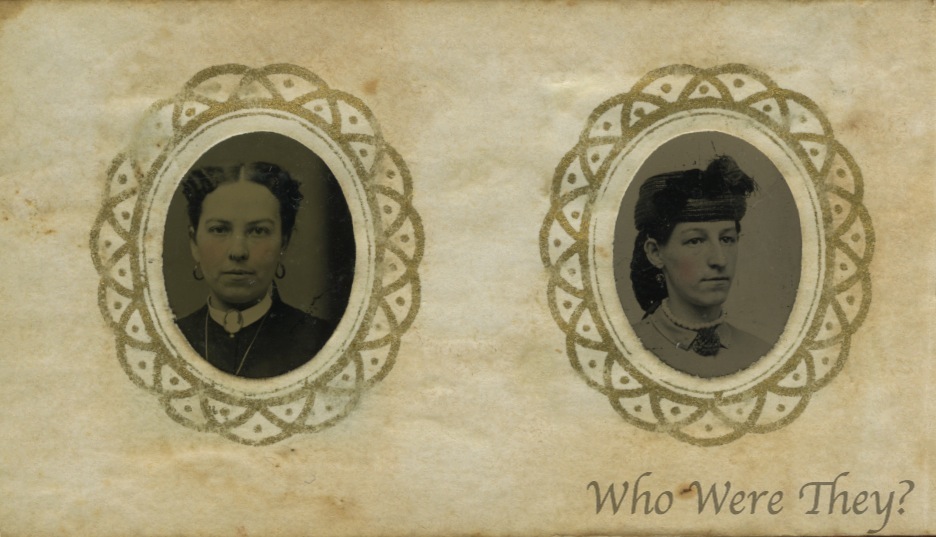
Here we have two women from the later 1860s or early 1870s. We can tell this by their hair styles and collar styles. Let’s take a closer look.
Waved & bejeweled
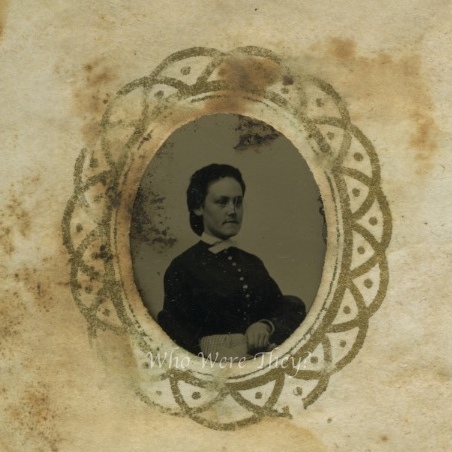
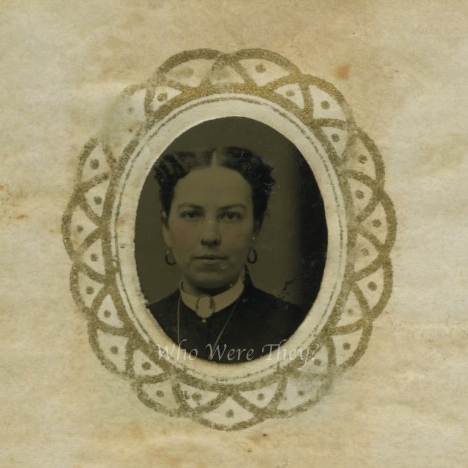
First up, this lady has her hair styled in finger waves before being pulled to the back of her head. The dominant style for hair in the 1860s was a part in the center and smooth, oiled hair that was close to the head, before widening out around the ears. This gave the woman’s face a nice, round appearance. In contrast, this hairstyle draws the eye up toward her eyes. She also has on rather large earrings, a large cameo brooch and a necklace of some type that we cannot see fully. Her collar is a small band rather than a Peter Pan or folded style. We know this to have come into fashion in the post war years. I believe her cheeks were also slightly tinted on the photo.
Straw hat
Next we see this lady who decided to wear her hat for her photograph. This style of hat, which we now call a pill box/pillbox hat, was just called a hat with no special name that I can find. It has a rolled brim, and has been adorned with feathers and a wide ribbon. At first glance, it appears she is wearing a small ruffled collar above or inside her fold down collar, but in fact it is a pearl or bead necklace. She also had a large brooch of some type and you can just see an earring on her exposed ear. Her photograph was also lightly tinted on her cheeks.







 Who Were They?