Who Were They?

Lost and forgotten photos from the past

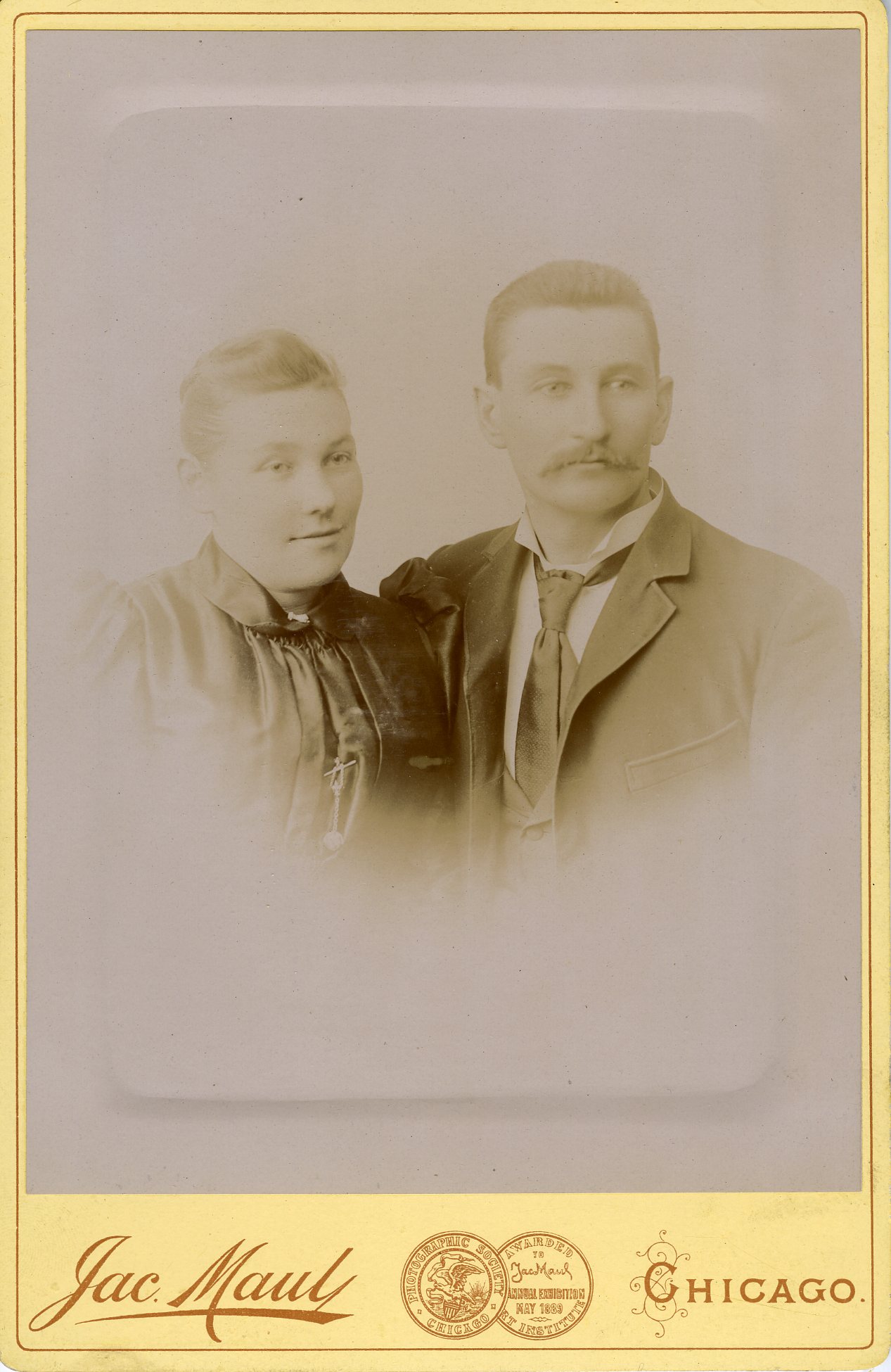
You can definitely tell this photograph is purple, indicating it was made using the collodion process and making its date sometime after 1894. The photo also seems to have something underneath it, making the ridge that you can see around the image. It’s almost padded. This photo is placed under the baby from our last posting. They don’t look like the couple on the other side of the page, so it may be a safe guess they are Io/Jo/I. O./J. O.’s parents. It is such a shame that nearly every photograph in the Dobb Long Book goes unnamed, as they surely picture families, friends, loved ones and relatives who led full and happy lives.

This post is a proud Sepia Saturday post. Please click through and take in the sepia goodness from around the world.

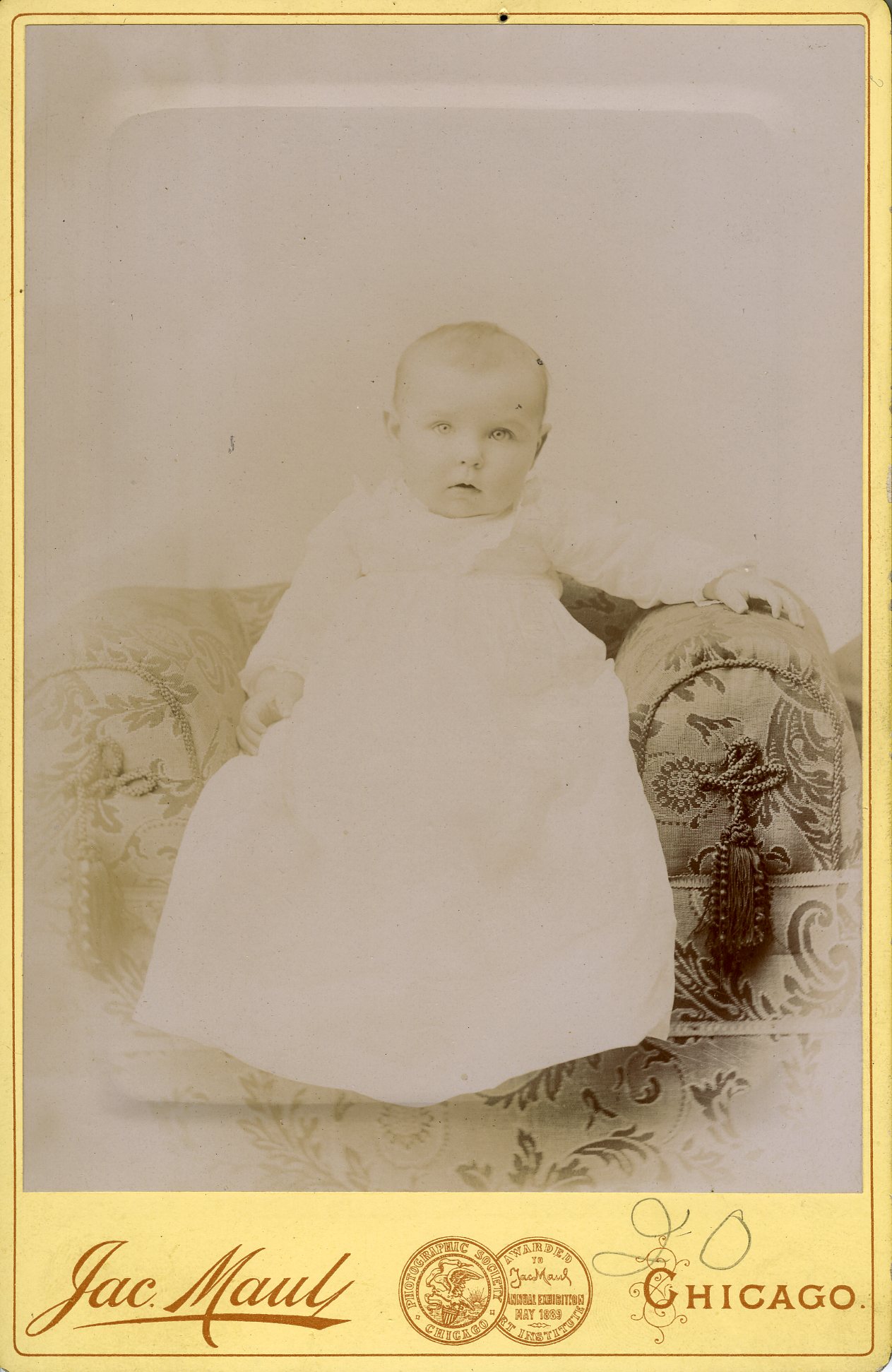
Here we have a baby, perhaps three or four months old, resting on what looks like a miniature easy chair with flower & paisley upholstery. The photo is directly to the right of Mr. Mysterious and also has that lilac tinge of the colodion process to it, so presumably is after 1894. Written above “Chicago” is Io or Jo, or possibly I.O. or J.O. It’s not much, but it is more than we have had for pages on end!

The photographer was Jac. Maul, who’s work we saw previously here. His full name was Jacob Maul, and he has his two photographic medals duplicated in the artwork next to his name.

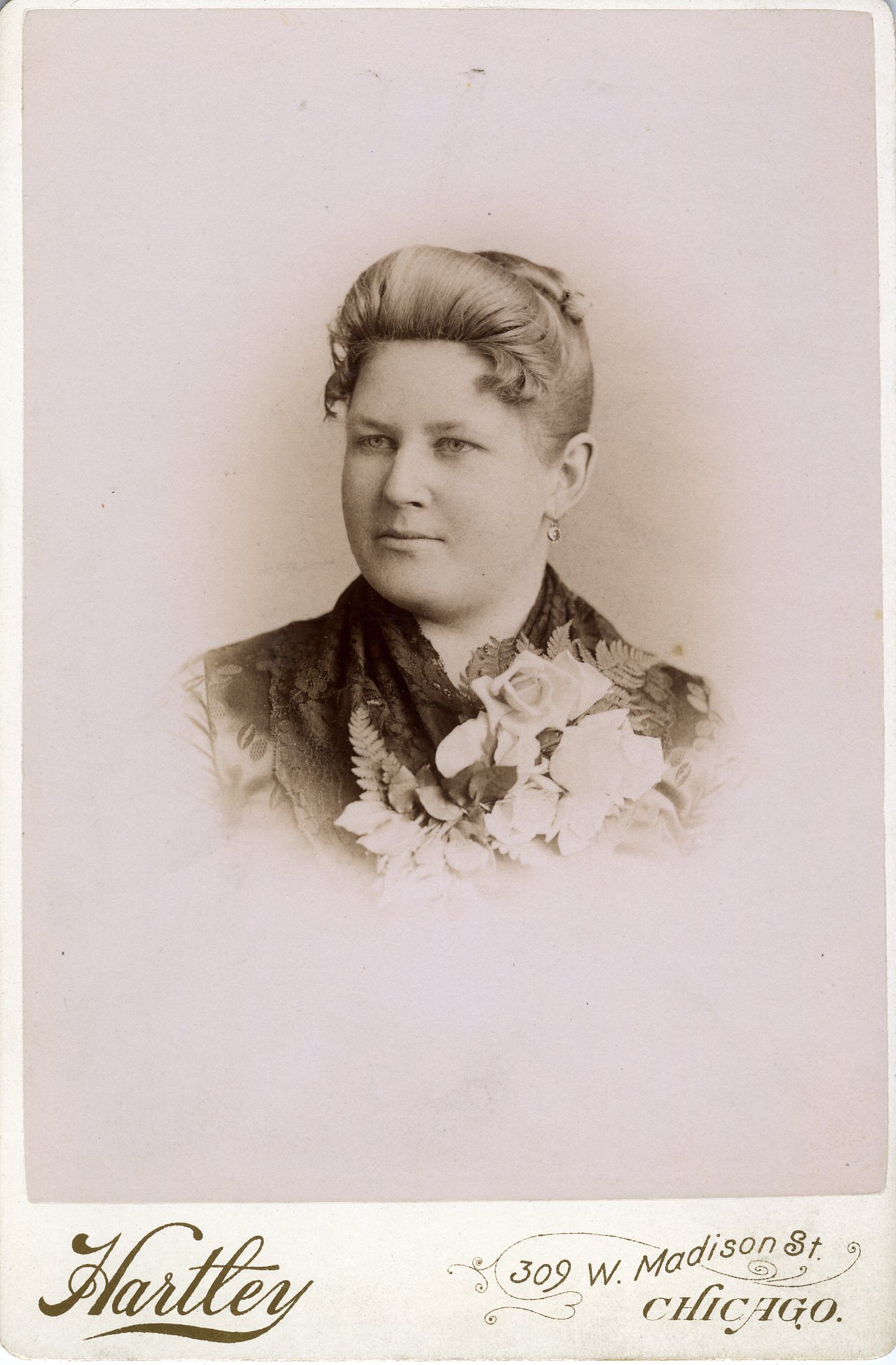
I believe this lovely lady to be posing for her wedding portrait, based on the lovely flowers adorning her bodice. Her position in the Dobb Long Book is directly below Mr. Mysterious, so perhaps they were both sitting for their wedding portrait. She has a rather interesting turn to the pouf of her bangs, and such prodigious bangs they are. They must have been the inspiration for whatever it was we were doing with our hair in the 1980s! Her dress is satin brocade, and I am picturing it in deep red hues.

Hartley has been used by this family a couple times now. On my previous post I linked over to another website showing the back of a Hartley cabinet card that had even more text than this one. Given that this photo also has a bit of a lilac tint to it, I will date this to 1895.

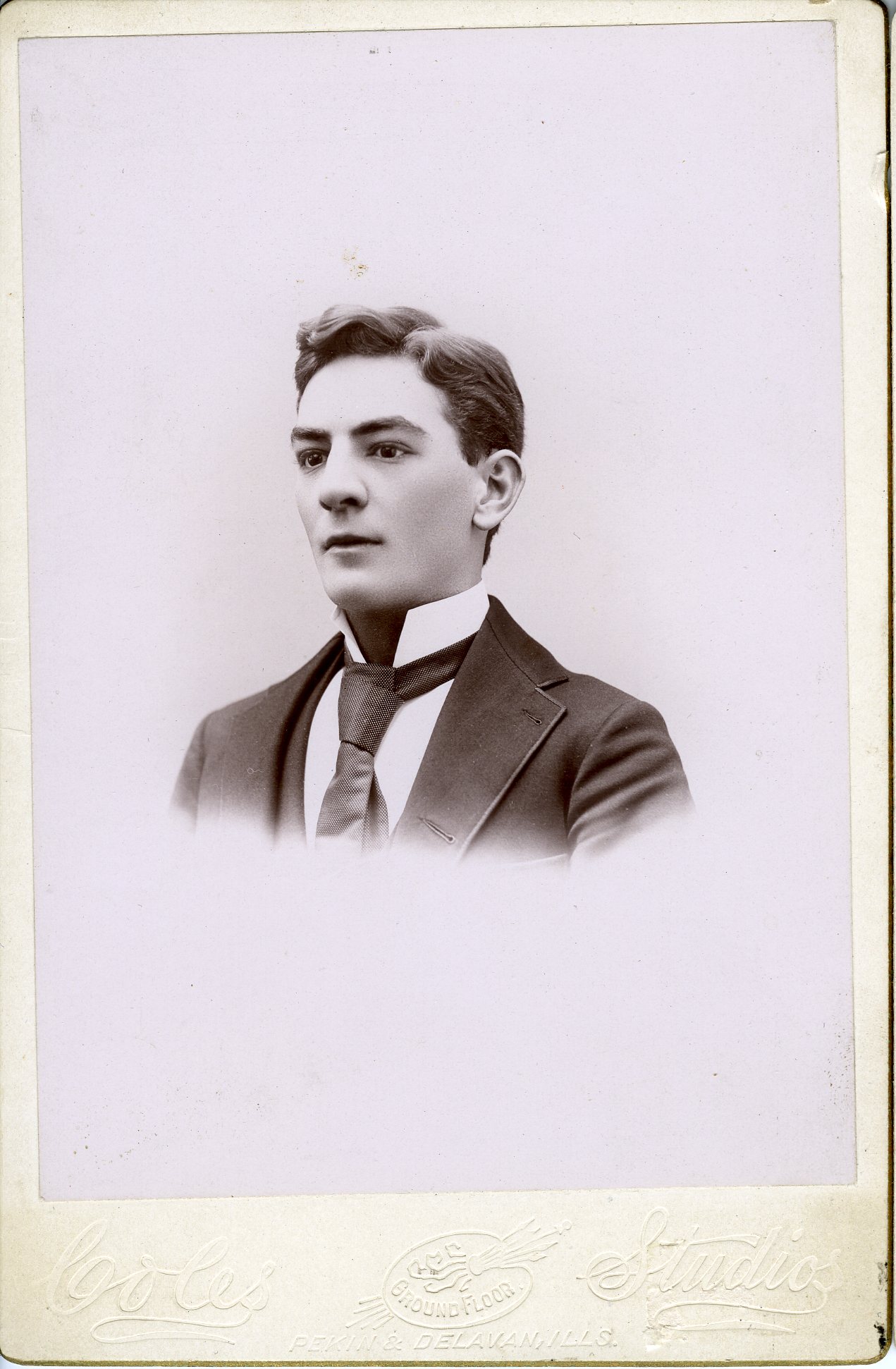
This fellow has what I consider to be a “mysterious” look. The wave in his hair, the dark eyebrows, the large nose, these combined with the quality of the photograph make me think of the “tall dark and handsome” of early movie lore. I have a good feeling – although no actual proof – that this is a photo processed with the more modern collodion process. The paper and chemicals were not as susceptible to yellowing as were older images. The process also resulted in deep, rich tones that could sometimes be bluish or purple-ish. This photograph has a lilac tint to it, which is what clued me in.

The photographer was H. H. Coles, who’s work we have previously seen in the Dobb Long Book. This card has an embossed (raised) logo, and also tells us that Coles was operating in Pekin and Delavin, IL at the time the image was made. Coles was in Pekin, IL between 1879-1900. Because of my collodion theory, I am dating this after 1894 but before 1900.

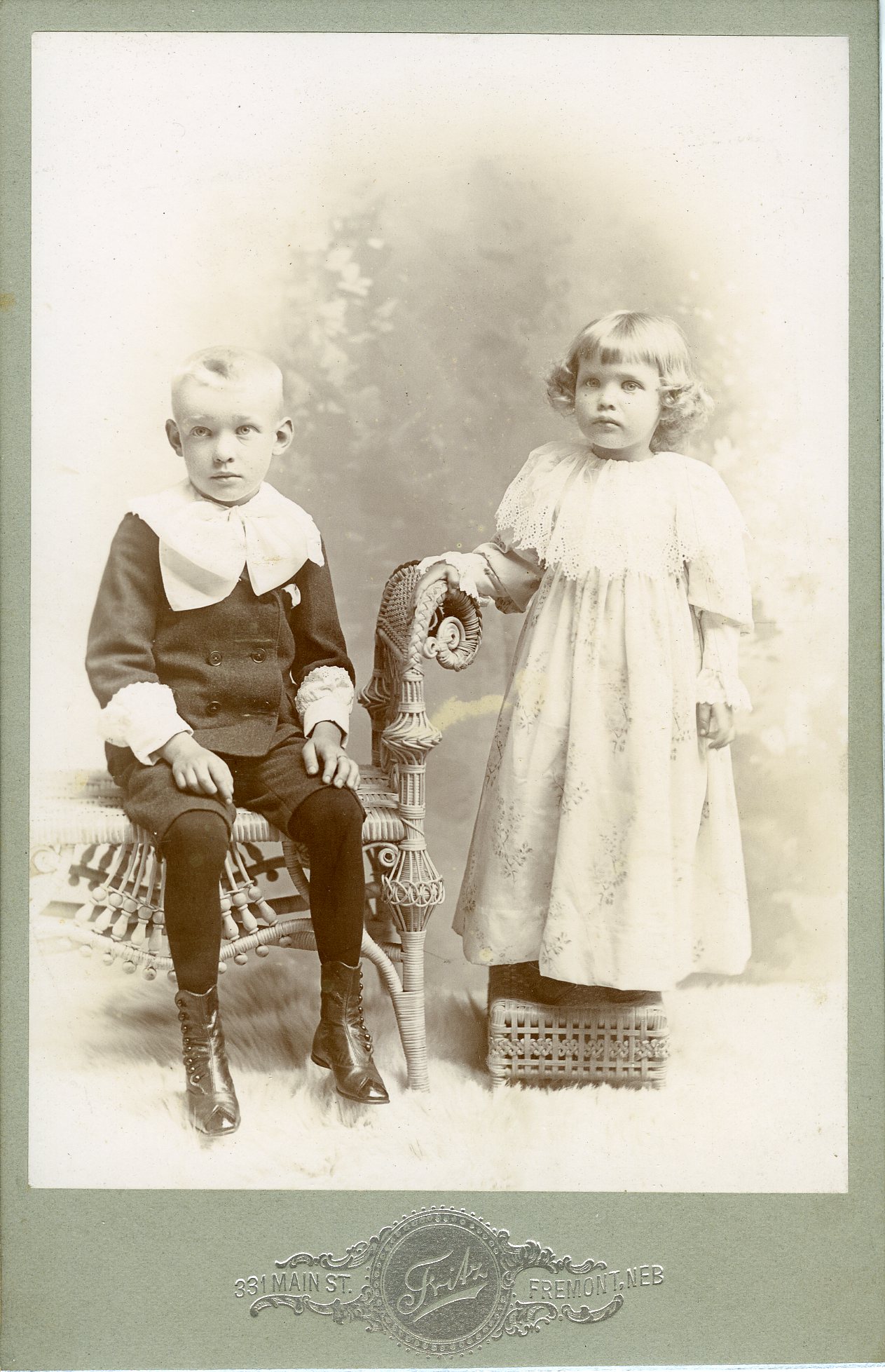
This photograph lives in the opening below our previous one of the couple on the maroon cabinet card. It was also made in Nebraska, so I assume they are the children of the couple. The boy has a very wide fancy collar and large bow on his suit, with lace cuffs, short pants, stockings and boots. He by far holds my attention, but little Miss to the right is also a beautiful child, with her full dress, lacy collar and gorgeous curls. Could these be the two children from a couple posts back?

The suit of clothes our young man is wearing is modeled on the Little Lord Fontleroy craze that swept America beginning in 1885 and remained fashionable through the turn of the century. The fashion was inspired by the illustrations by Reginald Birch in the book by Francess Hodgson Burnett, Little Lord Fontleroy. While the book described a boy in a velvet suit with a lace collar and long curly hair, of course fashion and personal style dictate what ultimately becomes part of the wardrobe. Many boys did not sport the long curly hair, and the suits were sometimes not even velvet. The fashion was incredibly popular with suits being handed down from one generation to the next. One source I looked at suggested that dressing boys in short pants may have led to the acceleration of breeching of boys and the drawing away from dressing boys in skirts and dresses during infancy and toddler ages.

I’ll date this cabinet card to 1890.