Who Were They?

Lost and forgotten photos from the past

I have been told and have read many times that the Cartes de Visite (CdV) photographs were used as calling cards or visiting cards, and while I never doubted that, I always wondered what exactly was done with them. How did the hostess handle those CdVs taken at the door from visitors? I can now tell you how they were handled in two households at least.

Example #1

A pretty young woman in a basic post-Civil War 1860s era dress. The card corners are square and the borders date the card to 1864-1869. A nice likeness of this young lady.
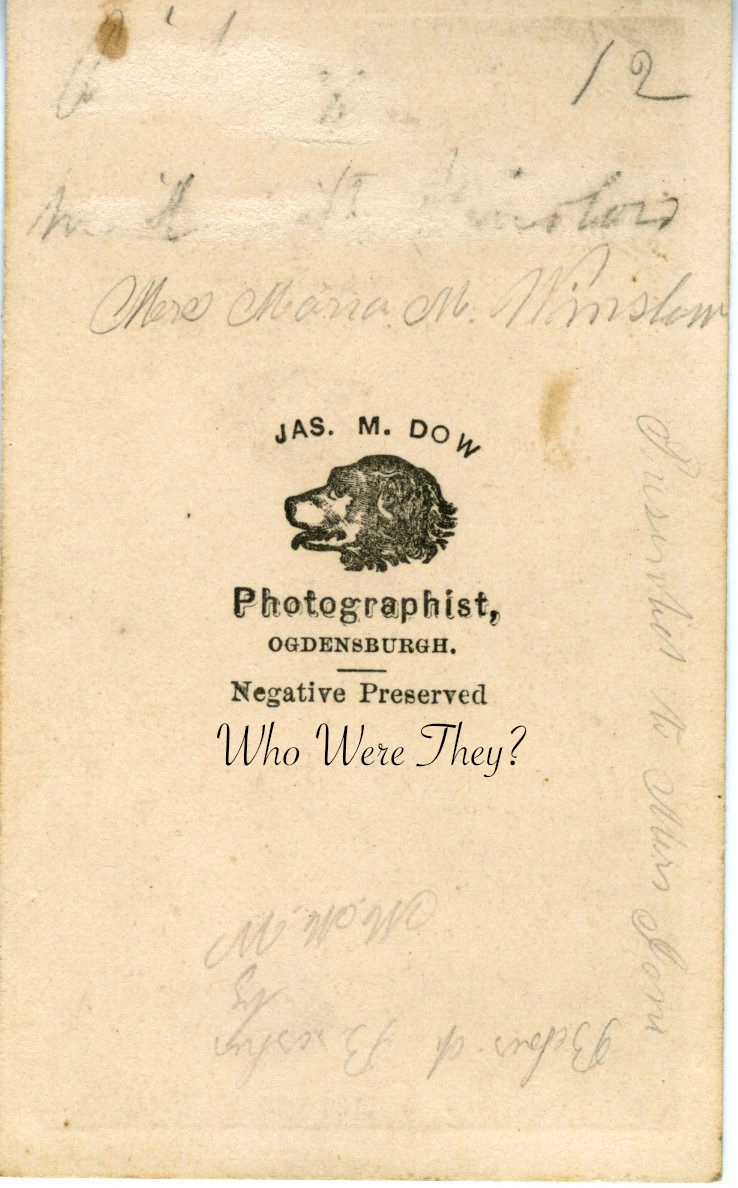
On the back are notes in pencil. I have digitally played with this to enhance the writing. It appears to say “Mere Marra M. Winslow” across the top. Along the side and continued on the bottom it says “Presented to Mrs Joni Beber of Brasher by MMW.” I don’t know what was scratched out at the top of the card, maybe it was misidentified by the butler.

Example #2
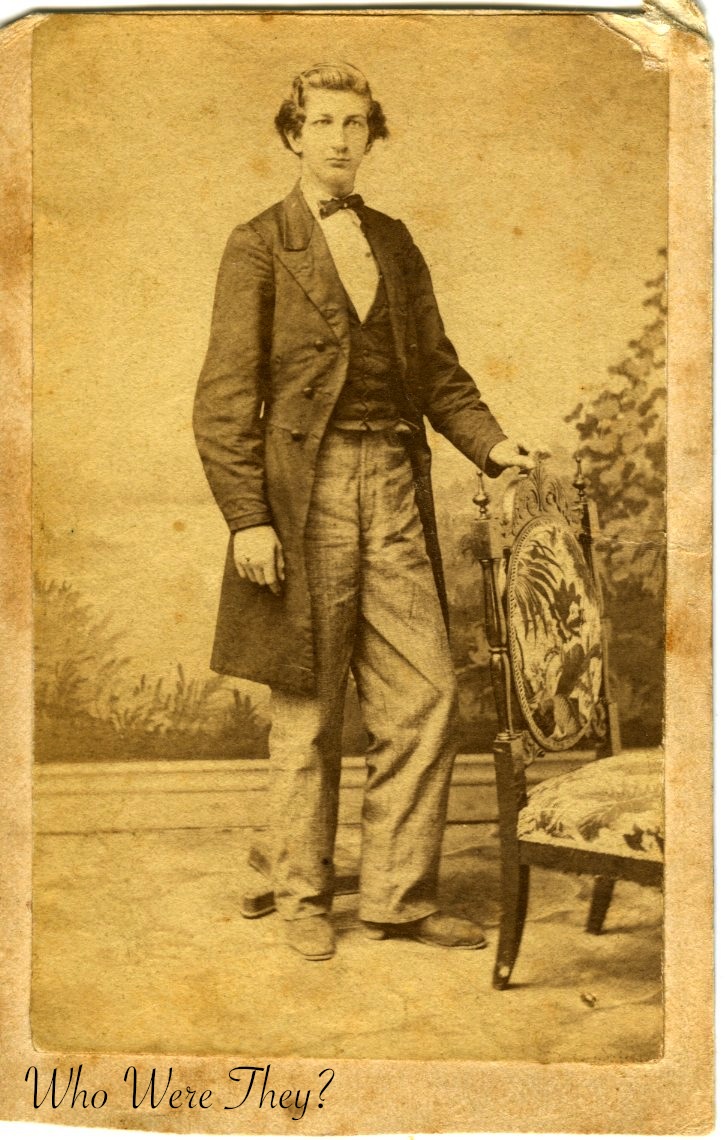
A handsome young man in a similar setting as the previous photo – a scenic backdrop and a chair. This card is terribly yellowed and damaged. The back is even worse.
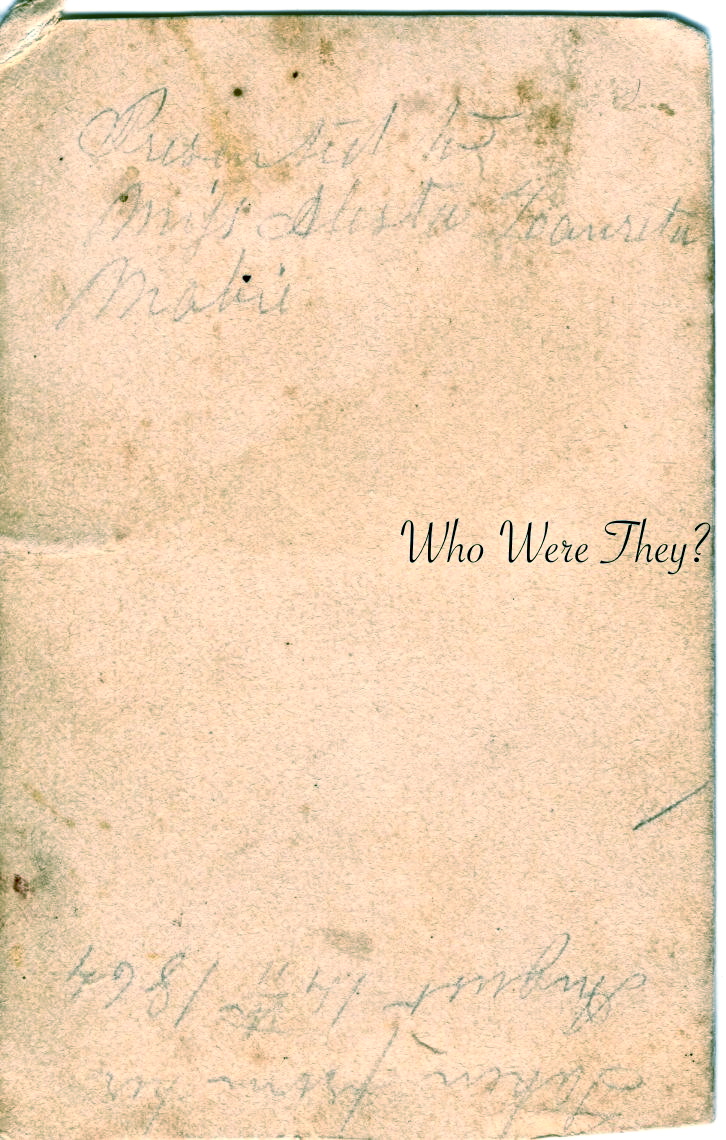
In adjusting the color levels it has turned almost pink, but it’s almost brown with age. The top portion says “Presented by Mist. Alesta ???rita Mabre.” I can’t quite make out the middle name and Alesta doesn’t seem correct for a man’s name. It might be Alestair but the handwriting doesn’t resolve into that for me. The bottom portion says “Taken from sir August 14, 1864.”

Being as the second photo does not have a photographer’s mark, I have no way of knowing where this young man was from.  The first photo was taken in Ogdensburg, NY.

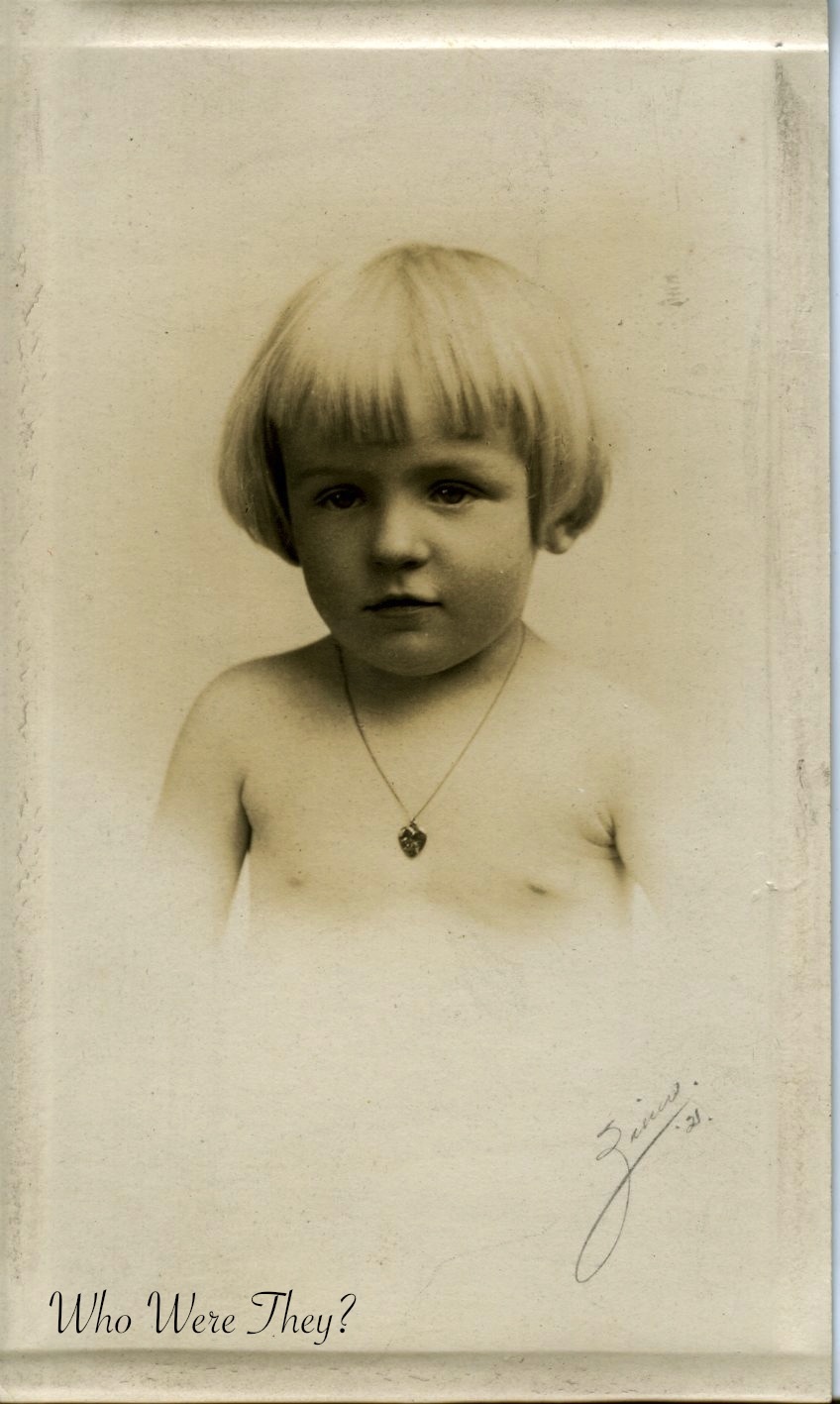
This little photo from 1921 is slightly longer than a CdV and features a little girl (I think) wearing nothing but a necklace with a locket. My curiosity is piqued. Was the undressed child photo common?

The photographer’s name was something like Zaines or Zainer, written in pencil in a very fine hand.

This unusually shaped photo features a young girl, about 3-5 years old, in a bonnet. The girl does not appear to have any clothing on, but some type of a boa wrapped around her. I have seen a similar photo on another site, but I can’t quite recall where. In my photographic explorations I have seen square photos taken on the diagonal, but never one in a diamond. I hope that someone out there may recognize this style and comment. Based on the content of the photo, I am thinking 1915-1925. This photo came from an antique shop in Orange, CA.

I’ve submitted this as a Sepia Saturday post because of the potential Easter bonnet this child could be wearing. It’s a stretch, I know, and it would be much better if she also had on an Easter dress! Please click through and browse the bunnies, chickies and other Easter paraphernalia from around the world.

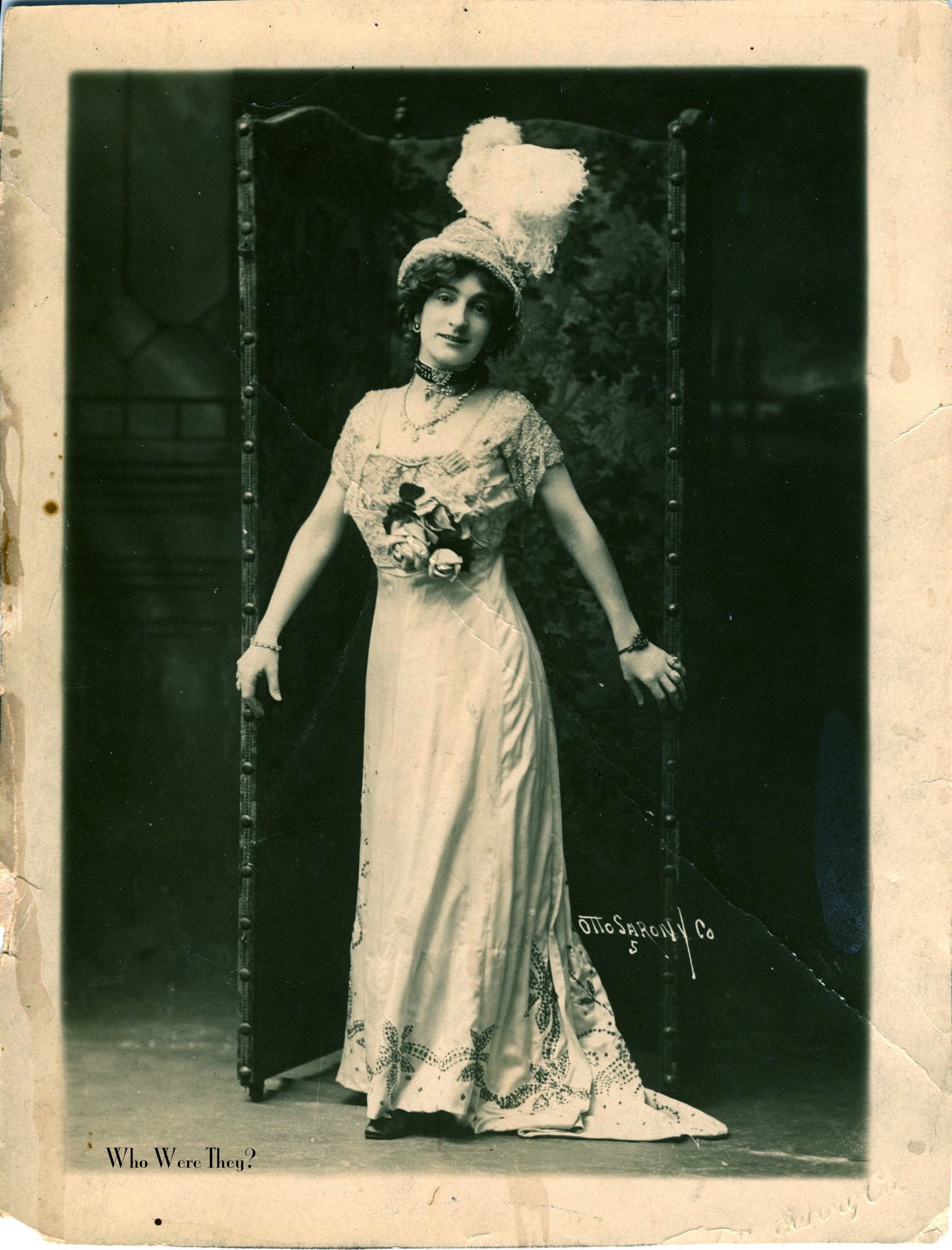
I have never seen a photo is this shape; have you? It looks like a bookmark. It is definitely not a photo postcard that has been cut down, but it is of a similar weight to a photo postcard. This lovely lady glows in the soft back lighting that was popular in studio portraiture in the 20s and 30s.

This lovely image is the vaudeville actress Irene D’Arville. She was popular around 1910, being featured on the cover of a magazine in December 1909 and was active at least up until 1914 when she had a playlet copyrighted (it was a comedy entitled The Men Next Door). I have only found two other photos of her, although that could just be today’s search results. Google sometimes confuses me how the same search on a different day will return different results. There may have been a family of D’Arvilles in the business, as there are many different vaudevillians with that last name.

Anyway, the photo is about a 5×7, taken by the Otto Sorony Co photograph studio. There is a great story behind the studio. Napoleon Sarony was a renowed photographer in the post Civil War period up through the turn of the century. His son Otto worked alongside him in the studio, although Napoleon only posed the sitters while uncredited photographers made the images and processed them. Napoleon dominated the market for celebrity photos and was known as an eccentric. Upon his death 1896, his son Otto was willed the business with a stipulation that he operate it for 15 years and only earned $75 per week (quite a lot at that time). Otto was apparently unhappy about these stipulations and sold the business brand Sorony Studios to a new owner. Later, having decided that he wasn’t making yet enough money, he sold his name to a different photographer. Between 1901 and 1909 or so, photos made under the Otto Sorony Co name were neither overseen by Otto, nor photographed by him. He died in 1903 of pneumonia before the two photographers using the Sorony name in some way ever finished their court battles over the name.