Who Were They?

Lost and forgotten photos from the past

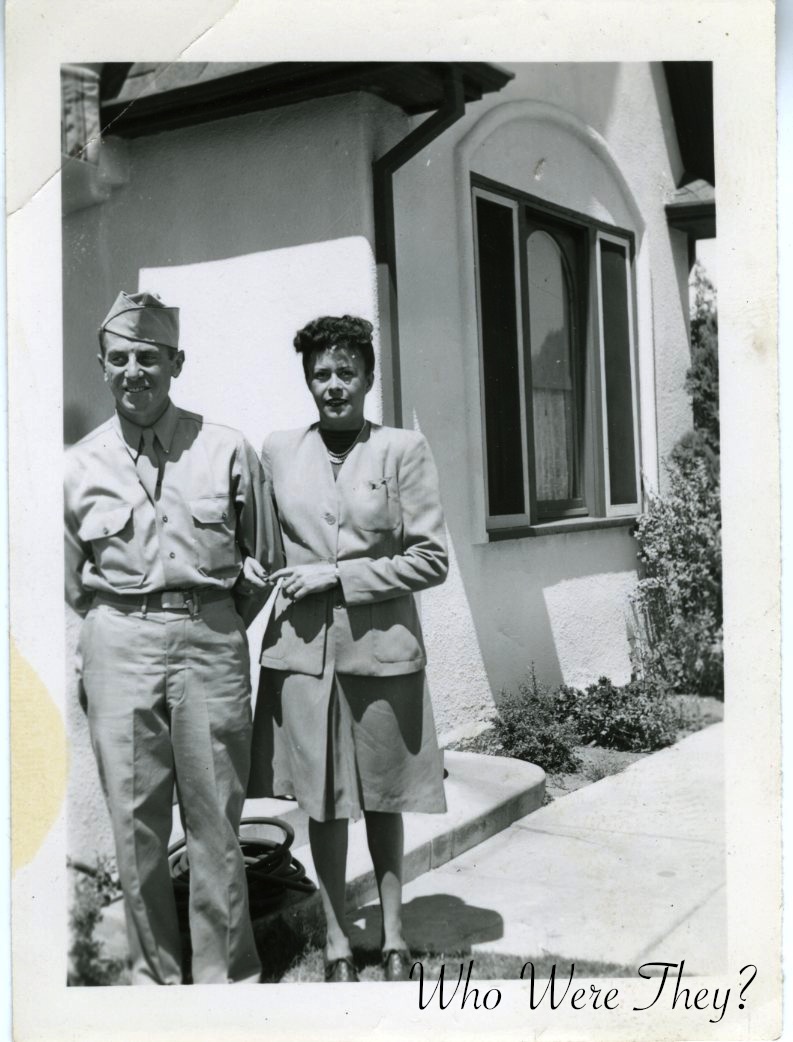
This little snapshot is of a handsome Army man and a lady in a nice suit. I can’t be sure of her age, so she could be his mother or his wife. The way she is holding his arm, I’m leaning toward mother. The photographer managed to capture the side of the house and the front window quite nicely. The arch over that window makes me think vintage California suburbs with the Spanish influence.

Here we have a fine looking Naval officer standing in front of the doors to a building. I don’t know anything about WW2 era ranks, so please chip in if you know! You can just see the shadow of the person taking the photo in the lower edge of the frame.

This week’s prompt for Sepia Saturday is a photo of a “Rosie the Riveter” working on an airplane engine. The weekly prompt is usually just a jumping off point and some folks follow the theme, some folks don’t. I often don’t follow the themes because I just don’t have anything that goes well with the prompt, but this week I was delighted! I recently was digging through a box of photos at an antique shop and found quite a number of photos of military men, dating from around World War II. This will kick off a weeks worth of military heros and the women who loved them as we approach July 4th, Independence Day.
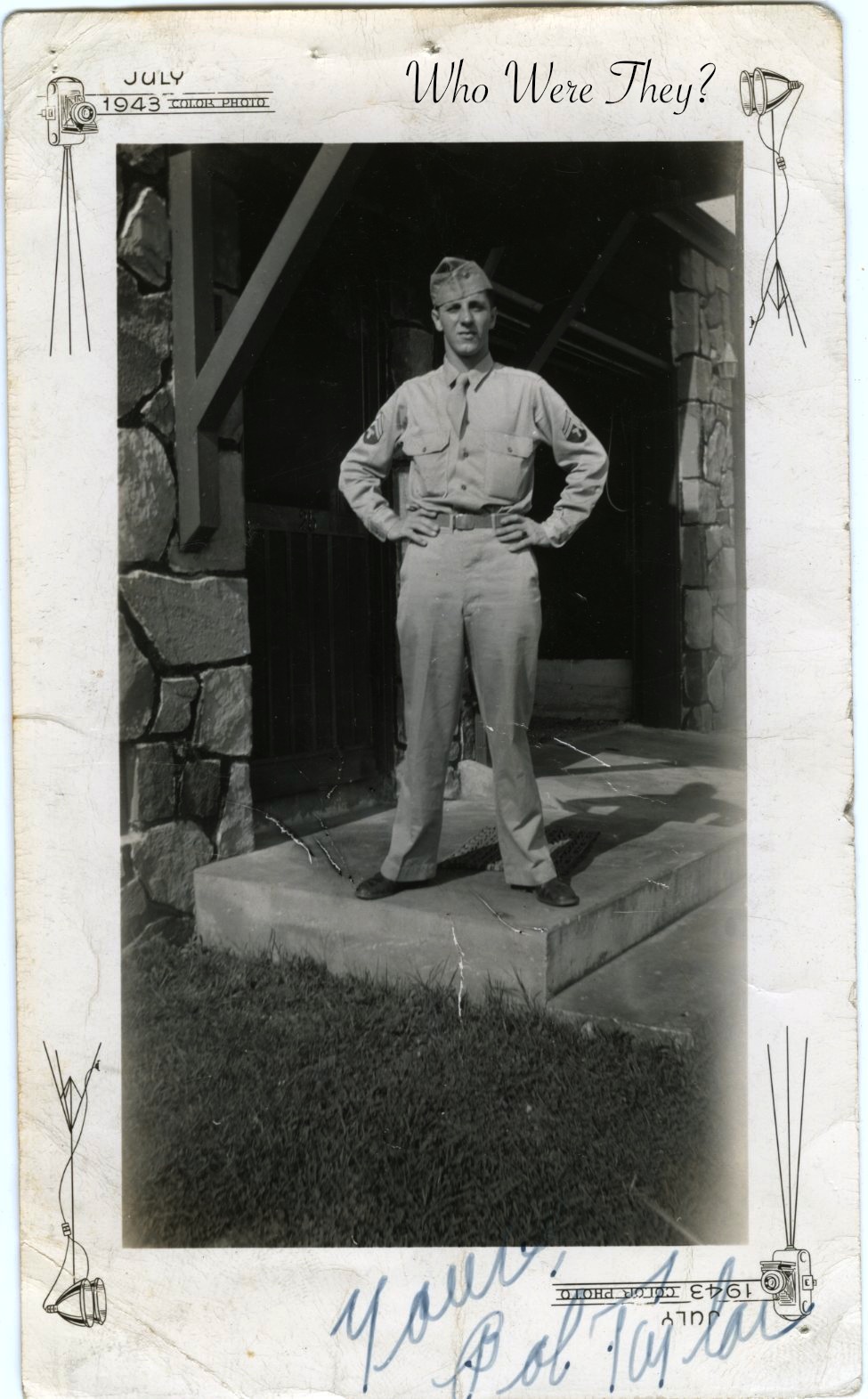
We start off with Bob Taylor, posing on the front porch in his Army duds in July 1943. This appears to be stateside.
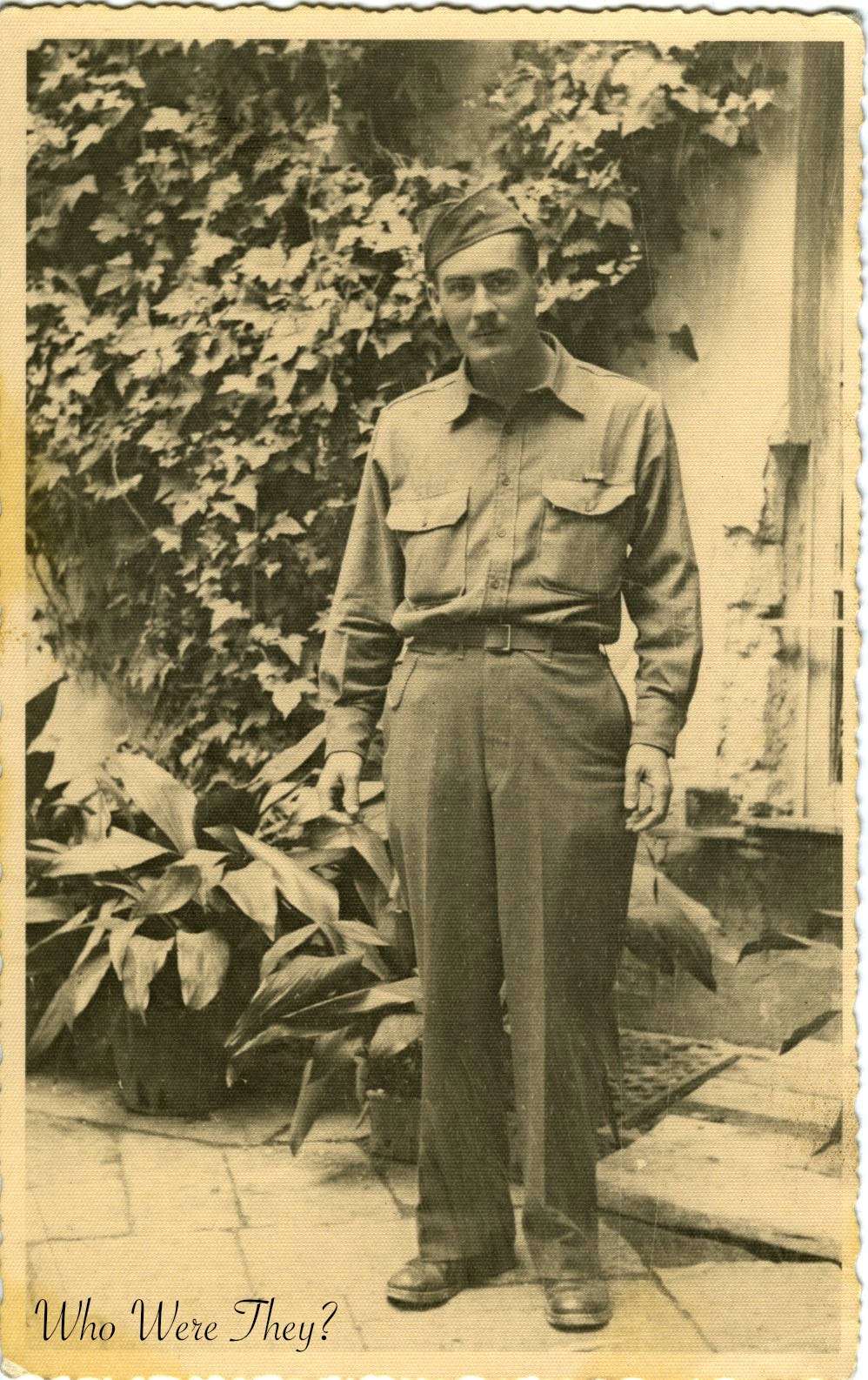
And here we have an unnamed gentleman, but the photo postcard is dated October 22, 1943 in Naples, Italy.
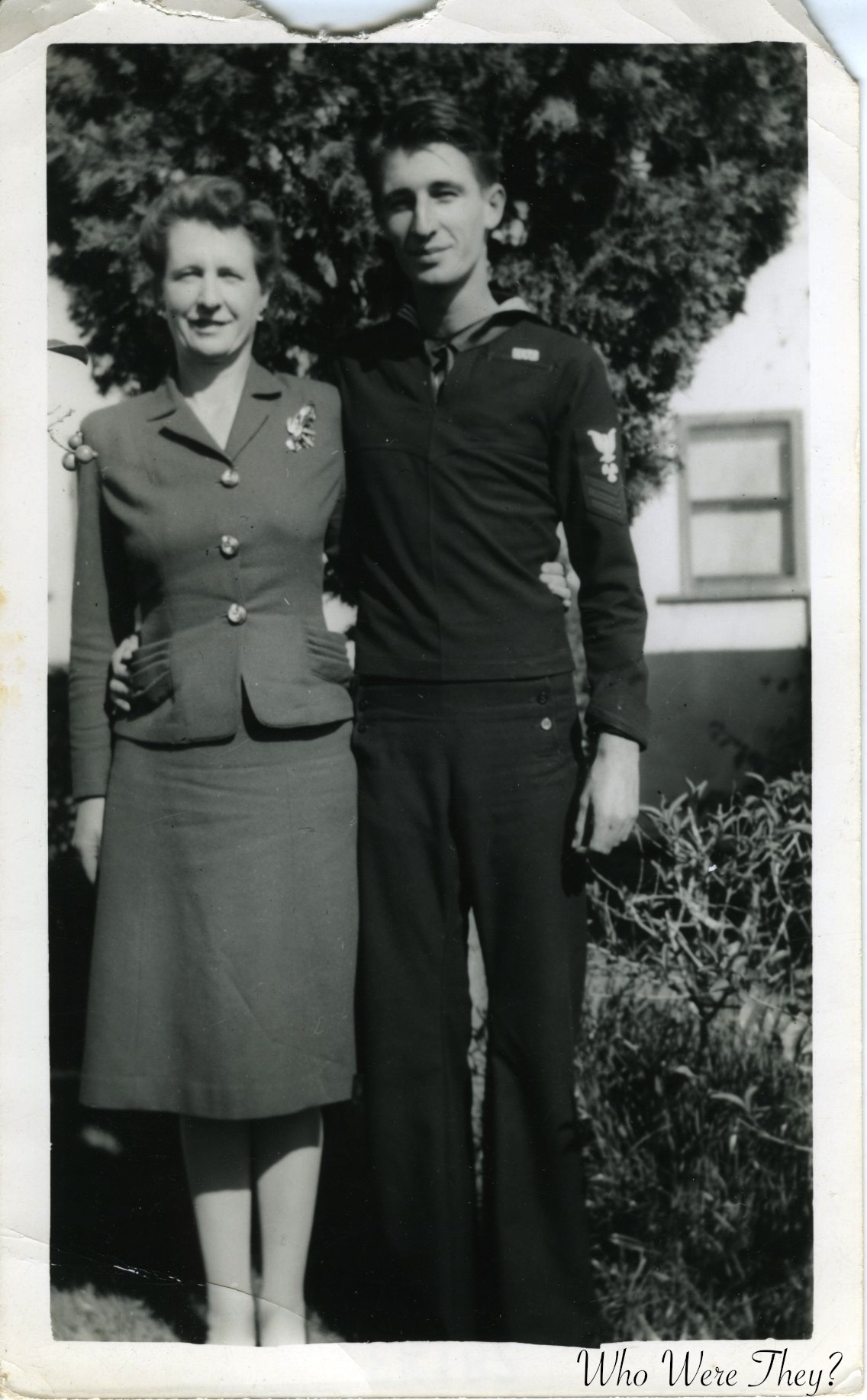
Third, a proud looking sailor posed with his mother in his blacks. This looks like another “in front of the house” photo, and makes you wonder if this was right before he shipped out or during leave.
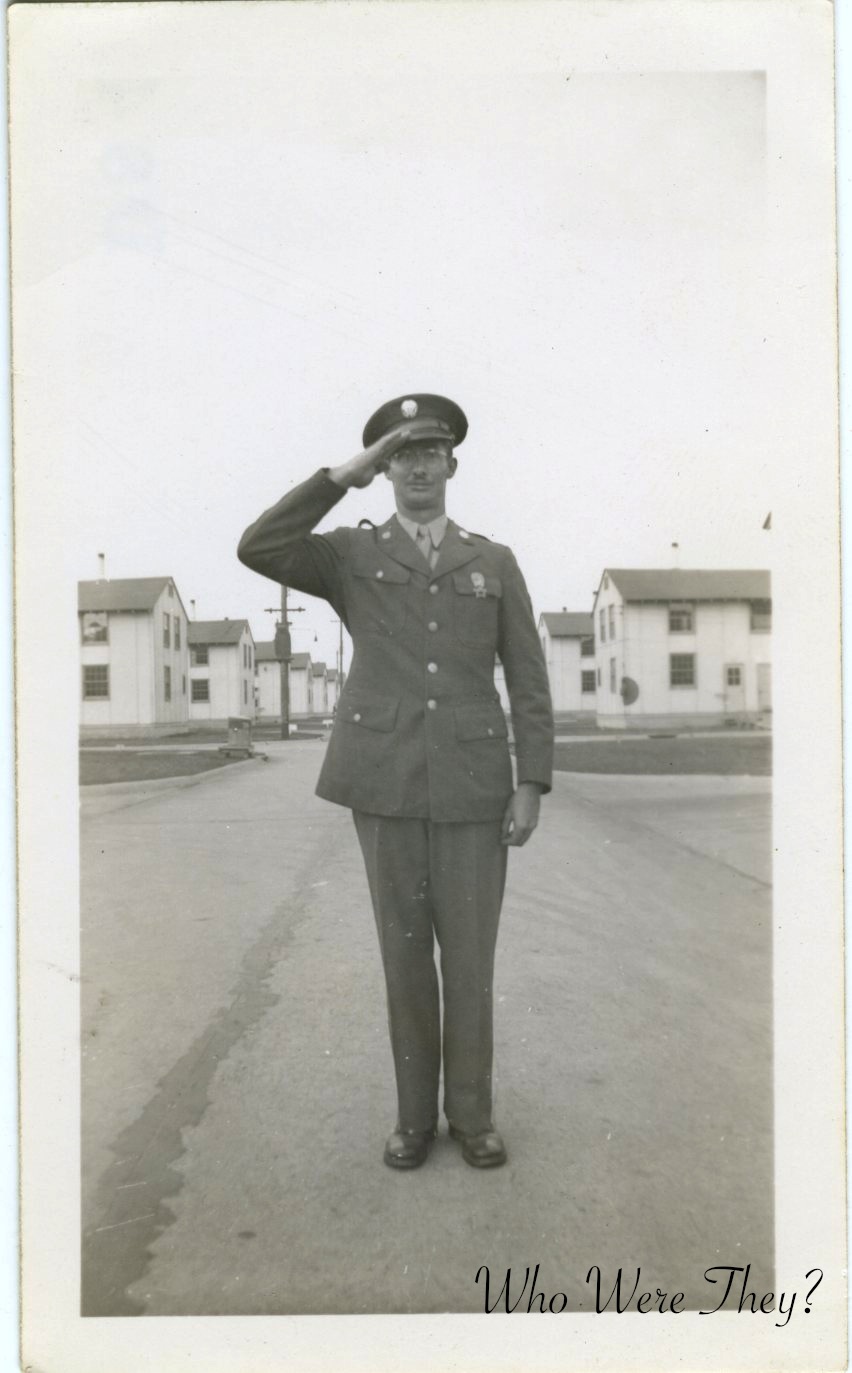

Finally, a salute to all our fine military men past and present. Click through to Sepia Saturday to explore the possibilities of a Rosie the Riveter prompt!
This is one of a massive packet of photos bought from ebay and well worth it. I was initially drawn to his pointed mustache, the type that tempts a mans fingers to twirl the ends. After examining the photo, I have come to realize that this is likely a collodion print because the colors are so very rich and clear. The collodion process is more like our modern film technology, and resulted in crisp images. Prints also sometimes have a lavender, purple or deep blue shade to them. The collodion process was popular in America after 1894, so that is the date I am using. However, this CdV features text in what I think is Swedish. Perhaps one of you can confirm this for me.


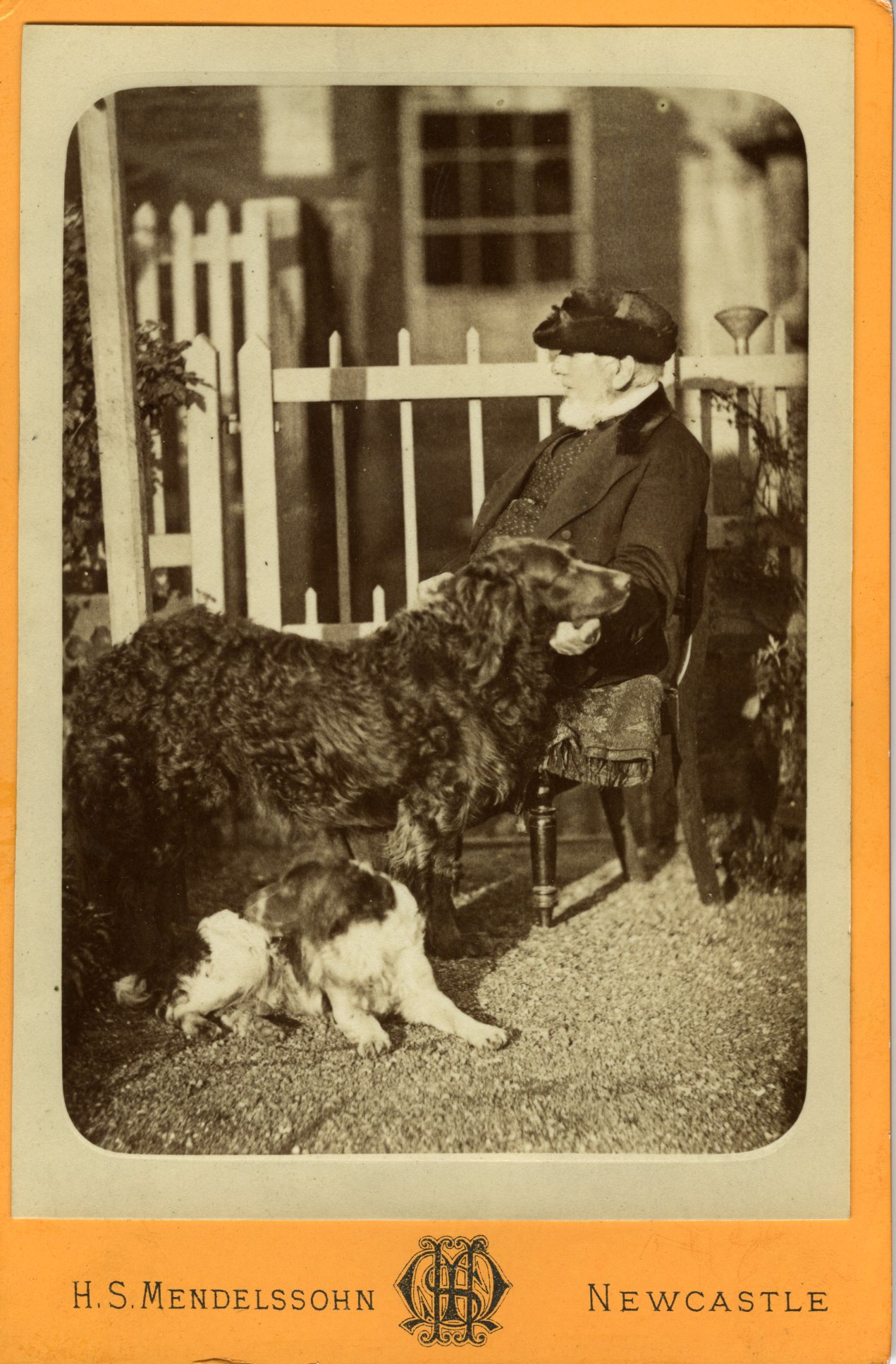
I particularly like this photograph from Newcastle on Tyne in England. The subject is an older man and his two dogs, one an Irish setter and the other looking a lot like a spaniel of some kind. I find it revealing that he chose to be photographed outside with his puppies rather than in a stuffy drawing room, and that sentiment makes me wonder if he was a hunter. I also love that the card itself is orange! I have seen so many yellow, white, pink and beige cards that a bright orange one really stood out. I paid a whopping $5 for this photo and half again as much for shipping.

The photograph is from the 1890s almost certainly. It has a glossy finish and there is a “padded” quality to the photo, giving it actual depth. The very edges of the card are red, although that can’t be seen in the scan. The photographer was H. S. Mendelssohn at 17  19 Oxford Street, Newcastle on Tyne.