Who Were They?

Lost and forgotten photos from the past


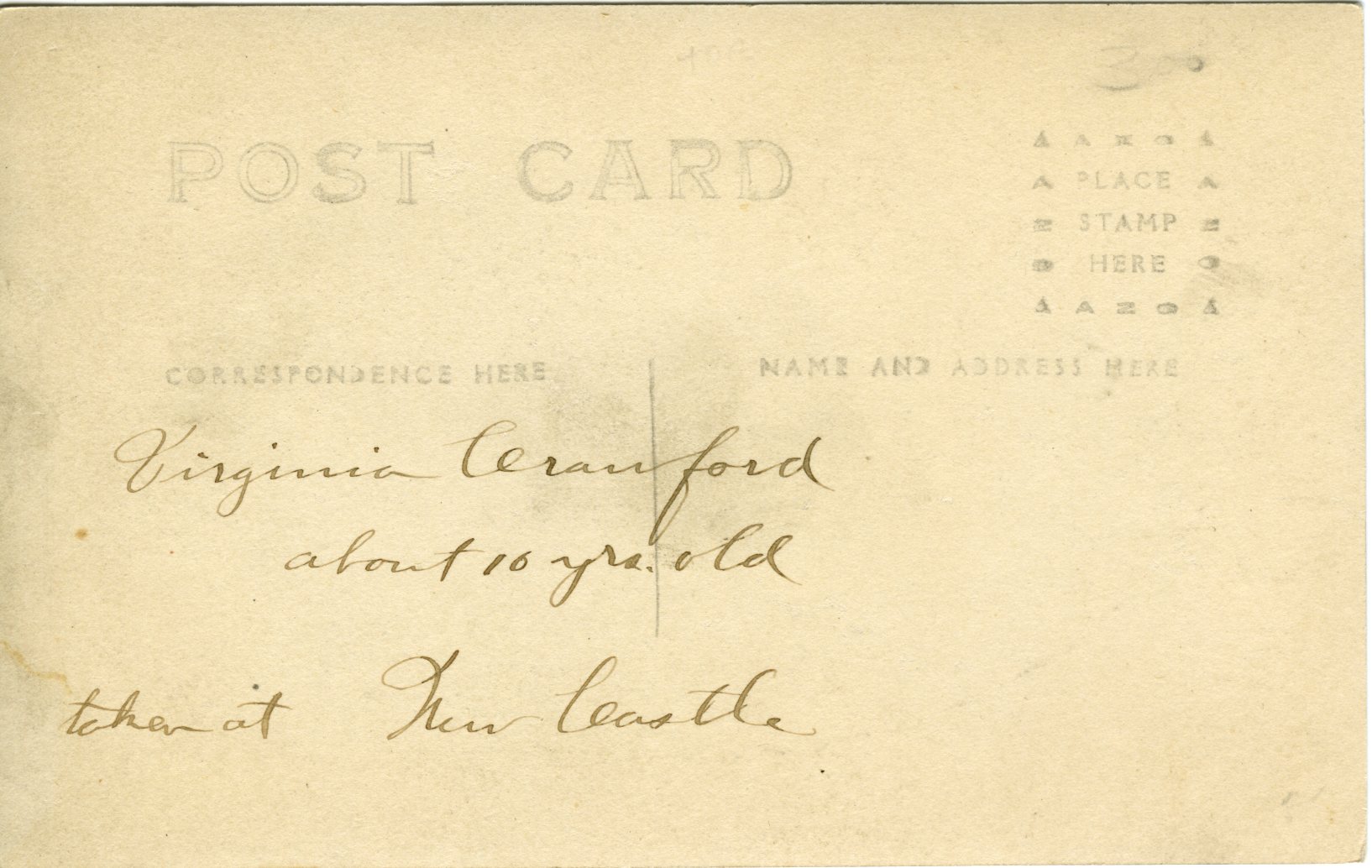
Today’s feature is an AZO real photo postcard with the corner triangles pointing up, so we can date the photo to between 1904-1918. A real photo postcard is a postcard made on photo paper, meaning the photo was developed directly onto the postcard. One of the popular type of papers made for this purpose was Kodak Professional AZO Paper, which was available until 2005! The stamp box – where you put your stamp for mailing – can reveal information about when the postcard itself was produced, as the stamp boxes changed a bit over time. From 1904-1918 the AZO postcard featured four triangles pointing up, one in each corner of the stamp box. From 1918-1930, there were two triangles pointing up and two pointing down. And overlapping from 1927 to 1940, there were squares in the corners of the stamp box.

This postcard is identified as picturing Virginia Cranford at about 10 years old, taken at New Castle. She is cute!

UPDATE: Iggy suggested and I agree that what I read as an N really is a W, making this Virginia Crawford.

Back in May, I showed you this group photo from the Taylortown Normal School in Dunkard County, PA. The school teacher was identified as Jarret H. Harrod, and a mailing address was found for his great-granddaughter Amy. At the time I mailed her a copy of the original post and asked if she could confirm the identity of the teacher.

As a very happy coincidence, Amy’s dad was visiting her the weekend my letter arrived! They spent quite some time talking about J. H. Harrod and the family. Amy says her dad does not have any photographs of his grandparents, so this is a real treasure for him. He remembers that J. H. liked to twirl his mustache and that they had great days at the fishing hole. He also said that J. H. was a very intelligent man who was very literate and well read, and who possessed a true love of teaching, which he did his entire life.

I will be mailing off the original photo to Amy for her dad, sent with love. This is the very best part of this website! Thanks to Intense Guy aka Iggy for the outstanding research work in finding Amy. You are truly a friend to the families of these lost but not forgotten photos.

This is a proud Sepia Saturday post! This week’s theme is beach and ocean, but we are departing the theme for a happy family reunion instead. Here in California we are experiencing the “June Gloom” and you wouldn’t want to visit the beach anyway!  :-)

This is a real photo postcard with the AZO mark and triangles in the corners of the stamp area pointing up, so we can date it between 1904-1918. The young lady pictured is Opal Bernard or Vernard Clark. Judging by her short skirt, I would say she is younger than 15 in this photo. Following Victorian traditions, girls were dressed in short skirts from infancy to about 13 years old, at which time their clothing still featured short skirts but modeled a more adult look. At her coming of age, between 15-18 years of age, a young woman’s clothing took on the full adult styles. Considering this young girl was born between 1890-1905 there is a good likelihood her parents followed the Victorian tradition to some degree.

Who knew that “Opal Clark” would be such a popular name? There are numerous entries on the census for this name within that time frame! It’s frustrating to know who the subject is and yet not be able to find the subject.

Here we have a post-1900 image of a lovely lady named Ella Seall. This name is written on the back, but also in one corner on the back, in pencil it says ESM. Perhaps Ella married someone whose name began with an M. Ella is wearing a beautiful dress of white with 3/4 sleeves and a few ruffles across the bodice and around the skirt. I believe this to be from 1900-1910 based on the beautiful Edwardian styling of the pigeon-breast blouse. Her hair is styled in the poufy bouffant of the Gibson Girl, and she is wearing eye glasses. Perhaps this was her graduation photo or a “coming out” portrait before the debutante ball.

The photographer was F. Martin of Circleville, OH.


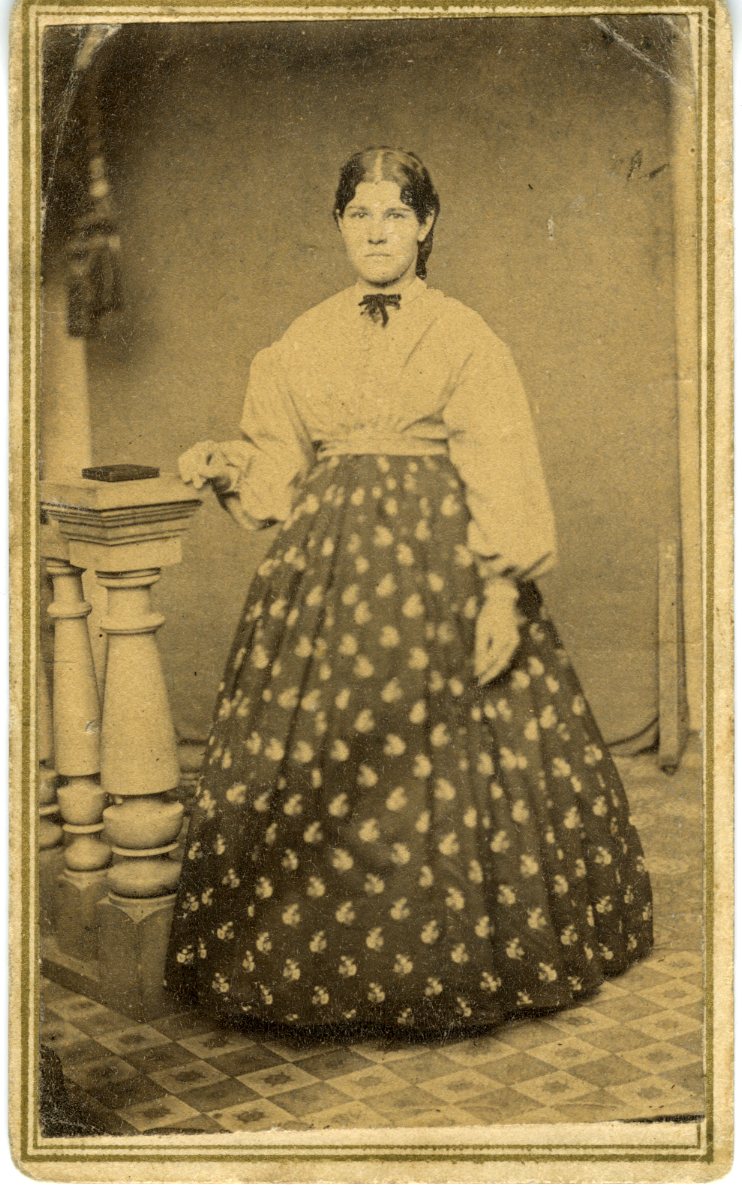
For today’s photo we have a CdV from the mid 1860s. This is the first time I have seen a photo of an 1860s dress with a bodice of a different fabric than the skirt. While it was known to have been done, it’s difficult to prove. For those of us who enjoy the 1860s and Civil War reenactment, this can help refute the “stitch counters” who insist it just wasn’t done.

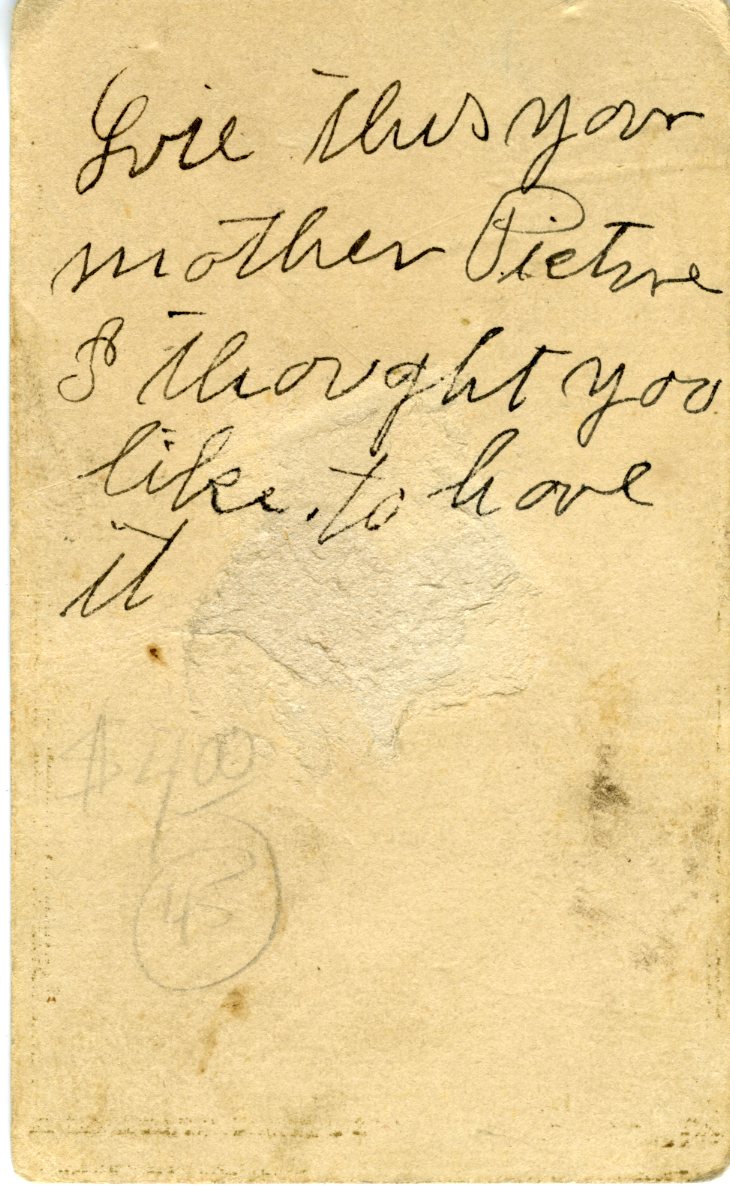
The back of the CdV was written by an unknown person to someone named Lois (?). I don’t think the name Lori was in use in the late 1800s but I could be wrong. The way I read the back is “Lois this your mother Pietra I thought you like to have it.” However, I am guessing at Pietra as the name because my brain wants to see Pietrse, which makes no sense to me. Whatever her name, she was fairly young in this photo, lending credence to the “two part dress” argument. Her dress might have been two combined parts from old dresses, or a more fashion forward effort similar to the Garibaldi dresses (a skirt, white blouse and bolero style jacket) that were popular with young women.

UPDATE: Iggy suggested the word is PICTURE not Pietra, and I am inclined to agree, making it “Lois this your mother picture I thought like to have it.” Thanks Iggy & Winston!