Who Were They?

Lost and forgotten photos from the past

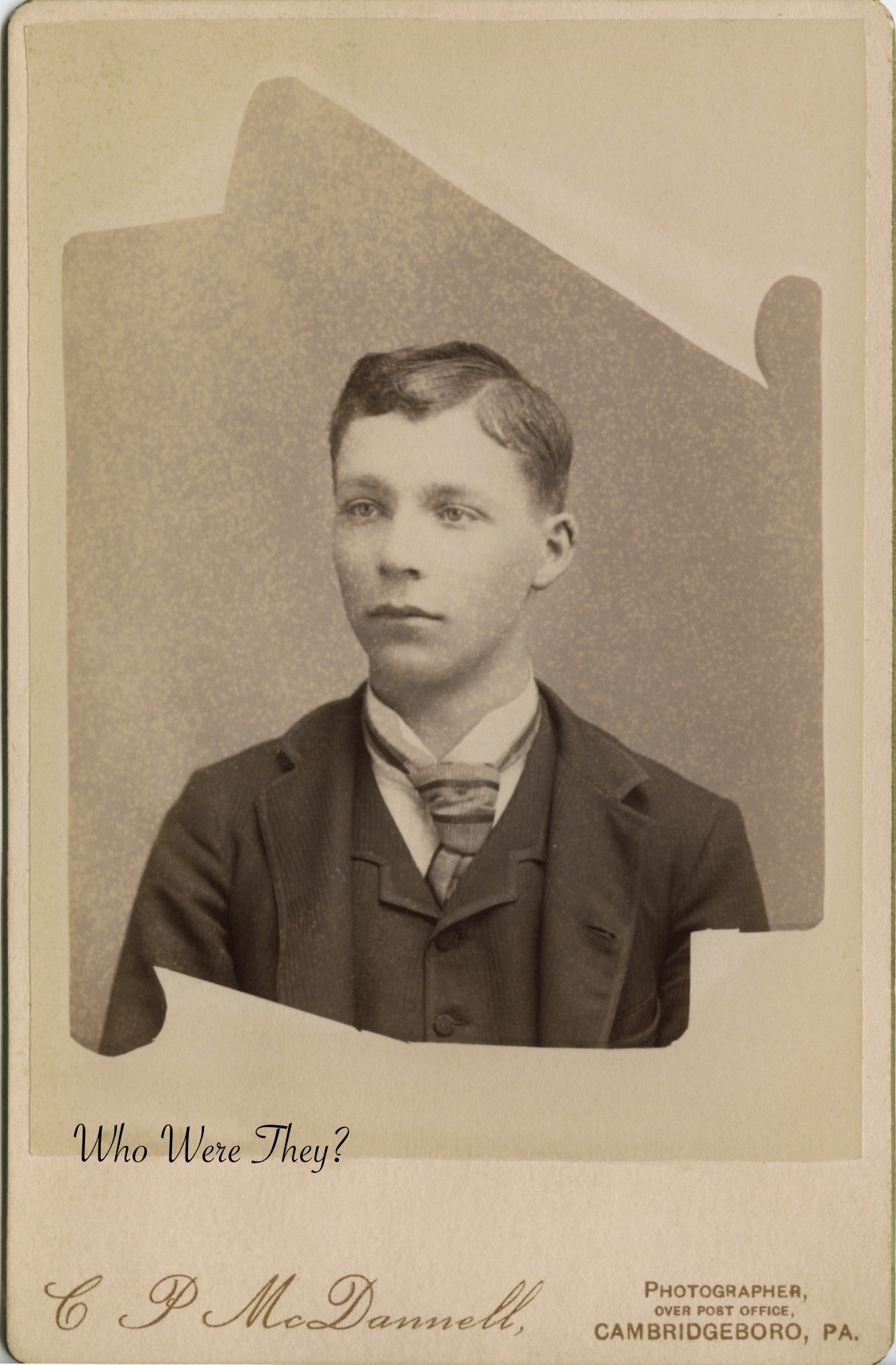
This photograph represents the third photographer in the little town of Cambridgeboro, PA. Apparently the town was doing quite well. The fancy masking of the photo is similar to the previous photo from the Red Velvet album. The masking must have been carefull applied to the negative plate but you can definitely see they were hand made via the uneven cut marks on the lower edge of this one. Die cut masks may not have been available.

The photographer was C. P. McDonnell, with a gallery located over the post office. Wilson’s Photographic Magazine in 1897 mentioned an advertising technique of Mr. McDonnell, which was to send a montage or collage of children’s photos to his clients. I suppose this was similar to today’s advertising slicks that come in the mail.

UPDATE: a reader suggested that the name is McDannell with an A and I agree. Sorry about that – I think I need better glasses!  :-)

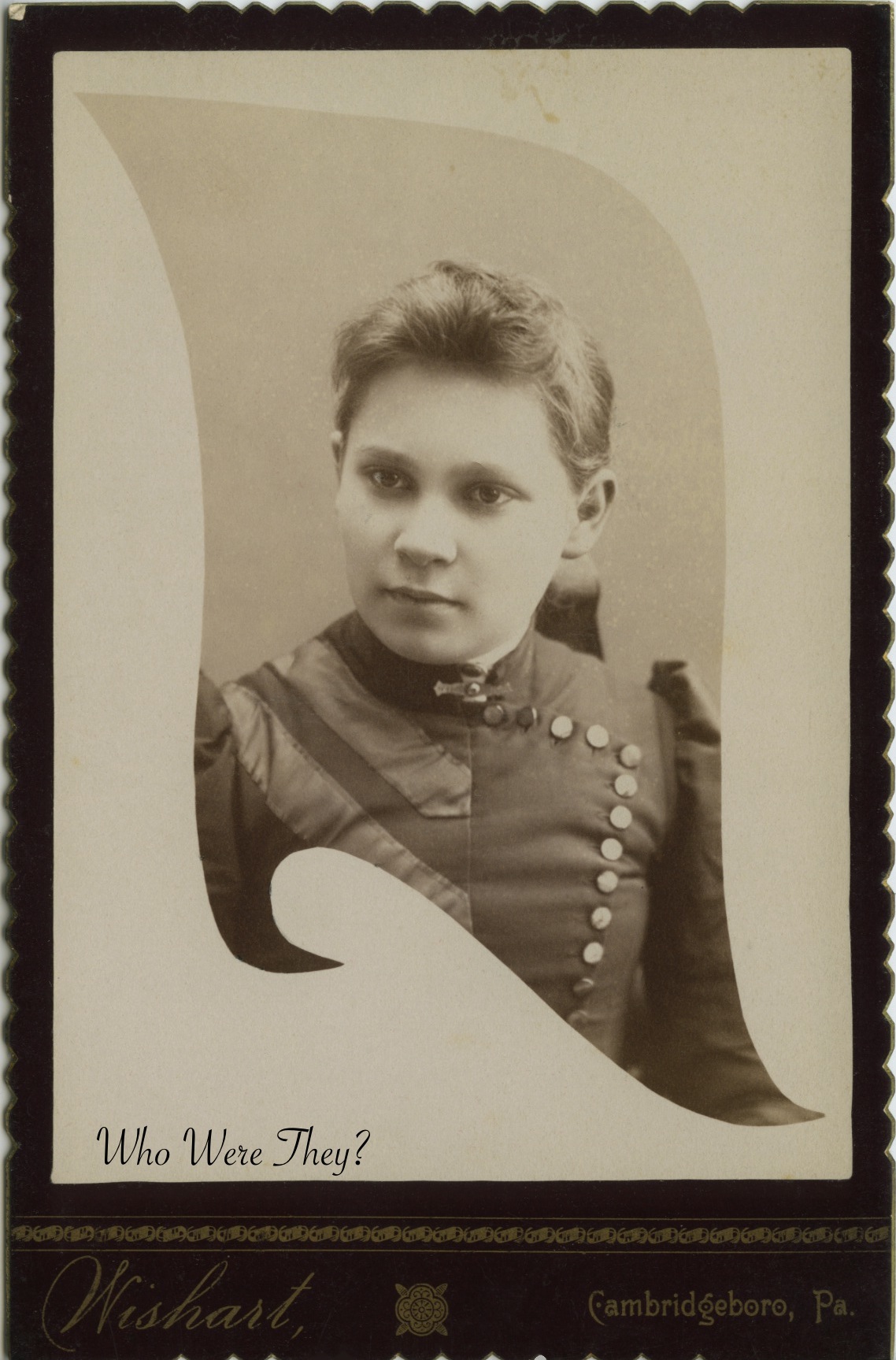
Staying in Cambridgeboro, PA we now have a lovely young lady who’s photo was masked in an interesting style. The image has been masked with a decorative shape reminiscent of a scroll. It is a shame we cannot see more of the dress the subject is wearing. I would like to know if the diagonal stripes go further down the chest or if those two are the only ones. The dress has another asymetrical feature in the line of buttons being off center.While she is young, you can tell she is already wearing a corset from the shape of her torso. Children were put into stays as young as four or five years of age to train their bodies for the more restrictive garments they would begin wearing as young ladies.

The photographer this time is Wishart. The deckeled edge of the photo tells us it was made in the 1890s, but I’d ventury early in the decade because of the dress style.

I’m delighted and flattered that Alan Burnett over at Sepia Saturday selected my suggestion for this week’s theme! My suggestion was “men with facial hair…or women with facial hair!” While I’m definitely able to meet the first half of the prompt, I cannot actually find one single photo of a bearded lady in my collection. I did have this friend in school who’s mother had quite an impressive mustache. As much as my friend hinted and cajoled, her mother did nothing about it and to this day has quite a thick growth on her upper lip. How’d you like to pucker up to that? Yikes!

I shall instead regale you with five photos of fantastic facial hair from the 19th century.

Chin curtain

This CdV from the 1870s was made by the very popular photographer Harrington in West Salem, Ohio. His gallery was located over Gable’s Drug Store, if you happen to have an old map. This type of beard is called a chin curtain, I am certain you can ascertain why. For the men visiting, just how long would it take a man to grow a beard to such a length? This chin curtain must be 8 inches or more from lip to tip. Perhaps he was adding hair on the chin as he was losing it on the top.
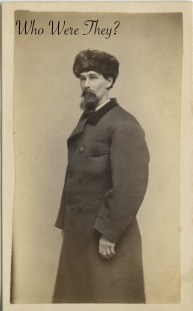
Wladimir, bring my troika

Next up by C. G. Hill in Lynn, no state provided, this man looks like he just came from Russia, doesn’t he? His full goatee is surmounted only by his fuzzy hat. What are those hats called anyway? This image is one of my favorites and you must read the caption out loud with your best Russian accent for full effect.

The handlebar

This particular CdV features a handlebar mustache that drifts into bushy sideburns. I like to think that he spent hours grooming his whiskers keeping them nice and clean. This photo was made by C. Taylor Photographer in Bishop, Auckland, New Zealand. Can any of our international visitors comment on the location or photographer?
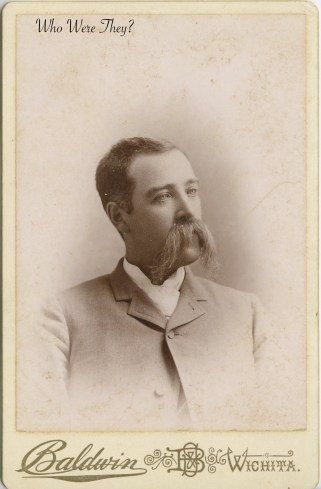
Coo coo ca-choo

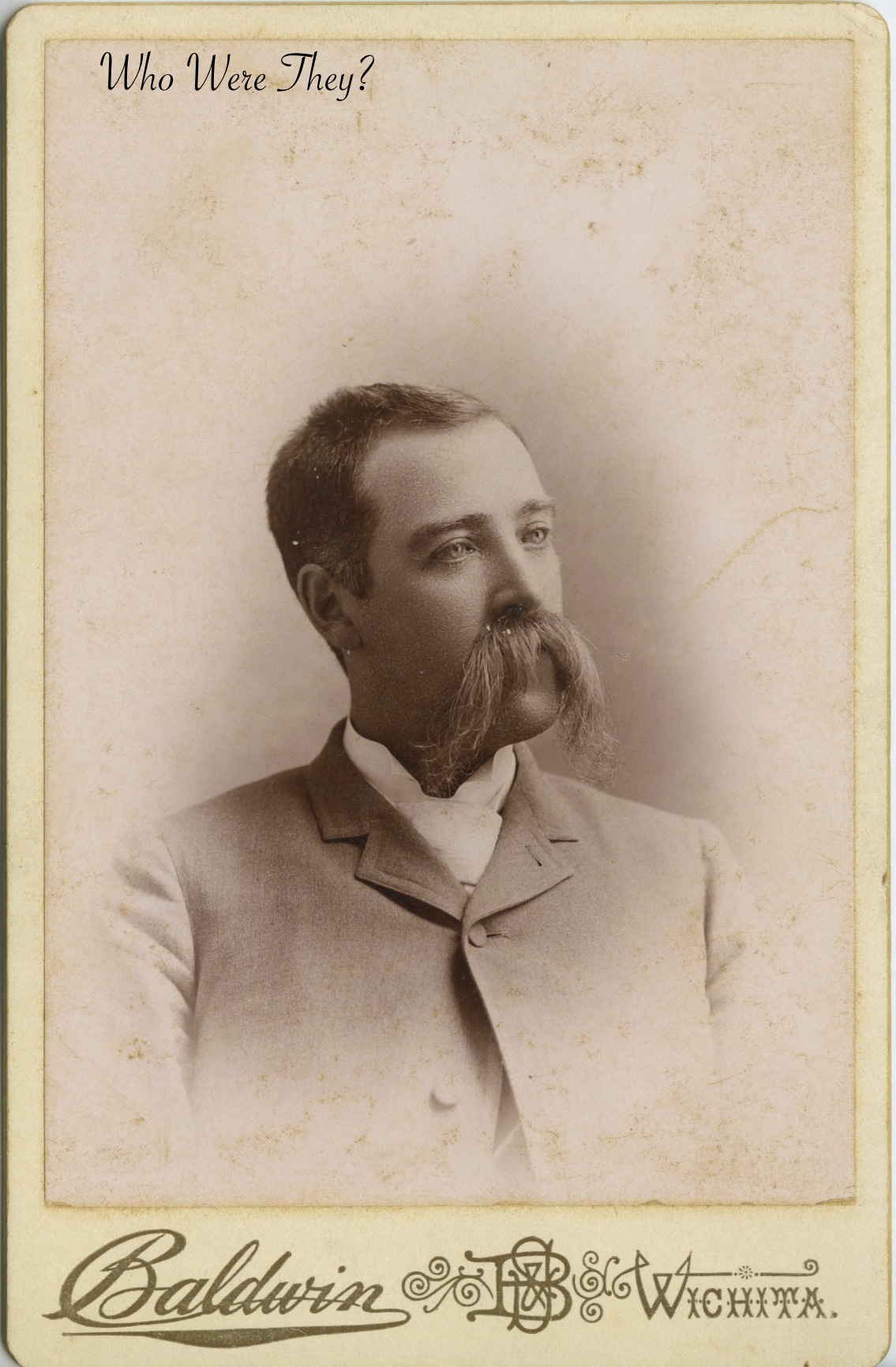
I imagine this very full and lovely handlebar could have been waxed into a curlicue shape if so desired. This man must have been quite proud of his mustache. It is more prominent than anything else in the photograph. He looks a bit like a walrus. The photographer was Baldwin in Wichita, Kansas and the photograph looks like a collodion print to me, dating it after 1892.

Sweet Adaline

I saved my favorite for last. We get four bewhiskered faces for the price of one! These are likely brothers given the close similarities in their appearance. I keep expecting them to break out in four part harmony like a barbershop quartet, don’t you? Or perhaps they are the Earp brothers, there were four of them, right? You are under arrest! The image was made by J. F. Rank in Van Wert, Ohio.

If you love looking at beards, mustaches and other types of facial hair, click over to Sepia Saturday.

Combing the internet

For more facial hair fun, try Century of the Beard or Mustaches of the 19th Century.
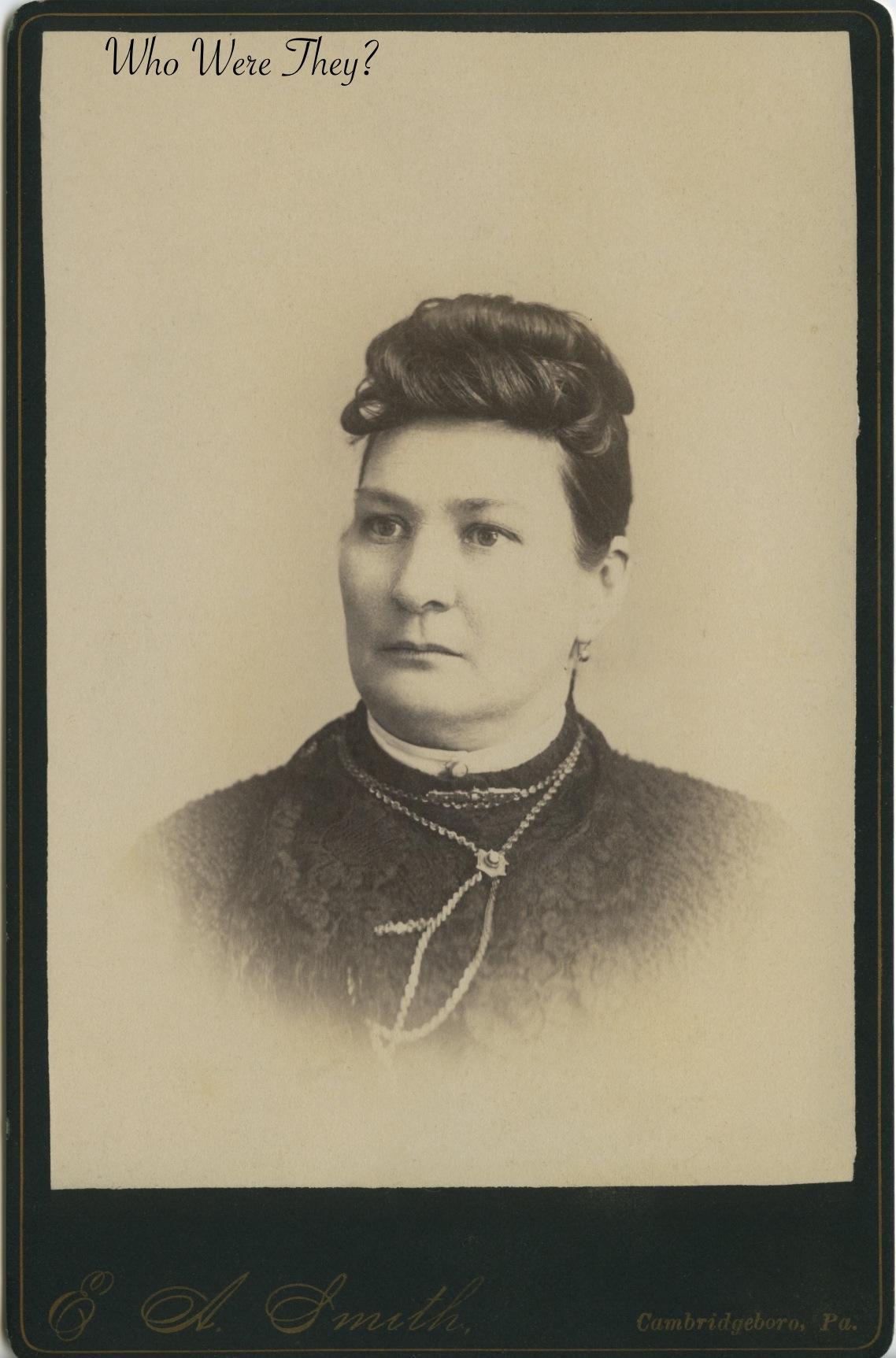
Next to our bearded portrait we find this lady. The same photographer was used and guessing by the fact that they are next to each other in the album, they are likely husband and wife. Note that she has some interesting jewelry shown. The necklace is of an interesting heavy chain that passes through a “bolo” type of clasp after wrapping twice around the neck and there is enough to drape on her chest, possibly with a watch or pin hidden under the lace of her dress. She also has a bar pin on her collar. Her dress appears to be heavily lace and quite fancy. I haven’t seen a bodice like that in the past, so I am wondering if she is wearing a shawl or paletot of some type.

Her face is similar to the woman in our family portrait. That family was photographed in Dakota Territory, but as Iggy pointed out, the train ran almost in a straight line from Pittsburgh to Dakota. Could this be the Mamma of that lady and Grandmamma of the boys?

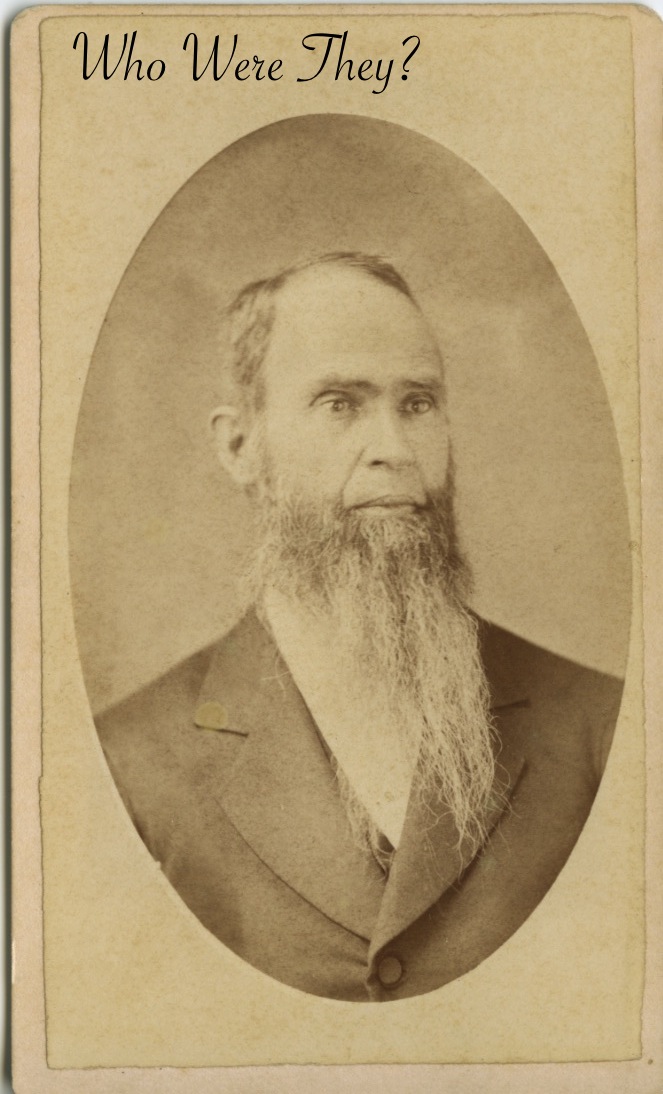
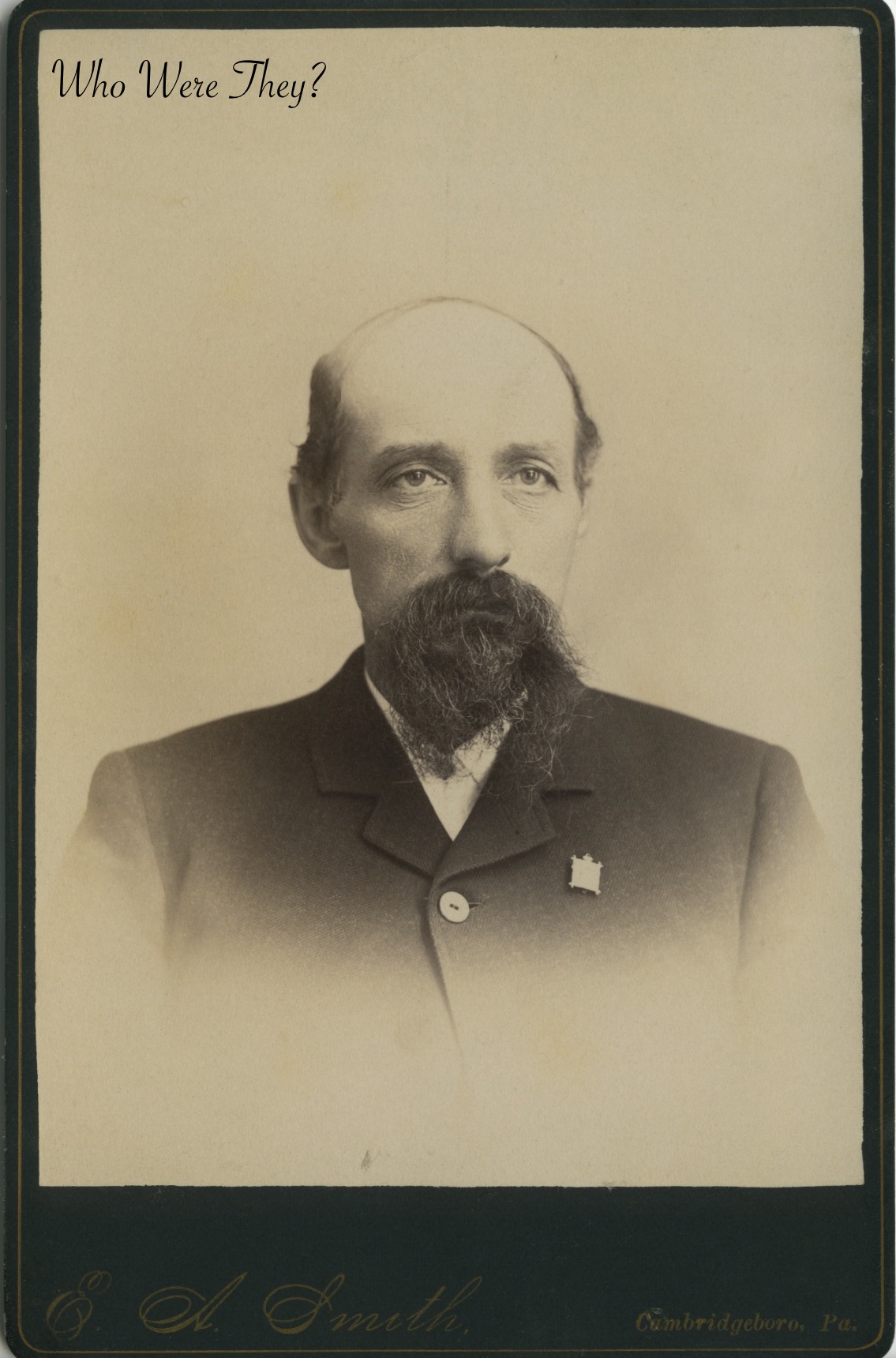
Turning the page of the Red Velvet album, we find this man. Although his is follically challenged on top, he is making up for it on his chin. The cabinet card is made of very dark green stock making the printed information a bit difficult to read. The gold is somewhat faded or worn which also does not help. However, squinting has revealed that the photographer was S. A. Smith of Cambridgeboro, PA. Cambridgeboro was a small borough of Cambridge Township, PA established in 1866. A history written in 1885 indicates that a photograph gallery is present, although it does not name the photographer.

The unnamed subject is wearing some type of pin on his jacket. It must have been important to him to wear it in his photograph. Perhaps it was a lodge or men’s club insignia.