Who Were They?

Lost and forgotten photos from the past

Rudd 4


This photograph, undated and with no location, was included with the other Rudd family photographs. The back of the photo identifies the family as follows:

Seated = Ed, Fred, Harry

Standing = Maude, Rosa, Bert J

And the last name Colter written beside that.

I must note that Harry, presumably the lad on the right front, is actually standing.

I started poking around on Ancestry because I really wanted to try to identify this family. That site really is wonderful. :-) I am going to tentatively date this photo to 1895 based on young Harry’s birth in 1890. Who are we looking at?

This is Rosalia Rudd Colter (4-29-59 to 2-11-22), married to James Henniger Gilbert Colter (12-28-47 to 7-10-22). Together they had several children:

Abigail – 1877-1878

Fred Tuttle – 1879-1944

Edward – 1880-

Eliza Maude – 1882-1975

Herbert or James Burton – 1887-1980

Harrison E – 1890-1937

For some reason James was not in the photograph. They lived in New Mexico in 1880 and 1900, so my guess is the photo was made in that locality. You may remember that Rosalia’s father was William Mann Rudd.

There’s some confusing and titillating information on James H. Colter, suggesting he was married to two women at the same time. James was born in Hartford, Nova Scotia, Canada. Well, the census records and family trees indicate he was married to Annie Colter, born 1858 in Nova Scotia, and having children John (1880), Lessettie (1889) and Cecil (1891) together. However, there is another record showing that James and Rosalia married February 22, 1877. I couldn’t find much other information, but it does make me wonder. Was James in Canada at the time of the photo? Maybe that’s why Rosa doesn’t look terribly happy. By 1900 she listed herself as widowed on the census, but other sources indicate that James lived until 1922 – and those sources are the Mormons and they don’t often get this stuff wrong!

Rosa died in San Jose, CA and is buried in Springerville, AZ, while James died in Prescott, AZ and is buried in Springerville, AZ. It adds to my curiosity. Did he leave her and she just claimed widowhood to save her dignity? Did he disappear and was presumed dead, only to turn up alive and able to survive Rosa by 7 months? They are quite likely buried in the same cemetery, and that indicates the family knew all along where the two were in order to bring them back together in death, and it is interesting that he was not returned for burial in Nova Scotia with his mystery family.

It is quite a lot of speculation and quite a story!

One of the exciting aspects of the Rudd photographs I acquired recently is a large selection of postcards. The family traveled and wrote postcards to send back to various individuals in Oklahoma. To meet the Sepia Saturday prompt, which shows a footbridge crossing a small body of water, a canoe on the water and some people, I am drawing on a few of these postcards.

Postcard 2

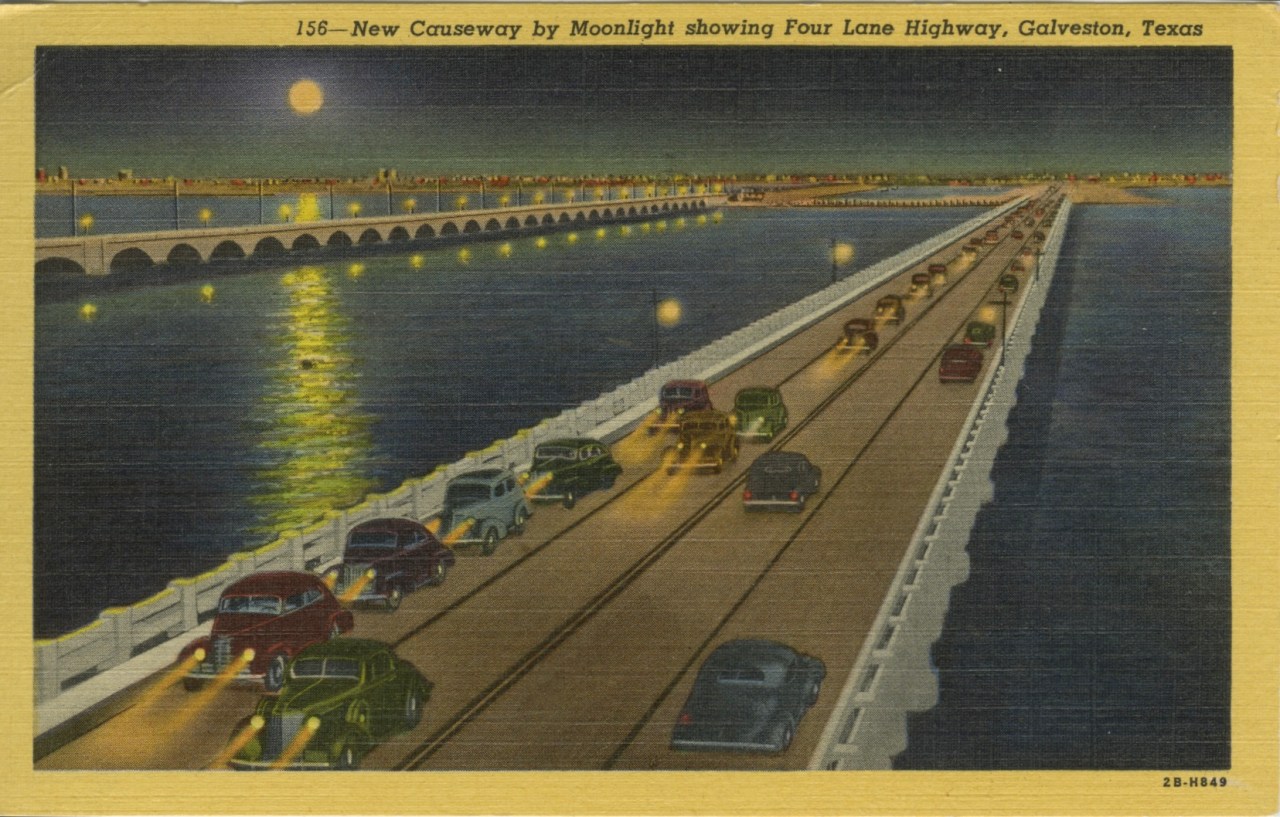
On a Wednesday in 1955, H & I sent this postcard to R. L. Fields. H & I had stayed in Galveston for a day and planned to stay one more day before moving on to Houston, then Dallas before heading home. They enjoyed a boat ride on the Gulf.

Postcard 4

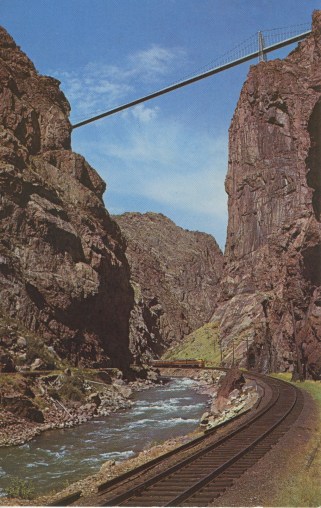
Sunday at 12:30, Louise wrote to Minnie. She had stayed with Grace’s uncle the night before after driving 480 miles. It was just a stop on their trip to Yellowstone, via Royal Gorge and Salt Lake City. This image is of the Royal Gorge Suspension Bridge in Canon City, CO. You might remember Minnie was the owner of one of the previously posted photographs, showing her and her grandparents.

Postcard

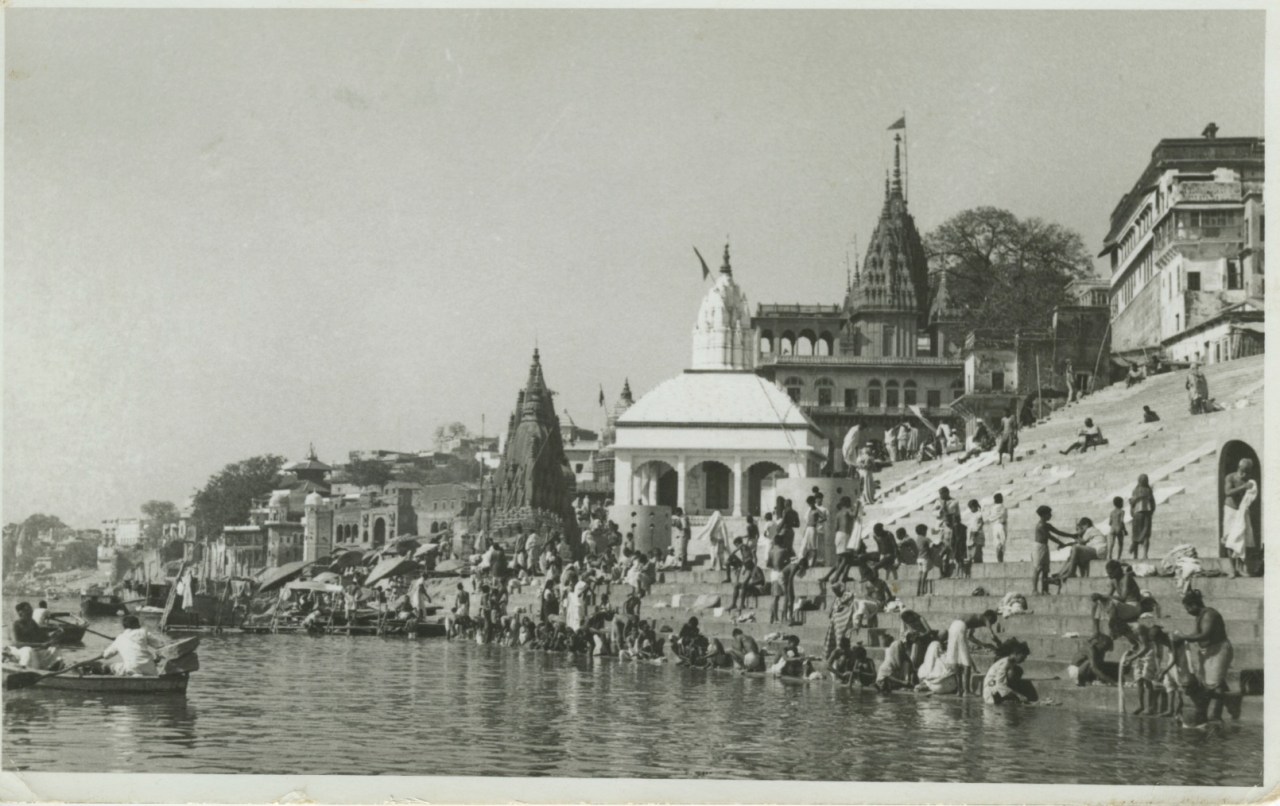
Dorothy & Otho have a sense of humor. In November ’55, they wrote to Mable Stong that “after an early morning boat ride along here we have decided we won’t need to borrow your tooth brush” — whatever that meant.

Postcard 1

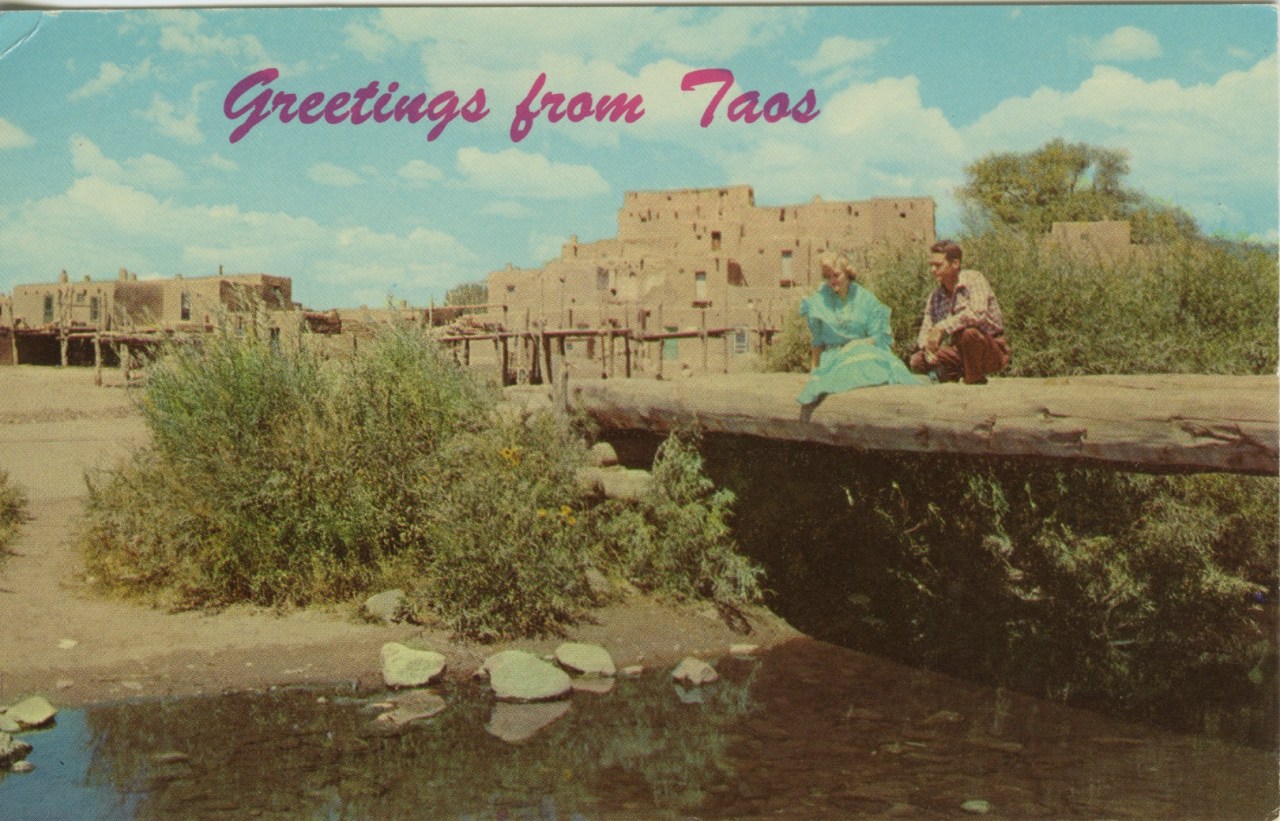
Last and certainly not least, Helen wrote to Mrs. Floyd Rudd in July ’69. Santa Fe, NM and the surrounding areas are amazingly beautiful, as Helen says, “any direction we look.” They were having a good time and hoping for rain at home.

For more photos and postcards possibly showing a bridge, water, people, and possibly even all in the same image, click over to Sepia Saturday!

Bridging the internet

Bridging the internet

Three beautiful little girls pose for their photograph by an unknown photographer in an unknown location. We are lucky that someone identified them as Mary, Belle & Kate, children of Emma Rudd McGinnis.  Iggy found that Emma Kate Rudd McGinnis was the daughter of William Mann Rudd. You can view Emma’s photograph in my first post about the Rudd family.

Emma was born as the seventh of twelve children to Dr. William Mann Rudd and Catherine Eliza Rudd. As I was trying to sort this out, I realized that the Dr and his son Jr, who is pictured here, were many years apart in age. Dr was born in 1827 and was 51 when Jr was born in 1878. His youngest child Catherine was born in 1881 when Dr was 54 years old. The children were as follows:

James – 1855

Nancy – 1857

Elvira – 1859

Rosalia – 1860

Davis – 1861

Charles – 1864

Emma – 1867

Virginia – 1871

Alome/Olney – 1874

Ida – 1876

William Jr – 1878

Catherine 1881

Yes, in the days without effective birth control, a woman could be in a state of pregnancy, nursing or otherwise caring for children for thirty years. Wow.

Emma married Bernard McGinnis (1852-?) in 1889 at the age of 19. Their daughters soon followed, Isabelle in 1889, Anna Kate in 1891 and Mary in 1892. Unfortunately, Emma passed away in 1902. While Belle and Mary both do not have living descendants, Anna does. Hopefully one of them may come upon this site and be able to provide some insight into this large family.

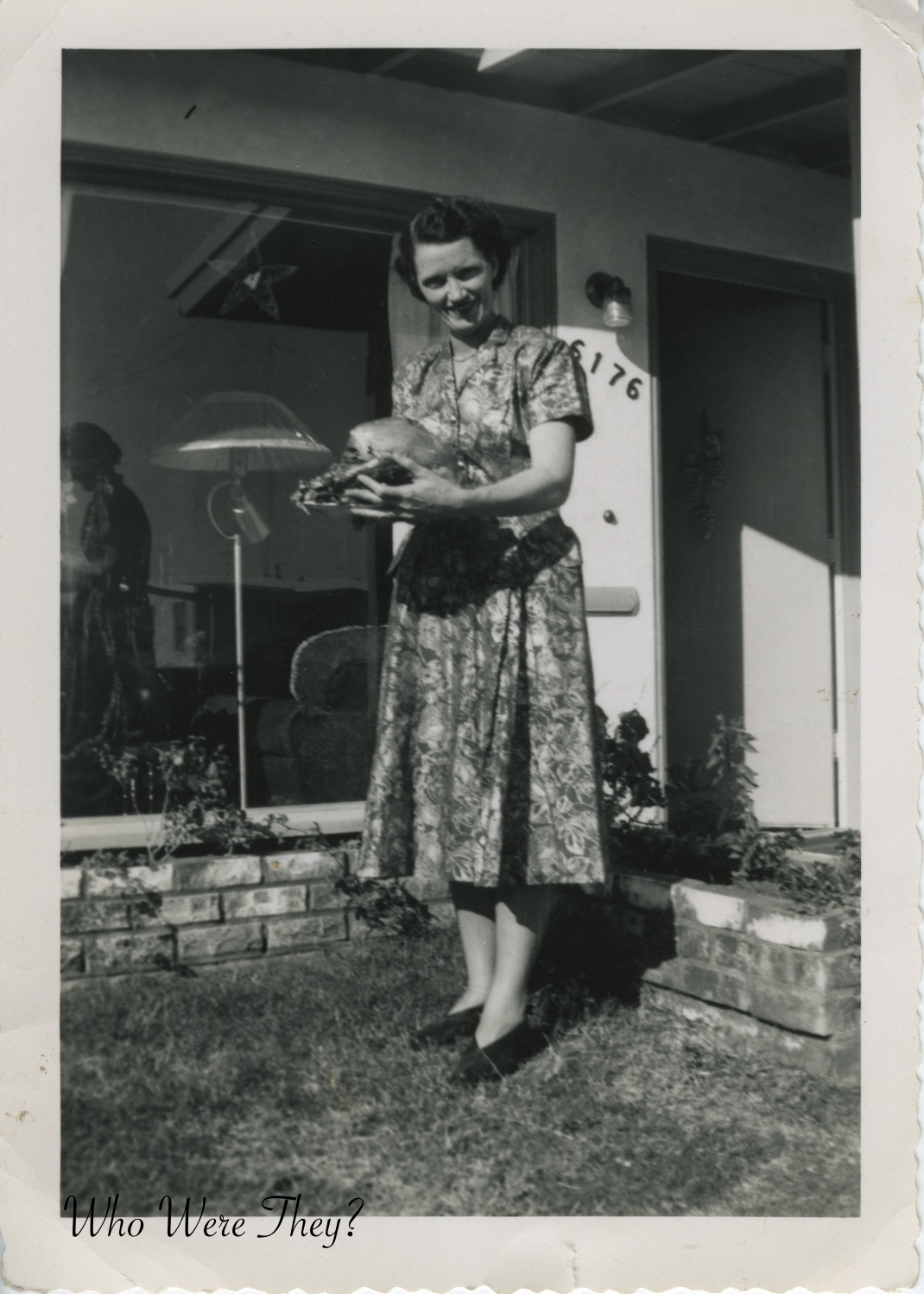
An anonymous snapshot of any woman, any where, circa 1950. I can not imagine plating my turkey, carrying it outside for a snapshot all while risking it falling to the ground, and my family tolerating the removal of the main entree from the house, haha. Thanksgiving here in America stands for traditions, family, friends, a time to put aside disagreements and simply appreciate our blessings, no matter how great or small.

I wish for you, dear visitor, a day filled with gratitude, a season filled with hope, and the coming year to be filled with all of life’s blessings.

This attractive couple was found among the other Rudd family photographs, and so I assume there is some connection, although I have as yet to make it. The woman’s dress is a beautiful example of late 1870s Natural Form trending to the Late Bustle period. The many layers of pleating are amazing, and it must have taken many hours to complete them all so perfectly. I learned recently that a trick to keeping pleats set is to steam them with vinegar!

Notice the gentleman’s trousers have some type of pattern in them. They were likely some kind of wool or wool blend in a particular weave. Many of these fabrics are lost to us now because the raw materials to make them have either changed significantly, disappeared entirely, or the mill that made the fabric has closed without transferring the method. For a historian or even history enthusiast, it is truly sad that we cannot examine the types of common items from the era of interest.

This couple was photographed by Payne Stanton & Co. in the Elite Gallery in the Temple Block, Los Angeles, Cal. The Temple Block was named not for a house of worship, but for Jonathan Temple (1796-1866) who was Los Angeles’s first land developer. His family and the Workman family were among the first Americans to emigrate to Pueblo Los Angeles when the area was still under Mexican control in the 1820s and 30s. The Temple Block was built in the late 1850s at the corners of Main Street, Temple Avenue and Spring Street. The three streets are still at the center of Los Angeles, with the now-iconic City Hall building having replaced the Temple Block in the 1920s. The Workman-Temple Homestead remains today as a historical landmark attesting to the importance of the family to California history. California’s last Mexican governor, Pio Pico, is buried in the family cemetery at the homestead. Furthermore, in the area, local schools, parks, streets and other points of interest carry the Workman and Temple names.