Who Were They?

Lost and forgotten photos from the past

photo-31

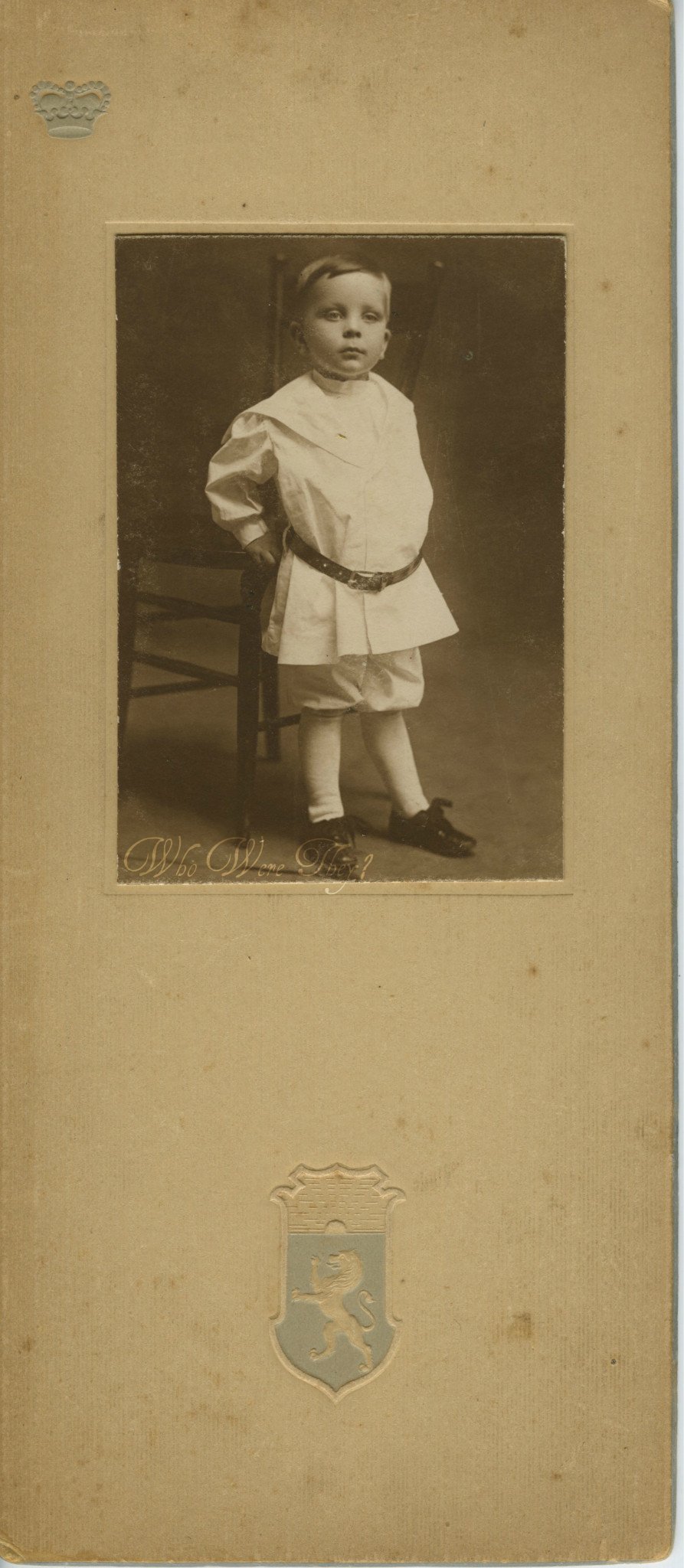
About 6 months – 1906

photo-40

For Mamma

Two photographs from the early 20th century, identified as Gerald Coe. In 1906, there were numerous boys named Gerald Coe born in America, so this is tricky. The only hint I have is a photographer named Gascon from London & Paris. The rubber stamp indicates “High Class Photographer” at 936 Main Street, but no city. So now you know as much as I do. We shall simply enjoy the serious baby face of the one photo and the almost cheeky expression of the other.

UPDATE: Thanks to Iggy, we now know this to be Gerald B Coe (1906-1990). See the comments for more detail. Thanks Iggy!!

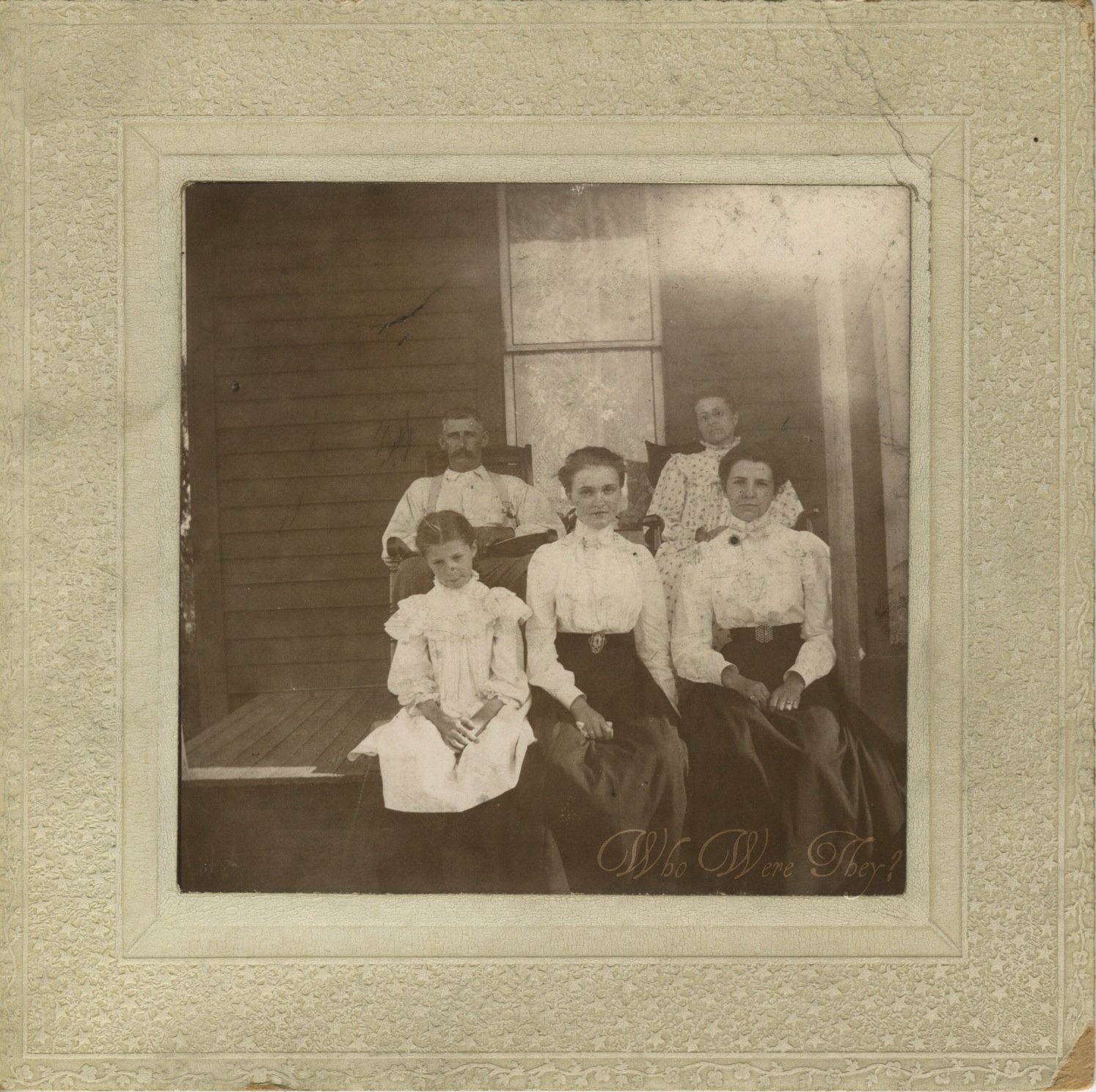
One of the sad aspects of my hobby is that I find so many photographs of babies, couples, families etc., all unidentified. They wind up on ebay, in antique shops, and otherwise available for sale as “vintage ephemera.” It really is sad, when you think about how early photography was not just a simple “point and click” procedure. Studio portraits in the 19th century were carefully set up to emulate painted portraits, and photographers often considered themselves artist, or even came from an artistic background, such as watercolor or oil painting. With the advent of the personal camera it became possible for individuals to take ad hoc photographs of their own subjects, but so often these were not labeled. Following are five photographs from a large packet I bought from ebay. I call them the Mystery Family.

mystery family 3

The whole family

Here is presented the group with the obvious family patriarch seated in the center of the group and probably shows four generations or so. It’s interesting that this particular photo looks a bit like a copy of a copy. I assume that is due to imperfections in the processing at the time.

mystery family 2

Father and children?

Here the patriarch is singled out with four younger people. They could be his children & their spouses, or just all his children.

mystery family 1

Parents and daughters

The young girl front left is wearing a really cute pre-teen dress from about the 1900-1920 era. The two older girls are wearing very typical pre 1920 dresses as well.

mystery family

Siblings? Cousins?

Another fine grouping of fashions here. The dresses look to be 1900-1910 styles.

mystery family 6

A casual group shot

While it is difficult to see in this image, the family including a few small children are gathered on the back stoop or side door yard of a fine clapboard house, possibly the same one show in three of the other four photographs. Note the bit of whimsy with the stacked hats in the foreground. :-)

Whoever this family was, they appear to have been close and cherished one another enough to set up these photo ops. I do so wish they had names!

For more mysterious families from around the world, click over to Sepia Saturday. You will be happy you did!

Who were they, indeed?

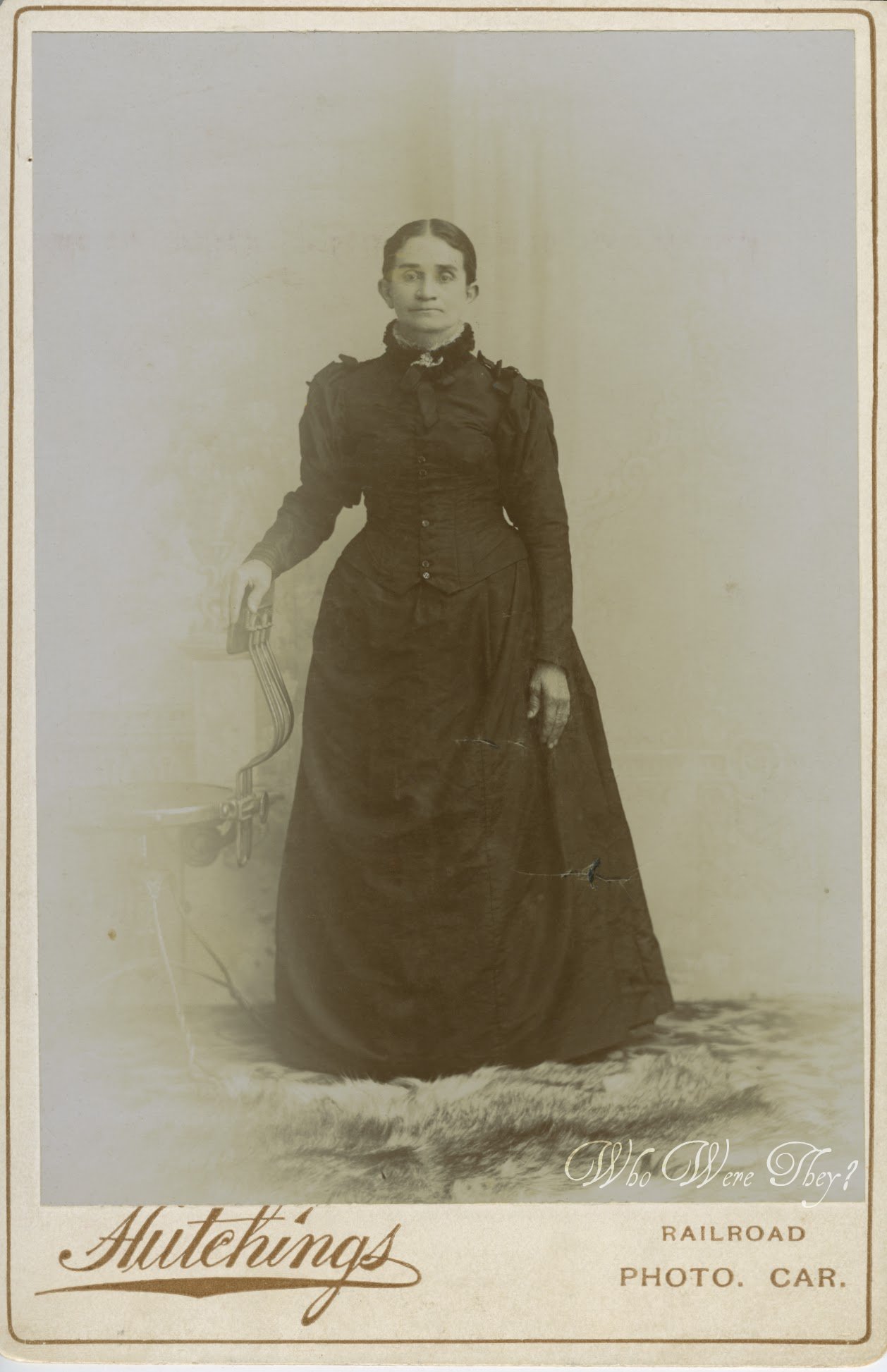
A Portrait

A Portrait

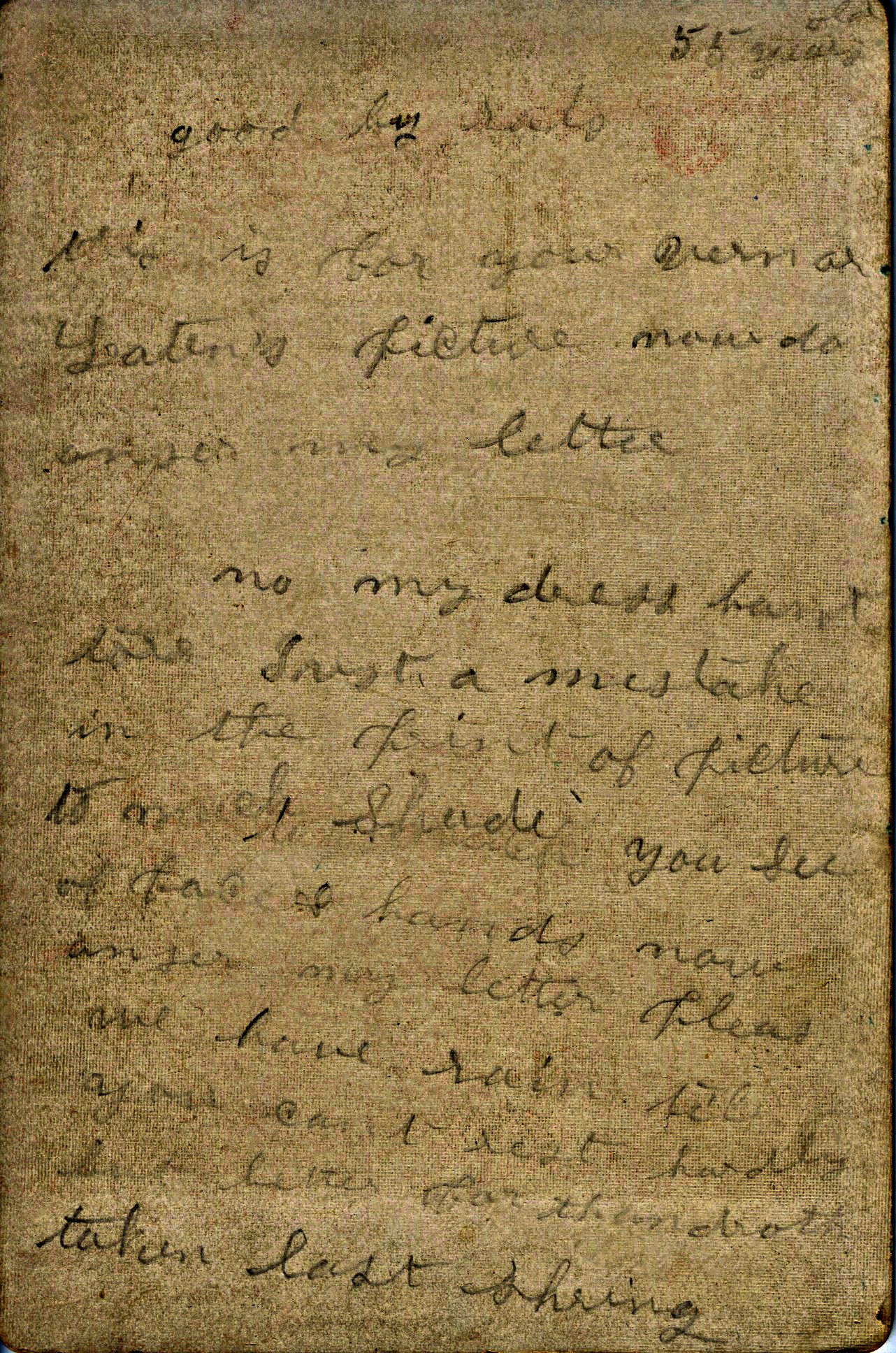
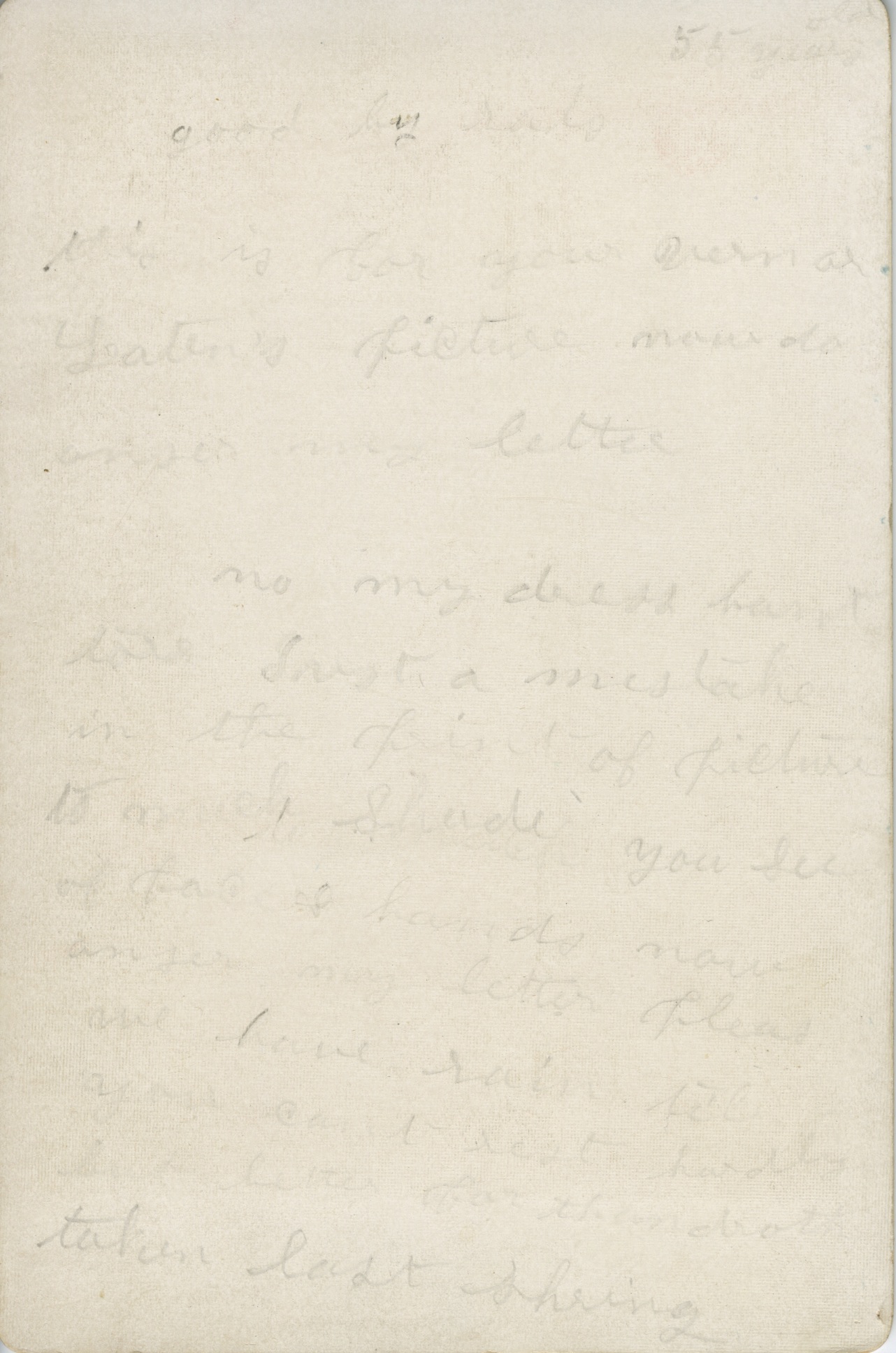
I purchased this particular cabinet card because the back had some faint and faded words written in pencil and I was intrigued by the challenge of finding out what those words were. Thankfully, by changing the exposure, contrast and sharpness, I was able to bring out the following:

photo-32

Letter on the back

Bits of it are still difficult to make out, but I think it goes a bit like this:

“55 years old

Good by reeds

this is for your ??? are

Leaten’s picture now do

answer my letter

no my dress hasn’t

torn (?) just a mistake

in the print of picture

to match shade you see

of face & hands now

answer my letter please

we have return to

??? can’t rest hardly

but ??? for them thats

taken last spring”

If you can make more sense out of it, please do!

The Hutching’s Railroad Photo Car was a train car studio that allowed the photographer to travel all over the country, taking photos and seeing the world at the same time. For other Hutching’s photographs, click the category Photographer / Hutching’s.

UPDATE: I realized some people might want to see the original scan of the photo back, below:

Faint writing

Faint writing

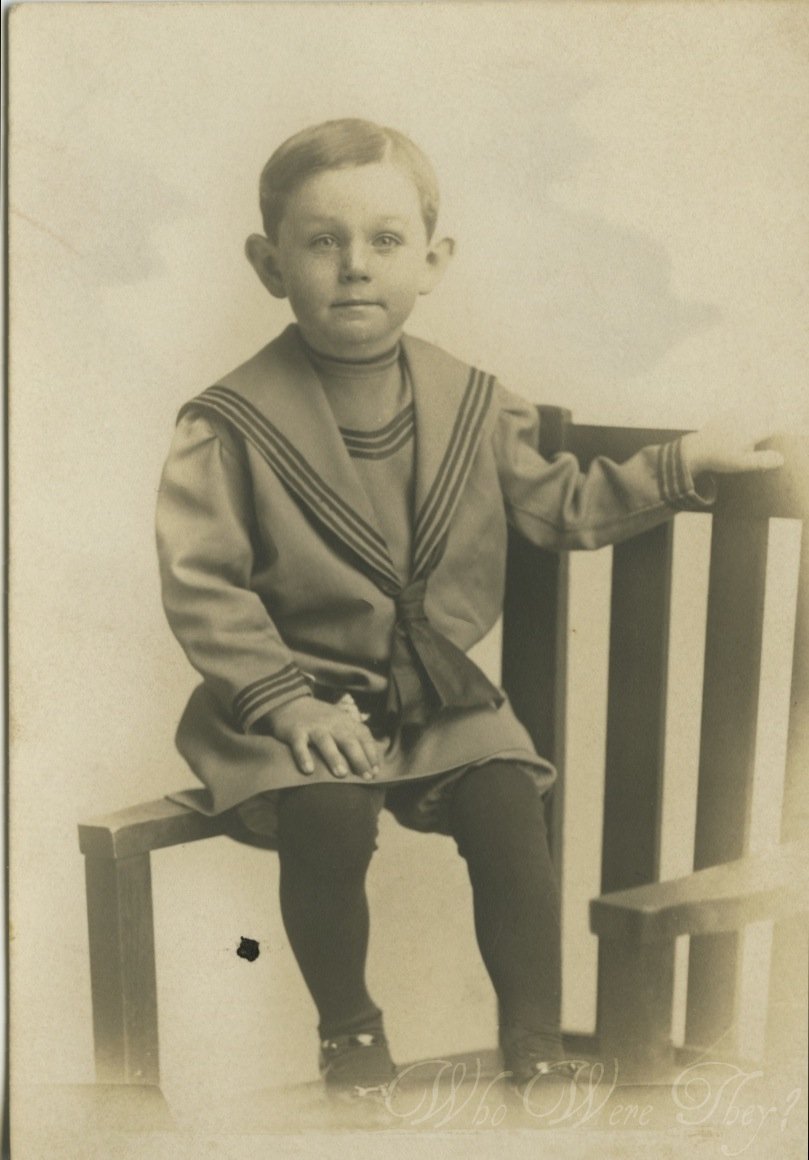
Hold on to that chair!

Hold on to that chair!

I always wonder at the thinking of a photographer putting a child in such a precarious location for a photograph. Were the parents at all concerned? Was this something that even crossed the Victorian & Edwardian minds of parents at the turn of the 19th to 20th century? This little fellow looks as thought he is safe, and so we shall not worry overmuch. Note his outfit has short elasticized drawers under it, much like the “tillies” under girls dresses today to cover a diaper. Yes they had elastic and yes they used it. Elastic was invented in the 1850s or 60s.

This is the last Rudd family photograph I will feature because I really want to return the collection to the family. There are snapshots and some 20th century images as well as postcards that I know the family will cherish and enjoy for many years to come. I will also be sending a CD with all of the scans on it so my contact can share them with family members.

To view the collection that I have posted, click on the Rudd Family category to the right.

Well this week’s Sepia Saturday prompt is a fellow with a turtle, but I shall diverge from the image prompt since, 1) I don’t have a picture of a turtle and 2) I have a really neat item from my family collection to share with you! Alan mentioned that this week’s Sepia meet-up is the closest to Valentine’s Day, and that is where I’m going with my post.

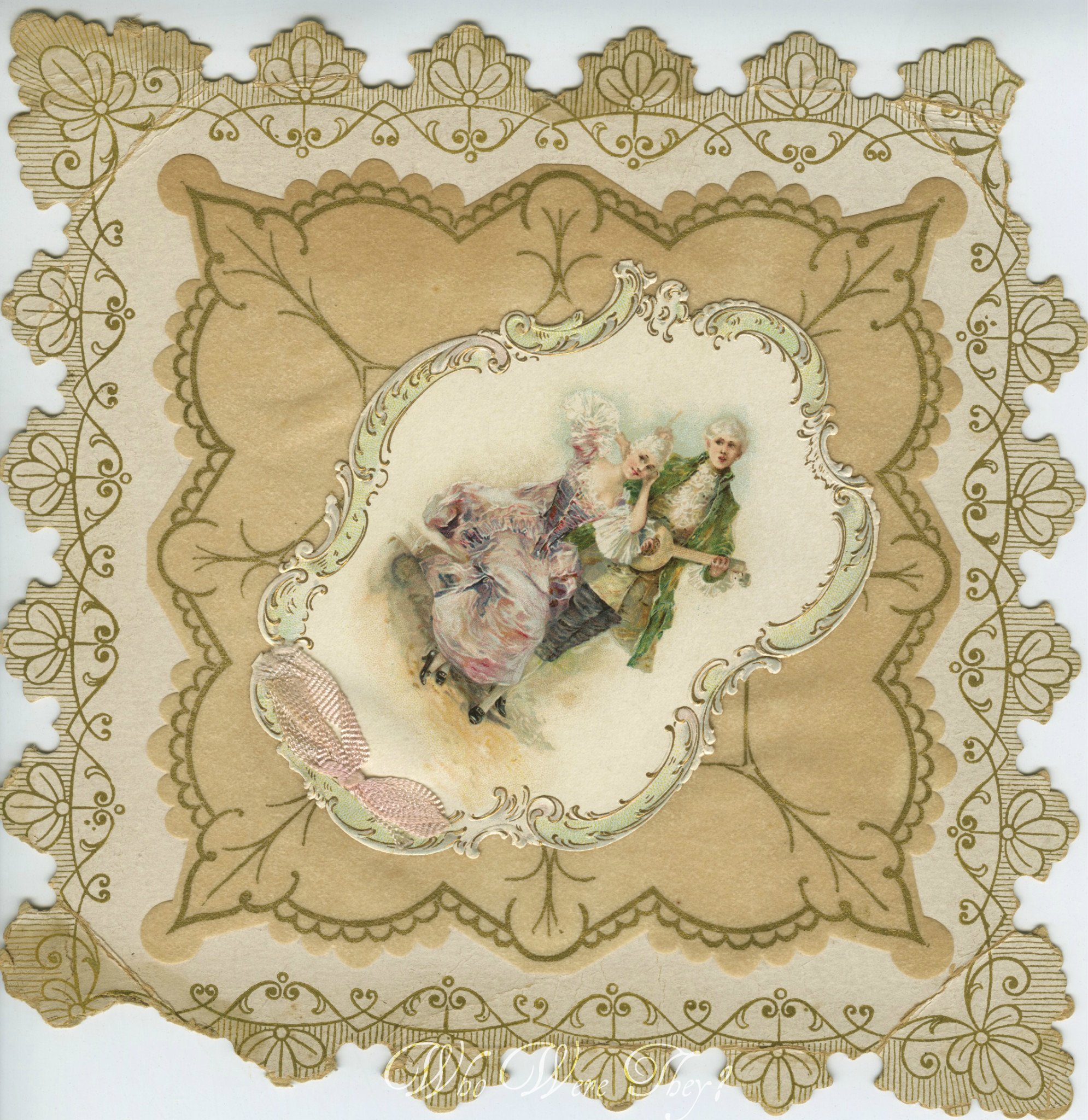
I learned from friends in other countries that American’s are far more obsessed with the giving and receiving of Valentine greetings than say, the English or Canadians. I suppose this is a testament to the American consumer culture, or possibly the commercialization of every possible holiday to be named on a calendar. But, we know from American history that this fascination with love and Valentine cards easily goes back to the late 19th century and early 20th. My mother gave me last weekend the following Valentine’s Day card, dated February 14, 1900.
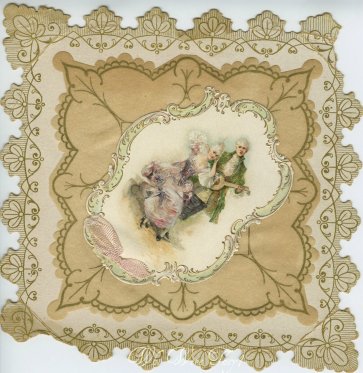
February 14, 1900

February 14, 1900

I looked through all my various photo editing tools (which I freely admit I am no pro with) and wasn’t able to figure out how to rotate this by 45 degrees. When on the scanner in that orientation the scalloped corners fall over the sides and wouldn’t be scanned. Ah, sigh, I suppose I need a lesson in Pixelmator.

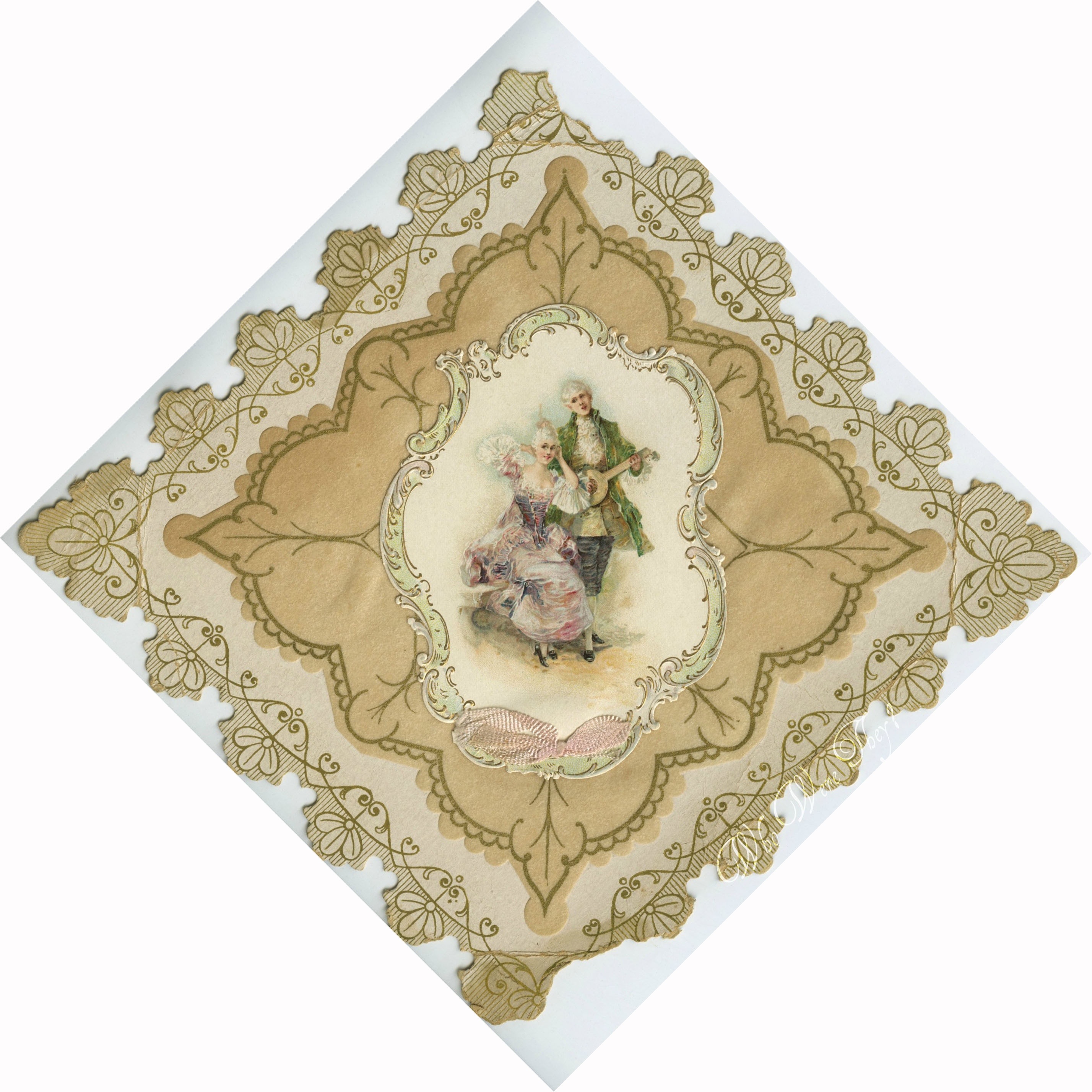
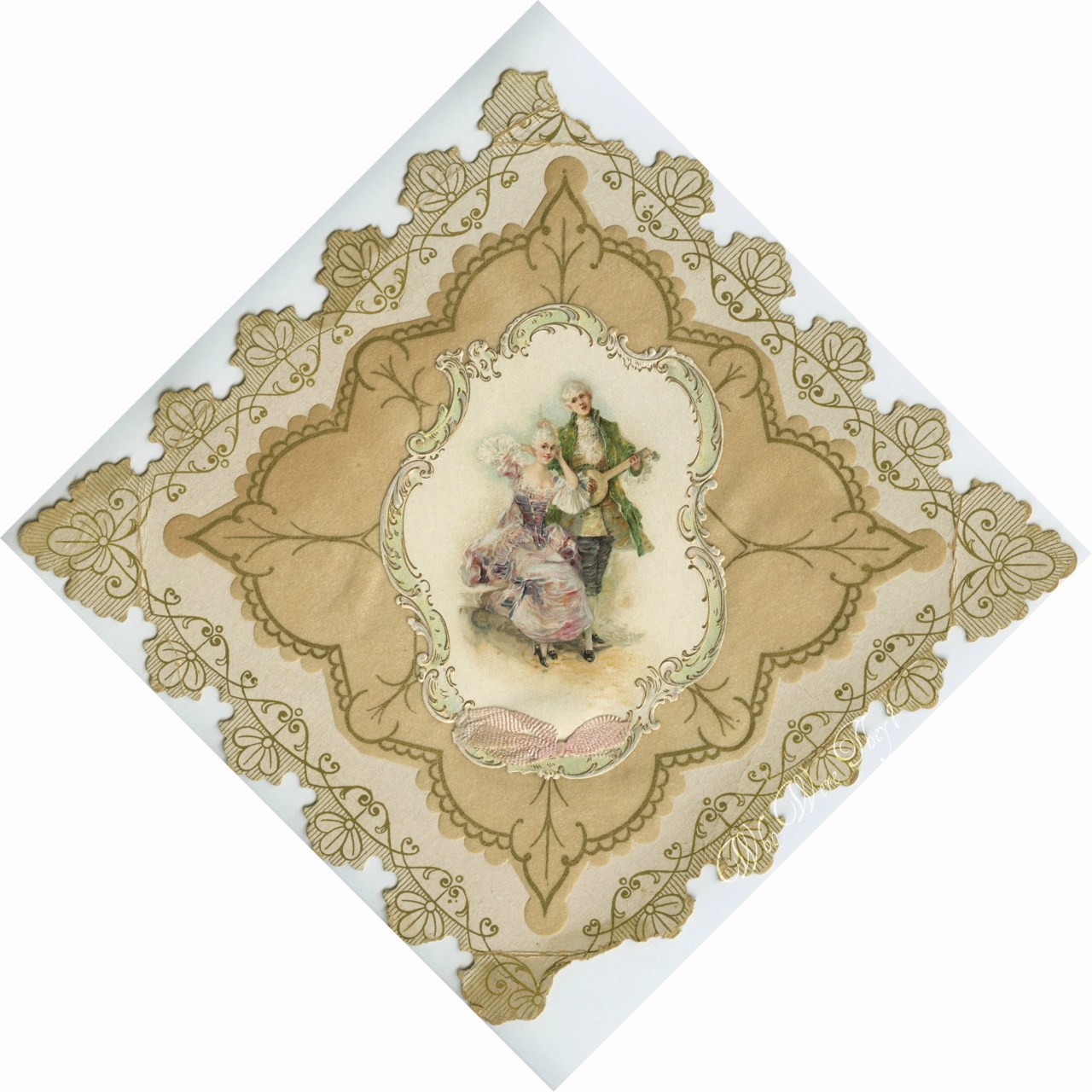
Anyway! The Valentine is composed of three layers of paper – the backing piece is gilded tag or card stock, die cut I assume, into beautiful scalloped edges. Two of the corners were lost to the ages, while the other two were creased back, almost as if being fit into an envelope, but I suspect just from wear and tear. The middle layer looks like vellum, delicately cut and gilded. It has a finer weight than the backing piece and is slightly translucent. The top layer is embossed, gilded and printed card stock, featuring the image of a couple dressed in Georgian fashions. Much like today, the fashions of yore were fascinating to our Victorian cousins at the turn of the century.

The layers are tied together with a fine pink ribbon. Behind the vellum, printed on the card stock, is the following romantic expression:

Love’s Token

May all your days be free from care,

And sunshine crown the happy hours.

Your life a journey bright and fair,

A pathway strewn with sweetest flowers.

Quite a lovely sentiment, and considering that love and courtship was handled much more cautiously than the “jump in feet first” method employed by today’s young people, this is quite sentimental. “I hope you never have to work hard at anything and nothing ever troubles you.”

I don’t know who the Valentine was given to or from whence it came. Mom thought it was from the Westfield house, so that would make it a Brewer item, but beyond that, who knows. It was not addressed or signed. A token so sweet though was certainly cherished and carefully stored for over 100 years. I too shall carefully store it and cherish it for the next generation.

UPDATE: Thanks Brett for the rotated image!

For more Valentine’s greetings and probably some turtles, click over to Sepia Saturday. You will be happy you did!

Don’t be a slow poke
20130216-123210.jpg