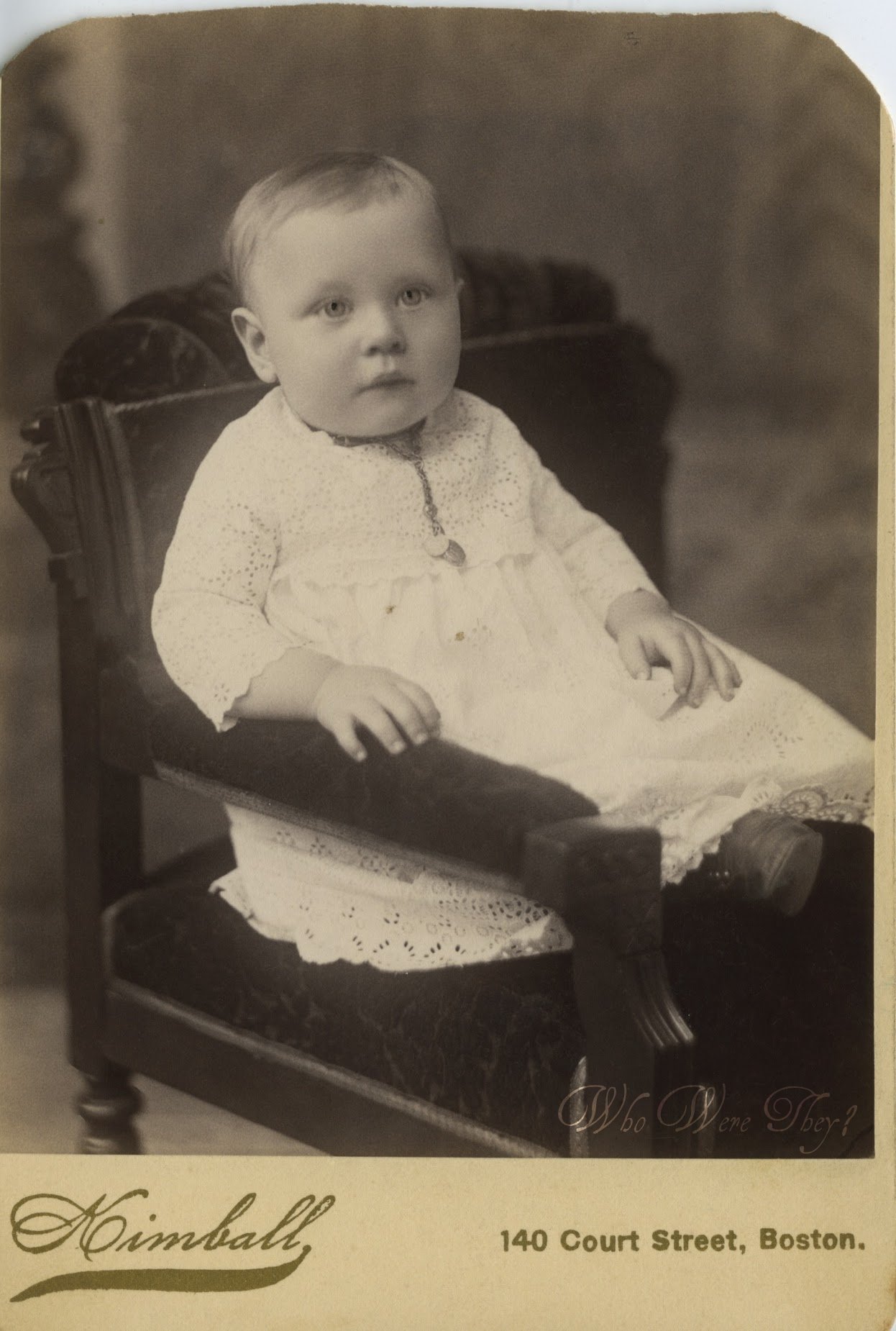
This particular cabinet card was trimmed along the top, presumably to fit into a frame. The child looks to be about 6 months of age, round of face and sweet looking. At first I thought this might be a boy, but then noticed the necklace, so am guessing at a girl. The chair is the typical velvet-upholstered affair common in portrait studios even today.
The photographer was Kimball at 140 Court Street, Boston.
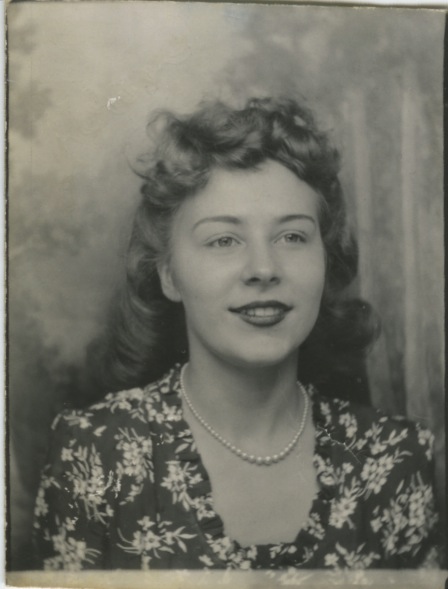
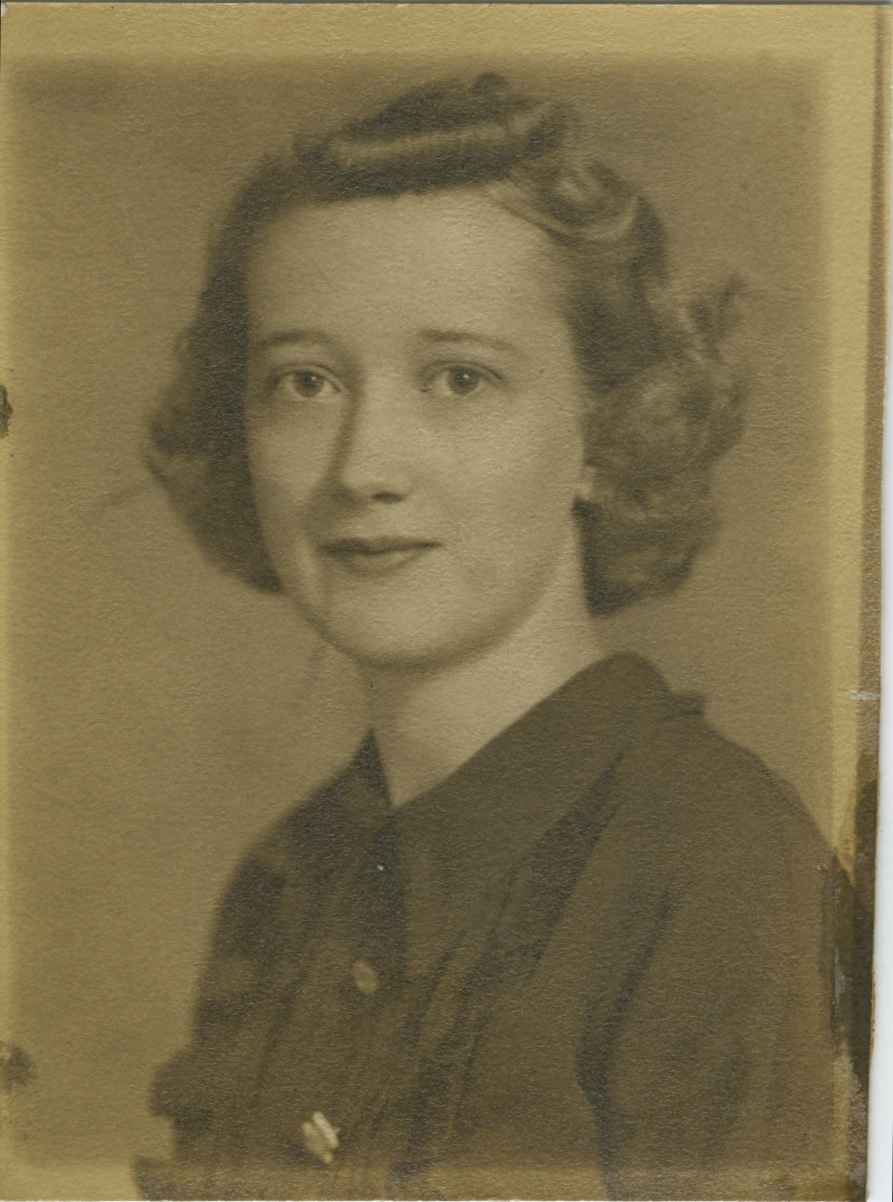
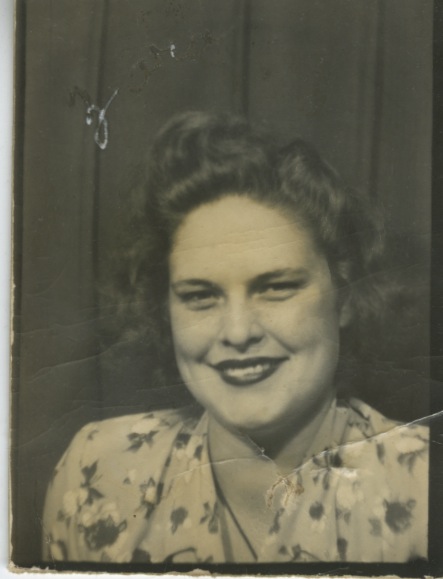
I was late for Sepia Saturday this past weekend. Sometimes, there are just too many things going on and they get in the way of my other responsibilities, er, I mean, hobbies. Anyway, I still wanted to share these photos with you. They were all in a batch of photos I found on ebay, and these all look like yearbook photos to me, the type you exchange with your friends and carry around in your wallet.
Lenore
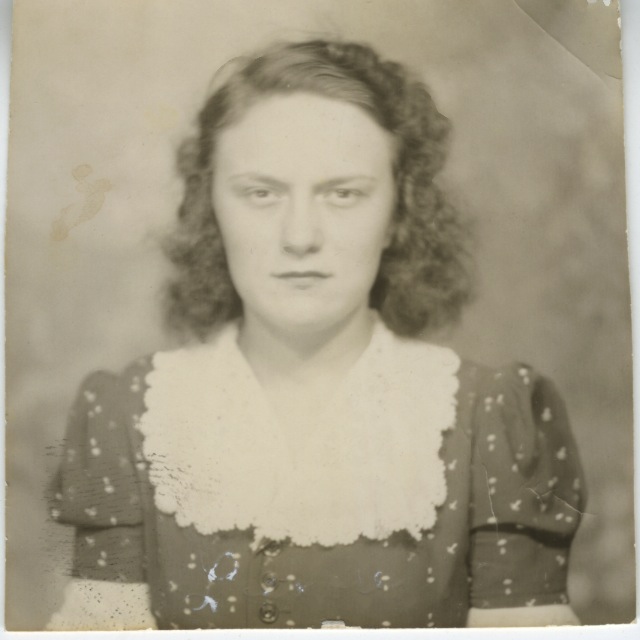
Not the best photograph of Lenore. The name is scratched into the photo across the chest and is visible when the photo is turned against the light. The photo is roughly 2″x2″.
Unidentified
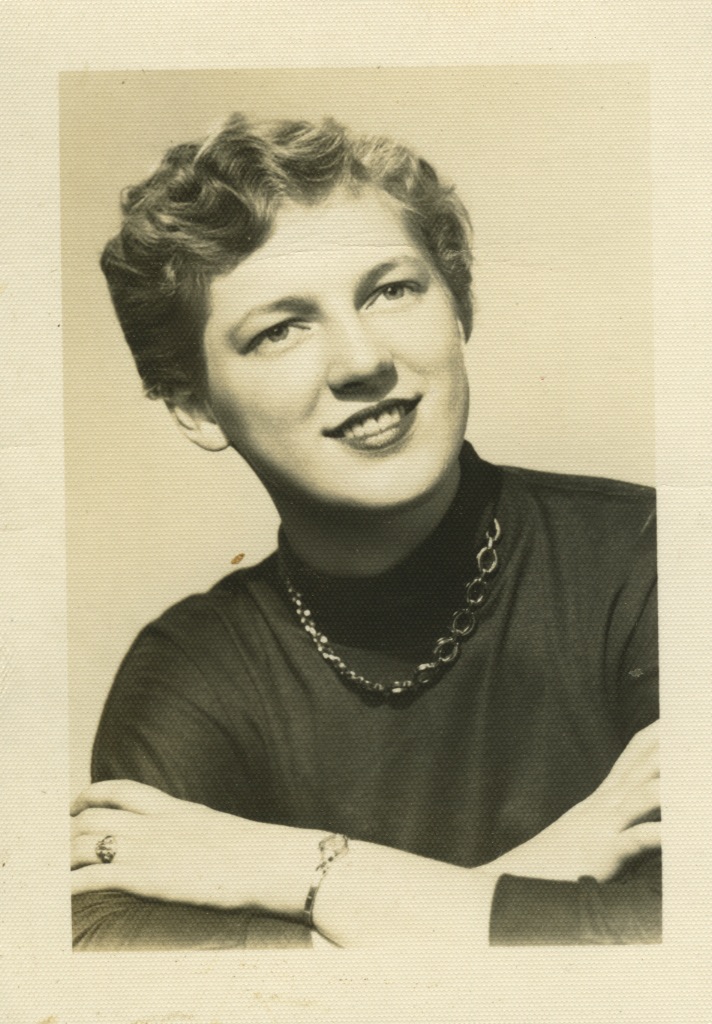
This one looks like a 1950s photo to me. It’s a standard wallet sized photo.
Joan
The name was written on the upper left corner but no ink remains, if it ever was there in the first place. The impression of the word is visible when the photo is turned against the light. The photo itself is about 1.5″x2″.
Unidentified
Possibly part of the same school as Joan above, the photo is not identified, but is the same size and the backdrop is similar.
Unidentified
Another wallet sized photo that was not identified.
Lara
The name is either Lara or Zara, I can’t be sure. Lara seems more plausible. Another small image, only 1.5″ by 2″.
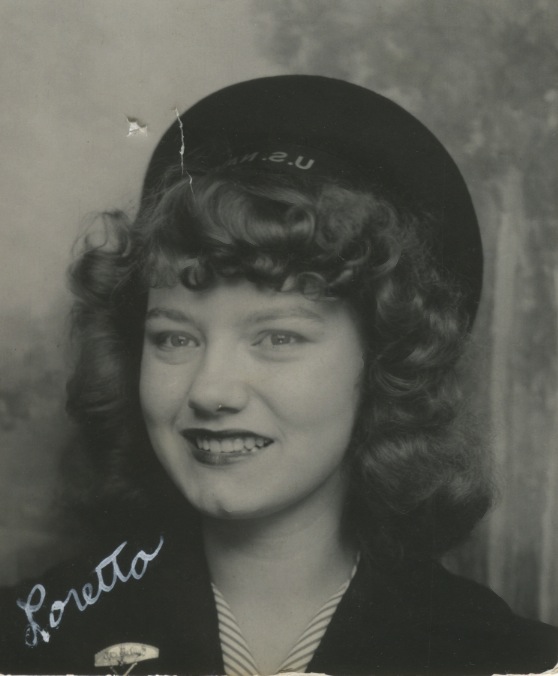
Loretta
This one is my favorite because Loretta looks like a lot of fun somehow. Her cap says “U.S. something” and the writing is backwards. This particular image is a tiny bit larger than the previous, maybe 2″x2.5″.
This photo of a baby all bundled up in blankets and cap and what looks like a padded cape just makes me all gushy. I want to cuddle the baby. The image has an incredibly clear shot of the sweat face, rounded cheeks and bright eyes, better than many 19th century cabinet cards. The photographer was William H. Partridge, one of a family of photographers. Father Asa was a daguerrotypist, first in West Virginia and later in Boston. The family studio was called A. C. Partridge and Sons. The sons were William and Edward, who both were successful photographers in their own rights. Around 1884, the brothers had moved to Oregon and opened a studio there. Individually, William and Edward travelled to Alaska to photograph the wild coast and scenery. They held successful shows in Portland and their landscapes sold quite well. By 1887, William had married and returned to Boston, which dates this photograph after that time. William remained in the photography business until 1914. After that time he was involved in real estate. William lived until aged 79, passing in 1939.
At the time of this photo, represented on the back mark, Partridge had four locations:
2832 Washington Street, Boston H’l’ds (Highlands?)
This week’s Sepia Saturday suggests newspapers and such, but I’m going for the headlines. Specifically, someone who made headlines: Lillian Russell.
Lillian Russell (12-4-1860 to 6-6-1922) was an American stage actress and singer of operettas, well known throughout America and Europe. During her heyday, she frequently starred in Gilbert & Sullivan comic operas. With roots in the American midwest, and a strong and independent mother (first woman to run for mayor of New York City), it is no surprise that the lovely nineteen year old was cast in her first role on stage in Gilbert & Sullivan’s H.M.S. Pinafore.
She was both favored and plagued by her beauty and femininity, garnering headlines with her various marriages and divorces, including one marriage that was dissolved because her “husband” was already married to someone else. Her stage presence and clear voice helped her ride out the various storms, and when long distance telephone service was introduced, it was Lillian Russell’s voice to be the first broadcast over the distance. She in New York, serenaded Washington D.C. and Boston audiences by phone.
Her long and prosperous life garnered much attention. She was known as a sex symbol, even in her later years when she was rotund but still lovely (with the help of corsetry, of course). While she was only 62 at the time of her death, her legacy of beauty, grace and charm are still known in the 21st century.
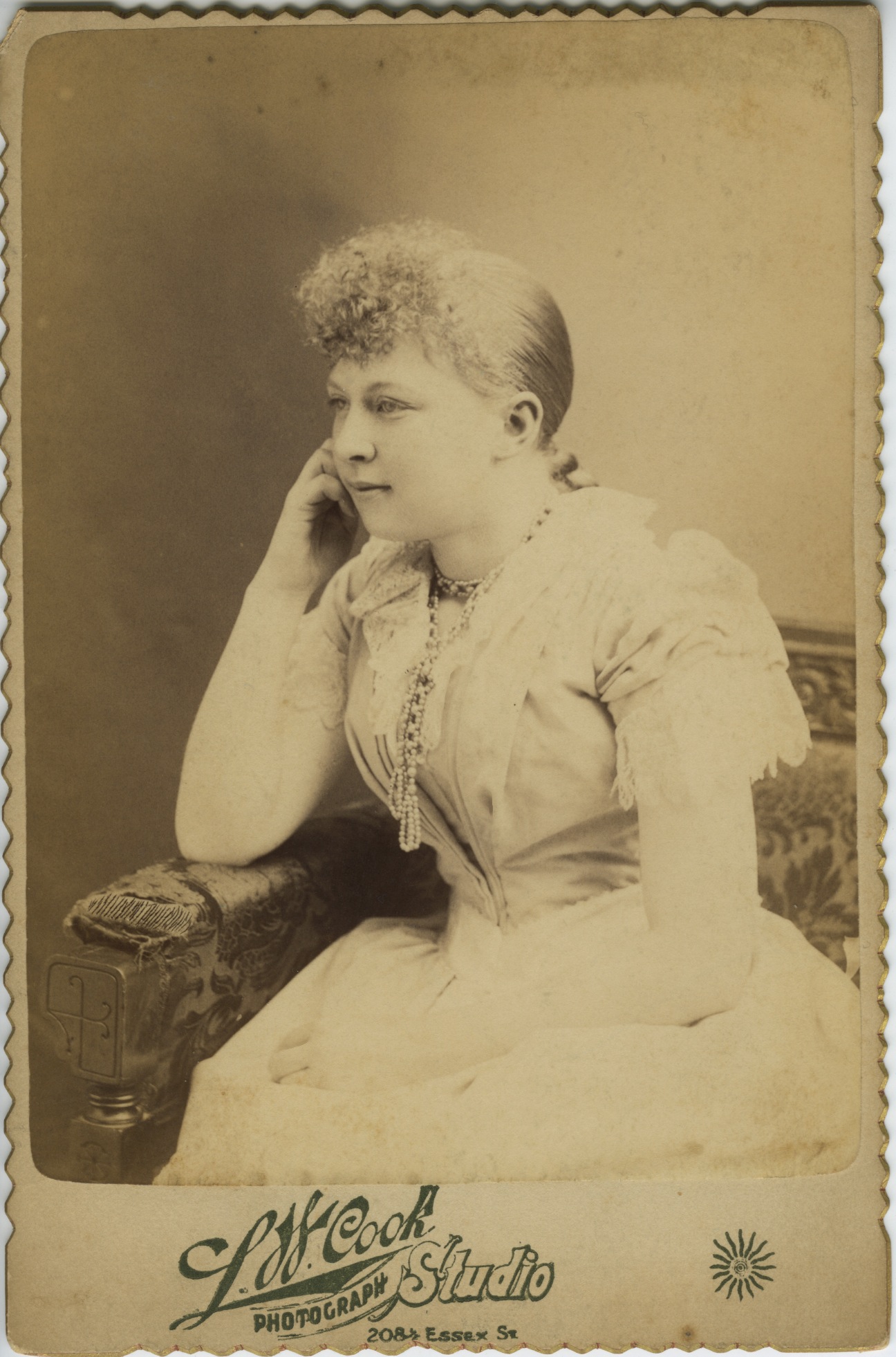
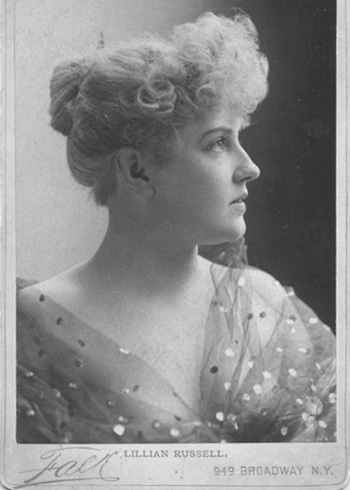
The reason I selected the photograph above is that it bears a strong resemblance to a young Lillian Russell. See the image below of a known photograph of Lillian.
Lillian Russell circa 1880s
While I realize that my unidentified photograph is 99% certainly not Lillian Russell, the young woman depicted would have been known in her community as having the lovely round face, soft curly hair and curvaceous figure of her doppelgänger.
For other twists on the theme, click over to Sepia Saturday. You will be happy you did!
On a Victorian cabinet card it is unusual to see a smile because of the long set up and exposure time of the photographic technology available. This photograph however shows a young girl with a funny, pudgy face and a tiny smile. And maybe crossed eyes. She is dressed in some type of jumper with lace collar and a necklace, as well as curled ringlets at her ears.
The photographer was J. B. Neff of Bellaire, Ohio. Interestingly, the direction given is “opposite post office” which is the same direction for R. L. Henderson, shown recently, from the same town. It is possible that Neff sold his business to Henderson, however Neff is documented to have been in business in Bellaire in 1892. The previous photograph featured deckled edges of the card and that was a known style of the 1890s. By 1897 Neff had moved to Cincinnati, so again it is possible he sold his studio to Henderson and Henderson felt the direction was to be retained.






 Who Were They?