Who Were They?

Lost and forgotten photos from the past

Gems 17

Off center, slipped down in the placeholder and looking squashed

A page in our little album that does not feature its residents to their best portrayals, unfortunately. The tiny gem tintypes have shifted in their placeholders and threaten to hide some of the better elements on them.
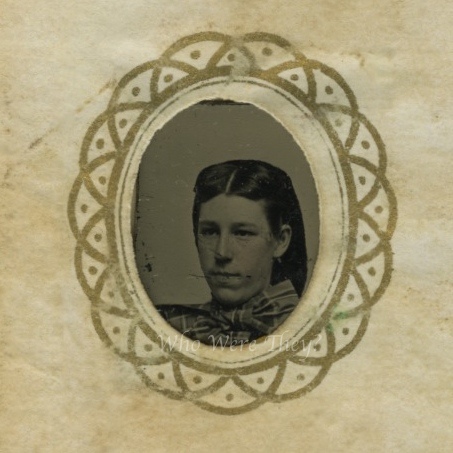
Giant plaid bow

Giant plaid bow

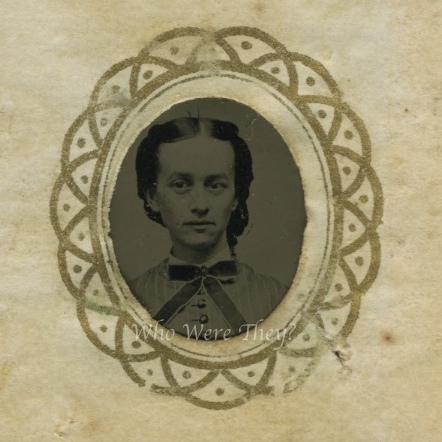
I do wish we could see more of this image, or even more of the dress worn, because there is a massive bow at this girl’s neck and I’m really curious what was going on with that! It is not possible to tell if the bow was part of the overall dress, or if it was worn as a decorative element, such as a bow tie, OR even if it was part of a wrap that was tied around the neck with the giant bow. It is a mystery.

Slouching

Slouching

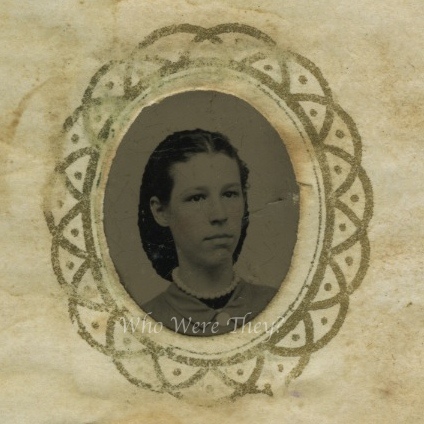
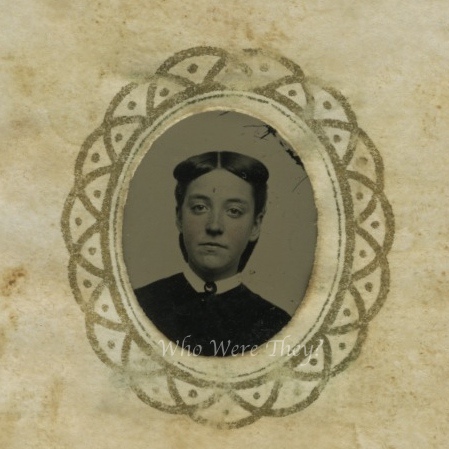
This particular image just appears to be sliding off the edge of the world and we cannot see more of her dress either! The band collar is interesting, however, and these became fashionable post Civil War, I believe in the last years of the 1860s and early years of the 1870s, remaining popular in some form or fashion through the end of the Victorian era. The hairstyle here looks awkward, but I suspect it was well fastened to the back of her head. It just looks like it is going to pull her head backwards!

Gems 16

Pearls and bows

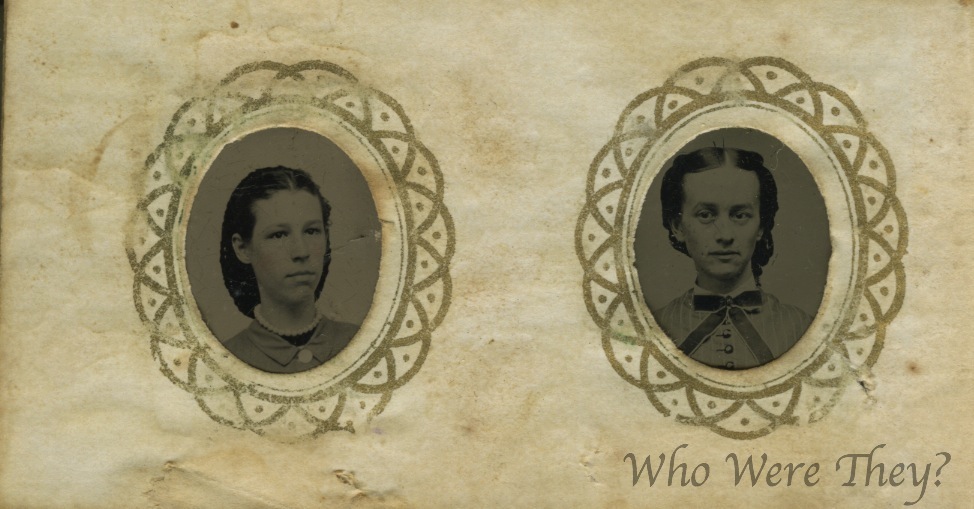
Today’s image reminds me of a country song, “she used to tie her hair up in ribbons and bows, sign her letters with x’s and o’s.” The young ladies here have put on their Sunday best to have their images struck.

Miss Pearl

Miss Pearl

This beauty has her hair dressed and covered with a hair net, I believe. This is a controversial subject among the historical reenactor & living history set. Women did cover their dressed hair with a hair net. They were usually the super fine ones we picture on lunch ladies, and they matched the hair color so they weren’t as noticeable. Women also wore fashion hair nets, made from ribbons and beads. These were frequently made for fancy dress parties and balls. Living history interpreters gnash their teeth when they see other women wearing a “snood” (a word invented in the 1930s) made from rayon in brightly colored strands, and covering undressed hair. Remember, dressed hair is hair pulled into some arrangement to keep it under control. The hair net is only there to manage the little wisps that work their way out during the day. Some would use this image as proof that their rayon snood is similar to one worn during the era. It comes down to empirical evidence that is available to us – advertisements, patterns, and fashion plates, as well as extant items that are held in private collections and museums. There were ads for hair nets in varying hair colors. There were not ads for hair nets in yellow, blue & purple. :-)

Miss Bow

Miss Bow

The bow tie on this image is large and fashion forward. You can see that it was edged with a contrast color. The dress itself was striped. This is possibly a later 60s image, potentially even early 70s based on the hair style. Her features are angular but not lacking in femininity.

Gems 15

As in, off kilter

It can be frustrating as a collector of photographs and antique albums to find that images have gone askew and crooked over the years. I hesitate to touch them as I don’t want to damage the delicate surfaces of tintypes or CDVs. I don’t want to take images out of their photo sleeves unless they come out easily, as I don’t want to damage the fragile paper that was used to create the 150 year old book. And so, I wind up with scans of images that are off center, cockeyed, or otherwise wonky.

To the left, to the left

To the left, to the left

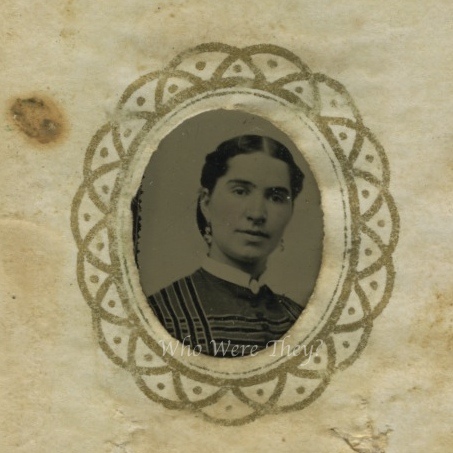
A pretty woman with striped embellishment on her bodice, earrings and a pin. I recently learned that this type of trim on the dress was more popular toward the end of the war and into the second half of the 1860s.

Leaning to the right

Leaning to the right

It is more difficult to narrow down this lady’s timeframe due to the solid color dress, but the collar might be a bit of help. While white collars were very very commonly used on dresses because they protected the dress fabric from the sweat, oil and dirt found on the skin, the fold over collar was in use almost exclusively until after the war when a stiffer, more standing style of collar came into use. So, here I am also guessing at post war.

These crooked photos reminded me of a little story my grandmother used to tell us. It was called the Crooked Mouth Family. There are several slight variations, but the gist is that each family member talked with their mouth crooked to one side or the other, while the youngest spoke correctly because he had a college education. The family is ready to go to bed and it is time to put out the candle. Each person attempts to blow out the candle, but can’t because their mouthed is crooked! What made it magic for us was Gram would do funny voices and could switch her mouth around to speak as each person without missing a beat, saying “well, I will!” “well I wish you would!” and then crooking her mouth to the side and blowing and missing the imaginary candle. I found a couple of grandmothers on YouTube performing the story for their grandkids. I hope you enjoy these as much as I did! Click the link to go to the video.

The Crooked Mouth Family

The Crooked Face Family

Gems 14

Hey, I’ve seen her before!

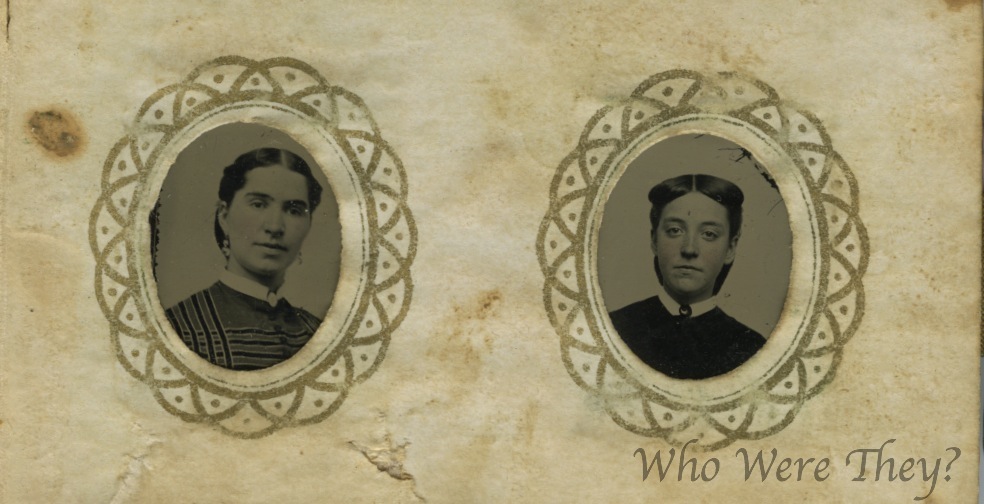
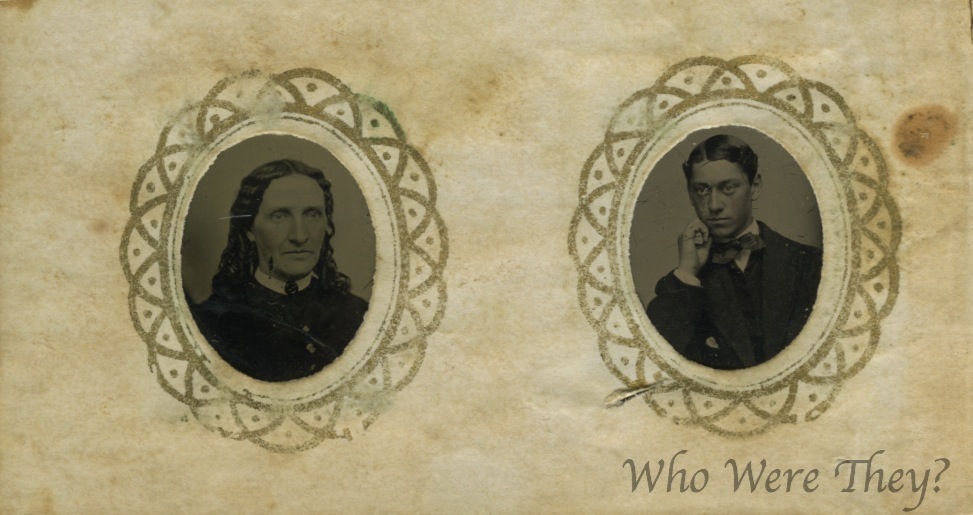
Sometimes when buying albums online, I wonder if the album was truly put together by someone in the past or if some dealer just slam dunked a bunch of photos together. This is one reason why. The lady on the left of the image was previously shown, on the second page of the album. Was it an extra gem that the original owner put in place to fill an empty spot? Or was it an extra image the dealer put in place to fill an empty spot? I know in my own photo albums, I don’t like to repeat photos, but if there is a good one I might use it twice, but this is a modern concept of putting together a grouping of photos on a page to produce a response. What if we only had small portraits of people, no candids, nothing like what we currently have? Would you put extra images into open spaces to fill the book? I might.

Gems 14 - Man

Another thoughtful pose

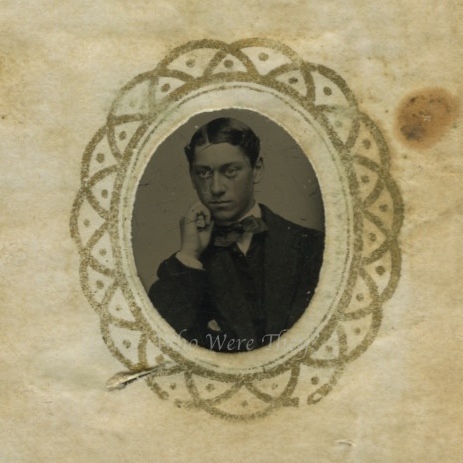
This particular young man is using the “just touch your fingers to your cheek to make it look like you are thinking…” pose. I love his big bow tie. I believe there was not a standard size to bow ties at the time, which is why we see some that are quite large while others are almost tiny. Someone who knows more about men’s neckwear may chime in if they like. This chap’s hair is oiled and appears to be behaving quite nicely. His ears are a bit large and he has puffy eyes, as though he was fatigued or had been crying. I doubt that is the case, as a person would want to look their best for their photo rather than exhausted, so I’m guessing this is just what he looked like.


Gems 13

We are just over half way through this album and I’m quite enjoying it! Do you like when I provide links at the end of the article? That’s a new thing I’m trying out and hopefully I’ll be able to add a little extra every once in a while to further spur your curiosity.

Gems 13 - fingertips

Fingertips holding her in place

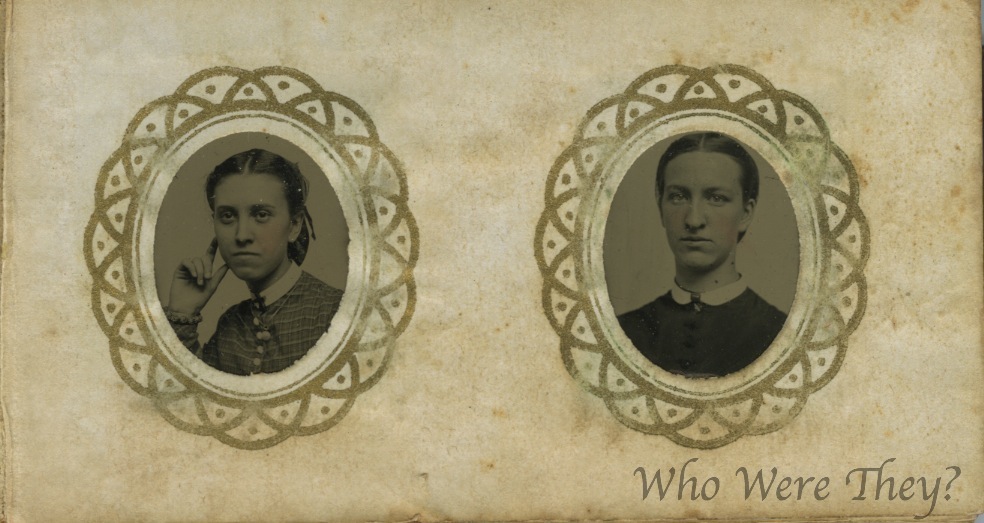
There is another photo website that has funny names for various poses, including the chin rest and arm shelf, but I don’t know that they have a name for this pose. I can imagine the photographer told her to rest her cheek just slightly on her fingertips, as though the two were not actually touching, so as to avoid squishing of the cheek. It gave this Civil War era young lady a thoughtful air.

Gems 13 - Solemn

Not quite trusting

The feeling I get from her eyes is that she doesn’t quite trust the process, maybe isn’t sure about how it will turn out, or just didn’t like the photographer. Another Civil War era young lady posed for her portrait with an unknown photographer.