Who Were They?

Lost and forgotten photos from the past

SD CDVs 2

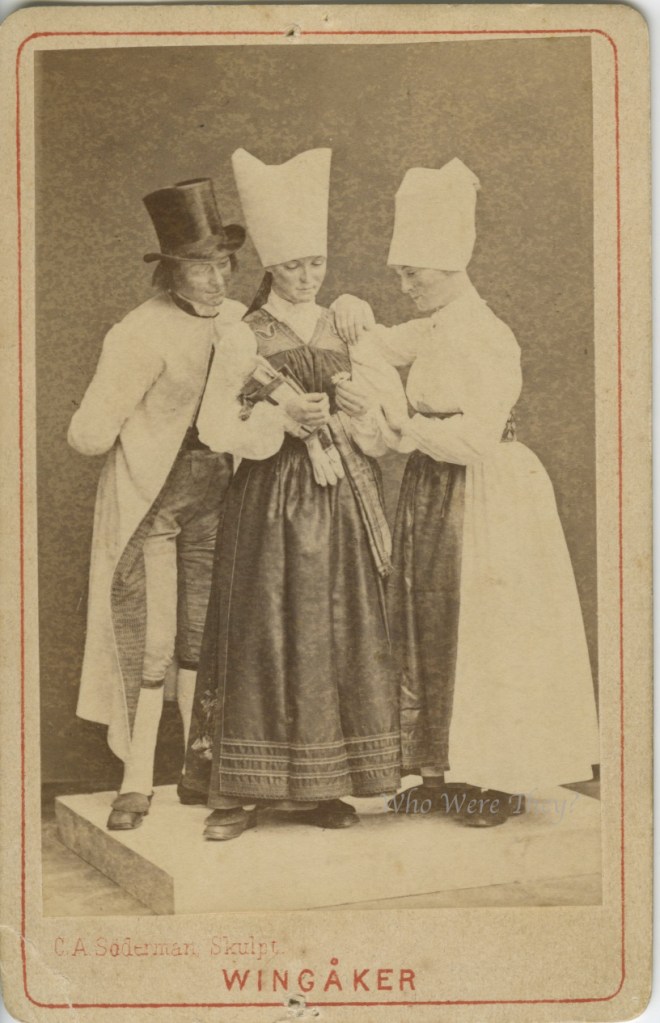
For your review is a fine image of the ethnic costume of Wingaker Sweden. Wingaker, or Vingåker as it is found in English language, is a town in the central southern third of Sweden.

I found images in the Cycopeadia of Costume that are quite similar to the dress on the middle subject of this image. The apron worn over the dress and the high cap she is wearing is referenced as “ordinary clothing.” I can assume this to mean every day clothing, but the author of this resourceful book spent literally half a sentence on the costume description, unfortunately. I would happily take input from anyone who knows anything about Swedish ethnic clothing, the linen caps, or anything else that can enlighten us.

The studio is once again Eurenius and Quist of Stockholm. There is faint text that references C. A. Soderman, Skulpt but I am unsure how that relates to the studio. Perhaps Eurenius and Quist purchased the image or licensed it from Soderman. I have no clue.

This photo and the previous one of the Norwegian clothing both have a faint pencil mark on the back that says MP but I have no idea what that means either. I wish I had been able to find other photographs by the studio or that referenced MP. It seems like they were once owned by the same person for some reason.

Further Reading

A Cyclopedia of Costume or Dictionary of Dress by James Robinson Planche, Publisher William Clowes and Son, 1879, pp 346

SD CDVs

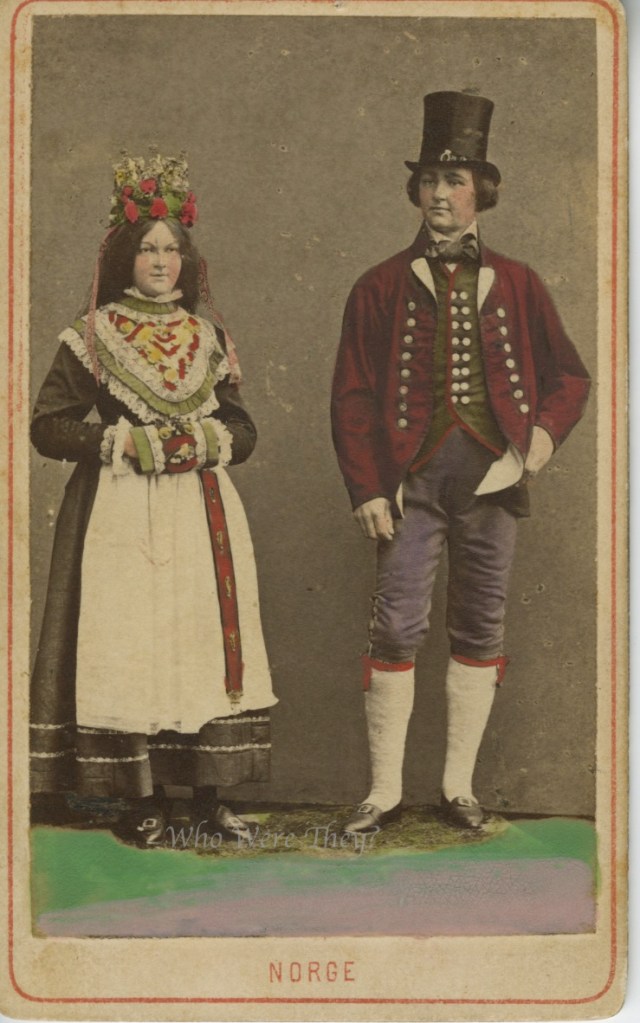
This wonderful cdv shows an ethnic costume from Norway. It has been carefully hand painted so as to bring out the navy colored breeches, green vest and red coat of the man, and the green, yellow and red decoration on the woman’s dress. The costumes are fascinating and were probably much more beautiful in person!

The photographer probably made a series of images of ethnic costumes, but this is the only painted image I came across during a recent trip to San Diego, CA. It does make me wonder how this particular cdv found its way from Sweden, where it was made, to almost the border between America and Mexico.I did a little bit of research on the costumes themselves and there is a rich and diverse ethnic costume tradition in Norway. These clothes could be wedding attire, as one website I found referenced women wearing a type of crown or headdress with their wedding clothes. The man’s costume looks similar to one I found from Sunnmøre in the southwestern part of the country. A person more familiar with the many regions and costumes of Norway can better pinpoint where these clothes were from.

The photographers were W. A. Eurenius & P. L. Quist of Stockholm. They were decorated photographers, with silver medals awarded them in 1865, 1866 and 1867. I have one other image from these photographers, also an ethnic costume. Come back soon and take a look.

Further Reading

Bunad – Norwegian Traditional Costumes – My Little Norway

A Cyclopedia of Costume or Dictionary of Dress by James Robinson Planche, Publisher William Clowes and Son, 1879, pp 344-348

Marvel Farm035

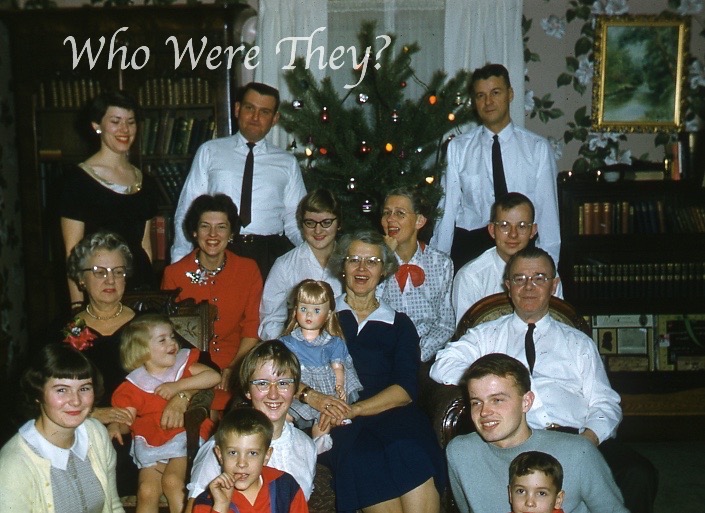
Brewer family Christmas from the 1950s. Center is Katharine “Pat” Brewer and George S Brewer, my grandparents. Surrounding them are family from the Erie, PA area. I just love how Gram is holding a doll and makes it look like she’s just part of the family. That sort of captures Gram’s spirit. This photograph was taken at their home at 1216 West 9th Street and is a Kodak color slide. I scanned the slide using an Epson Perfection 4870 flatbed scanner. Scanning slides can be difficult because of the slide frame and “in the old days” this particular scanner had a great interface to detect and scan slides. Unfortunately, the drivers for this scanner are outdated and don’t work with the latest versions of the Mac OS, so I use the built in interface. It doesn’t have as many features and I can’t scan slides easily. While the scanner is nearly ten years old, it is a workhorse for standard images that can go on the glass, so I’ll keep using it until it quits!

We have certainly had quite a lot of distractions around here this year! I realized I haven’t blogged very much at all except for on my recipe site, and even there I took a month long break. The photos are in my hot little hands, I just haven’t made many opportunities to write and post, but I hope you will stick it out and come back for some really fascinating images. I found some great CdVs of national costumes, some hand painted images, and some that I wonder if they were nuns. Wow!

Until then, I wish you the very best during the holiday season, no matter what you celebrate!

IMG_0373

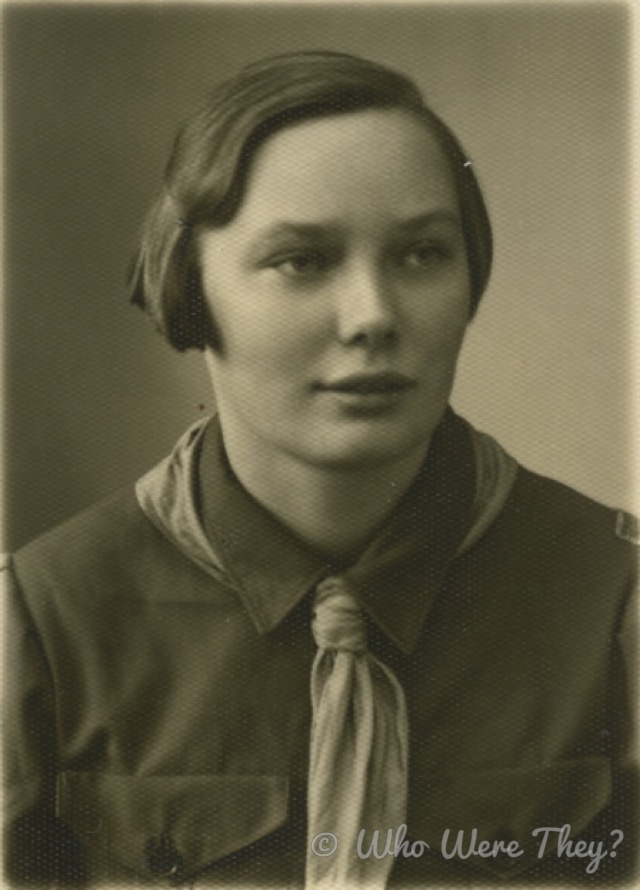
This photo is small, only about 2×3, and thanks to having scanned it we can enlarge the digital version for study. The young woman pictured was probably named Lii’le or Liile, something like that. Liile was an Estonian Girl Scout – or as they are known outside of the US, a Girl Guide. She wears a uniform similar to the early American uniforms, with a neckerchief tied under the collar. You can just see the insignia patch over her shoulder.

On the reverse of the photo is written “Målestuseks Liile!” which translates as “Memories” or “Remember me” or the like.

The photo was dated in the European fashion “28 11 37” which to our American minds would be November 28, 1937. Further, it was imprinted “Kunst-Foto Osol, Tallinn, Mundi” meaning Kunst-Foto (loosely translated as artistic photo) in Osol, Tallinn & Mundi. Tallinn is the capitol of Estonia and Mundi is a small village also in Estonia. I can only assume that Osol is also a town or village in the country.

IMG_0372 IMG_0370 IMG_0371

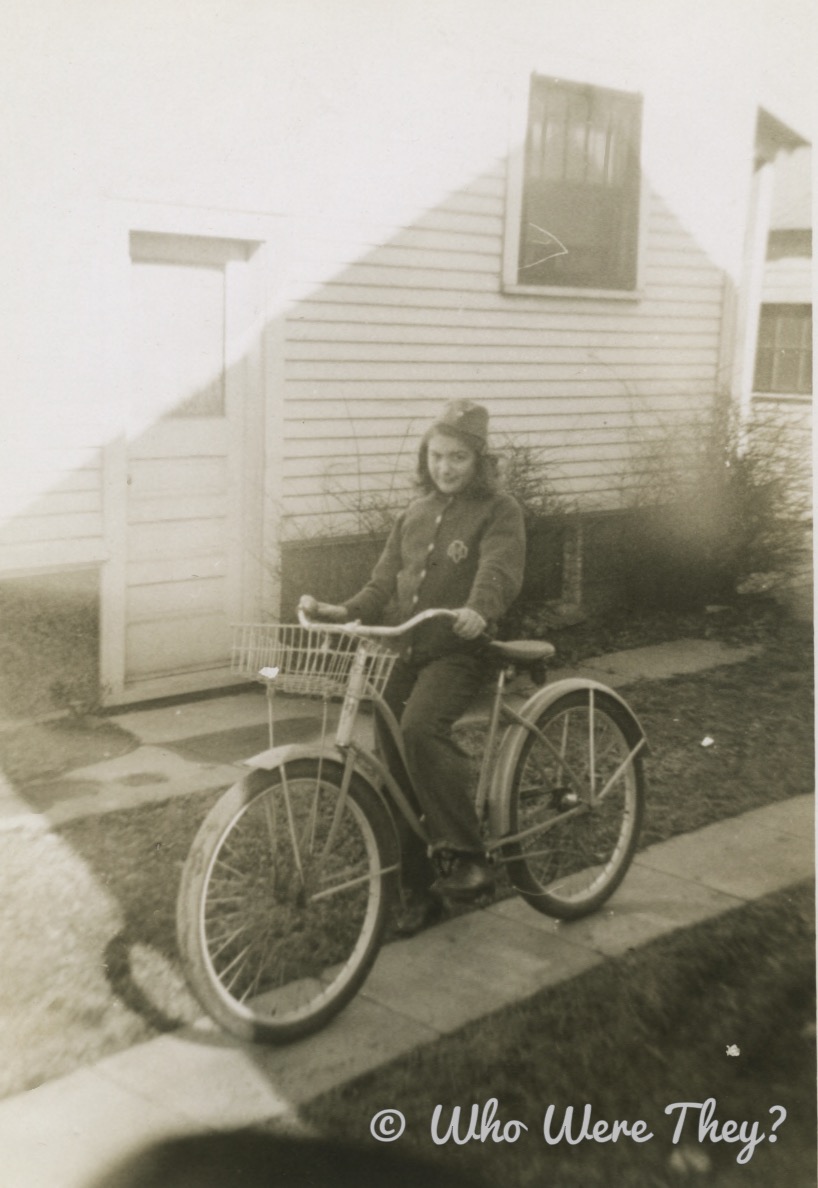
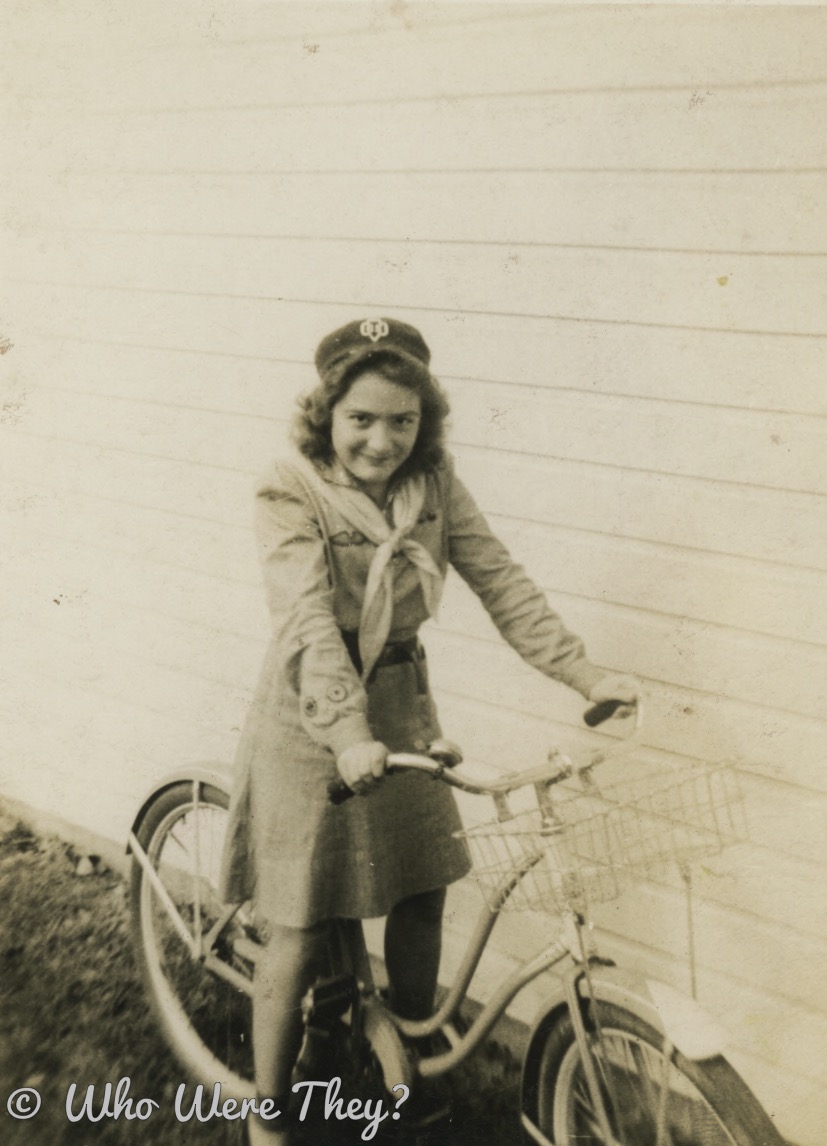
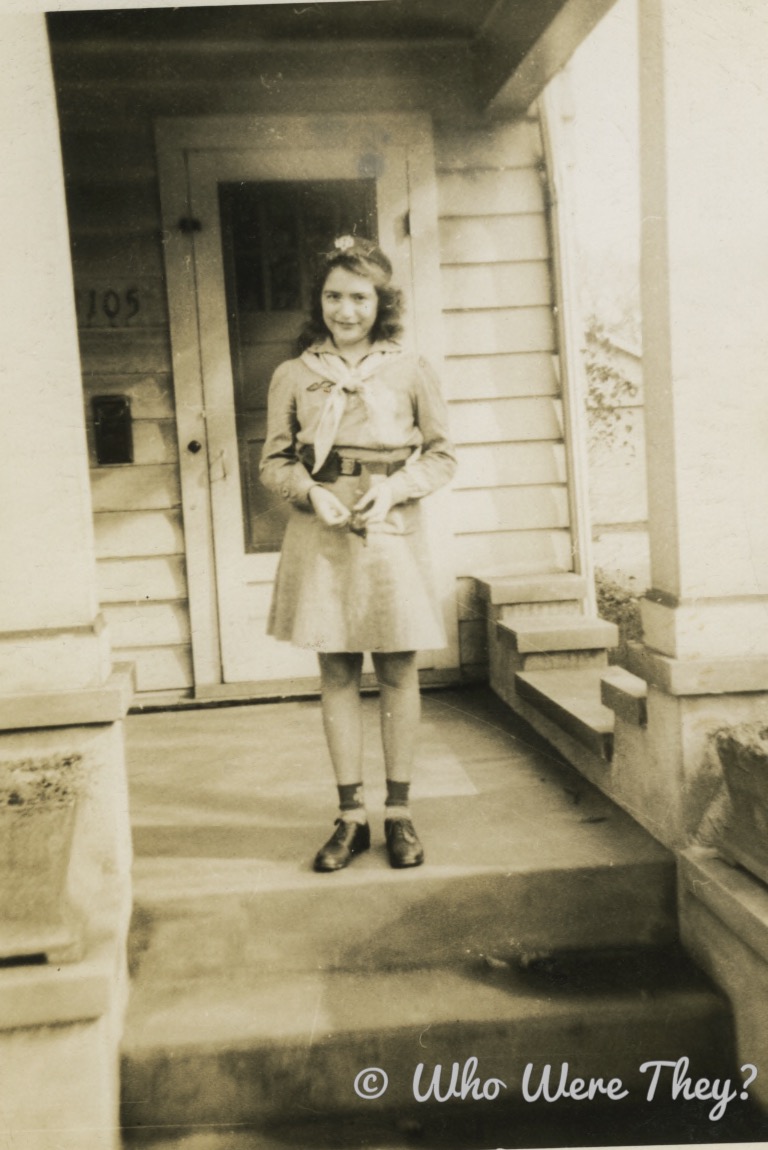
These three images of an unidentified girl in the 1940s or 1950s feature her Girl Scout uniform and her bicycle. I have no information about where the photographs were taken, but I am assuming they are American.

The uniform looks to be a Cadette uniform, which was the third level of Girl Scouting at this time. First level was Brownie, then Junior, then Cadette or Intermediate, then Senior. Each level had classes, such as first and second class, and these were earned through projects and actions to make the world a better place. In later years, these were changed to various named awards. Second Class was split into two awards in the 1960s and these were Sign of the Arrow and Sign of the Star. First Class was split in the 1980s into Silver Award and Gold Award.

Even though my daughter’s event has passed, I am going to continue this series because I have so many wonderful images! I hope you will check back for more and that you are enjoying them. I know I am!