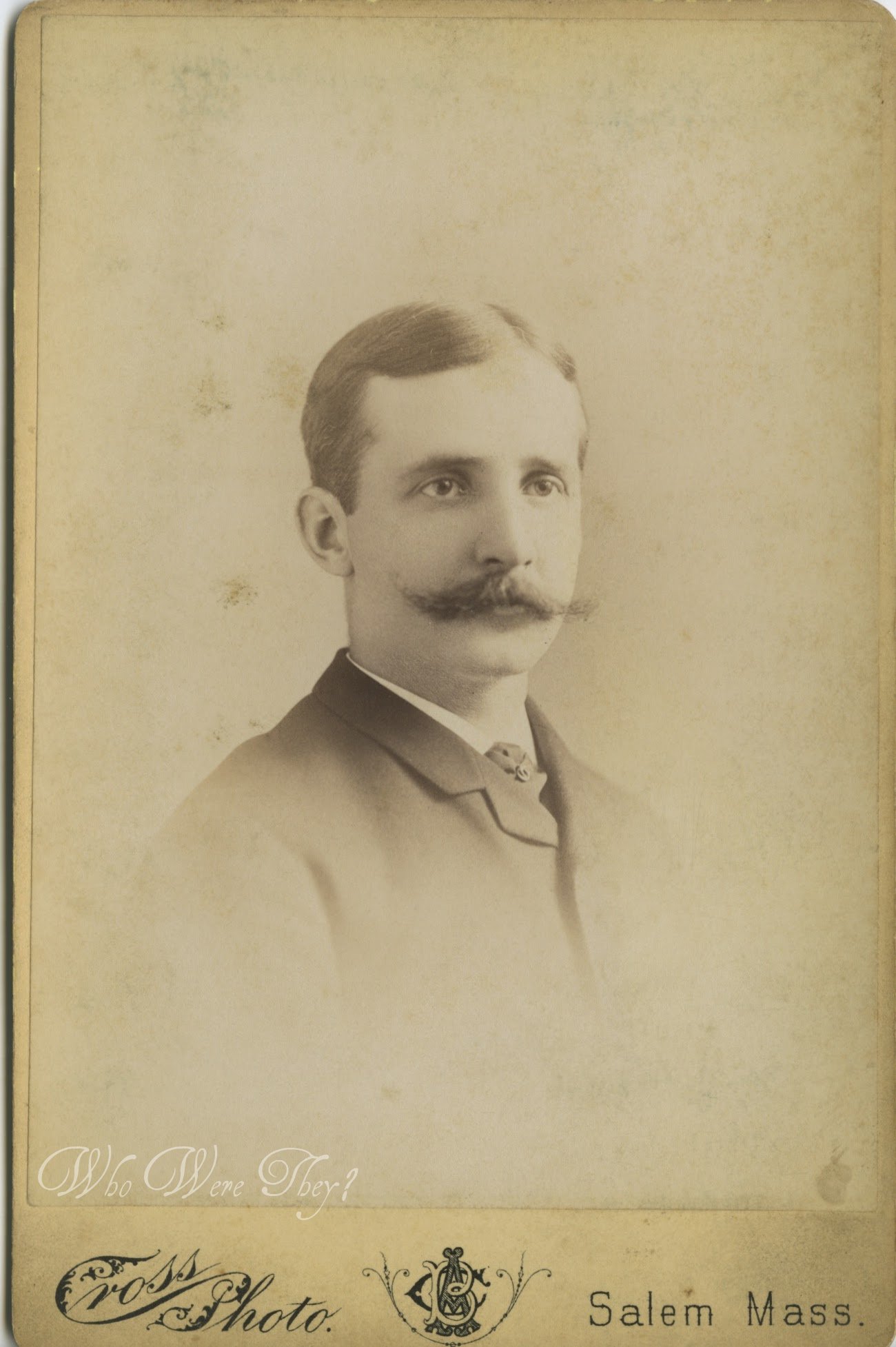
This handsome man sat for his portrait showing off his fine handlebar mustache at the studio of A. B. Cross of Salem, MA. The Cross Photo studio is considered one of the most prolific of the CDV era (roughly 1870-1890). Salem of course has a long history in America, and by the time this photo was made, the area had developed numerous industrial interests, including a steam cotton mill, tanneries, and shoe factories. While the harbor and port declined against competition from New York and Boston, the town became famous for the author Nathaniel Hawthorne and its long history. 20th and 21st century school children are taught about the Salem Witch Trials through the play The Crucible by Arthur Miller, and based on events that took place in Salem in 1692-93.
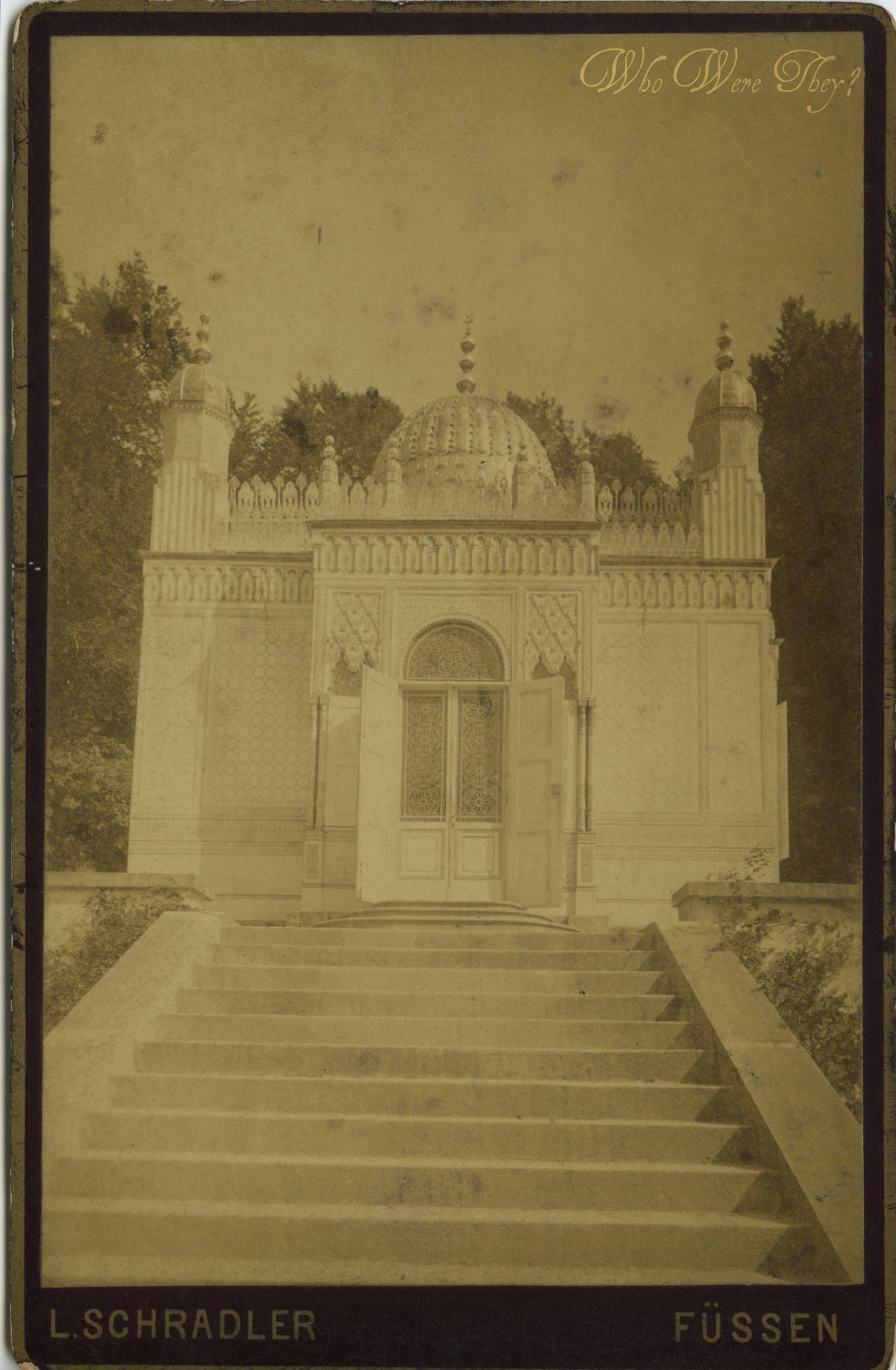
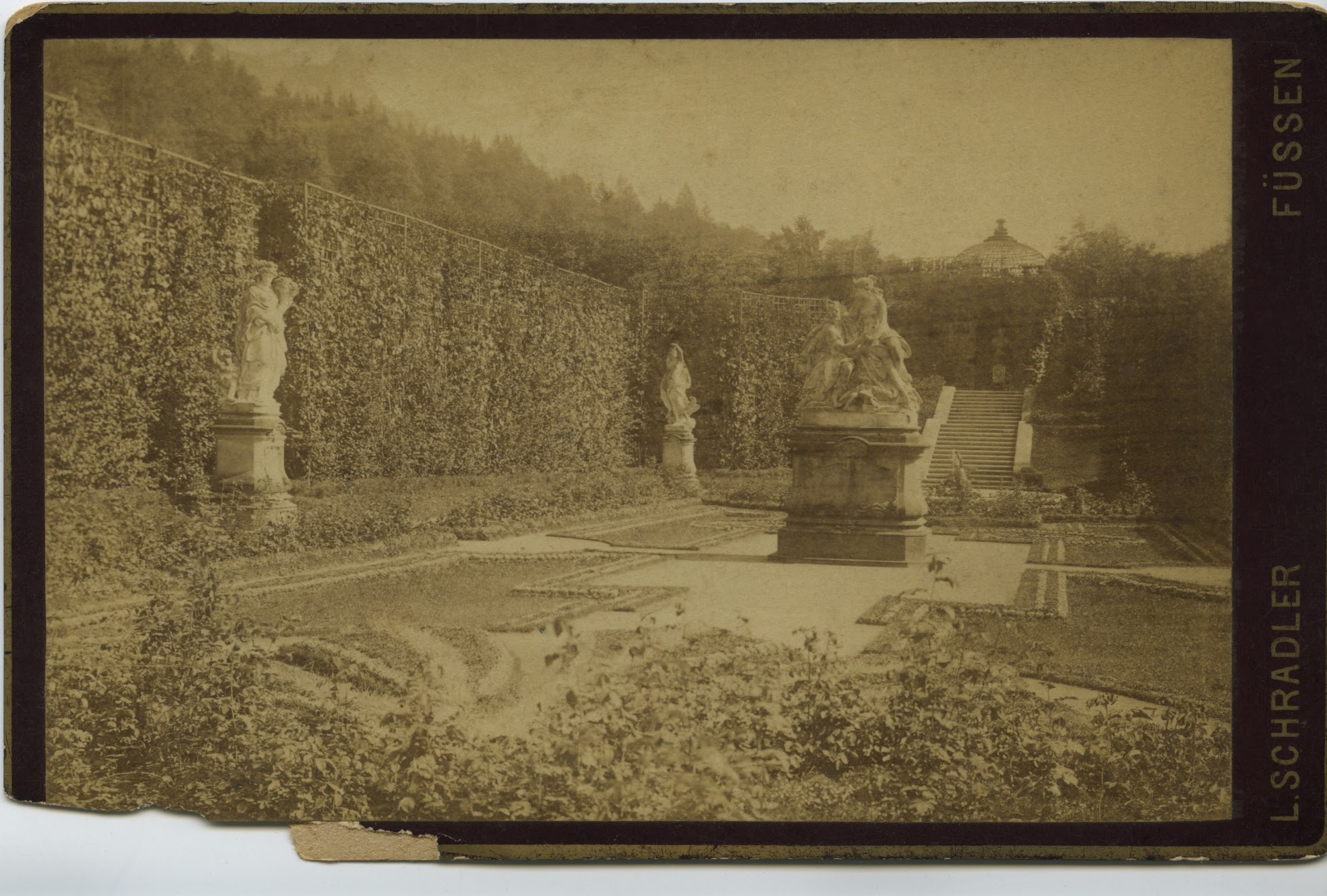
Alan’s prompt this week suggested castles and monuments. These photographs of Füssen in Bavaria, Germany I think fit the bill quite nicely.
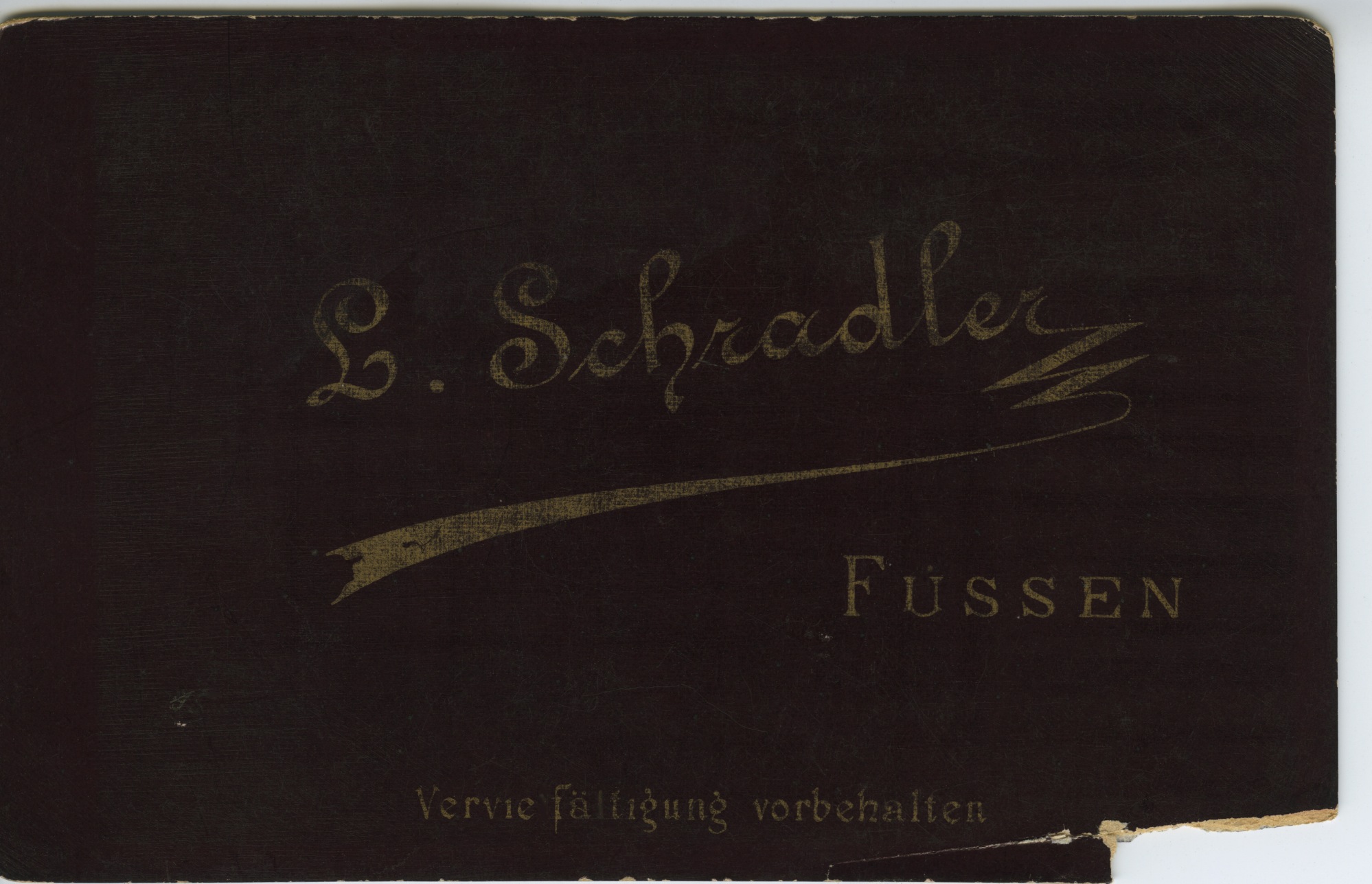
Photographer: L. Schradler
Füssen is central to the famous Bavarian castles and the gorgeous Neuschwanstein Castle is just a short bus ride away from town. Because of this, it is a little difficult to find photographs within the town because so many travel photos show the traveler posed with Neuschwanstein in the background “while at Füssen.” It is also possible these photos do not depict monuments within the town, but instead something from a local castle. The town has a long history, dating back to the Roman times. Their patron saint is St. Mang, and his remains were once buried in Füssen, but have since disappeared.
While I have searched every different way I could think of, I could not find any photographs that came close to matching these to provide an identification. Granted, these photos are greater than one hundred years old and things have surely changed over time, but that domed building at the top of a flight of steps seems like it ought to look similar today. Perhaps one of our better travelled visitors can lend some insight.
Translation please…
Can you read and translate the words center bottom? Please comment and let us know what it says. My guess is something along the lines of “negatives preserved” or “artistic landscape photography.”
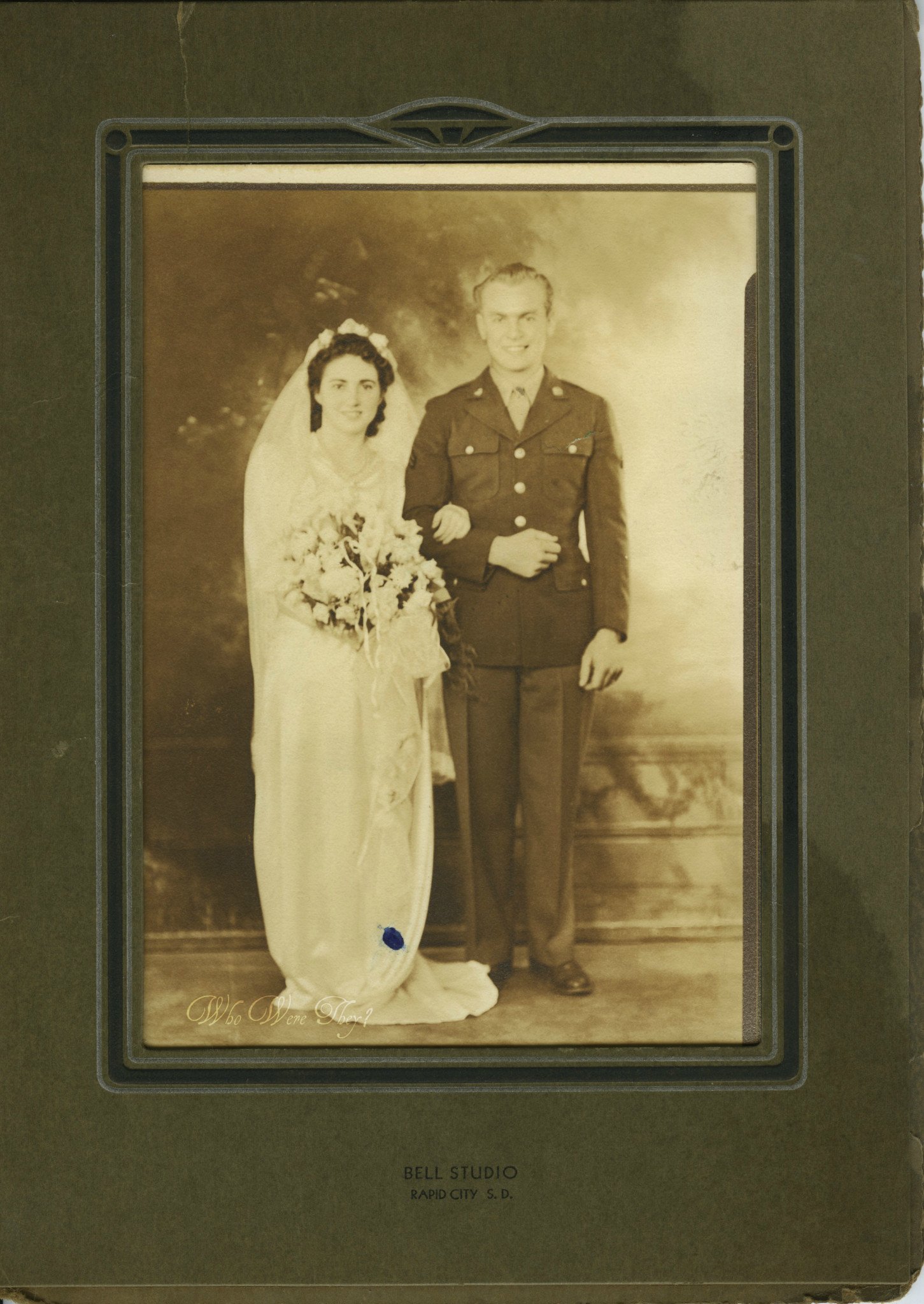
I just hate it love it when I go to an antique shop that obviously doesn’t care lovingly curates their photographic items for sale. In particular, one of my favorite shops has a stall where people can paw through carelessly spend hours thoughtfully sifting in the crummy cardboard boxes holding piles and piles of photos getting wrecked, bent and torn ready for new homes. This is one such photo. I was drawn to the happy and hopeful faces of this young couple posed in their wedding clothes. He is in an Army uniform, she is a lovely white dress, veil and bouquet. The lady at the desk couldn’t find a price on the folder, so she ripped it open to look on the back of the photo. Needless to say, I asked for a discount.
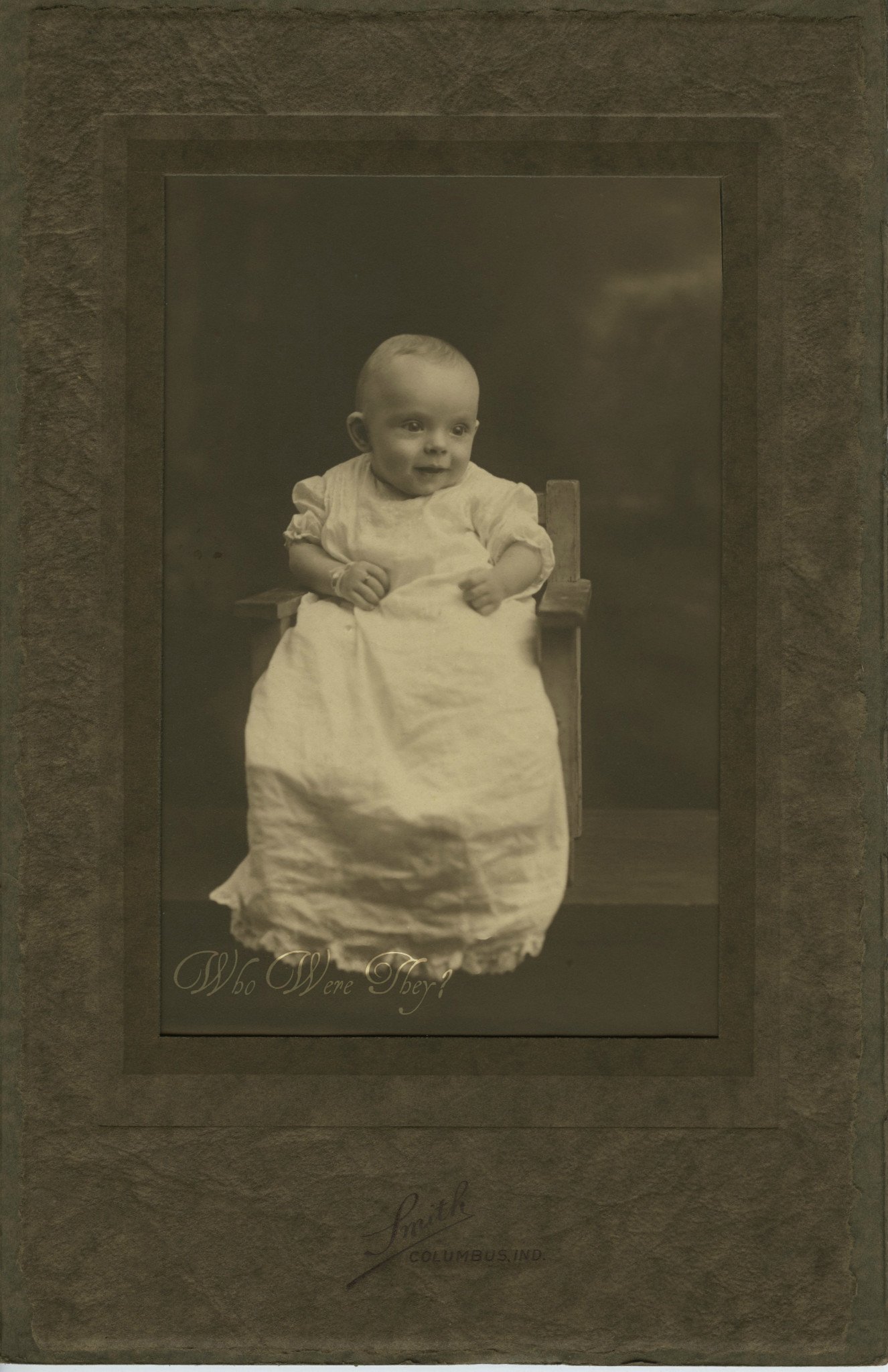
This baby is very happy! Look at the bright eyes and smile while the infant looks off at Mama or Papa. Babies start to smile socially around 6-8 weeks of age on average, though some start younger and some wait a while longer. Before that age, babies smile reflexively from various stimuli, including gas, hunger, tickling and cuddling. The social smile is an intentional smile. These are the best smiles, especially when Baby is very young. It is a special moment shared between Baby and Mama or Papa, Auntie or Grandma, and there isn’t much that can compare. when a baby has very few ways to express herself, a cry or a smile go a long way.
The photographer of this smiling tot was Smith out of Columbus, IN. The style of print and mount are consistent with the 1920s.
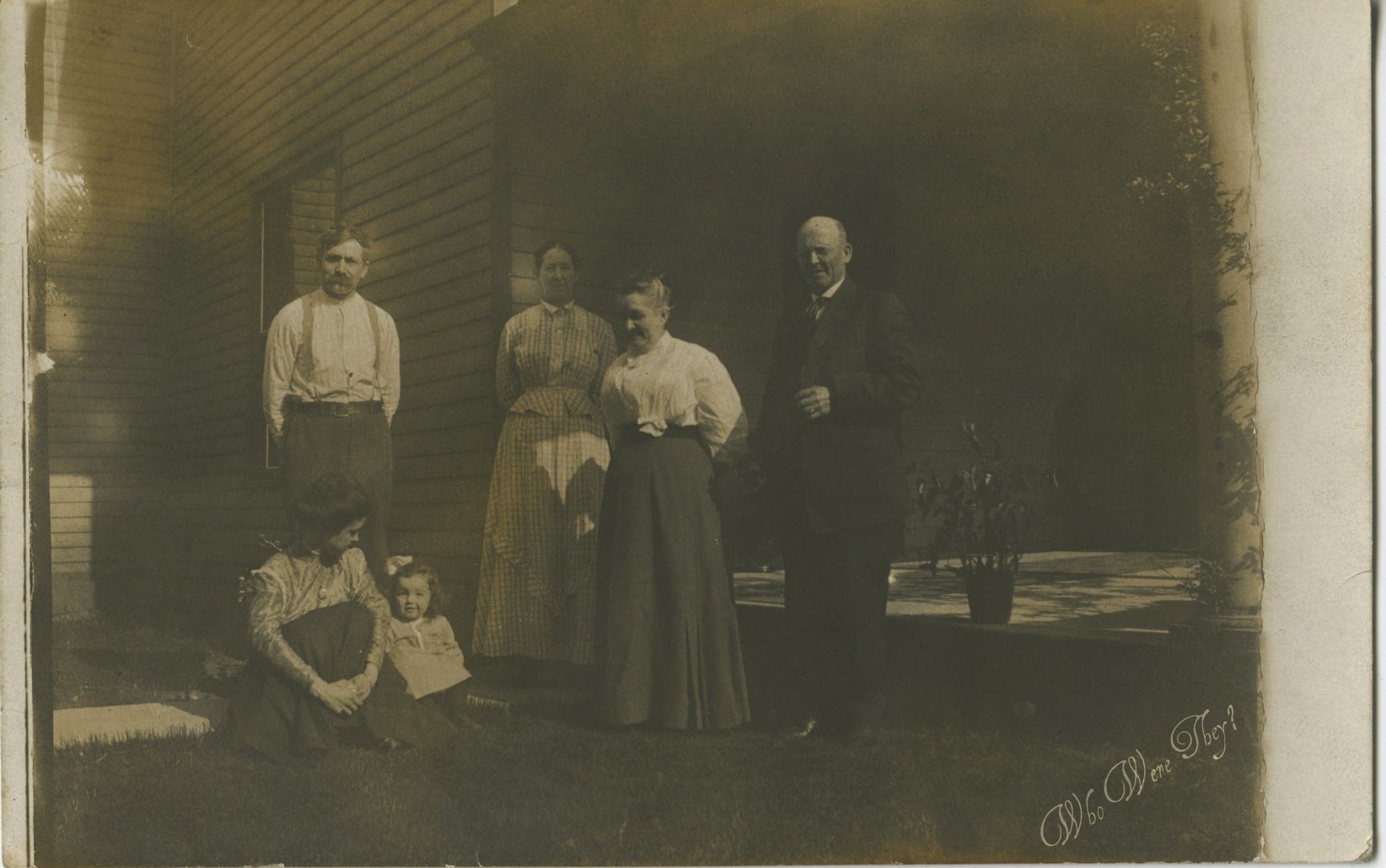
Here we have a variety of photographs of people in doorways, as inspired by the Sepia Saturday prompt, which shows two men standing in the doorway of a shop. As I looked through these photos, I realized the commonality is not only people posed in front of doors, porches and doorways, but the pride of place this indicates of these families.
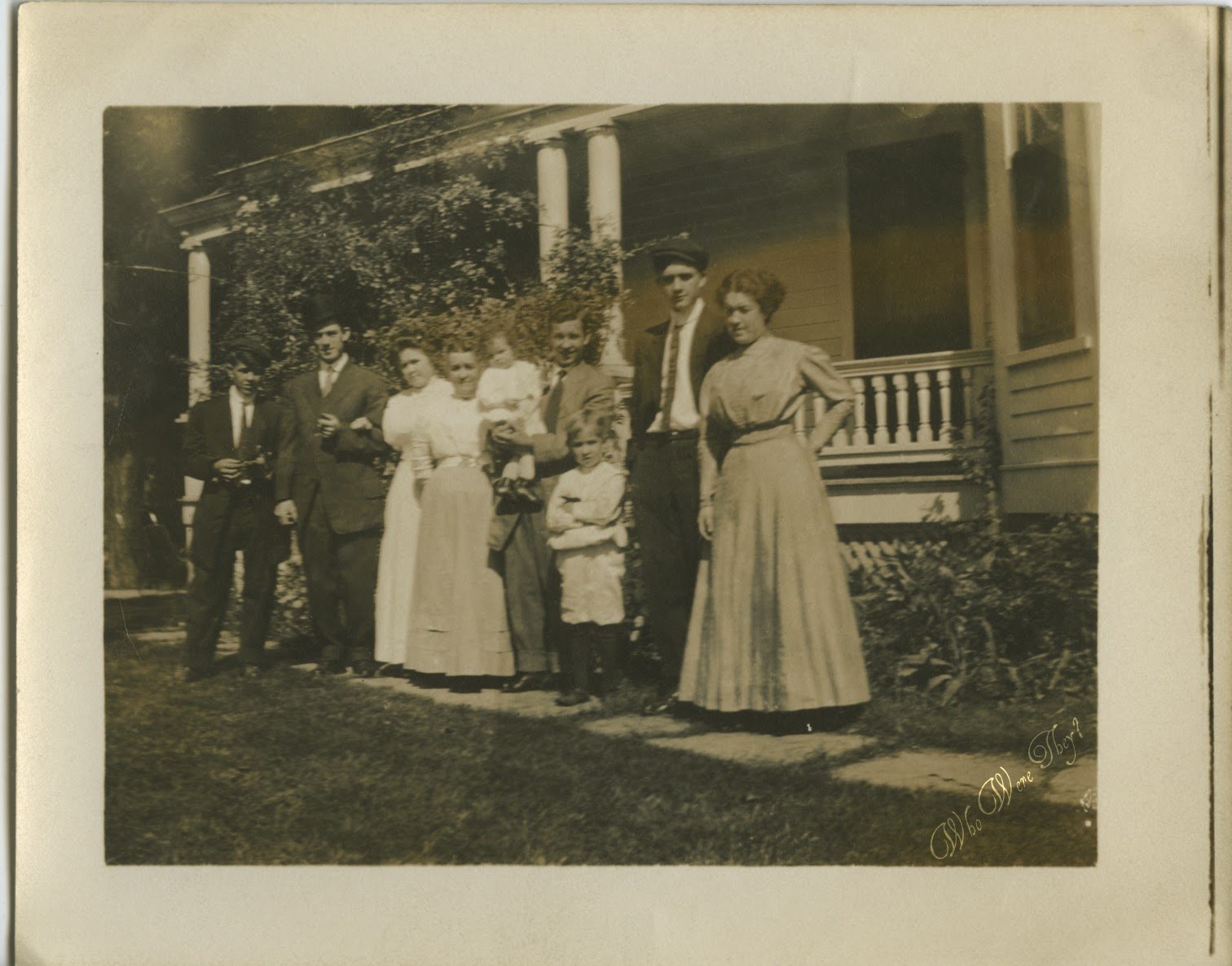
Doorway/porch A
This porch is simple, just a single step up from the yard, but the whole family is here for the photo.
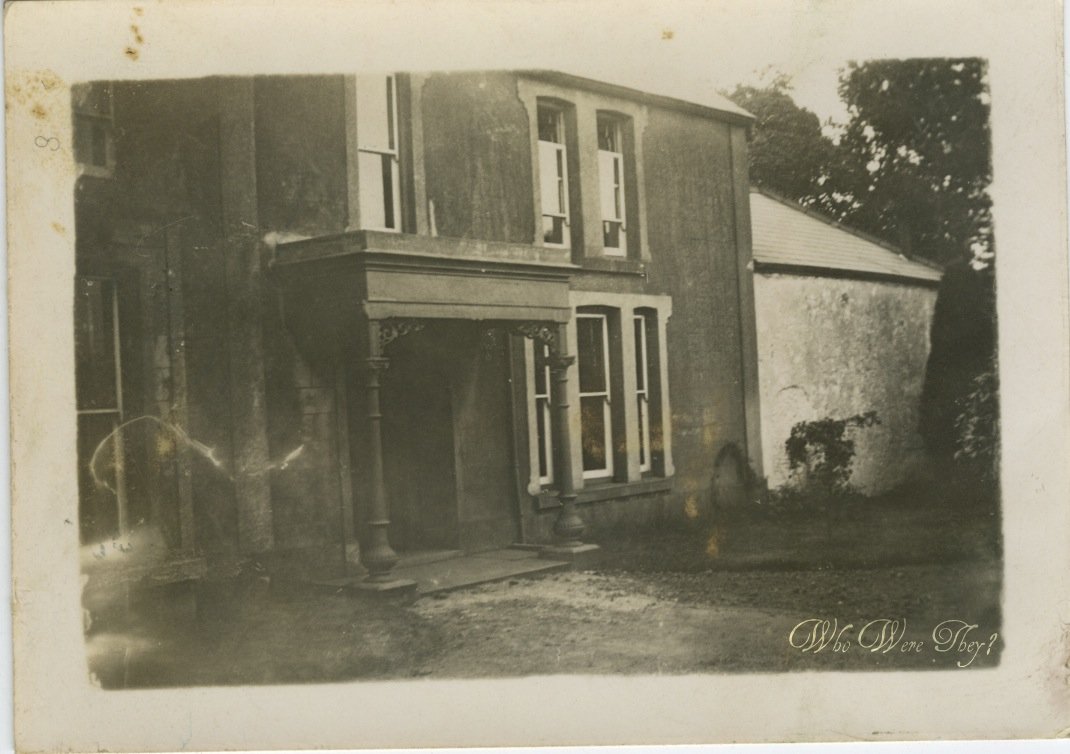
Doorway/porch B
A wide angle view of a doorway/porch of a pretty big house. The pathway looks almost like a driveway and comes right up to the porch. While there are no people in this photo, with the cost of photos it would not have been a throw away or practice shot, I believe. Someone was proud of that portal to the home.
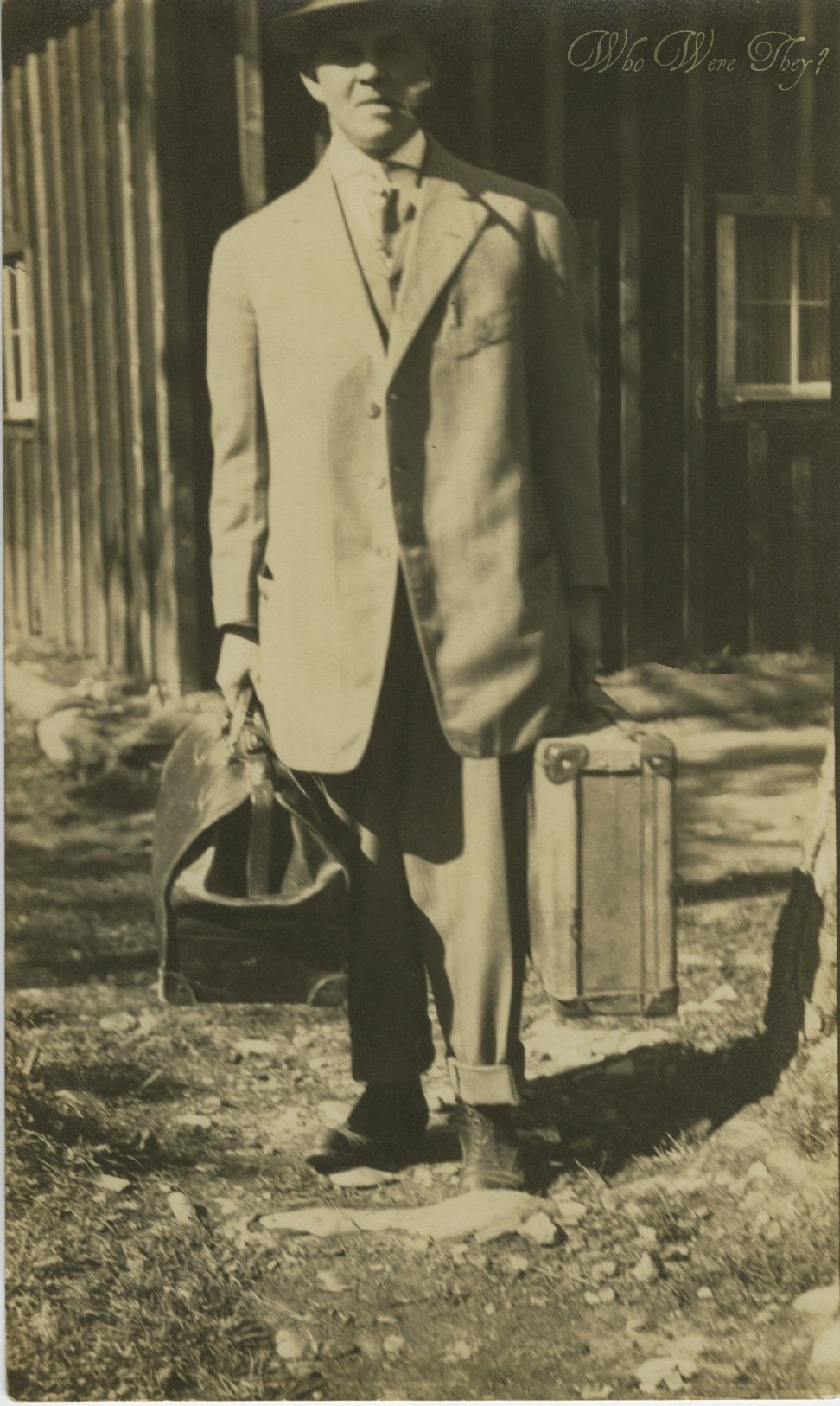
Leaving Saltese, September 27 ’09
Here’s a rather rudimentary doorway/porch. Saltese is a small mining town in Montana near the Idaho border. I think this might have been a country doctor on his rounds to another town, given the doctor style valise.
Porch D – multiple views
Next we have four views of the same porch/doorway. This appears to have been a larger house with a side porch and veranda style covering. Very nice with the foliage growing up the side. I expect that porch was enjoyed on long summer evenings.
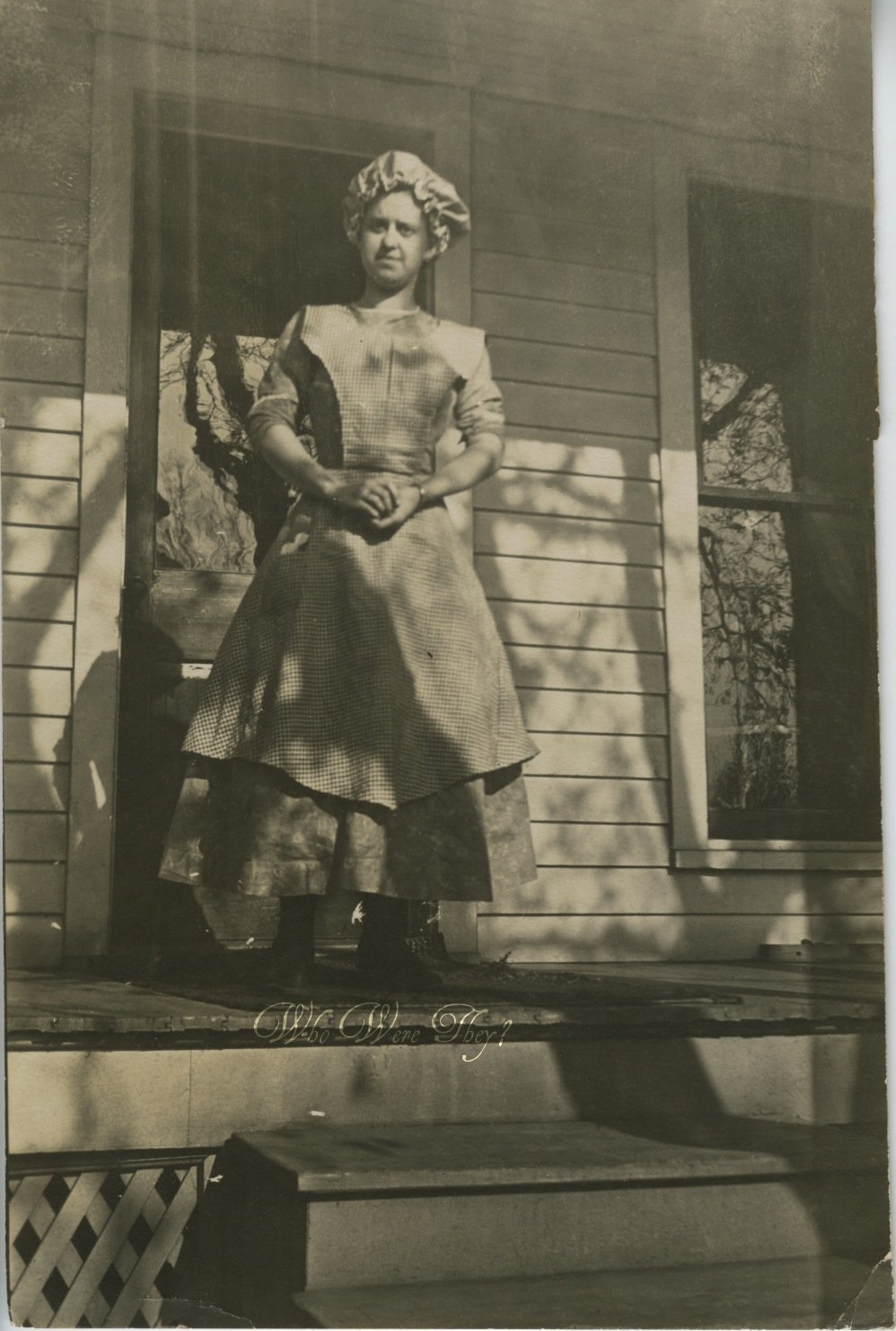
View #2 of porch D
I love the style of this apron and I believe this must have been a domestic who lived in or served the home, given her cap and apron.
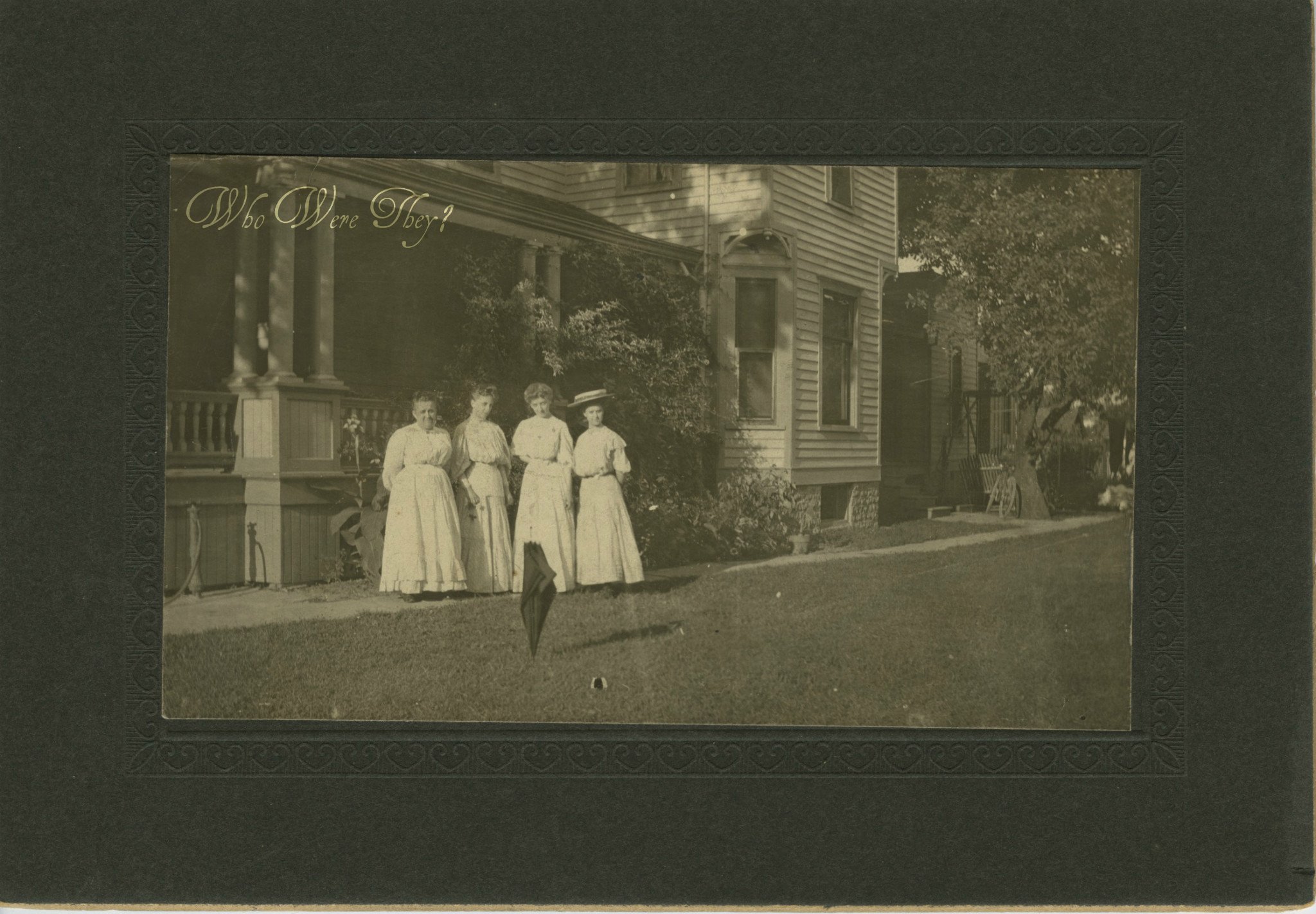
Distance view – note the umbrella in front of the ladies.
Four women by the side porch. That lawn looks like it might have hosted a nice garden party or croquet game or two. Note the umbrella stuck into the ground in front of the ladies. What an odd thing to do.
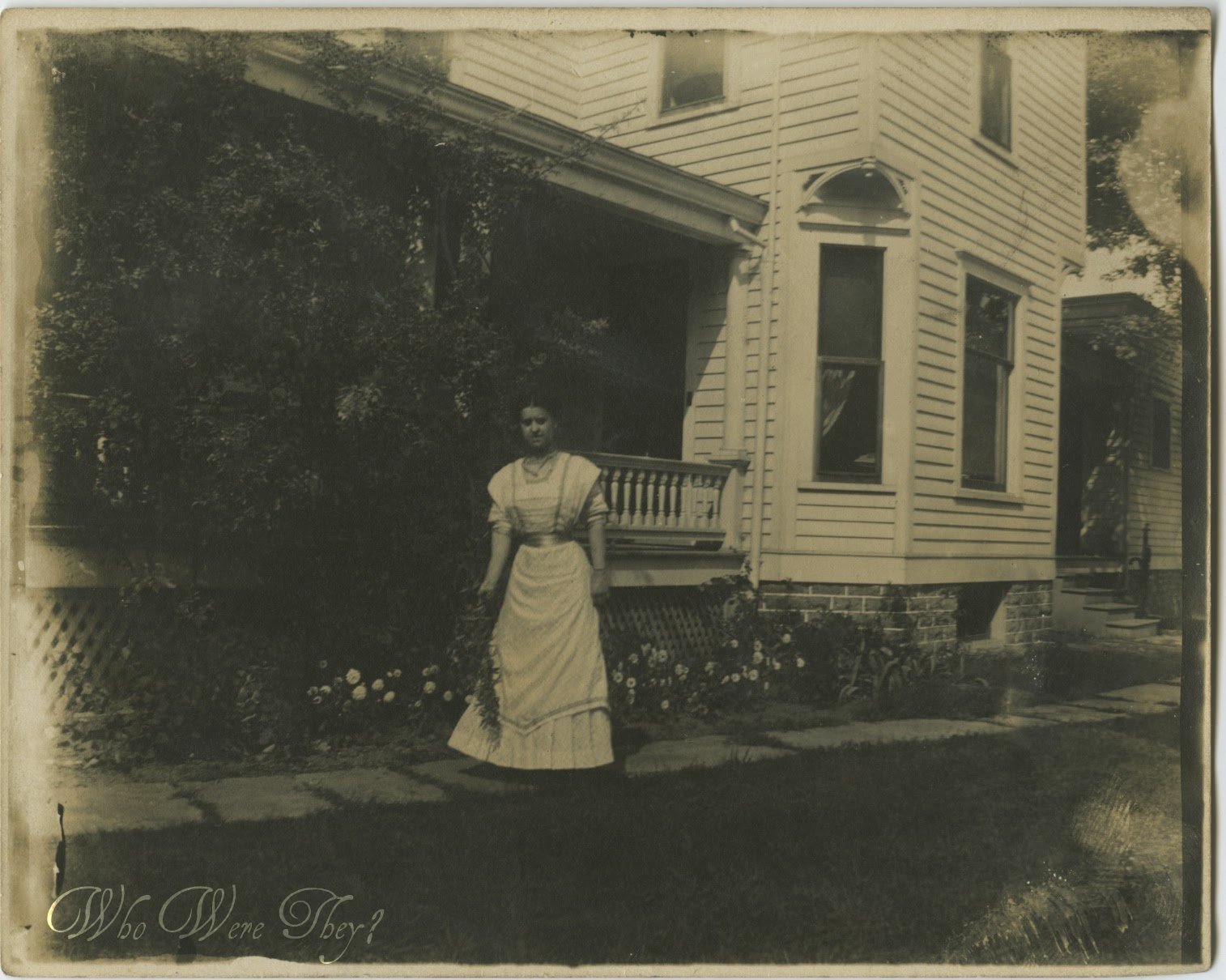
Final view
I’m guessing this image was to show off flowers this lady had tended or planted. It’s a lovely image showing an early 20th century dress as well. Again, the apron features a center point, but this is definitely not a servant. She may have been the lady of the house and the apron is just a coincidence.
For more doorways and entrances to explore, click over to Sepia Saturday. You will be happy you did.







 Who Were They?