Who Were They?

Lost and forgotten photos from the past

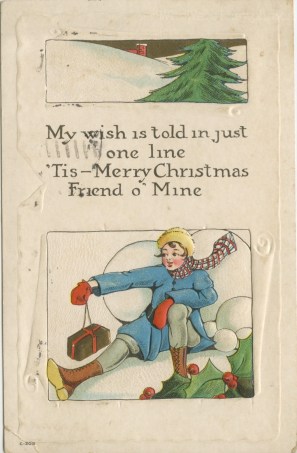
This sweet, embossed card features a young person sitting in the snow, holding out a gift. It reads

My wish is told in just

one line

‘Tis – Merry Christmas

Friend o’ Mine
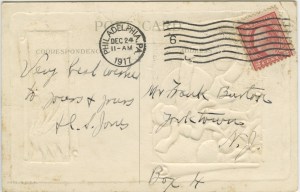
The card was mailed in 1917 from Al S Jones in Philadelphia, PA to Mr Frank Barton of Yorktown, NJ and the greeting reads

Very best wishes to you and yours, Al S Jones

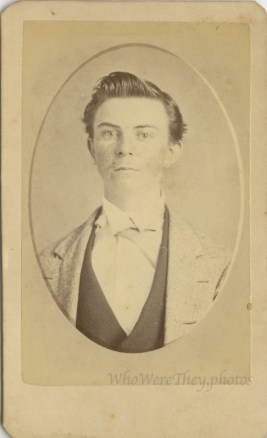
Today we feature a young fellow with highly oiled hair. This was a popular style for men and women through the 19th century. This particular photo is masked to an oval, and you can just see a slight embossment around the oval. The card has no back mark.

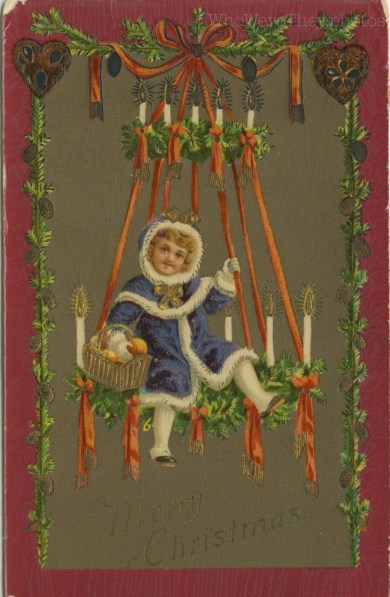
That does not look like a safe place for a child to sit! Today’s lovely Christmas card features a child in blue sitting on a lighted chandelier with ribbons and balsam. Call me a helicopter parent, but that just seems like a very bad combination of things lol.

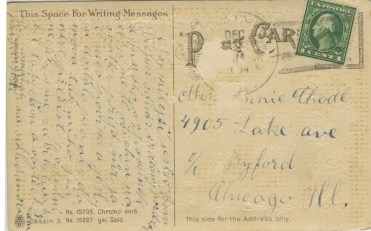
The card was possibly mailed in 1914, but there is damage to the area where the postal cancellation was made. It was sent to Anna Chodl, and the message is written in another language – possibly Czech according to site visitor Robin. If you can read Czech, please let us know what the card says! It was printed in Germany by Dessin. I find it interesting that the printed text is all in English, rather than in German.

A simple holly wreath adorns this holiday greeting. The text reads

With Kind Thoughts

And Good Wishes for

Christmas and the Coming Year

Downer Place Garage Co

A. C. Berthold, Manager

I found a Downer Place in Aurora, IL, and also found this particular company referenced a couple times in old documents.

Automobile Topics (magazine?) in June 1915 referenced that the garage was being built, and that it would include a sales area and a repair department.

A 1923 book of certified Domestic and Foreign corporations, published by the Illinois Secretary of State.

A 1931 phone directory that lists the garage phone number as 8724.

A popular hair accessory in the 1870s and 1880s, this lady is wearing a peigneta. Some will call it a comb, which it is, but the Spanish name is peigneta. If used with a lace veil, it becomes a mantilla. However, in America, these combs were wildly popular as a fashion accessory and were available in carved tortoise shell, smaller ones in mother of pearl, and early versions of plastic.

This photograph has no back mark, so we can’t even tell you who the photographer was or where the image was made. This is unusual by the 1880s, as the card back mark was used as advertising and bragging space.